


Mount Le Conte has a reputation that lures thousands of hikers every year into the high country above Gatlinburg. At 6,593 feet, it is one of the tallest peaks in Great Smoky Mountains National Park, but what surprises many first-timers is not the summit itself. It is how demanding the day feels, how quickly the weather shifts, and how different the reality is from the glossy photos of the Alum Cave Bluffs. Talk to people who have actually made the climb and you will hear the same theme: “I wish I had known what I was really getting into.” This guide pulls together those lessons so you can start your Le Conte hike informed instead of surprised.
Get the latest updates straight to your inbox!
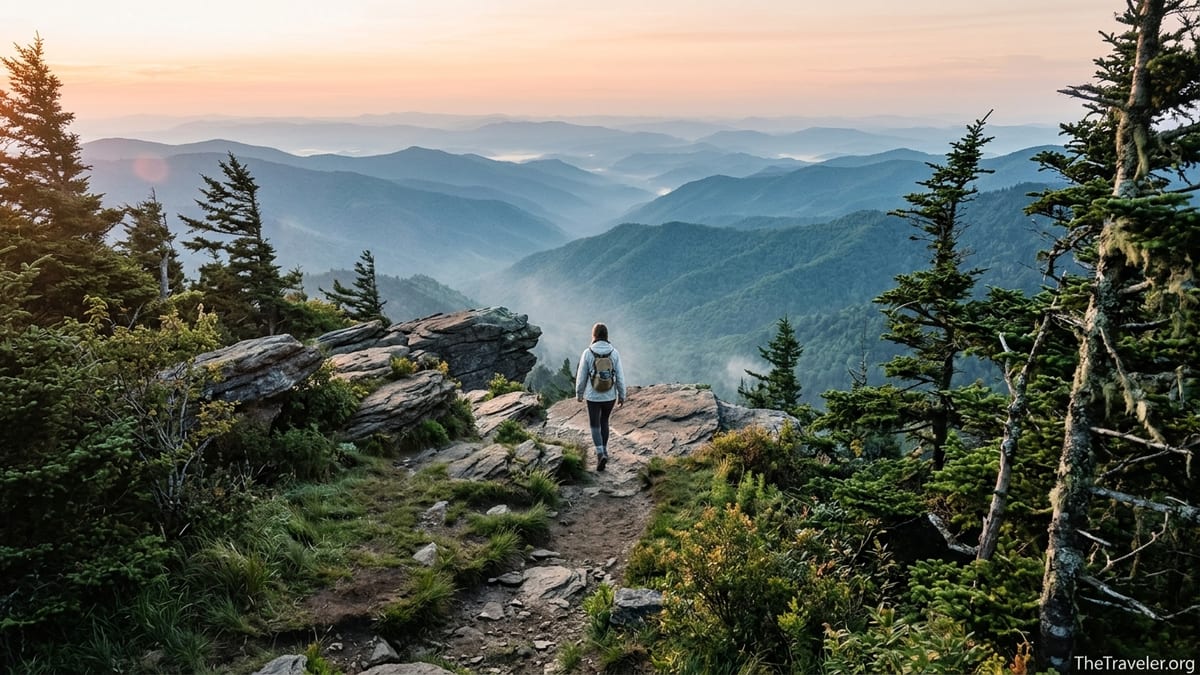
Understanding the Mountain You Are Actually Climbing
One of the most common surprises is that “shortest” does not mean “easy.” The popular Alum Cave Trail to Mount Le Conte is about 11 miles round trip with roughly 2,700 to 2,800 feet of elevation gain, depending on the tracker you use. It is officially listed by the National Park Service as a challenging, all-day hike. Many visitors arrive from a Gatlinburg hotel where the sidewalks are crowded with pancake houses and souvenir shops and assume a five-mile climb each way will be a casual outing. By mid-afternoon, they are staggering back to the trailhead in flip-flops or minimalist sneakers, drained by the non-stop ascent.
Another surprise is that Mount Le Conte is not a single simple summit cone. The mountain is a massif with several distinct high points, including High Top, Cliff Tops, and Myrtle Point. Reaching LeConte Lodge or the backcountry shelter does not automatically mean you have stood on the highest point or seen sunrise and sunset viewpoints. Hikers who did not research the layout sometimes reach the lodge, snap a quick photo, and start down, only to learn later they were a short spur trail away from the true summit or best views.
Even the starting elevation can be deceptive. The Alum Cave trailhead on Newfound Gap Road sits at around 3,800 feet, already higher than downtown Gatlinburg, but you still have several thousand feet to climb. That much vertical gain, especially for people who live at or near sea level, can leave legs burning and lungs working harder than expected. While the mountain does not require technical climbing skills, it demands steady cardio fitness and the ability to keep moving uphill for several hours without a long break.
Finally, hikers often underestimate how long the day will take. Experienced trail runners might finish the route in five hours or less, but many average hikers are out eight to ten hours, especially if they stop at Arch Rock, the Alum Cave Bluffs, LeConte Lodge, and side trips to Cliff Tops or Myrtle Point. Visitors who start at 11 a.m. after a late breakfast in town are sometimes shocked to find themselves descending steep, rocky sections in the dark.
Weather, Seasons, and the Shock of a Cold Summit
Mount Le Conte is notorious among locals for having its own weather. A blue-sky morning in Gatlinburg or Pigeon Forge can turn into a cold, foggy, or rainy afternoon on the ridge. As you climb above 6,000 feet, temperatures at the summit can be 10 to 20 degrees cooler than at the trailhead. Hikers who start from a humid parking lot in July wearing cotton T-shirts and no extra layer are frequently shivering in the wind near Cliff Tops by early afternoon, especially when clouds roll in.
In shoulder seasons this contrast is even sharper. In April and early May, guests at Gatlinburg cabins might see budding trees and spring flowers, but the top of Le Conte can still hold ice on shaded stretches. National Park Service advisories regularly warn that wet rock and lingering ice around the bluffs and narrow ledges can make footing treacherous. Local guides often recommend microspikes in late winter and early spring, something many visitors have never considered for a hike they found on a vacation blog.
Afternoon thunderstorms are another underappreciated risk. In summer, the Smokies often build up heavy clouds by mid-day. A hike that feels pleasantly warm on the way to Alum Cave can turn into a soaking, slippery descent in a matter of minutes. The narrow ledges with cable handrails above Alum Cave Bluff are exposed to wind and rain; hikers who started in trail runners without much grip are quickly reminded that these are mountain conditions, not a city park stroll.
Because of all this, local outfitters in Gatlinburg and Townsend constantly advise hikers to pack a light waterproof jacket, an insulating layer such as a fleece, and at least one dry pair of socks, even in summer. Many of the rescues on Le Conte happen not in bitter winter storms but in mild seasons when people simply did not expect to get cold, soaked, and exhausted at altitude. Knowing that the forecast in town does not tell the full story on the ridge is one of the most valuable lessons.
Crowds, Parking, and the Reality of Getting to the Trail
Nothing frustrates would-be Le Conte hikers more than planning their big day, driving up Newfound Gap Road, and finding the Alum Cave parking area already packed. The National Park Service repeatedly warns that the trailhead sees “extreme crowding and limited parking,” particularly from March through October and during fall color season. On fair-weather weekends, cars begin filling the lot around sunrise, and late arrivals sometimes circle or turn back altogether.
Since 2023, Great Smoky Mountains National Park has required parking tags for vehicles that will be parked more than 15 minutes. The tags are modestly priced compared with many national parks, but you must still budget for them and pick them up in advance or at specific kiosks in town. Visitors who assume the park is entirely free sometimes arrive to find they need to sort out a parking tag before they can legally leave their vehicle at Alum Cave or other busy trailheads.
The crowding is not just about parking. Alum Cave is one of the most popular hikes in the Smokies even for people who have no intention of summiting Mount Le Conte. Families often hike the 2.3 miles to the bluffs and back, which means the lower portion of the trail can feel like a moving line of people during peak season. For Le Conte-bound hikers, that can translate into stop-and-go progress, waiting to pass on narrow sections, and pausing at the cable handrails while others take photos.
Some travelers work around this by staying in Gatlinburg or along U.S. 441 and starting before dawn, reaching the trailhead between 6 and 7 a.m. Others book seats with local shuttle or guide services that drop them at Alum Cave and pick them up later, avoiding the parking problem altogether. These options cost extra, but many hikers who have spent an hour hunting for a spot on previous trips decide the small added expense is worth it to protect a limited vacation day.
Trail Conditions, Exposure, and Why Footwear Matters
Hikers used to wide, groomed paths in urban parks are often surprised by the variety of terrain on the way to Le Conte. The lower Alum Cave section follows Alum Cave Creek and Styx Branch, crossing several sturdy wooden bridges. After Arch Rock, where you climb stone steps through a natural archway using a handrail, the trail begins a more sustained climb. Past Inspiration Point and the bluffs, it narrows and hugs the mountainside, with a few short sections of exposure where a fall would have serious consequences.
Along these cliffs, the park has installed steel cables bolted into the rock to serve as handrails. In dry conditions, many experienced hikers barely notice them, but when the rock is damp or icy these cables become essential. Visitors who attempt the trail in worn-out sneakers or flat-soled casual shoes regularly find themselves sliding and clutching the cable, moving much more slowly than they expected. Local search-and-rescue reports often mention sprained ankles and minor falls on the rocky, rooty stretches above Alum Cave.
The reality of the surface also surprises many people. Parts of the trail are smooth dirt or crushed rock, but long segments are uneven, with step-ups over roots and wet stones. On busy days, descending hikers kick loose small rocks and gravel that roll underfoot like ball bearings. Trekking poles, which some first-timers assume are “for serious hikers only,” can make a huge difference in stability, especially on the steep descent when legs are tired.
As for footwear, regional gear shops around the Smokies consistently recommend trail running shoes or hiking boots with good tread. On a typical Saturday in October you will still see people starting up in athletic slip-ons, fashion boots, or sandals, often after reading only that the trail is five miles to the top. Many of them turn around well before the summit. Those who reach Le Conte in supportive shoes with grippy soles almost universally say they are glad they chose proper trail footwear.
Food, Water, and the Myth of the Easy Out-and-Back
Another thing many hikers wish they had known is just how much food and water they would actually consume. A full Le Conte day from Alum Cave can easily stretch to eight hours of steady effort. Local guides often suggest at least two to three liters of water per person, plus electrolyte tablets or a sports drink for warm, humid days. Yet it is common to see day hikers starting with a single half-liter bottle picked up at a gas station in Gatlinburg.
There are several streams along the lower trail, but they are not guaranteed to be safe without proper filtration or treatment. During dry spells some flow diminishes, and in any case, park rangers urge visitors to carry what they need rather than relying on natural sources. Portable squeeze filters and lightweight purification tablets are now sold in most outdoor shops in the region, and many experienced hikers clip a filtered bottle to their packs rather than gamble on untreated creek water.
Food is just as important. The elevation gain and constant climbing burn more calories than most casual visitors expect. A few granola bars may not be enough to keep energy levels up over an 11-mile day, especially for families or those unaccustomed to long hikes. Seasoned Le Conte hikers typically pack sandwiches from a local deli, trail mix, jerky, and some quick sugar like gummy candies or fruit chews for the final push. At the top, LeConte Lodge sometimes sells simple treats like lemonade or hot chocolate to overnight guests and a limited number of day hikers, but lodge supplies vary and cannot be counted on as your main resupply.
The descent also catches people off guard. Many assume that once they reach the lodge, the “hard part” is over. In reality, the steep downhill over rocks and roots can be punishing on knees and hips. Hikers who did not eat and drink enough on the way up often feel lightheaded or sluggish on the way down, which is when missteps and twisted ankles are most likely. Those who pace their snacks and hydration throughout the day, treating the outing as a full endurance effort rather than a quick scenic walk, generally report a safer and more enjoyable trip.
Lodging, Permits, and Planning Beyond a Day Hike
People who have seen photos of LeConte Lodge perched just below the summit are often surprised to learn how difficult it is to secure an overnight stay there. The lodge, the only commercial lodging inside Great Smoky Mountains National Park, is extremely popular and typically books up far in advance via a reservation system that opens each year and fills quickly. Many hikers only discover this after falling in love with the idea of a sunrise and sunset from the mountaintop, only to find no openings for their travel dates.
Backcountry camping is another option, but it requires advance planning and permits. The Mount Le Conte backcountry shelter, located near the summit, operates similarly to Appalachian Trail shelters and must be reserved through the park’s backcountry permit system. Some hikers assume they can simply bring a tent and sleep wherever they find a flat spot near Le Conte, but camping is restricted in the national park, and rangers do cite or relocate people who attempt to camp outside designated areas.
For most visitors, Mount Le Conte remains a demanding day hike rather than an overnight trip. In that case, the smart move is to structure lodging in Gatlinburg, Pigeon Forge, or park campgrounds around an early start. Many hikers book a motel close to Newfound Gap Road so they can reach the Alum Cave trailhead at dawn without a long drive. Others choose a base in Townsend or Cosby if they plan to explore less crowded parts of the park after their Le Conte summit attempt.
Experienced hikers also stress the value of having a backup plan. Heavy rain, thunderstorms, or lingering ice can turn a Le Conte attempt into a risky proposition, especially for families or newer hikers. Several people who have visited the region multiple times have stories of waking up to a poor forecast, skipping Le Conte, and instead choosing a lower-elevation hike to Rainbow Falls, Chimney Tops alternatives, or quiet valley trails. Knowing that there are many worthwhile backup hikes helps lessen the disappointment if conditions are not right.
Fitness, Safety, and Knowing When to Turn Around
Mount Le Conte’s popularity can make it look easy on social media, but search-and-rescue teams in the Smokies respond to stranded and exhausted hikers on this mountain every year. One of the most important lessons from those who have been there is the value of an honest fitness assessment. If your normal activity level back home is mostly driving and office work, tackling Le Conte as your first serious mountain hike will feel more like a strenuous all-day workout than a scenic stroll, particularly in summer humidity.
Local recommendations often suggest building up to Le Conte with shorter, moderate hikes earlier in your trip. Trails to Alum Cave Bluff only, Rainbow Falls, or moderate ridge walks near Newfound Gap can give you a sense of how your body handles ascent and descent. Parents especially report wishing they had tested their children’s endurance on a shorter outing before committing to the full 11-mile climb. Online forums are full of posts from families who made it to the bluffs or Inspiration Point, only to wisely turn around when younger hikers faded.
Safety also means knowing when to call it a day. Park rangers repeatedly emphasize that summiting is optional, but getting back to the trailhead is not. Hikers who have turned around below the lodge after thunderstorms rolled in or after an ankle tweak often say the same thing: the mountain will still be there next year. In recent seasons, several high-profile rescues around the Smokies have involved people pressing on through lightning, fog, or sheer exhaustion because they felt committed to reaching the top.
Technology can help but should not be your only safety net. Many hikers track the route using apps on their phone or a GPS watch, but cell service on the mountain is spotty. Seasoned visitors carry a paper map, a small headlamp even for planned day hikes, and a basic first-aid kit. They also let someone know their route and expected return time. Those simple steps, along with realistic expectations and a willingness to turn back if conditions deteriorate, are what separate a memorable adventure from a serious incident.
The Takeaway
Ask hikers who have stood at Cliff Tops watching the light spill over the Smokies, and most will tell you that Mount Le Conte is absolutely worth the effort. What they often add is that the effort is greater than they expected. The mountain’s short mileage hides significant elevation gain, rugged terrain, and a climate that shifts quickly with altitude. Crowded parking lots, exposed ledges, and a long, demanding descent can all come as surprises to those who saw only a few pretty photos and a brief description online.
Going in with clear eyes changes everything. If you arrive with sturdy footwear, plenty of water and food, extra layers, a parking tag, and a flexible plan that respects weather and daylight, Le Conte becomes less of a gamble and more of a well-prepared adventure. Whether you turn around at Alum Cave Bluff or reach the summit near High Top, you will come away with a deeper appreciation for the Smokies and the mountain that towers above Gatlinburg.
Perhaps the most valuable thing to know before attempting Mount Le Conte is that there is no shame in making it a two-trip mountain. Many locals and repeat visitors first hiked only to Alum Cave or the lodge, then returned another year to explore Myrtle Point or stay at LeConte Lodge. Approaching the mountain with patience, respect, and realistic expectations will give you the best chance of joining those who remember their Le Conte day not for misery and surprises, but for the views, the cool summit air, and the satisfaction of having truly earned them.
FAQ
Q1. How long does it take to hike Mount Le Conte via Alum Cave?
Most hikers take between seven and ten hours round trip via the Alum Cave Trail, depending on fitness, weather, and how many stops they make for views and photos.
Q2. What is the best time of year to attempt Mount Le Conte?
Late spring through early fall generally offers the best conditions, but early spring and late fall can still have ice or snow near the summit, and summer often brings afternoon thunderstorms.
Q3. Do I need a permit or reservation to day hike Mount Le Conte?
No hiking permit is required for a day hike, but you do need a valid Great Smoky Mountains National Park parking tag if your vehicle will be parked at the trailhead for more than 15 minutes.
Q4. Is the trail to Mount Le Conte safe for children?
Many families hike to Alum Cave Bluff with older children, but the full climb to Le Conte is long and strenuous with some narrow, exposed sections, so parents should carefully consider their children’s endurance and comfort with heights.
Q5. Can I get water or food at the top of Mount Le Conte?
LeConte Lodge sometimes offers limited drinks and simple snacks, primarily for overnight guests, but hikers should plan to carry all the water and food they need for the entire day.
Q6. What gear is most important for a Mount Le Conte hike?
Sturdy trail shoes or hiking boots with good traction, a small backpack, plenty of water, layered clothing including a rain jacket, snacks, and a headlamp are considered essentials by experienced hikers.
Q7. How early should I arrive to find parking at Alum Cave?
On busy weekends and during peak seasons, many hikers aim to arrive around sunrise or earlier, as the Alum Cave parking area can fill quickly and roadside parking is limited or restricted.
Q8. Are there alternative routes to the summit besides Alum Cave?
Yes, other established trails such as Rainbow Falls, Trillium Gap, Bullhead, and the Boulevard connect to Mount Le Conte, but they are longer and often less traveled than Alum Cave.
Q9. What should I do if the weather turns bad during my hike?
If storms, heavy rain, or fog develop, it is usually safest to turn around and descend, avoiding high exposed sections and giving yourself enough daylight to return to the trailhead.
Q10. Is it realistic for a first-time mountain hiker to summit Le Conte?
It is possible for fit first-timers who prepare well, start early, and respect the distance and elevation, but many people are happier and safer starting with shorter Smokies hikes before attempting the full Le Conte climb.