


Munich Airport is one of Europe’s smoother hubs to connect through, and its lounges are a big reason why. Whether you fly Lufthansa in economy or an international business class ticket on another airline, there is a good chance you can access at least one lounge. The question is not just which lounge you can enter, but whether it is worth paying extra for access, how good the food really is, and where to find a shower after a long-haul flight. This guide focuses on the main options in 2026, with a practical look at access rules, real-world prices, and what you can expect once you walk through the door.
Get the latest updates straight to your inbox!
How Munich Airport Is Laid Out and Where the Lounges Are
Munich Airport has two main passenger terminals, and lounge strategy starts with knowing which one you are using. Terminal 2, including its satellite building connected by an underground people mover, is the home of Lufthansa and most Star Alliance carriers. If you are flying Lufthansa, Swiss, Austrian, United, Air Canada or another Star Alliance airline, you will almost certainly depart from Terminal 2. The bulk of Lufthansa’s lounges, including its flagship First Class Lounge, are spread across this terminal and the satellite at the K and L gates.
Terminal 1 is more fragmented and is used by airlines outside Star Alliance, including many leisure and low-cost carriers as well as oneworld and SkyTeam partners on certain routes. Here you will not find Lufthansa-branded lounges. Instead, Munich Airport operates contract lounges such as Airport Lounge World and Airport Lounge Europe, which serve a revolving cast of airlines and membership programs. If you hold a Priority Pass or similar card, Terminal 1 is currently your primary hunting ground.
Most long-haul departures and arrivals on Lufthansa and its partners use the non-Schengen sections of Terminal 2 and the satellite, while most European flights within the Schengen area use the Schengen side. That matters because Lufthansa often duplicates lounge types on each side. For example, there are both Schengen and non-Schengen Senator Lounges and Business Lounges, as well as a dedicated First Class Lounge in the satellite. When planning a connection, the key is to pick a lounge that aligns with your departure gate so you are not scrambling back through passport control at the last minute.
Transfer times at Munich are generally reasonable, but moving between Terminal 1 and Terminal 2 involves a landside walk or shuttle and new security screening. That makes it impractical to rely on a lounge in the “other” terminal during a short layover. In real terms, a Priority Pass holder arriving on Lufthansa in Terminal 2 usually cannot make it to a Terminal 1 lounge and back on a one-hour connection. For most travelers, your realistic options are limited to lounges in the same terminal and side of passport control as your departing flight.
Lufthansa Lounges: Business, Senator and First Class
Lufthansa operates several lounge tiers at Munich, reflecting ticket type and elite status. At the top is the Lufthansa First Class Lounge in the Terminal 2 satellite, serving Lufthansa and Swiss First Class passengers as well as HON Circle members. This is where you will find the most exclusive experience: a restaurant-style menu, quieter spaces, premium drinks, and private shower and relaxation rooms. For someone arriving on a Lufthansa First Class flight from the United States on an early morning, a common pattern is to head straight here for a shower, a cooked-to-order breakfast and a couple of hours of rest before a short connection onward in Europe.
Most frequent flyers, though, will encounter the Senator and Business Lounges more often. Senator Lounges target Star Alliance Gold members and Lufthansa’s own Senator and HON Circle elites, regardless of cabin, along with passengers flying in Star Alliance First Class. Business Lounges are designed primarily for business class passengers on Lufthansa Group and Star Alliance carriers, plus some mid-tier Miles & More elites on specific long-haul itineraries. In practice, a United Airlines Star Alliance Gold member traveling in economy from Munich to Newark on Lufthansa will usually be directed to a Senator Lounge, while a Lufthansa economy passenger with no status can only enter if they buy access, when space and policy allow.
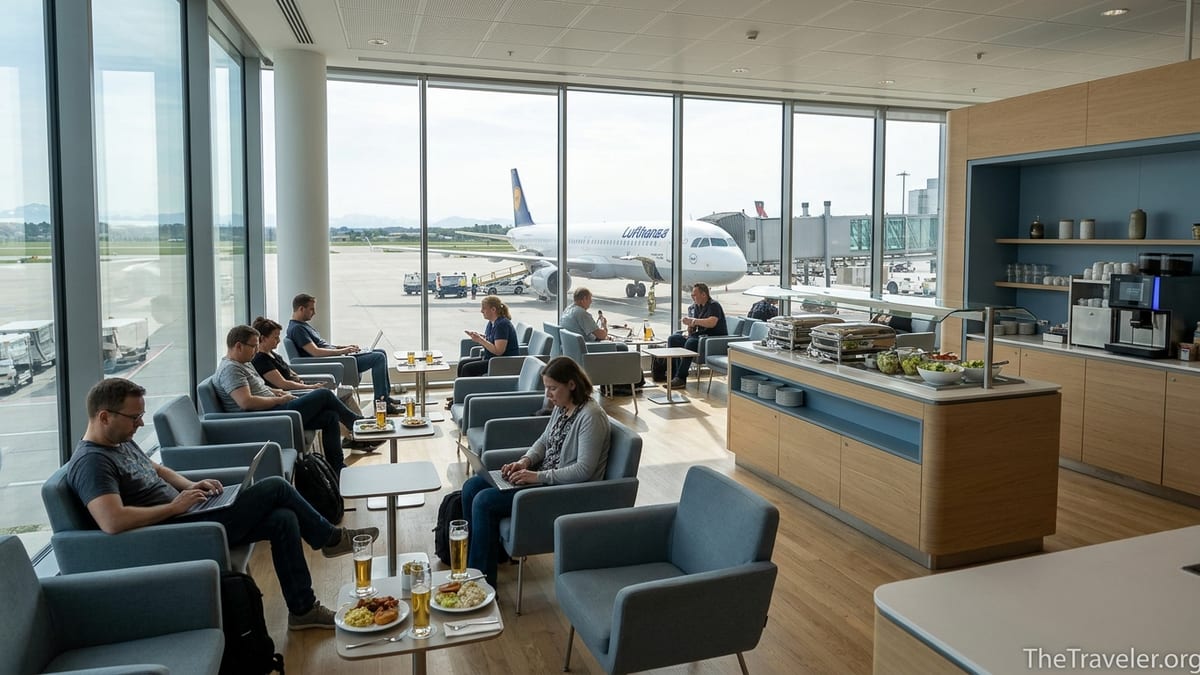
Facilities and design vary slightly by location, but the general Lufthansa template at Munich is consistent. Expect large open seating areas with a mix of work tables and armchairs, good airside views, a buffet area with hot and cold options, a self-serve bar, and showers in the bigger lounges, especially on the non-Schengen side. For example, the non-Schengen Senator Lounge near gate H24 is frequently praised for its solid buffet and barista coffee service. During the morning rush you might queue briefly for a shower, but many travelers find it worthwhile after an overnight flight from Asia or North America.
Access rules change occasionally, so it is safest to think in broad terms rather than memorizing fine print. Generally, a same-day Star Alliance business or first class ticket gets you into at least a Business Lounge in Terminal 2. Star Alliance Gold status usually unlocks Senator Lounges, even when you fly economy. Paying your way into Lufthansa lounges as an economy passenger without status is sometimes possible, but availability is often restricted at busy times and prices are dynamic. Travelers report walk-up prices that can sit around the mid-double-digit euro range per person when offered, which may or may not be good value depending on how long you have and how crowded the lounge is.
Independent Lounges in Terminal 1: Airport Lounge World & Europe
Travelers flying non Star Alliance airlines or holding lounge memberships like Priority Pass often end up in Terminal 1’s independent lounges. The two main branded spaces to know are Airport Lounge Europe on the Schengen side and Airport Lounge World on the non-Schengen side. Both are operated on behalf of the airport and serve a patchwork of carriers ranging from full-service airlines that contract for their premium passengers to tour operators that include lounge access in some holiday packages.
Airport Lounge World, located in Terminal 1’s non-Schengen area, is the larger and more modern of the pair. It typically features expansive windows, runway views, and a range of seating zones including quieter nooks for working and more casual areas for families. Most visitors arrive either with an invitation from their airline or through a membership such as Priority Pass, LoungeKey or DragonPass. If you lack any of those, you may be able to buy a walk-up day pass, often priced in the region of 50 to 60 euros per adult for a stay of up to three hours, including food, drinks, Wi-Fi and shower access when available.
Airport Lounge Europe, in the Schengen section of Terminal 1, is smaller and can feel busier at peak times. It caters heavily to short-haul flights within Europe on carriers that do not run their own lounges. Priority Pass and similar programs have historically listed it as an accessible lounge, but at busy times access for membership cards can be capped or temporarily suspended. This means a traveler arriving with a Priority Pass card in hand may occasionally find a “no Priority Pass right now” sign at the entrance, especially during the morning bank of departures to popular Mediterranean holiday destinations.
The experience in these Terminal 1 lounges is solid but not luxurious. You can generally count on a buffet with a couple of hot dishes, basic salads, soup, snacks, German beers, wines and a limited spirits selection. Showers are a key amenity: they are not as private or plush as Lufthansa’s First Class facilities, but for an economy passenger connecting from a long overnight sector into a European low-cost flight, a quick shower and fresh clothes can make the price of admission feel well justified. Seating does fill up at times, however, so if you are traveling with a group, arrive early in your three-hour window to stake out a corner.
Priority Pass and Other Memberships at Munich
For many leisure travelers, the most realistic path into a Munich lounge is through a card-based membership such as Priority Pass, often bundled with premium credit cards. At Munich in 2026, the situation is relatively straightforward but not always flexible. Priority Pass currently partners most consistently with the Terminal 1 lounges. That means if you are flying a non Star Alliance carrier that uses Terminal 1, such as an independent European airline or some long-haul partner, your card may get you into Airport Lounge World or Airport Lounge Europe, subject to capacity limits.
If you are flying Lufthansa or another Star Alliance airline out of Terminal 2 on a basic economy ticket with no status, a Priority Pass alone usually will not open any doors. Lufthansa does not broadly accept Priority Pass for its own lounges in Munich. Some travelers still try to engineer a visit to a Terminal 1 lounge by going landside and walking over, but this adds extra security checks and unpredictable walking time. With a tight connection, it is a risky strategy. In practice, your card is most useful when your departure already leaves from Terminal 1.
Other memberships and premium credit cards matter mainly at the margins. Certain American Express cards with high annual fees have, at times, secured access to specific Lufthansa lounges when flying with Lufthansa Group, but the benefits can be limited to particular cabins or routes and are subject to change. Independent lounge products sold by third parties, which promise bundled access at multiple airports, usually plug into the same set of Terminal 1 lounges that Priority Pass uses rather than unlocking anything new in Terminal 2.
The practical takeaway for a family of four is this: if you already pay for a premium credit card that includes Priority Pass, you may find real savings on food and drinks during a long Terminal 1 layover compared to buying four restaurant meals and soft drinks in the gate area. If, however, you mainly fly Lufthansa in economy on short hops and would need to buy a separate membership just for Munich, the limited access in Terminal 2 means that investment is unlikely to pay for itself on lounge visits alone.
Food, Drink and Showers: What You Actually Get Inside
The value of any lounge lives or dies by what is on the buffet and how comfortable the space feels at the times you travel. Munich is no exception. In Lufthansa’s Business and Senator Lounges, you can usually expect a buffet that reflects the time of day. In the early morning, that might mean scrambled eggs, sausages, fresh bread rolls, cold cuts, yogurts and fruit. By lunchtime and into the evening, hot dishes might include simple pasta, stews or regional German options, along with salad bars and desserts. Complimentary beer is almost a given in Germany, and you can expect domestic brands on tap or in bottles, plus house wines and standard spirits.
In higher-tier lounges such as the Lufthansa First Class Lounge in the satellite, the food shifts from buffet-heavy to restaurant-style. Passengers report sitting down to order a full cooked breakfast with made-to-order eggs, or dining on plated main courses and desserts before an overnight flight. It is not a Michelin experience, but it significantly beats the standard terminal environment. For someone landing from a long overnight in economy who has managed to upgrade or book First Class for the long leg, the opportunity to enjoy a proper meal before a short onward flight can be a highlight of the trip.
Independent lounges in Terminal 1 offer a step up from the public concourses but rarely match Lufthansa’s top-tier spread. Here you are more likely to find a smaller buffet with one or two hot trays, a soup, and basic snacks. The drinks selection typically includes German beer, wine, soft drinks and a short list of spirits for self-service. Coffee machines are standard, though barista-made drinks are more common in the better Lufthansa lounges. On a practical level, if you would otherwise buy a hot meal and an alcoholic drink in the terminal, the lounge’s inclusive offer often rivals or undercuts that cost for a stay of a couple of hours.
Showers are a crucial selling point for many long-haul travelers. Munich’s main non-Schengen Lufthansa lounges maintain shower cabins that can be requested at the reception desk. In busy morning waves between about 6:00 and 9:00, you may be given a pager or asked to wait in the lounge until a cabin is cleaned and ready. Independent Terminal 1 lounges also provide showers, though there may be fewer cabins. In both cases, towels and basic toiletries are usually included. If you price a standalone shower service at some airports, which can easily run to 15 to 25 euros per person, the ability to refresh in the lounge becomes a tangible part of the value equation.
Are Munich Lounges Worth It? Real-World Value Scenarios
Whether a lounge visit at Munich is worth it depends heavily on how you access it and what you would otherwise spend in the terminal. Start with the simplest case: a solo traveler transiting Terminal 2 with a business class ticket on Lufthansa or another Star Alliance carrier. In this scenario, lounge access is included in the fare and the question is not “is this worth paying for” but “is it worth making time for.” If your connection is 90 minutes or longer, the answer is almost always yes. You are trading crowded gate areas for a quieter space with reliable Wi-Fi, food, drinks and the chance to shower on long-haul itineraries. The value is built into the premium fare you already paid.
Next, consider a couple traveling in economy with no status, departing from Terminal 1 on a leisure carrier with a four-hour layover. If they can buy a lounge day pass for roughly 55 euros per person, or access it through a card membership they already hold, the math becomes more nuanced. A sit-down meal with drinks in the terminal can easily approach 25 to 30 euros per person in many European airports. Add snacks and coffees over a long wait and the total climbs quickly. In that context, a lounge visit that includes a light buffet, drinks and a place to unwind may feel like a reasonable trade, especially if one of them wants to shower after an overnight train or bus journey into Munich.
On the other hand, a family of four with young children on a two-hour intra-Europe layover might find less value in buying day passes at the door. Children do not always make full use of the buffet, and parents can end up spending much of their time keeping little ones entertained rather than relaxing. In such cases, using the terminal’s public play areas and grabbing a simple snack at a café may be a better use of both money and energy. Lounges are not always magical sanctuaries; at peak times they can be as busy and noisy as the main concourse, just with better chairs and free drinks.
Priority Pass-style memberships are most compelling for frequent travelers who pass through Terminal 1 multiple times per year and already hold the card through a premium credit product. Paying an annual fee purely to access Munich’s independent lounges is harder to justify unless you know you will use the benefit repeatedly, perhaps in combination with other airports on your regular routes. When evaluating whether to buy lounge access outright at Munich, think in concrete terms: how much would you otherwise spend on food, drink and perhaps paid Wi-Fi, and how much do you personally value quiet space and a shower during your specific layover?
Practical Tips for Choosing the Right Lounge at Munich
A few practical tactics can make lounge use at Munich more efficient. First, match the lounge to your departure gate zone. In Terminal 2, if your long-haul flight leaves from the non-Schengen H or L gates, aim for a lounge on that side of passport control to avoid extra border checks. For example, if you are connecting from a Schengen arrival into a non-Schengen departure, it can be tempting to pop into the first lounge you see; but clearing passport control early and settling into a non-Schengen lounge near your final gate is usually less stressful.
Second, pay attention to time-of-day crowd patterns. Morning peaks coincide with waves of departures to major European business destinations and inbound long-haul arrivals from Asia and North America. It is during these windows that Lufthansa’s Business Lounges can feel almost as busy as the public concourse. Senator Lounges can be slightly calmer but still crowded. If you have flexibility, arriving a bit earlier or later in the day can significantly improve your experience. Independent Terminal 1 lounges see their highest demand on weekends and holidays when leisure traffic surges, so capacity restrictions for membership cards are most likely then.
Third, if showers are your priority, make that clear as soon as you enter. Instead of settling into a seat and then wandering over to ask later, tell the front desk staff that you would like a shower cabin. They can either direct you immediately or add you to a waiting list. This is particularly relevant in the non-Schengen Lufthansa lounges around the morning and late-afternoon long-haul banks. Allow at least 20 to 30 minutes for a full cycle from request to completion during busy periods.
Finally, budget time conservatively when moving between terminals. Walking from a Schengen gate in Terminal 2 to a non-Schengen lounge in Terminal 1 involves not just distance but also leaving the secure area, walking through the central plaza and re-clearing security and, if applicable, passport control. While some seasoned travelers manage this on longer layovers to reach a preferred lounge through Priority Pass, it is not something to attempt with tight connections or checked baggage. When in doubt, choose a lounge in the same terminal and zone as your onward flight, even if it looks slightly less attractive on paper.
FAQ
Q1: Can I use a Munich Lufthansa lounge if I am flying economy?
Yes, if you have Star Alliance Gold status or an eligible Miles & More tier, you can usually access at least a Senator or Business Lounge in Terminal 2 even on an economy ticket. Economy passengers without status sometimes can buy access, but it is not guaranteed and can be restricted at busy times.
Q2: Does Priority Pass get me into Lufthansa lounges at Munich?
No, Priority Pass generally does not provide access to Lufthansa-branded lounges in Terminal 2. It is mainly accepted at independent lounges in Terminal 1, such as Airport Lounge World and Airport Lounge Europe, and only when those lounges are not capacity-restricted.
Q3: How much does a day pass to a Munich airport lounge cost?
Prices vary, but walk-up day passes in Terminal 1’s independent lounges are typically in the region of 50 to 60 euros per adult for a stay of a few hours. Lufthansa sometimes offers paid access to its own lounges for eligible economy passengers at roughly similar price levels, subject to space and current policies.
Q4: Are there showers in Munich Airport lounges?
Yes. Key Lufthansa lounges in Terminal 2, especially in the non-Schengen areas, have shower cabins that can be requested at reception. Independent lounges in Terminal 1 also provide showers, though there may be fewer cabins and short waits during peak times.
Q5: Which Munich lounge is best for long-haul passengers?
The Lufthansa First Class Lounge in the Terminal 2 satellite is the most luxurious option for eligible First Class travelers. For business class and Star Alliance Gold passengers, the non-Schengen Senator Lounges in Terminal 2 and the satellite are often considered the best balance of food, amenities and proximity to long-haul gates.
Q6: Can I visit a Munich lounge on arrival?
In some cases, yes. Certain Lufthansa status holders and premium cabin passengers are allowed to use specific lounges on arrival in Munich, particularly after long-haul flights. Policies can differ by status level and route, so it is wise to check at the lounge desk with your boarding pass from the long-haul sector.
Q7: Is it worth buying lounge access for a short layover?
For layovers under about 90 minutes, buying access is often marginal value, especially once you subtract the walking time to and from the lounge. The main exception is when you urgently need a shower or quiet workspace and are willing to pay for that comfort even during a brief stop.
Q8: Are Munich Airport lounges child-friendly?
Children are generally welcome in both Lufthansa and independent lounges, and many families use them. However, dedicated play areas are limited, and at peak times lounges can feel crowded. For very short layovers, using public play zones in the terminal can sometimes be more relaxing for families with energetic young children.
Q9: Do Munich lounges cater to special diets?
Lounge buffets typically include vegetarian options and simple dishes like salads, breads and fruit that work for many dietary needs. However, options for strict vegan, gluten-free or allergy-sensitive diets can be inconsistent, so travelers with specific requirements should not rely entirely on the lounge buffet and may want to bring suitable snacks.
Q10: Can I work productively in Munich Airport lounges?
Yes. Most lounges offer reliable Wi-Fi, plentiful power outlets and a mix of bar-style and table seating suitable for laptops. The quieter corners of the Lufthansa lounges in Terminal 2 and the window-side areas in Airport Lounge World are particularly popular with business travelers needing to work during a layover.