


The long‑trailed direct Frecciarossa high‑speed link between Munich and Rome is moving from political promise toward operational reality, with the latest updates in late 2026 confirming a summer 2027 launch target. However, key details such as final timetable, stopping pattern and ticket sales are not yet fully published. This guide explains what is confirmed, what is still subject to regulatory approval and testing, and how to plan Munich–Rome rail travel through 2027 whether or not the new direct service starts on time.
Get the latest updates straight to your inbox!
Current status in late 2026: what is confirmed and what is not
As of November 2026, Deutsche Bahn (DB), Trenitalia and ÖBB have jointly confirmed their intention to launch direct Frecciarossa services linking Munich with Milan and Munich with Rome in summer 2027. This follows an earlier political announcement that had spoken of initial services as early as December 2026, which has slipped as test running and approval have taken longer than hoped. Public statements by the operators and reports from Austria indicate that regular operation is now described as starting “from summer 2027,” and no official start date has been loaded into public booking systems.
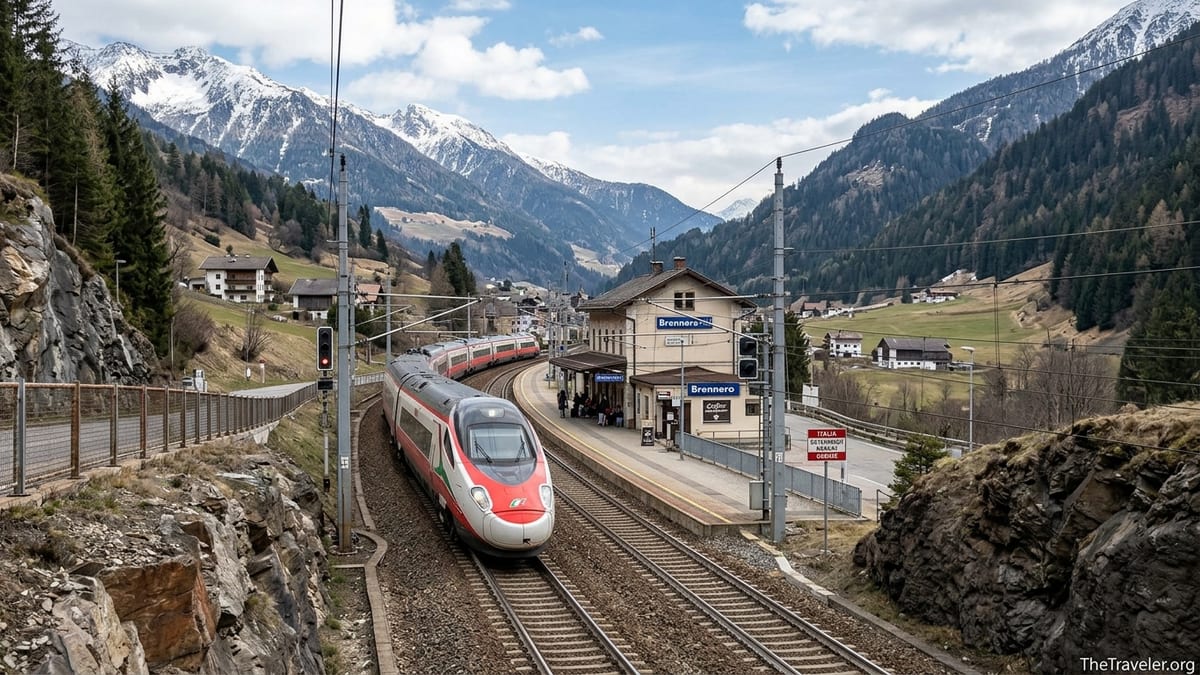
The cooperation agreement provides for Frecciarossa ETR 1000 trains to run from Munich via Innsbruck and the Brenner corridor into northern Italy, with through trains to Milan and extended services to Rome. A recent DB timetable 2027 press release notes that new direct connections from Munich via Innsbruck to Italy will begin only “after approval of the Frecciarossa trains,” clarifying that regulatory sign‑off is a prerequisite and still in progress. Trenitalia’s own communications from September 2026 confirm that test runs in Germany and Austria are underway and that commercial services are expected in summer 2027, explicitly tying the start to completion of type‑approval.
Crucially for travelers, there are still no published train numbers, detailed stopping patterns, or bookable Munich–Rome direct Frecciarossa journeys in any of the main retail systems. Timetable data for mid‑2027 on DB, ÖBB and Trenitalia sites currently shows only existing connecting options using EuroCity, Railjet, Nightjet and domestic Italian high‑speed trains. Until the direct trains appear in journey planners with train numbers and times, all dates and running patterns should be treated as indicative and subject to change, even if the political commitment is strong.
This means travelers planning for 2027 should distinguish carefully between what is politically announced and what is operationally guaranteed. For trips in spring 2027, only the established connecting routes can safely be booked at this stage. For summer and autumn travel, the best approach is to monitor DB and Trenitalia channels as the 2027 annual timetable is finalized and updated, while still keeping backup plans using current services in case approvals or start‑up are delayed beyond the peak holiday season.
The DB, Trenitalia and ÖBB partnership and the planned route
The new Frecciarossa connection is the product of a three‑way partnership between Germany’s Deutsche Bahn, Italy’s Trenitalia and Austria’s ÖBB. The concept first appeared in a joint announcement in 2025, presenting it as one of several EU‑supported pilot projects to improve cross‑border passenger rail. A more detailed statement followed from DB in 2026, outlining direct high‑speed services from Munich to Milan and Munich to Rome operated with Trenitalia’s flagship Frecciarossa 1000 trainsets and supported operationally by all three companies.
The route will use the existing Brenner corridor rather than the still‑in‑construction Brenner Base Tunnel. Trains are expected to start at Munich Hauptbahnhof, run south through Rosenheim into Austria, then via Kufstein, Wörgl and Jenbach to Innsbruck. From Innsbruck they continue up the ramp to the Brenner Pass, cross the border at Brenner/Brennero, then descend through Fortezza/Franzensfeste and Bolzano toward Trento, Verona and the high‑speed lines of northern Italy. Operators have repeatedly highlighted this link as the first time Tyrol and southern Germany are directly connected to Italy’s domestic high‑speed network.
Public information so far confirms two main market focuses: Munich–Milan and Munich–Rome. Press materials refer to two train pairs per day on each axis once operations start, but they carefully frame this as a plan rather than an already scheduled reality. Initial communications from 2025 suggested journey times of around six and a half hours between Munich and Milan and around eight and a half hours between Munich and Rome. These figures are indicative targets, based on combining existing EuroCity timings over the Brenner with Italian high‑speed running south of Verona or Bologna. However, until the final timetable is inserted into official schedules, these travel times must be treated as approximate.
It is also worth stressing what has not yet been confirmed in public documents. There is no final, operator‑verified list of intermediate stops beyond Innsbruck and Brenner, and it is not yet clear whether all trains will serve stations such as Bolzano, Verona or Bologna, or whether some services will run with limited stops to optimize end‑to‑end journey times. Similarly, there is no published breakdown of which services will terminate in Milan and which will continue to or originate from Rome. Travelers should therefore expect some variation between trains once details emerge, with perhaps one daily pair optimized for speed and another pair offering more intermediate access for the Tyrol and South Tyrol markets.
Homologation, test running and how the 2027 rollout differs from today’s trains
For the Frecciarossa 1000 to operate commercially between Munich and Rome, the rolling stock has to complete a demanding international homologation process. Trains that currently serve Italian domestic and French or Spanish routes have already been built to meet European interoperability specifications, but they still need country‑specific approval in Germany and Austria, particularly for compatibility with national signaling, train protection systems and power supplies. DB and Trenitalia have emphasized that their engineers are working jointly on adapting Frecciarossa equipment to these requirements.
In 2026, several Frecciarossa units began test runs on Austrian and German tracks. Regional reports from Tyrol describe trains running between Kufstein and Brenner and between Salzburg and Vienna as part of the approval program. These non‑commercial runs test acceleration, braking, signaling interfaces and driver training under a variety of conditions. Only after the European and national safety authorities certify the trains will they be allowed to enter passenger service north of the Brenner. This homologation timeline, rather than pure political will, is the main reason why the original end‑2026 launch window has shifted to summer 2027.
The 2027 rollout will differ significantly from today’s EuroCity and Railjet services because it introduces true high‑speed rolling stock across the border. At present, daytime trains between Munich and Italy over the Brenner are primarily EuroCity formations operated by ÖBB and Trenitalia with locomotive‑hauled coaches. These services run at conventional speeds, make several stops such as Innsbruck, Brenner, Bolzano and Verona, and take roughly five and a half hours between Munich and Verona under the current timetable. South of Verona, passengers transfer to separate Frecciarossa or Frecciargento services for onward high‑speed travel.
By contrast, the Frecciarossa 1000 line is designed as a through high‑speed service, even if it must respect conventional line speed limits on the winding approaches to the Brenner. The aim is to provide a consistent onboard experience from Bavaria to Lazio with the same train, staff changes at borders aside. Although the Brenner Base Tunnel, now forecast to open in the early 2030s rather than 2028, will eventually shorten and straighten the alpine section further, the 2027 Frecciarossa services will already remove the need for en‑route changes for many travelers and create more competitive overall timings versus flying.
Comparing planned Frecciarossa service with today’s Munich–Rome journeys
Until the direct Frecciarossa trains appear in booking systems, Munich–Rome rail journeys require at least one transfer, and usually two or three. A typical daytime itinerary for a random midweek date in November 2026 shows a first leg on an ÖBB EuroCity from Munich Hauptbahnhof to Verona Porta Nuova, taking about 5 hours 30 minutes with stops at Rosenheim, Kufstein, Innsbruck, Brenner, Bolzano, Trento and Rovereto. After a connection of 40 to 60 minutes in Verona, passengers board a Trenitalia high‑speed Frecciarossa to Rome Termini via Bologna and Florence, taking around 4 hours 5 minutes. Total scheduled journey time including a realistic buffer is therefore close to 10 hours 30 minutes.
Prices for this kind of itinerary depend heavily on advance booking and fare promotions. For a mid‑November 2026 weekday, bookings through German and international ticketing platforms show advance one‑way fares in second class starting around 90 to 120 euro for the through Munich–Rome daytime journey with at least two train changes, when booked several weeks ahead. Shorter‑notice bookings or peak dates can easily rise to 160 euro or more one way in standard class, especially when the long Italian high‑speed segment is included. Seat reservations on Frecciarossa services within Italy are compulsory and baked into most ticket prices, while the EuroCity leg over the Brenner offers optional reservations for a modest extra charge.
Night travel is possible using an ÖBB Nightjet service from Munich to Bologna, then a morning high‑speed train onward to Rome. For summer 2026 dates, Nightjet fares for a basic seat between Munich and Bologna have typically started around 40 to 50 euro if booked well ahead, with couchette and sleeper compartments costing significantly more. Adding a Bologna–Rome Frecciarossa connection usually brings the total to somewhere between 90 and 180 euro per person depending on comfort level and advance purchase. This remains an important alternative for travelers who prefer to travel overnight, and will continue to be so even after daytime Frecciarossa services begin.
Against this background, the planned direct Frecciarossa is intended to cut overall travel time and complexity. If the approximate targets of six and a half hours to Milan and eight and a half hours to Rome are realized, the fastest daytime journeys will shorten by roughly two hours compared with many current daytime itineraries, and by even more compared with journeys involving multiple regional connections. Just as importantly, travelers will avoid platform changes at busy hubs like Verona and Bologna. However, because no final timetable or pricing grid has yet been published, it is not possible to say whether direct services will always be the cheapest option. For some dates, connecting itineraries with promotions or flexible routing via Verona or Bologna may still offer better value.
Onboard Frecciarossa experience and likely features on the Munich–Rome route
While the precise onboard configuration of the international Frecciarossa sets has not yet been published in detail, the trains earmarked for Munich–Italy operation are ETR 1000 units similar to those already used on Italian domestic routes and in cross‑border services to France and Spain. These trains typically offer four travel environments: Standard (second class), Premium (a more spacious second‑class layout with enhanced seating), Business (a first‑class style environment with greater pitch and a quieter atmosphere) and Executive (a small, high‑comfort premium cabin with at‑seat catering). On domestic Italian services, Standard class uses a 2+2 seating layout, while Business and Premium provide wider seats and more legroom.
Luggage allowances on Frecciarossa services are generally generous and included in the fare, reflecting European rail norms rather than airline style restrictions. Overhead racks accommodate smaller bags, while larger suitcases can be stored on shelves at carriage ends or between seat backs. There are no published weight limits or per‑bag fees on current domestic or French‑linked Frecciarossa routes, and there is no indication that the Munich–Rome service will differ in this respect. Travelers should still be prepared to manage their own luggage through stations and be mindful that space at the ends of cars can fill up during peak periods.
Wi‑Fi and power sockets are standard features on ETR 1000 sets, with onboard portals currently offering at least basic connectivity for email and browsing on Italian routes. Mobile data coverage can be variable in the alpine sections between Innsbruck and Brenner and in some valleys south of the pass, but overall the expectation is for continuous connectivity for much of the Munich–Rome journey. Catering on existing Frecciarossa trains consists of a bar or café car offering snacks, hot and cold drinks and light meals, supplemented in higher classes by at‑seat service. There is every reason to expect a similar service level on the international trains, though menus and payment options may be adjusted slightly to reflect international operations.
Accessibility is a strong focus on modern Frecciarossa equipment, with features such as accessible toilets, spaces for wheelchair users and visual and audio information systems already in place on domestic trains. However, some station platforms along the Brenner corridor are not yet fully optimized for level boarding, so staff assistance may be required for boarding and alighting at intermediate stops. For bicycles, current Frecciarossa policy within Italy is more restrictive than on many regional or EuroCity services, with only limited spaces available on some trains and mandatory reservations where carriage is allowed. Operators have not yet published a clear statement on bicycle policies specifically for the Munich–Rome services, so travelers who wish to bring bikes in 2027 should assume that options may be limited and consider using regional or EuroCity trains instead, or packing bikes in bags that comply with luggage rules.
Ticket sales, booking windows and fare conditions
When tickets for the direct Frecciarossa become available, they will be sold through all three partner railways as well as through major international retailers. DB already sells Trenitalia tickets for domestic Italian high‑speed services alongside its own and ÖBB products, and has highlighted this in press communications about expanded European booking. Trenitalia, for its part, retails tickets that include cross‑border segments in Austria and Germany on its website and apps, while ÖBB acts as a key intermediary for journeys involving the Brenner corridor, such as today’s EuroCity and Nightjet services.
In practical terms, travelers can expect to find Munich–Rome direct train options on DB’s digital platforms, on Trenitalia’s booking channels, and on ÖBB’s website and smartphone applications. Larger third‑party retailers and global distributors will also list these services once they are loaded into the international timetable database. However, as of November 2026, there are no direct Frecciarossa trains visible in any of these systems for 2027, a clear sign that the necessary timetable and pricing data have not yet been released.
Booking windows will follow the usual patterns of the operating railways. DB typically opens long‑distance bookings up to around six months before departure, though the exact horizon can vary when new timetables or infrastructure changes are involved. Trenitalia frequently opens domestic Frecciarossa bookings three to six months ahead, with occasional shorter horizons when new services start or during timetable transitions in June and December. Given these practices, it is reasonable to expect that direct Munich–Rome Frecciarossa tickets will appear in stages during early and mid‑2027 rather than suddenly covering an entire year of departures.
For fare conditions, the future direct trains will likely blend Italian high‑speed concepts such as economy, super‑economy and base fares with German and Austrian paradigms of saver fares and flexible tickets. Today, a sample one‑way Munich–Rome daytime journey in November 2026 combining EuroCity and Frecciarossa services might cost around 100 to 130 euro on a non‑refundable advance fare, increasing to 150 euro or more for semi‑flexible options that allow changes on the day of travel. For families, combined tickets can reach 350 to 500 euro for two adults and two children without railcards, although discounts from family offers or children’s reductions can significantly reduce these costs. Since no official price list for the direct Frecciarossa has been published, it is not yet possible to quote specific future fares; travelers should instead use current connecting fares as a benchmark and be ready for a premium on the most convenient non‑stop departures.
Rail versus air between Munich and Rome in 2027 planning
For many readers, the key question is how a future direct Frecciarossa will stack up against flying between Munich and Rome in 2027. Today, typical non‑stop flights between Munich and Rome take around 1 hour 30 minutes gate to gate, operated by carriers such as Lufthansa and ITA Airways. However, when door‑to‑door time from city center to city center is considered, the advantage narrows. Travelers must add check‑in and security time at Munich Airport, boarding and disembarkation, baggage reclaim in Rome and transfers at both ends. A realistic door‑to‑door air journey for most passengers between central Munich and central Rome often takes around 4 to 5 hours.
By contrast, the proposed direct Frecciarossa journey time of roughly eight and a half hours seems much longer, yet it runs from city center to city center with no changes of mode. There is no airport transfer required at either end, no security checkpoint in the airline sense, and a much more flexible attitude to luggage. Onboard Wi‑Fi, power outlets and the ability to move freely can make the time more productive and comfortable for many travelers. For those with a strong aversion to flying or a preference for lower‑carbon travel, the train becomes an especially attractive option, even if nominally slower.
In pricing terms, current autumn and winter 2026 airfares for Munich–Rome non‑stop flights fluctuate widely. On some off‑peak weekdays, one‑way economy fares booked several weeks ahead can be found in the region of 80 to 120 euro, similar to many advance rail fares. On peak summer dates or at short notice, prices can climb to 200 euro or more one way. Checked baggage fees can add significantly to cheaper “hand luggage only” airfares, while rail fares include luggage as standard. For a family of four traveling with checked bags, the total cost differential between air and rail often narrows or can even reverse in favor of rail, especially if rail family discounts or children’s reductions are used.
Once the direct Frecciarossa becomes operational with competitive journey times and fares, its main competition will be with these short‑haul flights. For business travelers with tight schedules, flying may remain preferable, particularly if corporate policies favor airlines and direct flights match meeting times. For leisure travelers, students, families and those conscious of environmental impacts, the train is likely to be appealing, especially when combined with overnight stays in Innsbruck, Bolzano or Verona, turning the journey into part of the holiday itself. The key to making an informed choice in 2027 will be comparing concrete door‑to‑door timings and total travel costs, including baggage, transfers and onboard comfort, once the Frecciarossa schedules and fares are officially published.
How to book and what to do if the direct train is delayed
Given the remaining uncertainties about the exact start date and schedule, travelers planning 2027 trips should adopt a flexible, step‑by‑step approach to booking. First, identify your preferred travel window and check DB, ÖBB and Trenitalia booking platforms for available Munich–Rome rail options covering that period. If direct Frecciarossa trains have appeared, note their departure times from Munich Hauptbahnhof and arrival times at Rome Termini and consider how they fit with hotel check‑in and onward plans. If the direct trains are still absent for your dates, focus on the best connecting itineraries instead of waiting indefinitely.
Second, compare fares across a couple of sample dates around your desired travel day. If you see attractive saver fares on connecting routes via Verona or Bologna for your exact date but there is still no sign of direct trains, it is usually safer to secure those tickets, especially for peak seasons such as school holidays or major events. Since new services can be added to timetables or have their fares adjusted close to launch, there is always a risk that early direct‑train fares might not undercut well‑planned connecting tickets, particularly for families or larger groups who benefit from existing discount structures.
Third, make a backup plan that does not depend on the Frecciarossa launch going exactly as currently forecast. For example, if you are traveling in August 2027 and wish to rely on rail, you might book a mid‑morning EuroCity from Munich to Verona with a comfortable connection onto an afternoon Frecciarossa to Rome, ensuring a total journey time around ten and a half hours. If direct services are confirmed and bookable by the time of your trip and you prefer them, you can then decide whether to change your tickets, subject to fare conditions, or to keep your original itinerary. When buying tickets, read the fare rules regarding changes and refunds carefully; slightly more expensive flexible tickets may be worthwhile for those determined to switch to the direct train if it becomes available.
Finally, travelers should keep an eye on alternative options in case of disruption. For instance, in the unlikely event that test running reveals additional technical issues, launch could slip from summer into autumn 2027. Under such circumstances, robust Venice or Bologna connections, existing Nightjet services between Munich and Bologna, or even a mix of train and short‑haul flight could become useful fallbacks. By booking accommodation with flexible cancellation terms and allowing some slack in your schedule, you can adapt more easily to any late changes in the rollout timetable.
FAQs: launch status, route specifics, sleepers and who benefits most
Many readers have recurring questions about the Munich–Rome Frecciarossa project, and answers as of late 2026 must take into account that some aspects remain fluid. The most important question is whether the summer 2027 launch is guaranteed. The honest answer is that, while DB, Trenitalia and ÖBB continue to present that target publicly and test running is underway, final approvals and train paths have not yet been fully granted. Until the services appear as scheduled, bookable trains in journey planners, any predicted first departure date remains indicative. Travelers with immovable plans in early summer 2027 should book existing connecting services instead of assuming the Frecciarossa will be running by a specific day.
Another frequent question is which stops along the Brenner route will be served. Announcements highlight Munich, Innsbruck, Brenner/Brennero and major Italian cities such as Milan and Rome, but intermediate stops like Bolzano, Trento or Verona have not been definitively listed. Given the line’s geography and current EuroCity patterns, it is reasonable to expect at least some of these cities to be served, but whether every Frecciarossa will stop at all of them is not yet clear. For those planning intermediate journeys, such as Innsbruck to Rome or Munich to Bolzano, it is safest to assume that existing EuroCity and regional services will continue to be the primary options through at least the early part of 2027.
Travelers also ask whether there will be sleeper or couchette options on the Frecciarossa trains. The answer is no: Frecciarossa 1000 trainsets are day trains with reclining seats, not overnight stock. Overnight journeys between Munich and Rome will continue to rely on Nightjet services combined with Italian high‑speed or intercity trains, at least for the foreseeable future. Those seeking beds instead of seats should therefore look to the Nightjet from Munich to Bologna or other night train combinations and then transfer to morning trains to Rome. The new Frecciarossa link is designed for daytime travel, with comfortable seating and onboard amenities rather than bunks.
Reservation rules are another area of interest. On current Frecciarossa services, seat reservations are compulsory and included in the ticket price. It is likely that the same principle will apply to the Munich–Rome services, though the precise way reservations appear in DB and ÖBB booking interfaces may differ from Italian practice. EuroCity services over the Brenner today have optional reservations, so travelers accustomed to boarding with unreserved tickets should be prepared for a different system on the new high‑speed trains once implemented.
Finally, who stands to benefit most from the new connection when it launches? The primary beneficiaries will be travelers who value a comfortable, environmentally friendlier alternative to flying and are prepared to spend a full day traveling between Bavaria and central Italy. This includes leisure travelers, families, students, and those combining stops in the Alps and northern Italy with a longer stay in Rome. Business travelers with meetings in both Munich and Rome may also benefit, particularly when they can work productively on board. Residents of Tyrol, South Tyrol and northern Italy will gain improved access to Germany’s long‑distance network through a single, high‑quality train. The project also symbolizes a wider shift in European transport policy, favoring better cross‑border rail links over short‑haul flights, a trend that is likely to shape travel options across the continent throughout the late 2020s and into the 2030s.