

More news on this day
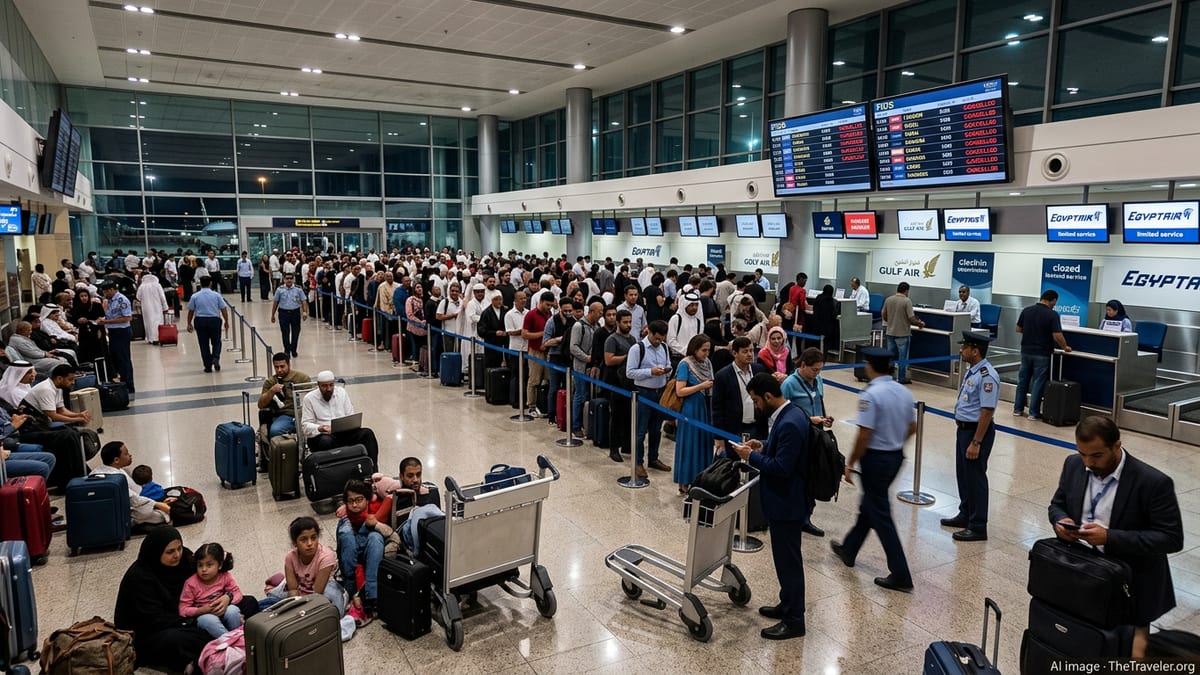
Passengers traveling through Muscat’s Seeb International Airport are facing renewed disruption as a cluster of flight cancellations by Oman Air, Flydubai, Air Arabia and other regional carriers affects key routes to Dubai, Bangkok, Sharjah and additional destinations, according to published schedules and recent traveler reports.
Get the latest news straight to your inbox!
Fresh Wave of Cancellations Hits Muscat Routes
Updated flight information for mid May 2026 shows a fresh wave of cancellations on services linking Muscat with major regional hubs, including Dubai and Sharjah, as well as longer-haul connections such as Bangkok. Publicly available status trackers and booking platforms indicate at least five Muscat flights scrubbed over recent days, affecting both point-to-point journeys and onward connections.
Oman Air, the national carrier based at Muscat International Airport, has canceled select services on regional routes while maintaining most of its core schedule. Flight-status tools show certain Dubai to Muscat services listed as canceled, even as other rotations on the same city pair continue to operate. This has contributed to a patchwork pattern of disruption that is proving difficult for travelers to anticipate.
Low-cost operators Flydubai and Air Arabia, which normally provide dense coverage between Oman and the wider Gulf, are also seeing cancellations and schedule changes. Recent posts on regional travel forums describe last-minute emails notifying passengers of flight cancellations on Flydubai services within days of departure, with limited alternative options available at short notice.
The impact of these adjustments is magnified by Muscat’s role as a connecting hub. Many passengers transiting between Asia, the Gulf and Europe rely on through itineraries that hinge on timely departures from Muscat, so the loss of a single leg can strand travelers far from their final destinations.
Regional Airspace Tensions Still Reshaping Schedules
The latest disruptions come in the wake of ongoing regional security tensions that have already led to significant airspace restrictions this year. Published coverage from Omani media in March 2026 reported multiple Oman Air cancellations on routes to Amman, Dubai, Bahrain, Doha, Dammam and Kuwait after airspace closures in parts of the region forced carriers to reassess flight paths and frequencies.
Those earlier operational challenges have not fully dissipated. Regional news and aviation monitoring sites continue to document intermittent closures and risk advisories affecting corridors over and around the Gulf, prompting airlines to re-route or pare back services. For operators with relatively lean fleets, such as Oman Air and smaller Gulf low-cost carriers, even modest changes to flight times or routings can cascade into same-day cancellations.
In addition to geopolitical factors, airlines are balancing aircraft availability and crew resources after a busy winter travel period. Industry analysis notes that carriers in the Gulf and wider Middle East have been operating near capacity into 2026, leaving limited slack in the system if aircraft require unscheduled maintenance or if crews reach duty-time limits. When combined with restricted routing options, these constraints can translate quickly into short-notice schedule cuts.
Travel experts observing the region suggest that carriers are prioritizing routes with consistently high demand while trimming frequencies or individual flights on secondary services. For Muscat, this can mean sporadic cancellations on certain departures to nearby hubs such as Dubai or Sharjah, even while headline long-haul connections remain mostly intact.
Knock-On Disruption for Passengers Connecting via Muscat
For travelers, the most challenging aspect of the current situation is the lack of predictability. While core schedules between Muscat and major destinations like Dubai, Doha and key South Asian cities continue to operate in large part, the selective cancellation of individual flights is undermining confidence in same-day connections.
Some passengers transiting Muscat on itineraries to Europe or Southeast Asia have reported losing their onward segments when a short regional hop was removed from the schedule. In cases where Muscat to Dubai or Muscat to Sharjah flights were canceled, travelers have described being offered rebooking on later services, forced overnight stays or rerouting through alternative Gulf hubs, which can extend journeys by many hours.
The situation is particularly sensitive for time-critical travel such as business trips, medical journeys or family events. With seat availability limited in the days immediately following a cancellation, last-minute rebooking often comes at a higher fare or requires accepting inconvenient timings. Travelers posting online account of Flydubai and Air Arabia cancellations have noted difficulty finding comparable alternatives close to their original departure dates.
Domestic implications within Oman are also emerging. Muscat’s function as the main international gateway means that travelers originating in other Omani cities, including Salalah and Sohar, can see their entire journey upended when an outbound Muscat leg is cut. This places additional pressure on ground transport options for those seeking to reach Dubai or other nearby destinations by road when air links falter.
What Airlines Are Advising and How Travelers Can Respond
Airlines operating to and from Muscat have published general guidance on disruption management through their official channels, emphasizing the importance of monitoring bookings and checking flight status close to departure. Publicly available customer-advice pages for Oman Air, Flydubai and Air Arabia outline typical options when a flight is canceled, including rebooking on the next available service, rerouting via another hub or receiving a refund or travel credit, subject to fare rules.
Travel-industry commentary suggests that passengers traveling through Muscat in the coming weeks should allow extra time for connections and consider building longer layovers into itineraries. Booking slightly earlier or later departures on critical routes such as Muscat to Dubai or Muscat to Bangkok can provide a buffer if a specific flight is removed from the schedule.
Travel insurance is another factor for passengers to review carefully. Many policies sold in the region include limited coverage for cancellations caused by airspace closures or security-related disruptions, but terms can vary widely. Specialists recommend that travelers verify whether their policy covers missed connections and additional accommodation costs if a Muscat flight is canceled or significantly delayed.
Passengers are also being encouraged by consumer advocates to keep thorough documentation if disruptions occur. Maintaining records of cancellation notices, revised itineraries and out-of-pocket expenses can support later claims with insurers or formal requests for reimbursement through airline customer-service channels.
Outlook for Muscat Operations in the Coming Weeks
Looking ahead, analysts following Gulf aviation expect a continued period of volatility for Muscat’s international operations. While there are no indications of a full-scale shutdown of any particular route group, the combination of shifting airspace constraints, fleet utilization pressures and strong regional demand suggests that ad hoc cancellations are likely to persist.
Oman’s broader aviation strategy, which includes closer integration between Oman Air and the recently fully state-owned low-cost carrier SalamAir, may provide some medium-term resilience by allowing more flexible deployment of capacity on key routes. However, network realignments of this kind typically take time to filter through to day-to-day schedules, and travelers in May and June 2026 should still be prepared for short-notice changes.
For now, passengers planning trips through Seeb International Airport are advised by travel professionals to monitor their bookings regularly, sign up for airline notifications where available and maintain alternative routing ideas in case of disruption. As carriers adjust operations in response to daily conditions, Muscat’s role as a regional crossroads remains intact, but the margin for error on tightly timed itineraries has narrowed.