


More news on this day
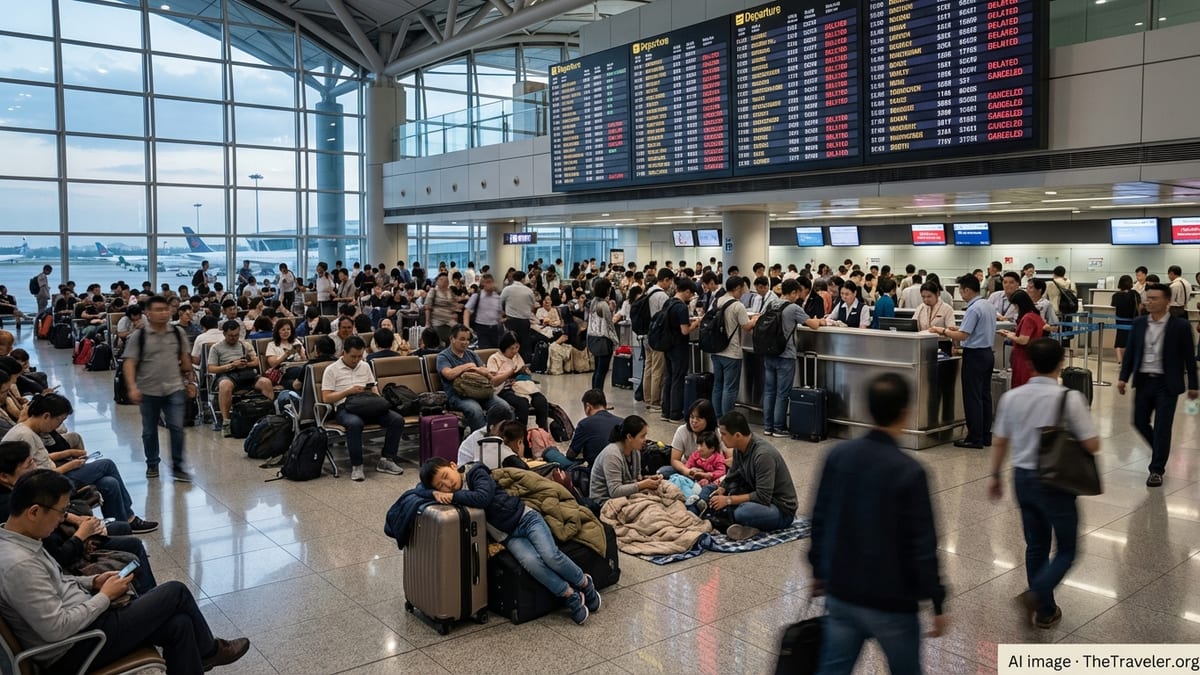
China’s peak May travel season is running into mounting disruption as a sweep of heavy rain, cold fronts and localized storms collides with already strained aviation and rail networks, creating fresh uncertainty for millions of domestic and international travelers.
Get the latest news straight to your inbox!
Blue Alerts and Intensifying Storm Bands Hit Key Regions
Publicly available bulletins from China’s National Meteorological Center show that a series of convective weather systems has developed across large parts of the country since the start of May. A blue alert, the lowest tier in China’s four-level warning system, was issued in early May for severe convective weather, with forecasts of snow, torrential rain and hail in multiple regions, including parts of the southwest and south. These conditions are expected to persist in waves, intersecting with one of the year’s busiest domestic travel periods.
Weather China, a platform linked to the China Meteorological Administration, has highlighted repeated episodes of moderate to heavy rain across provinces such as Fujian, Guangxi and Yunnan. In southern China, a new round of heavy rainfall from May 6 brought thunderstorms, gusty winds and a marked temperature drop to provinces including Guizhou, Hubei and Guangdong, increasing the risk of slick roads, low visibility and localized flooding.
On May 12, independent alert aggregators tracked hundreds of active warnings nationwide, ranging from dense fog to rainstorm advisories in both urban and rural areas. While not all alerts directly affect major transport hubs, the broad geographic spread illustrates how unstable conditions have become during what is usually marketed as one of China’s most comfortable months for travel.
Climate and security risk assessments published ahead of the May holidays had already cautioned that sustained rain bands in southern provinces such as Guangdong, Guangxi, Guizhou, Hainan and Yunnan could disrupt logistics and tourism. Travelers heading to river valleys, mountain areas and less-developed rural attractions in these regions now face a higher chance of weather-related detours, closures or delays.
Flight Networks Strain Under Combined Pressure
China’s aviation system entered the May period under pressure from rising fuel costs, altered holiday schedules and lingering airspace constraints. Industry data reported by Chinese financial media in early May indicated that civil aviation passenger volume during the May Day holiday from May 1 to 5 fell by about 5 to 6 percent year on year, even as overall cross-regional travel increased, suggesting that travelers were already shifting from planes to trains.
While analysts have linked part of this decline to airfares and scheduling changes, weather has added an unpredictable layer. Coverage by domestic outlets in late April and early May described periods of fast-moving storm fronts over eastern and southern China, with heavy rain, crosswinds and poor visibility reducing effective capacity on major air corridors. This translated into clusters of cancellations and extended delays at large hubs such as Beijing and Shenzhen, as air-traffic flow controls were tightened to maintain safety margins.
In the second week of May, operational data collated by passenger-rights platforms showed renewed disruption at a string of major airports, including Shanghai Pudong, Beijing Capital, Chengdu Tianfu, Xi’an Xianyang, Guiyang Longdongbao and Kashgar. More than 400 flights were reported delayed or canceled on May 11 alone. Publicly available information suggested that congestion and network imbalances were the primary immediate cause, but these strain points were forming against a backdrop of unstable weather and high seasonal demand.
Travel-advice sites note that the combination of convective storms, low cloud ceilings and strong winds can cause rolling knock-on effects across China’s tightly scheduled domestic network. As airlines reposition aircraft and crews around weather systems, passengers may experience last-minute schedule changes far from the original area of severe weather, complicating onward connections to tourist hotspots.
Tourist Hotspots Confront Holiday Crowds and Safety Risks
China’s five-day May Day holiday remains a magnet for tourists, despite gradually softening per-capita spending. Reports based on Ministry of Transport figures show that total cross-regional movements during the May 1 to 5 period still rose compared with last year, driven in large part by surging rail volumes. Major heritage sites, mountain parks and riverfront cities experienced heavy foot traffic, with social media images showing dense crowds at famous landmarks from Beijing to Chengdu.
However, the same weather systems that are cooling temperatures and greening landscapes are also complicating visitor safety. Warnings issued ahead of the holiday emphasized heightened flood and landslide risk in southern provinces, where steep terrain and saturated soils can quickly turn heavy rain into fast-moving runoff. Local advisories have urged extra caution around rivers, canyons, scenic bridges and recently developed rural homestay areas that may be more exposed to flash floods.
Travel guidance from security and risk consultancies recommends that tour operators and individual travelers in affected provinces build additional buffer time into itineraries, particularly for transfers between airports, train stations and remote attractions. Sudden road closures due to localized flooding or debris can add hours of delay and may force detours onto crowded secondary routes already strained by holiday traffic.
In some coastal and hillside destinations, tourism authorities have periodically restricted access to viewing platforms, hiking trails and water activities during intense rain or thunderstorm windows. Public notices advise visitors to monitor real-time updates from local meteorological offices and scenic-area management before setting out in the early morning, when conditions can change rapidly.
Rail and Road Corridors Under Pressure
China’s high-speed rail network, which now carries far more May holiday travelers than domestic airlines, has also faced weather-related stress. Official and media reports describe heavy passenger volumes on key trunk lines linking Beijing, Shanghai, Guangzhou, Chengdu and Chongqing, with added services layered onto already dense timetables. Persistent storms and fog can reduce operating speeds on certain segments, while flooding near tracks or at stations may slow boarding, disembarkation or maintenance work.
Highways across central and southern China have similarly contended with challenging conditions. Forecasters have repeatedly highlighted the risk of reduced visibility, slick surfaces and water pooling on expressways as cold fronts meet warm, humid air masses. Truck traffic serving ports and manufacturing centers shares these arteries with holidaymakers traveling by private car or long-distance coach, increasing congestion and raising the stakes of any weather-induced closure.
Logistics and business intelligence bulletins circulating in late April and early May warned companies to anticipate potential delays in cargo and tourist-coach movements through Guangdong, Guangxi, Guizhou, Hainan and Yunnan. This has knock-on consequences for inbound tourism, as group tours that rely on tight timing for hotel check-ins and attraction slots may be forced to compress itineraries or drop stops when roads slow unexpectedly.
For individual travelers, the shift from air to rail reported during the May Day period has concentrated demand on a limited number of high-speed corridors. Travel forums and booking platforms indicate that tickets on popular daytime routes can sell out quickly around peak dates, leaving late planners with less flexible departure times that are more vulnerable to disruption from storms and heavy rain.
What Travelers Should Expect for the Rest of May
Seasonal climate outlooks for May describe a month that is generally warm and increasingly humid across much of China, with southern and central regions moving into their main rainy period. This year, the pattern appears to be skewing toward more frequent and intense rain events, especially in the south, which could keep pressure on transport systems through the end of the month.
Publicly available guidance from meteorological and emergency-management bodies suggests that additional rounds of heavy rain and thunderstorms cannot be ruled out in provinces that are already saturated. Travelers heading to or transiting through hubs such as Guangzhou, Shenzhen, Wuhan, Guiyang and Kunming may therefore face intermittent delays, particularly during late afternoon and evening hours when convective storms often peak.
Travel analysts observing China’s recovery trajectory note that the country’s transport infrastructure is generally robust, but that the combination of structural pressures on aviation, strong holiday demand and more volatile weather is creating narrower margins for error. When disruptions occur, backlogs can build quickly, with ripple effects from one storm system or alert window persisting for several days across both air and rail networks.
For visitors planning trips in the coming weeks, the emerging picture is not one of blanket shutdowns but of elevated unpredictability. Those who build flexibility into their schedules, monitor local weather and transport bulletins closely and remain prepared to pivot between flights, trains and road options are likely to navigate May’s unsettled conditions more successfully than travelers tied to rigid, tightly packed itineraries.