


I thought I understood how flight pricing worked before I started regularly booking through Webjet. Then I watched a Melbourne to Bali return fare jump by more than a hundred dollars while I was still entering my passport details. My biggest surprise about using Webjet was not just that prices could change, but how quickly and dramatically they could move in a single browsing session.
Get the latest updates straight to your inbox!
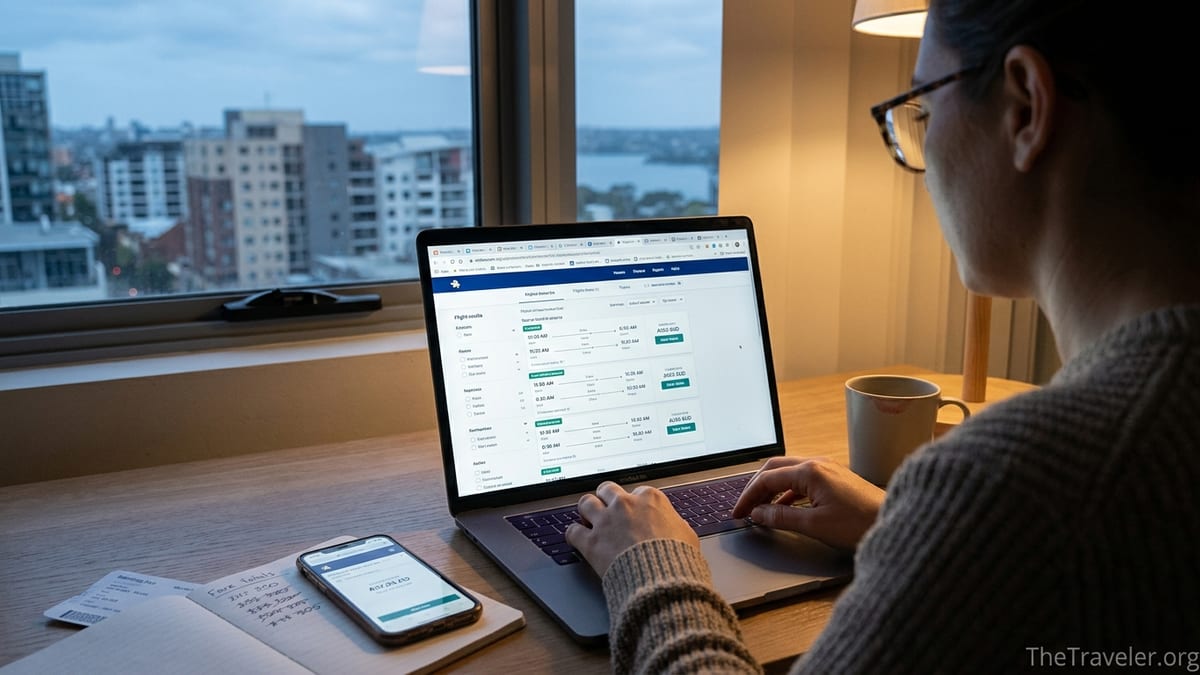
The Moment I Realised Webjet Prices Never Sit Still
My wake-up call came planning a family trip from Sydney to Queenstown for the July school holidays. I pulled up Webjet on a Tuesday evening and saw a return fare on a major Australian carrier for around 780 Australian dollars per person, including taxes, leaving in mid-July and returning 10 days later. I clicked through to check baggage details, went back to adjust dates by one day, and suddenly the same flights were priced at about 920 dollars. Nothing about the itinerary had meaningfully changed, yet the total for four people was now roughly 560 dollars more than the figure I had written down five minutes earlier.
That was not a one-off. Over the following months, I saw a Brisbane to Tokyo fare swing between roughly 980 and 1,250 Australian dollars on Webjet within a single day, and a Melbourne to Perth return climb from about 340 to over 500 dollars over the course of a week as the departure date approached. These numbers were not mistakes on my spreadsheet. They were the normal ebb and flow of modern airfare pricing, just far more visible on a comparison site I happened to be watching closely.
Once I started tracking these changes deliberately, I realised that what feels like wild volatility is actually a glimpse into how airlines and booking platforms constantly recalibrate prices behind the scenes. Webjet is not unique in showing these swings, but because it aggregates multiple airlines and fare types at once, the shifts can seem especially dramatic when you are trying to lock in a trip.
Why Webjet Prices Move So Quickly In The First Place
The core reason Webjet prices move so quickly is that they are directly tied to airline inventory systems that change fares in near real time. Airlines divide each flight into fare buckets, each with a specific price and set of conditions. When a fare bucket sells out, the system automatically offers the next, more expensive tier instead. A booking platform like Webjet simply reflects whatever the airline is offering at that moment, often across several carriers at once, which is why a single search can show a 20 or 30 percent spread between similar itineraries.
Industry analyses published in 2025 and 2026 suggest that on many routes the difference between the lowest and highest fare offered for the same economy seat over a full booking cycle can easily reach 20 to 60 percent. That lines up with what I saw on Webjet searching popular routes such as Sydney to Singapore or Melbourne to Los Angeles several weeks in a row. On a Sydney to Singapore trip I tracked for August travel, the cheapest economy return hovered around 720 to 760 Australian dollars early on, then climbed past 900 dollars as the departure month approached, even though flight times and airlines in the search results hardly changed.
Timing also plays a major role. Data from airfare analysts in North America and Europe continues to show that there is usually an optimal booking window, often around three to six weeks before departure for many domestic routes and a bit longer for long-haul international flights. Prices may dip when airlines run sales or if initial demand is softer than expected, but as planes fill, the systems tilt towards higher fares. When you search on Webjet repeatedly during this window, you are essentially peeking into that optimisation process in motion, watching seats move from cheaper to more expensive buckets.
The Extra Layer: Fees, Service Charges And Final Totals
Another reason Webjet prices can feel like they are jumping around is that what looks like a simple fare difference is Webjet’s servicing and Booking Price Guarantee, charged once per booking at a flat rate, regardless of the number of seats purchased. In late 2024, Australia’s consumer regulator took Webjet to court alleging that the company had advertised airfares that excluded compulsory service fees and booking guarantee charges. Webjet has since said it has improved its disclosures, but the episode highlighted how easily a headline fare can diverge from the amount you actually pay. Webjet has since said it has improved its disclosures, but the episode highlighted how easily a headline fare can diverge from the amount you actually pay.
In practice this means you might see, for example, a Brisbane to Auckland return displayed at around 520 dollars on the search results page, only to find that the total nudges closer to 540 to 560 dollars once Webjet’s own service fees and optional protections are included. If you are comparing that against an airline’s own website on another tab, which might show a larger fare upfront but fewer third-party charges at checkout, the real difference can be much smaller than the initial search suggests.
If you go back to tweak dates or swap to a slightly later return flight, Webjet refreshes the entire fare set. By then some cheaper airline buckets may have disappeared, so the system combines higher base fares with the same fixed fees, and the jump can feel like the platform has changed its mind about how much your trip should cost.
This layering of costs becomes especially noticeable when booking for several people. A seemingly modest 40 dollar per booking service fee quickly adds 160 dollars to the bill for a family of four. If you go back to tweak dates or swap to a slightly later return flight, Webjet refreshes the entire fare set. By then some cheaper airline buckets may have disappeared, so the system combines higher base fares with the same fixed fees, and the jump can feel like the platform has changed its mind about how much your trip should cost.
Real-World Examples Of Webjet Price Swings
To test whether my experience was typical or just bad luck, I ran a few structured experiments on Webjet over recent months, focusing on busy leisure routes from Australian cities. One example was a Melbourne to Gold Coast weekend trip in late September. On a Monday morning search, the cheapest direct return I could see on Webjet for a Friday to Sunday weekend sat around 310 Australian dollars. By that evening, the very same flight number had risen to approximately 360 dollars. Two days later, it briefly dipped back towards 330 before climbing above 400 by the end of the week.
I saw a similar pattern on an Adelaide to Bali itinerary for school holidays. Six weeks before departure, Webjet surfaced multiple options around 890 to 930 dollars return on full-service and low-cost carriers combined. Three weeks out, the least expensive reasonable connection was roughly 1,050 dollars, with more desirable times closer to 1,200. A week later, after a low-cost carrier launched a short sale on outbound sectors, Webjet briefly showed one itinerary under 900 dollars again, but the fare disappeared within hours as seats sold.
Looking beyond Australia, price trackers and travel blogs in early 2026 have documented equally sharp movements in other markets. On popular US routes, for instance, analysts describe cases where a New York to Los Angeles economy fare can move by 100 to 150 US dollars within a day, particularly within a few weeks of departure. When those changes are funnelled through an aggregator like Webjet that pulls from multiple airlines and booking systems, they appear to the customer as an unpredictable series of jumps rather than a smooth trend line.
How Dynamic Pricing And Competition Play Out On Webjet
The volatility you see on Webjet is not random. It is a direct result of dynamic pricing strategies designed by airlines and, to a lesser extent, by intermediaries. Airlines feed years of historical booking data, seasonality trends and live demand signals into revenue management software that constantly tweaks fares. If an evening flight from Sydney to Melbourne is selling faster than expected for a particular Thursday, the price may rise substantially by the afternoon, while an early morning departure the same day might stay flat or even drop a little if seats are not moving.
Competition between airlines amplifies this. Several detailed breakdowns of fare differences across booking sites published in 2025 and 2026 note that websites do not all receive updated prices from airlines at precisely the same moment. One platform may still be displaying a lower fare that has just been increased elsewhere, creating a short-lived arbitrage opportunity for flexible travellers. On Webjet, that can mean seeing one carrier stubbornly sitting at around 650 dollars for a Sydney to Fiji return while another drops to the low 500s for similar dates after a brief promotion. A few hours later, the positions may reverse.
Currency fluctuations also matter, especially for foreign airlines selling in Australian dollars. If the Australian dollar weakens against the US dollar or euro, international fares can creep higher in local currency terms even without any change in the underlying base fare. Because Webjet prices tickets in Australian dollars for its core markets, these shifts can show up as slightly higher totals from one day to the next on long-haul routes such as Melbourne to Dubai or Brisbane to Vancouver, even when everything else appears identical.
Strategies I Use Now When Booking Through Webjet
After a year of watching Webjet price movements closely, I have changed how I use the platform. Rather than falling in love with a single itinerary and watching its fare like a hawk, I treat Webjet as a scouting tool. I will typically start by running a broad search over a range of dates, noting the rough band of prices for my route. For a Sydney to Tokyo trip, for example, I might see economy returns clustering between 1,100 and 1,400 dollars over a two month window. That tells me what counts as a fair deal before I get emotionally attached to any one option.
Once I have that baseline, I set price alerts or reminders with one or two other services that specialise in tracking specific flights. When Webjet surfaces an itinerary I like at the lower end of the band, I check how it compares to booking directly with the airline. If the difference is small once all fees are included, I usually prefer to book with the carrier for easier changes later, particularly on international trips where schedule changes are common. If Webjet is showing a noticeably better price, I move quickly rather than assuming it will still be there tomorrow.
I also pay much closer attention to total trip cost instead of headline fares. On a recent Melbourne to Singapore trip, Webjet’s cheapest option looked about 70 dollars lower than the airline’s own site at first glance. By the time service fees and baggage were factored in, the difference had shrunk to around 20 dollars. In another case, booking a Perth to Sydney return for two passengers, Webjet’s bundle that included a booking price guarantee and customer support was 21.95 dollars more than booking direct, but the bundled protection made sense for a work-related trip where flexibility mattered more than shaving every last dollar.
Common Myths About Flight Prices When Using Webjet
Spending time with Webjet’s constantly moving numbers also forced me to reconsider some persistent myths about how flight pricing works. One common belief is that clearing cookies or switching devices will magically produce lower fares. Recent explanations from airline pricing experts and travel data firms suggest that while prices may appear to change between searches, the underlying cause is far more often related to inventory shifts and time elapsed than to the platform targeting you individually for higher fares. I have seen fares go down after restarting a browser, but I have also watched them rise steadily while using a private window, which undercuts the idea that cookies are the main culprit.
Another myth is that there is a single cheapest day of the week to book, often repeated as Tuesday. Modern analyses of large booking datasets show that, in today’s dynamic pricing environment, the day you click “buy” matters far less than how far in advance you book and how flexible you are with travel dates. Webjet’s own search patterns support this. I have found genuinely lower fares on a Sunday night for some routes and higher ones on a Tuesday afternoon for others. The system cares much more about the remaining time until departure, current demand and the competitive landscape than it does about the name of the day on the calendar.
Finally, it is easy to assume that every price jump on Webjet is a glitch or a deliberate attempt to push you into paying more. Regulatory actions, such as the Australian consumer authority’s case over Webjet’s historical fee disclosures, show that watchdogs do step in when advertising crosses the line into being misleading. At the same time, a significant portion of the volatility you see when refreshing Webjet results is simply a side effect of airlines adjusting prices to match demand, and of multiple systems trying to talk to each other in real time.
The Takeaway
My biggest surprise about using Webjet was discovering not just that prices could change, but how much of that movement is baked into the modern airfare system. Watching fares jump by dozens or even hundreds of dollars while planning trips from Australian cities to popular holiday destinations forced me to abandon the comforting idea that there is a stable, “true” price waiting to be uncovered if I just search long enough.
Instead, I have come to see Webjet as a fast-moving snapshot of a marketplace where airlines, currencies and competitors are constantly in flux. That does not mean travellers are powerless. By understanding how dynamic pricing works, paying attention to total costs rather than headline fares and treating Webjet as one of several tools rather than the sole authority, you can still land reasonable deals more often than not.
The volatility can feel unnerving, especially when you watch a family holiday climb by hundreds of dollars in a single evening. Yet once you accept that change is the rule rather than the exception, those swings become signals rather than personal affronts. Webjet’s greatest shock to me was its instability, but learning to read that instability has ultimately made me a more informed and resilient traveller.
FAQ
Q1. Why do Webjet prices change between searches on the same day?
They track live airline inventory and fare buckets. As seats sell, airlines move to higher priced tiers, and Webjet simply reflects those updates when you refresh.
Q2. Is Webjet more expensive than booking directly with the airline?
Sometimes it is and sometimes it is not. Webjet may show cheaper base fares on certain routes, but service fees and extras can narrow or erase the difference when you reach checkout.
Q3. Can I hold a fare on Webjet so it does not change while I decide?
Webjet does not generally offer long free holds like some airlines. Prices are not guaranteed until payment is processed, so delays can mean losing a lower fare.
Q4. Do Webjet prices go up if I search the same route repeatedly?
There is little evidence that repeated searching alone raises prices. More often, changes are driven by time, demand and airline inventory rather than your individual browsing history.
Q5. When is the best time to book flights I find on Webjet?
For many routes, booking several weeks to a few months before departure tends to be better than last minute. Once you see a fare at the lower end of the usual range, it is wise to book.
Q6. Why is the final price on Webjet higher than the first fare I see?
Initial results may not include all service fees, payment charges or optional protections. These are added later in the booking flow, so the total can end up higher than the headline fare.
Q7. Are Webjet prices the same as on other comparison sites?
Not always. Different sites receive updates on slightly different schedules and may have distinct fee structures, so you can see minor or even significant differences for the same flights.
Q8. Can Webjet prices ever go down after I book?
Yes, fares can drop later. Some airlines allow you to cancel within 24 hours or rebook with a credit for the difference, but policies vary and Webjet’s role is limited once the ticket is issued.
Q9. How can I protect myself from sudden price jumps on Webjet?
Search early, compare across a few sites, focus on total cost, and be ready to buy when you spot a fare that looks good for your route and dates instead of waiting for a perfect price.
Q10. Does Webjet control the airfare itself or only the extra fees?
Airlines control the base airfares. Webjet can add its own service and booking-related fees, but it does not set the underlying ticket prices for the flights it lists.