


More news on this day
American Airlines is preparing to reverse a years-long strategy of relying primarily on passengers’ personal devices for entertainment, with plans emerging to install modern seat-back screens across its domestic narrowbody fleet in the coming years.
Get the latest news straight to your inbox!
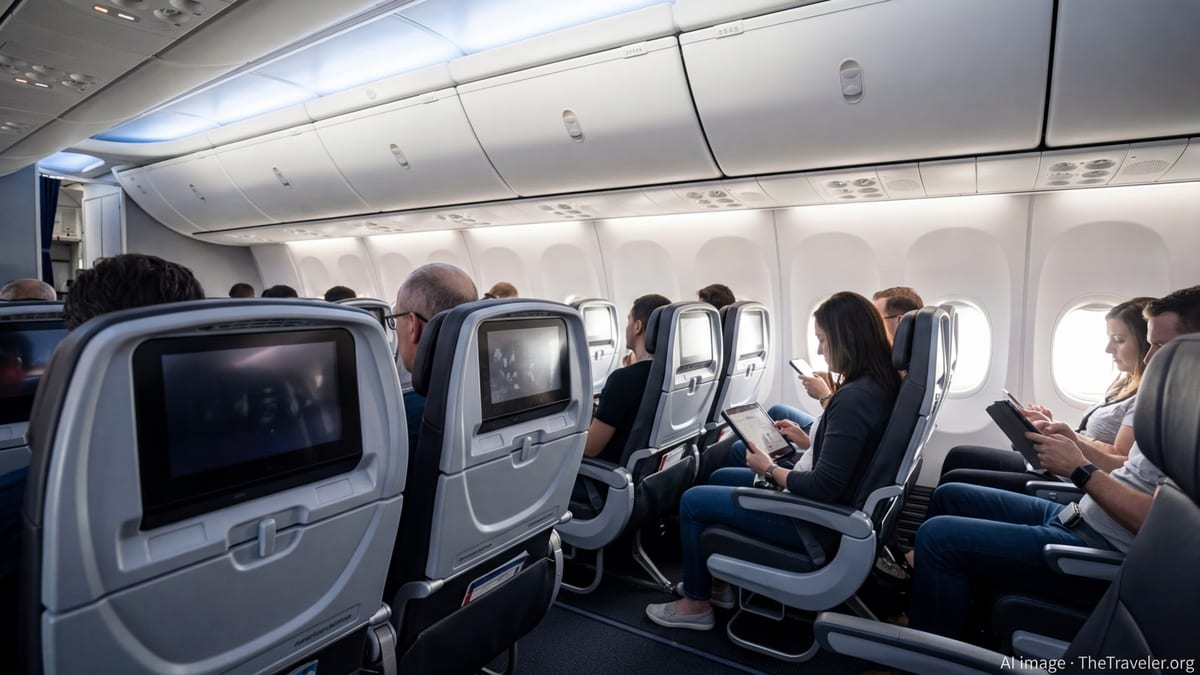
A shift from bring-your-own-device to built-in screens
The move represents a significant change for American, which spent much of the last decade removing many legacy screens from its single-aisle aircraft while promoting wireless streaming to phones, tablets and laptops. Industry coverage in recent years has consistently described American as an outlier among the largest U.S. network carriers, maintaining a largely screen-free narrowbody fleet even as rivals doubled down on in-seat entertainment.
New information circulating among aviation watchers and in public investor materials points to a phased reintroduction of embedded entertainment that will begin with upcoming aircraft deliveries and ultimately extend to existing workhorse models such as the Boeing 737 and Airbus A321. Reports indicate that the carrier’s latest narrowbody cabin plans call for large 4K seat-back displays at every seat, paired with Bluetooth connectivity and personal power.
While the airline has not issued a detailed public retrofit schedule, documents and brief references in recent corporate communications connect the screen rollout to a wider, multi-year modernization effort that also includes new premium seating products, upgraded connectivity and refreshed cabin interiors.
How the new narrowbody cabins are expected to look
According to publicly available descriptions of American’s next-generation cabins, the new narrowbody interiors are being designed around a common technology platform intended to appear across both long-haul and high-value domestic routes. Main cabin passengers are expected to see large-format 4K seat-back screens at every seat, USB-C and traditional power outlets, and support for wireless headphones via Bluetooth pairing.
In premium cabins on certain Airbus A321 variants and Boeing 787-9 aircraft, American has already highlighted forthcoming Flagship Suite seating with privacy doors and personal screens built into each suite. Industry analysis suggests that the same in-seat entertainment architecture will form the basis of the new narrowbody experience, with a consistent look and feel throughout the fleet once retrofits and new deliveries mature.
Design details published in trade coverage of American’s Airbus A321XLR interior show how the airline is blending cabin finishes, lighting and technology into a unified layout. That aircraft, intended for longer transatlantic and premium domestic routes, is seen by analysts as a template for what American plans to bring to more traditional domestic narrowbody flying later in the decade.
Connectivity upgrades set the stage
The pivot back to seat-back screens comes alongside a broad upgrade of American’s connectivity and entertainment platform. In 2024, the airline outlined a series of enhancements built around satellite-based Wi-Fi, expanded content libraries and the ability for customers to redeem loyalty miles for inflight internet access on Viasat-equipped narrowbody aircraft.
More recently, American announced plans to install a new high-speed connectivity solution across hundreds of narrowbody jets, targeting the second half of the decade for large-scale deployment. Public materials describing that initiative emphasize fast, gate-to-gate connectivity and a vision of aircraft as fully connected spaces, supporting both traditional entertainment and streaming to personal devices.
Analysts note that pairing high-bandwidth connectivity with modern seat-back screens gives airlines more flexibility in how they deliver content, from preloaded movies and television to streamed options and live programming. For passengers, the combination can reduce the friction of logging in on personal devices while maintaining the option to multitask across multiple screens.
Competitive pressure in the U.S. market
American’s move is widely seen as a response to competitive pressure from other major U.S. carriers that have invested heavily in in-seat entertainment. Delta Air Lines has promoted seat-back screens as a core element of its brand, equipping the majority of its mainline fleet with individual displays. United Airlines has likewise committed to installing screens on nearly all mainline narrowbody aircraft as part of its ongoing interior retrofit program.
Consumer-focused travel coverage frequently ranks carriers with seat-back screens higher for passenger comfort and overall experience, particularly on longer domestic segments where device fatigue can set in. Commentators have also pointed out that screens make it easier for families and less tech-savvy travelers to access entertainment, without relying on charged devices or downloaded apps.
By signaling a return to embedded entertainment, American appears to be closing a perceived product gap in the eyes of many travelers, including frequent flyers who have compared the airline unfavorably with competitors on cabin amenities. The strategy may also support American’s efforts to attract higher-yield customers on key business and leisure routes where product differentiation is most visible.
Timeline and questions that remain
Although references to a fleet-wide rollout of seat-back screens have surfaced in online forums and aviation circles, many operational details remain to be clarified in public-facing materials. Industry observers are watching for a formal timeline outlining which aircraft types will be equipped first, how retrofits will be scheduled across existing Boeing 737 and Airbus A321 fleets, and whether any older models will receive the new product at all.
There are also open questions about how American will balance cabin density with new hardware, particularly on aircraft that previously saw seats added when older entertainment systems were removed. Any change that affects seating capacity, weight or power requirements carries implications for operating costs and route planning, topics that analysts will scrutinize as more information becomes available.
For now, the emerging picture suggests that American is aligning its narrowbody offering with a broader industry trend toward fully connected cabins that combine fast Wi-Fi with high-resolution seat-back screens. As new aircraft enter service and retrofit programs begin, travelers on some of the busiest U.S. routes are likely to be among the first to see whether the carrier’s renewed focus on in-seat entertainment delivers a noticeable upgrade to the onboard experience.