


More news on this day
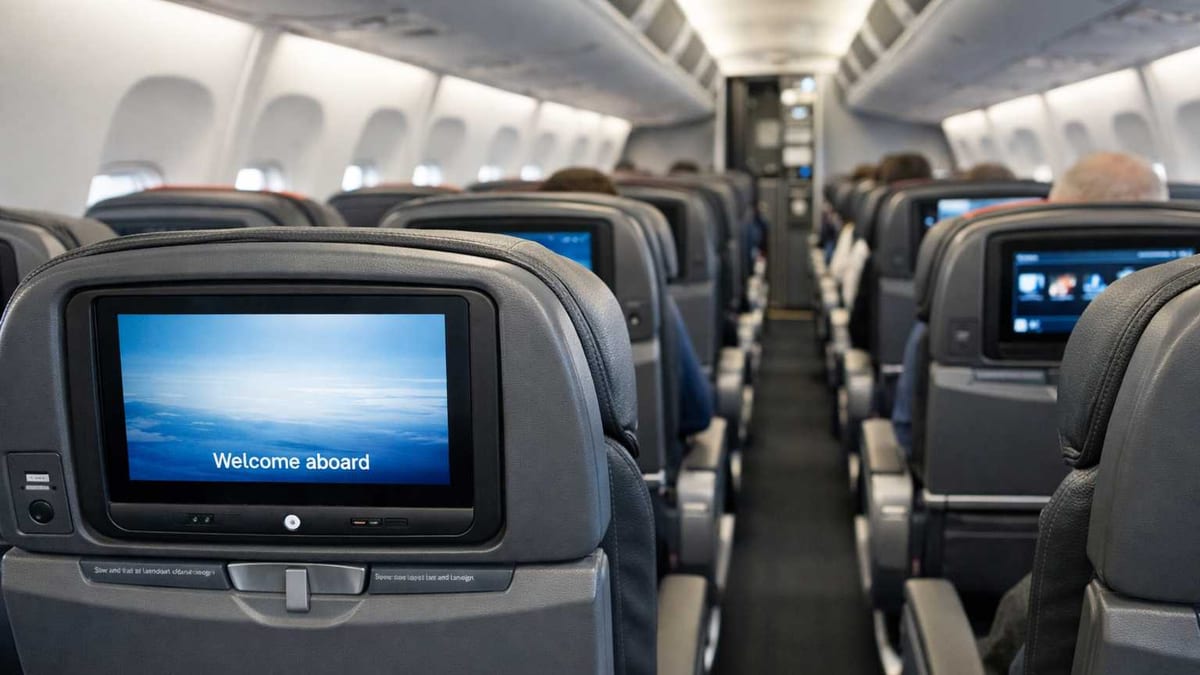
American Airlines has outlined a sweeping refresh of its domestic narrowbody fleet, committing to install seatback entertainment screens at every seat while significantly increasing the number of premium seats on key Airbus and Boeing single aisle aircraft.
Get the latest news straight to your inbox!
Reversal of a No Screens Strategy
The new initiative marks a sharp turn from the carrier’s previous strategy of removing most seatback screens from domestic narrowbody aircraft in favor of streaming to personal devices. Publicly available fleet information shows that, outside of a small number of older Airbus A319s, recent years have seen American focus its investments on high speed Wi Fi and wireless entertainment rather than built in displays.
Under the newly signaled plan, American is preparing to standardize modern seatback entertainment across its future narrowbody fleet. Information shared in recent communications and investor materials indicates that beginning with new deliveries and a structured retrofit program, the airline intends to introduce 4K capable displays with Bluetooth audio connectivity and in seat power at every seat. The move is designed to bring the onboard product more closely in line with competitors that already emphasize integrated screens on domestic routes.
Industry analysis suggests the shift reflects both changing customer expectations and competitive pressure. While the airline has long argued that most travelers prefer their own devices, surveys and frequent flyer commentary have consistently highlighted the convenience of built in screens, particularly on longer flights and for families traveling together.
Seatback Screens Across the Narrowbody Fleet
The transformation will center on American’s workhorse narrowbody jets, including Boeing 737 variants and Airbus A321 and A320 family aircraft that operate the bulk of the airline’s domestic and short haul international network. According to recent descriptions of the program, all new single aisle deliveries from Airbus and Boeing will arrive from the factory with the latest generation of seatback entertainment already installed.
For existing aircraft, the airline is planning a phased retrofit that aligns with scheduled heavy maintenance checks, a process that typically spans several years. Reports indicate that the project will extend into the next decade, with the goal of offering a consistent experience regardless of aircraft type or route. Customers will see layouts that combine the new 4K seatback screens with USB C and AC power and holders for personal devices, creating a hybrid setup tailored to different traveler preferences.
The new hardware approach builds on American’s recent enhancements to inflight connectivity and content. The carrier has been expanding high speed satellite Wi Fi coverage and has introduced options to redeem loyalty miles for onboard internet access, while promoting a library of roughly 1,500 entertainment titles available across its network. With embedded screens returning to domestic cabins, that catalog will increasingly be presented through a familiar, seatback interface alongside wireless streaming.
More First Class and Extra Legroom Seats
In parallel with the technology upgrade, American is accelerating a broader premiumization strategy across its fleet. Recent fleet updates and refurbishment announcements describe a sustained push to add more First Class and extra legroom Main Cabin Extra seats to narrowbody aircraft, reflecting strong demand for higher yielding cabins on busy domestic and regional routes.
Retrofitted Airbus A319 and A320 aircraft are at the forefront of this shift. Publicly available details show that these jets are emerging from interior updates with additional premium seats, redesigned front cabin chairs featuring more privacy and storage, and refreshed finishes throughout the cabin. The layouts retain Main Cabin capacity while carving out a larger footprint for those willing to pay for more space and comfort.
Planned future deliveries, such as higher capacity variants in the Boeing 737 MAX family and Airbus A321neo models, are also expected to feature expanded First Class cabins. Industry reporting indicates that these aircraft will be configured with notably more premium seats than the narrowbody layouts American operated a decade ago, positioning the airline to capture more revenue from corporate travelers and high status frequent flyers.
Aligning Domestic Cabins With a Premium Brand Push
The narrowbody refresh dovetails with a wider effort by American to reposition itself as a more consistently premium carrier across both long haul and short haul networks. In recent years, the airline has unveiled new long haul Flagship Suite business class seating, enhanced premium economy cabins, and upgraded amenity kits and dining on key international and transcontinental routes.
By extending that focus to the high frequency domestic network through improved seats and entertainment, the airline aims to close the perceived gap between its flagship products and everyday flights. Analysts note that for many travelers, especially those flying for business within the United States, the experience on narrowbody aircraft is their primary point of contact with the brand.
Bringing back seatback screens, pairing them with reliable high speed connectivity, and offering more opportunities to book or upgrade into premium seating could therefore have an outsized impact on customer perception. The evolution of American’s domestic cabins will be closely watched by travelers and competitors alike as the retrofit program rolls out over the next several years.
What Travelers Can Expect in the Coming Years
For passengers, the most visible changes will arrive gradually as more aircraft complete interior work or join the fleet. Travelers can expect to see brighter, larger seatback displays loaded with a broader selection of movies, television shows, and curated channels, along with intuitive menus and the ability to pair personal Bluetooth headphones instead of relying on wired audio.
Those seated in the forward cabin and extra legroom rows will find more options to secure a premium seat on domestic and short haul international routes. Ongoing schedule and fleet updates suggest that routes linking major hubs, key business centers, and popular leisure destinations will be early beneficiaries of aircraft with the new interiors, as American prioritizes markets where demand for premium seating is strongest.
As the project scales up, the airline’s domestic narrowbody operations are set to look and feel markedly different from the stripped down cabins that characterized much of the past decade. If the program progresses as outlined in public materials, travelers boarding an American single aisle jet later this decade are increasingly likely to find a cabin defined by more screens, more power outlets, and more premium seats than ever before.