


More news on this day
Japan’s Narita International Airport has reclaimed the title of world’s best airport for staff service in the 2026 World Airport Awards, overtaking South Korea’s Incheon International Airport and intensifying competition for global airlines and tourism flows across Northeast Asia.
Get the latest news straight to your inbox!
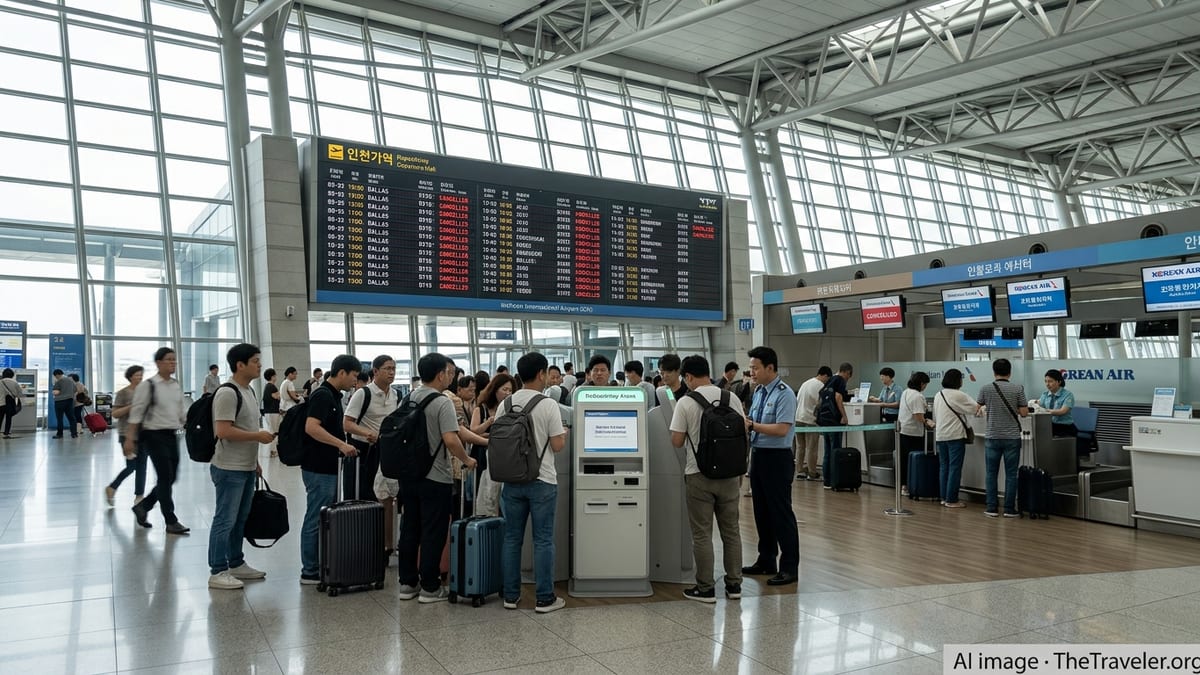
A Shift at the Top of Airport Service Rankings
The latest World Airport Awards, compiled by UK-based aviation rating firm Skytrax, rank Narita as the world’s best airport for staff service in 2026. Publicly available information shows that Narita’s victory comes just one year after Incheon was named the leading airport for staff service in 2025, underlining how closely contested the category has become between the two regional hubs.
According to published coverage and Narita’s own corporate announcements, the award reflects passenger evaluations of front-line staff across check in, security, immigration, retail and information counters. Criteria emphasize attitude, friendliness, efficiency and multilingual support, turning the category into a barometer of how well airports handle surging post-pandemic traffic while maintaining service quality.
Skytrax’s results indicate that Narita’s 2026 win builds on a strong recent record. The Chiba-prefecture hub has now taken the top airport staff award three times, including 2019 and 2024, and has also secured a 5-Star Airport rating in the organization’s separate quality audit program. The latest recognition signals that its investments in service, wayfinding and facilities are resonating with international travelers.
For Incheon, which held the staff service crown in 2025 and continues to earn high marks in other award categories, the shift underscores how incremental changes in queue management, staffing and passenger experience can quickly influence global rankings. The reversal highlights how fluid the competitive landscape remains among leading Asian hub airports.
How Narita Pulled Ahead on Service
Narita’s climb back to the top is closely linked to a focus on staff professionalism and consistency across the airport campus. Public information from the airport operator points to coordinated training programs, multilingual support and closer collaboration with airlines and concessionaires as key components of its service strategy.
Enhancements in terminal wayfinding, digital information and accessibility have also supported staff efforts. Updates to Narita’s website, expanded cultural events, and upgrades to restrooms and customer facilities have been highlighted in recent communications as areas where improvements were designed to reduce stress points for travelers and give staff more time to focus on direct assistance.
The recognition comes as Narita continues to reposition itself in Japan’s airport network. While Tokyo’s Haneda Airport captures much of the domestic and short-haul traffic because of its proximity to central Tokyo, Narita remains a vital international gateway for long-haul operations and low-cost carriers. Strong service scores can help offset the longer travel time into the city by reinforcing Narita’s reputation for reliability and passenger care.
Industry observers note that in an era of packed terminals and volatile travel demand, airports that manage to keep staff visible, responsive and empowered to solve problems tend to perform well in customer satisfaction surveys. Narita’s latest award suggests that its approach to service culture and continuous improvement is paying measurable dividends.
Implications for Global Airlines Using Narita
The shift in rankings carries direct implications for airlines that operate major networks through Narita. Carriers increasingly use third-party ratings as part of their own marketing and route planning, and strong airport staff scores can enhance the appeal of a hub when airlines compete for connecting traffic and premium passengers.
For full-service airlines based in Japan and their alliance partners, Narita’s top staff ranking offers an additional selling point for itineraries that route through the airport instead of other regional hubs. Travelers booking long-haul journeys with tight connections may weigh perceived service reliability and assistance for missed connections alongside schedules and fares.
Low-cost and hybrid carriers based at Narita also stand to benefit. While these airlines typically compete on price, many now promote smoother ground handling and easier transfers as a differentiator. Operating from an airport recognized for superior staff service reinforces messages about hassle-free travel, particularly for first-time visitors to Japan navigating complex rail links and immigration procedures.
Airlines considering future capacity allocations may view Narita’s service reputation as a factor when deciding where to add frequencies or launch new routes. Although slot availability, operating costs and bilateral air service agreements remain central considerations, an award-winning ground experience can support the commercial case for concentrating traffic at a particular hub.
Competitive Pressure on Incheon and Regional Hubs
Incheon’s loss of the top staff service title to Narita introduces new pressure on South Korea’s main gateway at a time when it is handling record passenger volumes. Public reports indicate that the airport processed more than 70 million passengers in 2025, straining security checkpoints and front-line staff in peak periods.
Discussion in regional industry media has pointed to staffing challenges and longer queues in recent years, particularly at security screening and immigration. While Incheon continues to score strongly in overall quality and infrastructure rankings, minor declines in perceived staff responsiveness or waiting times can influence survey-based awards when competition is tight.
The new ranking is also a signal to other Asian hubs including Singapore Changi, Tokyo Haneda and Hong Kong International that the staff service category is far from settled. As travel in Asia Pacific returns to or exceeds pre-pandemic levels, travelers are becoming more vocal about service lapses, and airports risk reputational damage if expansion fails to keep up with growth.
For Incheon, responding to Narita’s latest win may involve accelerating recruitment, improving queue management technology and refining staff deployment strategies at high-pressure touchpoints. Transparent communication about improvement plans and progress can also help reassure passengers as the airport navigates the current demand cycle.
What It Means for Tourism and Travelers
Narita’s renewed status as the world’s best airport for staff service comes at a pivotal moment for Japan’s tourism sector. International arrivals to Japan have been trending toward record levels, supported by a weaker yen, expanded air capacity and growing interest in regional and rural destinations beyond Tokyo and Kyoto.
Award recognition helps shape traveler expectations at the very first and last stages of a trip. For many visitors, their encounter with staff at Narita forms their initial in-person interaction in Japan, influencing perceptions of hospitality, efficiency and safety. A positive ground experience can encourage repeat visits and word-of-mouth recommendations that benefit the broader tourism economy.
Travel planners and tour operators may also use Narita’s ranking as a marketing tool when designing packages. Itineraries routed through an airport known for attentive staff and smoother transfers can be positioned as less stressful, which is particularly attractive to family, senior and first-time long-haul travelers.
For individual passengers, the practical impact is likely to be felt in shorter perceived waiting times, easier access to information, greater language support and more proactive assistance during disruptions. While awards alone do not guarantee perfect trips, the 2026 results suggest that travelers transiting through Narita can expect a high standard of front-line service compared with many global peers.
As international travel continues to rebound, the competition between Narita and Incheon for service leadership highlights a broader shift in what makes an airport successful. Beyond runways and retail, the quality of human interaction at every step of the journey is becoming a decisive factor in where airlines choose to hub and where travelers choose to connect.