


More news on this day
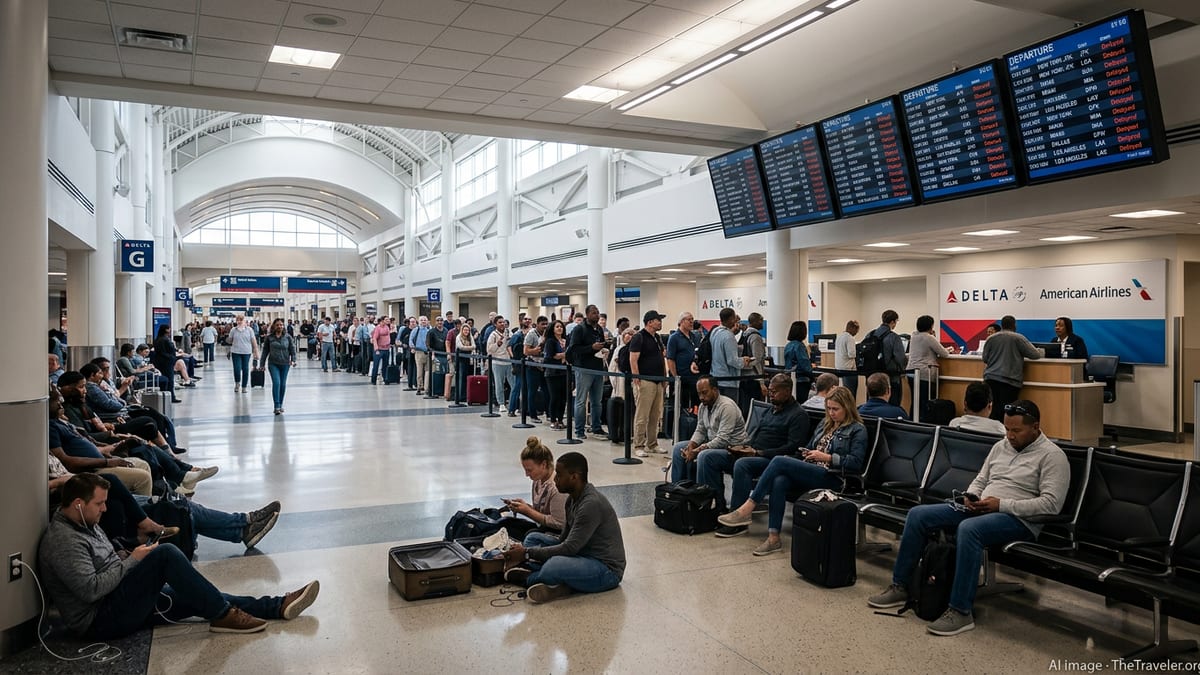
Hundreds of passengers at Nashville International Airport are facing major disruption after 15 flights were canceled and more than 120 delayed, snarling operations for carriers including Endeavor Air, Republic Airways, PSA Airlines and JetBlue.
Get the latest news straight to your inbox!
Operational Snarl Hits Regional and Low-Cost Carriers
Flight status data for Nashville on July 7 indicates that at least 15 departures and arrivals were canceled and roughly 124 delayed, affecting a mix of regional and low-cost operators. The bulk of the disruption has fallen on carriers that operate feeder services for the country’s largest airlines, along with point-to-point routes run by JetBlue and other low-cost competitors.
Regional affiliates such as Endeavor Air, Republic Airways and PSA Airlines operate many of Nashville’s short-haul connections on behalf of major brands serving hubs in Atlanta, Detroit, Charlotte and Washington. When schedules tighten or capacity is constrained, these high-frequency links are often among the first to feel the impact as airlines juggle aircraft and crews.
Publicly available tracking data shows that delays have been concentrated during peak morning and late-afternoon departure banks, when aircraft and crew rotations are already under pressure. Even modest schedule disruptions at these times can cascade throughout the day, producing rolling delays that ultimately leave travelers stranded well into the evening.
JetBlue, which serves Nashville from key East Coast markets, has also seen its operations affected. Longer-haul services are particularly vulnerable when departure slots are pushed back, since late arrivals can cause missed onward connections and force some passengers to rebook for next-day flights.
Weather, Airspace Constraints and Staffing Pressures Intersect
Reports from aviation data providers and recent disruption patterns at Nashville suggest the current wave of cancellations and delays is likely tied to a combination of unsettled weather, en route airspace constraints and ongoing staffing challenges in parts of the U.S. aviation system. Summer thunderstorm activity across the Southeast and Mid-Atlantic frequently triggers ground delay programs that ripple across regional networks.
When convective weather cells move through key hubs or busy air corridors, air traffic managers often slow the rate of arrivals and departures to maintain safety. This can force airlines to hold departures on the ground, reroute flights around storms or sequence aircraft into longer holding patterns, all of which contribute to downstream delays at airports such as Nashville.
At the same time, regional carriers continue to manage tight pilot and crew availability following several years of industry-wide labor shortages. Even temporary mismatches between crew schedules and aircraft availability can complicate recovery once an initial round of weather or airspace disruptions has passed, particularly for smaller operators with limited spare capacity.
Operational data released in recent months shows that regional airlines, including Endeavor Air, Republic Airways and PSA Airlines, typically maintain on-time performance that is comparable to or better than some larger carriers. However, their role as contract operators often means that disruptions at a mainline partner’s hub or along a shared route structure can quickly cascade into their own schedules.
Hundreds Face Missed Connections and Overnight Stays
The immediate impact for travelers in Nashville has been a wave of missed connections, long hours in terminal waiting areas and, for some, the need to secure overnight accommodation at short notice. With 15 flights canceled outright, passengers on those services have had to be rebooked onto later departures, often competing for limited remaining seats on already busy summer flights.
Delays affecting 124 additional flights have created further complications, especially for travelers relying on tight connection windows to reach secondary cities served primarily by regional aircraft. When a single inbound flight arrives late, passengers may discover that their onward regional connection has already departed or has been canceled due to crew timing limits.
Airlines generally attempt to prioritize same-day rebooking, but high seasonal demand and constrained capacity across the domestic network can leave some travelers facing departures the following day. In these circumstances, passengers may find themselves negotiating meal vouchers, hotel arrangements and ground transport while monitoring shifting departure times on airport display boards.
Families traveling with children, as well as those with time-sensitive commitments such as weddings, business meetings or international connections, are among the groups most affected by the disruption. Many have had to rapidly rearrange ground transport, extend car rentals or notify contacts at their destinations about unexpected changes in arrival times.
What Travelers Can Do When Disruptions Hit
Consumer advocates note that passengers caught in large-scale disruption events have a better chance of securing timely assistance when they act quickly and make use of multiple communication channels. Rebooking through airline apps or websites, where possible, can often be faster than waiting in line at an airport service desk when hundreds of travelers are seeking help at the same time.
Travelers are also encouraged to check the status of both their departure and arrival airports, since delays at one end of a route can signal problems that may not yet be reflected in local departure boards. If an aircraft operating an earlier leg of the same route is significantly delayed, passengers on later segments may wish to explore alternative options before seats become scarce.
Those who booked through online travel agencies or corporate travel managers can sometimes benefit from additional support channels for rebooking and itinerary changes. However, passengers remain subject to the operating airline’s policies on refunds, vouchers and accommodation, which differ depending on whether a disruption is classified as within the airline’s control or caused by external factors such as severe weather or air traffic restrictions.
For future trips, travel planners often recommend allowing longer connection times when routing through airports that are prone to summer weather or congestion, and considering travel insurance products that specifically cover missed connections, extended delays and additional lodging expenses. While such measures cannot prevent disruptions, they can soften the financial and logistical impact when airports like Nashville experience days of concentrated cancellations and delays.
Nashville’s Growing Role in a Stressed National Network
Nashville International Airport has grown rapidly in recent years, adding routes from major network carriers and low-cost airlines alike. That expansion has elevated its importance within the national air travel system, turning it into a significant connecting point for passengers traveling between the Midwest, Southeast and East Coast.
With higher traffic volumes, however, come greater operational sensitivities. As more airlines schedule tight turnarounds and high aircraft utilization to meet demand, any disturbance to the flow of arrivals and departures can reverberate across the airport’s increasingly dense timetable. Regional affiliates such as Endeavor Air, Republic Airways and PSA Airlines, as well as carriers like JetBlue, are integral to maintaining that connectivity.
Recent disruption patterns at Nashville illustrate how mid-sized airports can experience strains similar to those seen at the largest U.S. hubs. When schedule buffers are thin, even routine summer storm systems or moderate air traffic restrictions can trigger a rapid build-up of delays and set the stage for cancellations later in the day.
For hundreds of travelers currently caught in the latest wave of flight problems, the statistics translate into missed events, unplanned expenses and disrupted plans. For airlines and airport managers, the episode highlights the ongoing challenge of balancing growth and efficiency with the resilience needed to weather increasingly frequent operational shocks.