


More news on this day
Travel across Kenya slowed sharply on Sunday, August 30, as departing flights from major airports reported growing delays, prompting airlines to reshuffle schedules and passengers to brace for extended waits at terminals.
Get the latest news straight to your inbox!
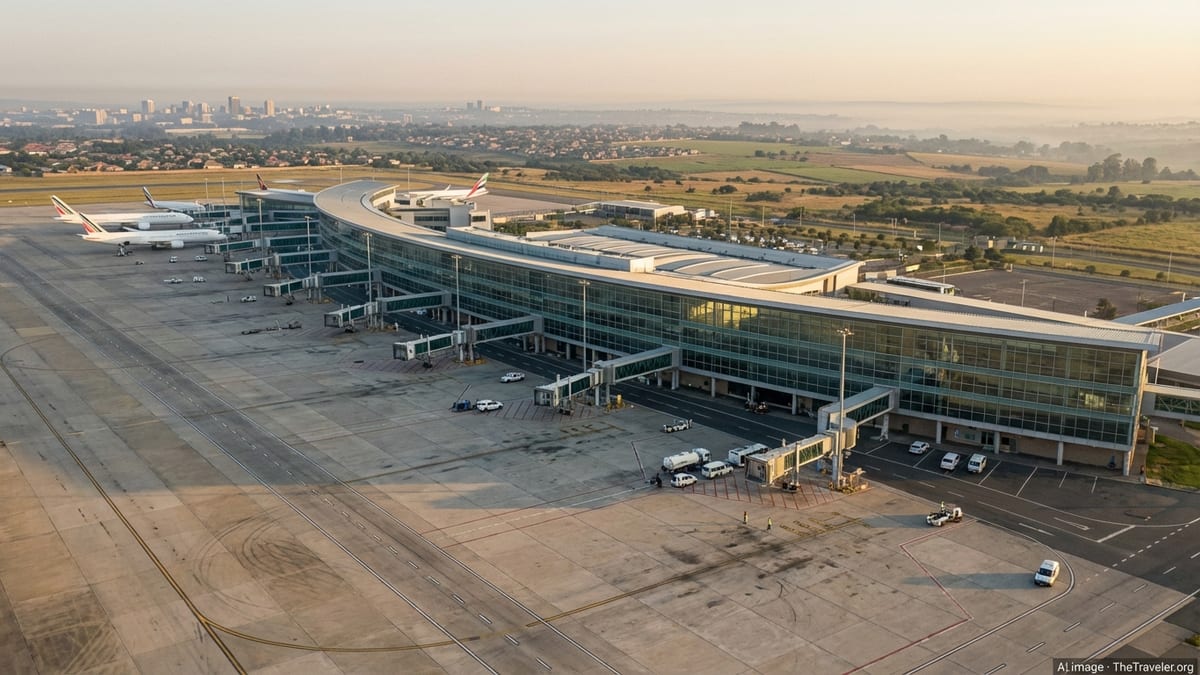
Delays Reported at Multiple Kenyan Gateways
Publicly available information from airport operators in Kenya on August 30 indicates that a number of departing flights were affected by delays, with disruptions reported across several airports rather than confined to a single hub. A notice from the Kenya Airports Authority (KAA) advised travelers that some departures were not running to schedule and encouraged passengers to monitor updates from their airlines before heading to the airport.
The advisory, which referenced “our airports” rather than one specific facility, pointed to a broader operational challenge spanning the national network. Initial reports highlighted Jomo Kenyatta International Airport (JKIA) in Nairobi and other major fields that handle both domestic and regional services, suggesting a knock-on impact along busy corridors linking the capital with Mombasa, Kisumu, Eldoret, and key tourism destinations.
Airport monitoring platforms continued to show services operating on core domestic routes such as Nairobi to Eldoret, but with altered timings and compressed turnarounds in some cases. Scheduled flights on the Nairobi–Eldoret corridor, including Jambojet and Skyward Express services, remained available, yet the wider pattern of delays pointed to uneven operational conditions that left many passengers facing uncertainty at check-in and boarding.
Travelers using Kenyan airports on Sunday encountered the practical effects of these disruptions in crowded departure halls, longer processing times, and the heightened risk of missed onward connections. In several instances, airlines urged customers to arrive early and to rely on digital tools such as mobile apps and websites to confirm departure times before traveling to the airport.
Infrastructure Strains Add Pressure to Busy Hubs
The latest disruption comes as Kenya’s busiest aviation gateways are already operating under significant structural and capacity pressures. Wilson Airport in Nairobi, a critical hub for domestic, tourism, and charter operations, has been navigating a demanding transition following the rehabilitation and staged reopening of its main runway. Reports in recent days describe how night operations on the revamped runway remain restricted pending additional approvals, forcing airlines and charter operators to adjust schedules and route traffic through alternate configurations.
Alongside runway constraints, Wilson Airport is contending with a long-running congestion problem that predates the current delays. An audit highlighted dozens of derelict or abandoned aircraft occupying valuable apron space, constraining parking options for active fleets and limiting the airport’s ability to absorb schedule irregularities. These legacy issues have made it more difficult for operators to respond flexibly when disruption elsewhere in the network pushes more traffic into Nairobi’s airspace.
Regulatory publications and recent commentary from Kenya’s aviation authorities also point to a complex operating environment in which air navigation services, training flights, and commercial movements must compete for finite capacity. Discussions about relocating some aviation schools from Wilson and optimizing airspace management underscore the degree of strain on Nairobi’s twin-airport system, especially during periods of heightened demand or operational stress.
Against this backdrop, even relatively contained delays at major airports can quickly ripple through the network. Domestic carriers that rely on fast turnarounds and precise slot timings are particularly vulnerable when stands, taxiways, or navigation procedures are operating near their limits, magnifying the effect of any slowdown in processing departures.
Knock-on Effects for Domestic and Regional Connectivity
The timing of Sunday’s disruption has significant implications for both domestic travelers and regional connectivity. Weekend flights between Nairobi and secondary cities such as Eldoret, Kisumu, and coastal destinations are typically popular with business commuters and leisure travelers returning ahead of the work week, leaving fewer empty seats available to re-accommodate delayed passengers.
Schedules published for August 30 show multiple non stop services on high-demand routes, including morning and evening departures between Nairobi’s JKIA and Eldoret. While many of these flights remained listed as operating, the broader pattern of delays increased the likelihood of cascading disruptions for travelers with tight connections to regional services, including those continuing on to neighboring countries.
Airlines serving the Kenyan market often operate narrow fleets and tight rotations, which can make rapid recovery from widespread delays more challenging. A late departure early in the day can compress ground times and push subsequent flights off schedule, especially on short domestic sectors where aircraft are planned to complete several legs in quick succession. In such circumstances, even modest operational issues can evolve into a day-long struggle to restore punctuality.
Tourism operators, particularly those relying on connections from Nairobi to safari airstrips and coastal resorts, are sensitive to this kind of network disruption. While there were no immediate indications of widespread cancellations, prolonged delays on trunk routes increase the risk of missed transfers to smaller aircraft and onward services, potentially impacting itineraries that are often tightly choreographed across multiple modes of transport.
Power and Systems Vulnerabilities Highlight Broader Risks
Sunday’s flight delays unfolded against the backdrop of a separate, large-scale systems challenge: a nationwide power disturbance reported by Kenya’s main electricity provider over the same weekend. The utility cited a system disturbance affecting bulk power supply to multiple regions and confirmed that restoration work was underway. Although aviation authorities did not publicly link the flight disruptions directly to this event, the coincidence highlights the sensitivity of airport operations to external infrastructure shocks.
Airports depend on stable electricity for essential functions such as airfield lighting, passenger screening, baggage handling, and terminal services. While major hubs typically maintain backup generation capacity, broader grid instability can still create localized interruptions or force operators to prioritize critical systems over secondary amenities, slowing passenger processing and aircraft turnaround times.
Separate industry documentation has also underscored the importance of resilient air navigation and data systems for maintaining smooth operations in Kenya’s airspace. Technical papers in recent years have warned that the lack of fully redundant control and data infrastructure at key facilities increases the potential impact of outages on flight management, even when physical airport infrastructure remains intact.
Specialized aviation data providers, whose real-time feeds underpin airline operations, travel apps, and airport information screens, regularly conduct scheduled maintenance that can lead to slower updates or delayed delivery of positional data. While these activities are typically planned to minimize disruption, any overlap between data slowdowns, local infrastructure strain, and heavy traffic can complicate efforts to keep passengers accurately informed about changing departure times.
What Travelers Can Do as Disruption Continues
With Kenyan airports working to normalize operations, travelers scheduled to fly over the coming days are being advised through public notices and airline channels to build in additional time and to remain flexible. Carriers are directing passengers toward digital check-in, flight-status tools, and notifications to stay abreast of any late changes to departure or arrival times.
Experience from previous irregular-operations days in the region suggests that passengers with domestic or regional connections should avoid tight transfer windows where possible. Longer layovers, while less convenient, can provide a buffer against knock-on delays when airport systems and ground handling operations are under strain.
Travelers are also encouraged to verify which Nairobi airport their flight uses, particularly for domestic and safari services that may operate from Wilson rather than JKIA. Differences in runway availability, parking capacity, and operating hours between the two gateways can influence how individual flights are affected by wider disruptions, especially when airlines are adjusting schedules on short notice.
As Kenya’s aviation authorities and airport operators continue to manage a busy period for domestic and regional air travel, the latest wave of delays underscores the importance of long-planned infrastructure upgrades and capacity improvements. Until those projects are fully realized, days like Sunday are likely to remain a test of resilience for airlines, airports, and passengers alike.
Kenya Airports Authority advisory on flight delays
Business Daily coverage of Wilson Airport runway operations