


More news on this day
Nepal Airlines has introduced a sweeping fee-waiver policy for passengers stranded by ongoing airspace disruptions linked to conflict in the Gulf region, positioning the Kathmandu-based carrier as one of the most flexible options for travelers caught in the latest wave of cancellations and diversions affecting the United Arab Emirates, Qatar, Saudi Arabia, and neighboring states.
Get the latest news straight to your inbox!
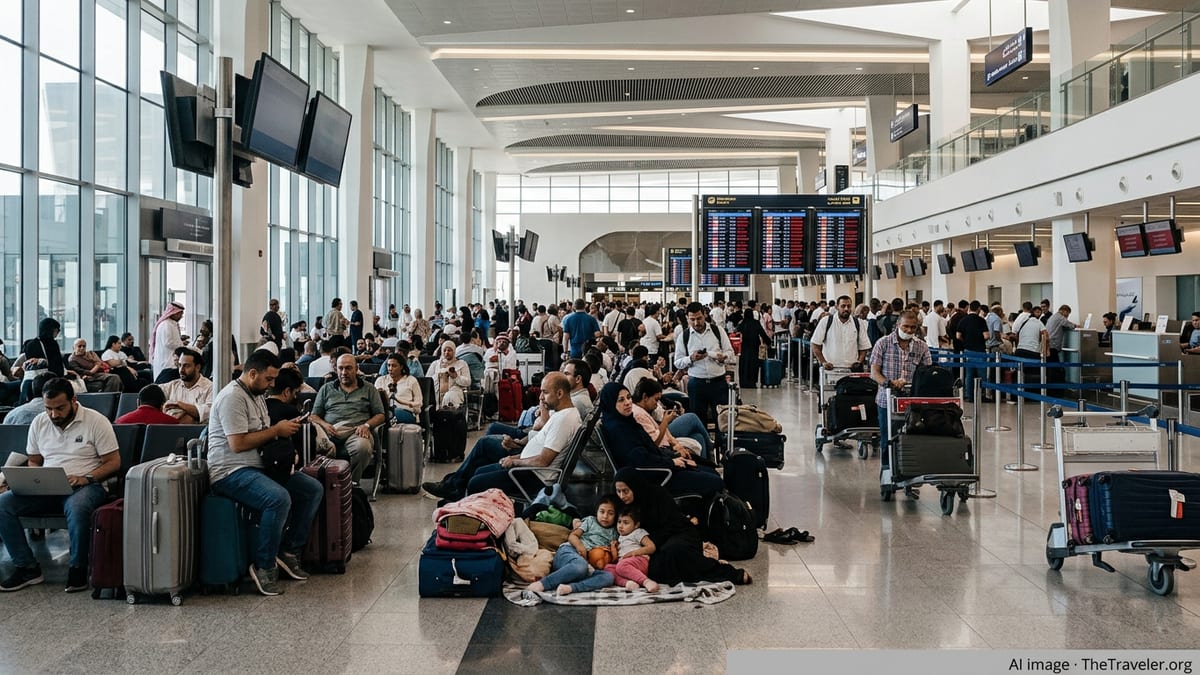
New Waiver Policy Targets Stranded Dubai, Doha, and Dammam Travelers
According to notices published on the Nepal Airlines website in late March 2026, the carrier has removed change and reissue fees for passengers booked on flights to and from Dubai, Doha, and Dammam whose journeys were canceled due to Middle East airspace closures from February 28 onward. The move applies to both tickets and associated ancillary services, such as prepaid baggage, for affected departures within the disruption window.
The policy covers passengers originally scheduled to travel on or after February 28, 2026, with flexibility extending until flights on the impacted routes fully resume. For eligible customers, the airline is allowing one-time revalidation or rebooking without any service charge, subject to seat availability in the same cabin. Published guidance indicates that the waiver remains valid for up to 45 days from the original travel date, offering a broader grace period than many regional competitors.
While the waiver is explicitly tied to canceled services on the Kathmandu–Dubai, Kathmandu–Doha, and Kathmandu–Dammam sectors, the practical impact is wider. These Gulf hubs act as crucial gateways for Nepali migrant workers and leisure travelers connecting onward to Europe, North America, and other parts of Asia, meaning the fee relief is reaching a geographically diverse group of passengers left in limbo by the fast-changing security situation.
Nepal Airlines has framed the changes as a customer-support measure in extraordinary circumstances, emphasizing in its public notices that the airline regrets the inconvenience but is committed to “maximum flexibility” for travelers whose plans were upended by decisions taken far beyond the carrier’s own network.
Gulf Airspace Closures Ripple Across Global Flight Networks
The fee waivers come against the backdrop of one of the most disruptive aviation crises the Gulf has seen since the pandemic. A series of regional strikes and retaliatory attacks beginning on February 28, 2026, prompted temporary airspace shutdowns and capacity restrictions across the United Arab Emirates, Qatar, Saudi Arabia, Kuwait, Bahrain, and parts of Iran and Iraq. Publicly available aviation advisories describe large portions of the region as conflict-affected airspace, with extended caution zones and, in some cases, outright prohibitions for certain carriers.
Operational data compiled by aviation watchdogs and travel-compensation firms indicate that hundreds of flights were canceled or delayed in early June alone, as airports in Dubai, Doha, Jeddah, Riyadh, Kuwait City, and Manama grappled with rolling restrictions, last-minute closures, and diversions. Industry digests focused on the Middle East crisis report that some European airlines remain barred from overflying key Gulf corridors, forcing longer routings or temporary suspension of services.
For South Asian carriers that rely heavily on Gulf stopovers, the disruptions have been particularly acute. Flight-tracking reports and local media coverage from Nepal note that Kathmandu-bound services from Dubai and Doha were among those repeatedly grounded or diverted in March, with aircraft forced to reroute via alternative hubs or delay departures until safe corridors reopened. This cascade effect has strained airline schedules and complicated crew and fleet planning across the region.
The evolving restrictions have also heightened uncertainty for passengers planning trips months in advance. Even when airspace partially reopens, airlines are often required to follow conservative routings or adhere to tight operating windows, leading to irregular flight timings and a lingering risk of last-minute changes that can strand travelers far from home.
Nepal Airlines Positions Flexibility as Competitive Advantage
Within this turbulent context, Nepal Airlines’ decision to waive fees for a defined group of affected passengers is emerging as a strategic differentiator. While many carriers in the Gulf and beyond have offered limited date-change options or partial waivers during the crisis, publicly available Nepal Airlines notices outline a more expansive approach for travelers whose flights were outright canceled due to airspace closures.
The policy effectively shields eligible customers from common post-disruption costs such as rebooking charges, ticket reissue fees, and penalties for adjusting travel within a short window. For migrant workers traveling between Nepal and job markets in the UAE, Qatar, and Saudi Arabia, these charges can represent a significant financial burden, especially when combined with unplanned expenses for accommodation, food, and local transport while waiting for new flights.
Travel-industry analysts writing on the Middle East crisis have noted a wider shift toward more passenger-friendly policies, as airlines seek to preserve loyalty in an era of heightened geopolitical risk. In this sense, Nepal Airlines’ waivers align with a broader trend of carriers framing flexibility not as an exception but as a core part of their value proposition, particularly on routes exposed to conflict-sensitive airspace.
By publishing clear terms, date ranges, and eligibility conditions, the Nepali flag carrier is also reducing confusion at check-in counters and ticket offices, where stranded passengers often struggle to understand what relief they can claim. Transparent communication about the 45-day rebooking window, covered destinations, and applicable booking channels may help limit disputes and provide a measure of predictability amid an otherwise volatile travel landscape.
Passengers Navigate a Patchwork of Rights and Options
Despite the relief measures, the experience of travelers caught in the Gulf airspace crisis remains uneven. International consumer-rights organizations note that protections vary widely by jurisdiction and route. Passengers flying on European carriers into the Middle East, for example, may benefit from compensation frameworks that link payouts to distance and delay length, while those traveling on regional or South Asian airlines often rely on the goodwill policies set by each carrier.
In the case of Nepal Airlines, the current waivers focus on waiving fees rather than providing cash compensation, accommodation, or meals as a standard entitlement. Some passengers transiting through Dubai, Doha, or Dammam have turned to travel insurance, credit card protections, or employer support to cover subsistence costs when flights are grounded for more than a day. Others have sought alternative routings via hubs such as Istanbul, Delhi, or Colombo to bypass the most affected airspace altogether.
Reports from traveler forums and regional news outlets suggest that information gaps remain a persistent challenge. In fast-evolving situations, schedules and waivers can change with little notice, leading some passengers to receive outdated advice from intermediaries or third-party agents. Industry observers recommend that affected travelers monitor the official channels of both their airline and departure airport, rather than relying solely on generic travel advisories.
Even so, the combination of flexible rebooking, partial network recovery in the Gulf, and the gradual reopening of certain air corridors has begun to restore connectivity between Nepal and major labour and tourism markets. For many passengers, the key question is not whether they will eventually reach their destination, but how much time and additional cost it will take to get there.
What the Waivers Signal for Future Disruptions
Nepal Airlines’ response to the current Middle East airspace crisis may offer a template for how smaller national carriers handle geopolitical shocks in the years ahead. By tying full fee waivers to a specific set of canceled flights and a clearly defined travel window, the airline appears to be balancing financial prudence with a visible show of support for customers most affected by events beyond their control.
Aviation experts tracking the Gulf situation point out that conflict-related airspace closures are likely to remain an intermittent feature of global travel, given the region’s strategic importance and dense concentration of commercial routes. Airlines operating in and around the Gulf may therefore face recurring decisions about how generous to be with waivers, refunds, and rebooking flexibility when the next crisis unfolds.
For Nepal-bound travelers, the latest policy underscores the importance of closely reading fare rules and disruption notices, particularly on routes that rely on a small number of transit points. In periods of heightened tension, choosing carriers with transparent waiver policies and proven flexibility can significantly reduce the financial and emotional toll of being stranded far from home.
As the Gulf’s airspace gradually reopens and schedules stabilize, the experience of February and March 2026 is likely to inform both regulatory debates and airline playbooks. For now, Nepal Airlines’ decision to remove fees for a key segment of its stranded passengers stands out as a notable intervention in an exceptionally challenging travel environment.