


More news on this day
Philippine Airlines has introduced its new Airbus A350-1000 flagship on nonstop flights between Manila and Toronto, a high-profile move that strengthens transpacific links and raises the bar for long-haul travel between the Philippines and Canada.
Get the latest news straight to your inbox!
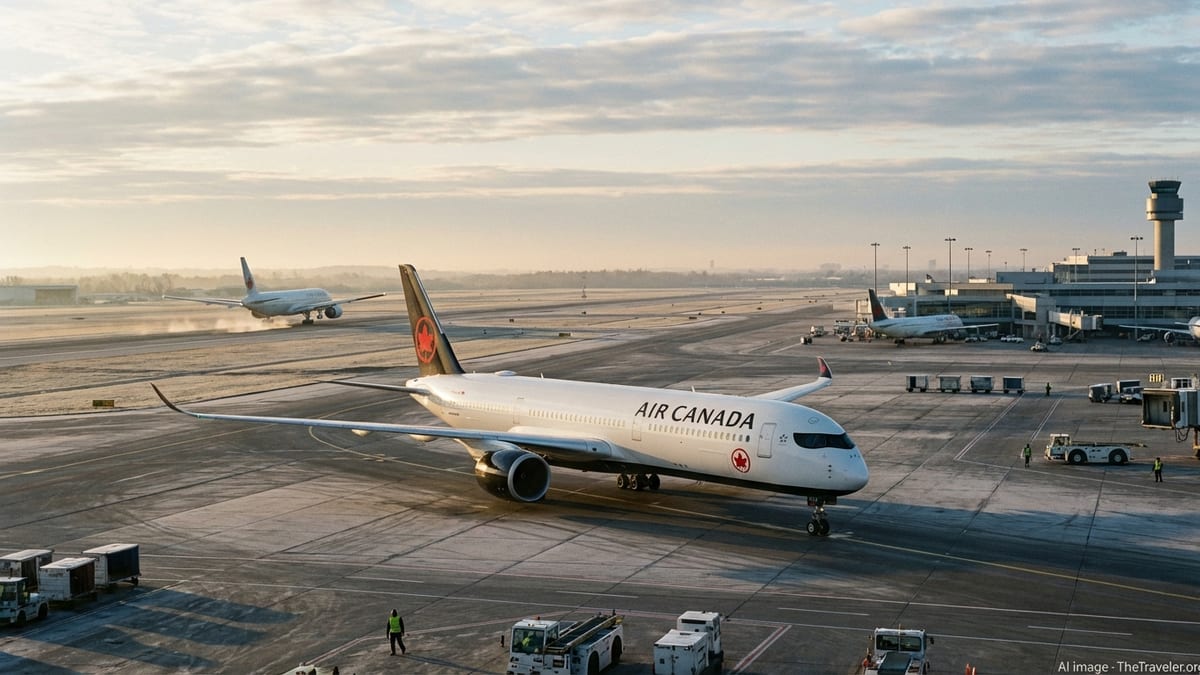
Manila–Toronto Becomes Second North American A350-1000 Route
The deployment of the Airbus A350-1000 on the Manila–Toronto sector from early June 2026 marks the aircraft’s second scheduled North American route in the Philippine Airlines network, following earlier long-haul operations to the United States. Publicly available schedules show the type now operating selected services between Ninoy Aquino International Airport and Toronto Pearson International Airport, replacing older widebodies on one of the carrier’s busiest Canada links.
Reports indicate that the shift is part of a broader fleet renewal strategy built around nine A350-1000 aircraft on order. The new-generation twinjet is intended to gradually take over long-haul missions that have historically been served by Boeing 777-300ERs and A350-900s, with an emphasis on transpacific and potential future transpolar routes. Industry coverage notes that the aircraft’s range and payload make it well suited to nonstops from Manila to major North American gateways, including Toronto.
For travelers, the change is significant. The A350-1000 arrival on the Manila–Toronto rotation brings a more modern cabin, quieter ride and improved environmental performance on a flight lasting roughly 14 to 15 hours westbound. Travel industry observers describe the move as a competitive response to other Asia–North America carriers that already rely on new-generation widebodies for their longest sectors.
Flagship Widebody Designed for Ultra Long-Haul Missions
The Airbus A350-1000 is the largest variant in the A350 family and has been positioned by manufacturers and airlines alike as a specialist in long-range operations. According to technical data published by Airbus and referenced in aviation coverage, the type offers up to a 25 percent improvement in fuel burn and carbon emissions compared with previous-generation widebodies of similar size, thanks to advanced aerodynamics, lightweight composite materials and Rolls-Royce Trent XWB-97 engines.
Philippine Airlines configured its A350-1000 fleet with a high-capacity three-class layout of roughly 380 seats, reflecting the strong demand on North American routes while still promising a step up in comfort over older aircraft. Cabin design materials and media previews highlight features such as larger overhead bins, calmer LED lighting schemes and improved cabin pressurization intended to reduce fatigue on ultra long-haul sectors.
The aircraft is also positioned as a bridge to more sustainable long-distance flying. Manufacturer information notes that the A350 family is certified to operate with up to 50 percent sustainable aviation fuel blends, and industry analysis around Philippine Airlines’ order has pointed to the type’s role in supporting the airline’s decarbonization efforts over the coming decade.
Cabin Experience Targets Premium and Visiting-Friends-and-Relatives Markets
The introduction of the A350-1000 on the Manila–Toronto route is expected to play to Philippine Airlines’ dual focus on premium passengers and the large visiting-friends-and-relatives market between the Philippines and Canada. Toronto hosts one of the largest Filipino communities in North America, and nonstop services have long been considered strategic within the carrier’s long-haul portfolio.
Cabin layout information presented in airline marketing materials and enthusiast reports indicates a modern business class cabin offering direct aisle access for every seat, a premium economy section aimed at price-sensitive travelers seeking extra comfort, and a high-density economy cabin. The combination is designed to appeal both to corporate and connecting traffic and to leisure travelers flying home to the Philippines or onward to Southeast Asia.
Independent passenger accounts published in recent weeks suggest that the updated business-class product, improved inflight entertainment and refined lighting are being viewed positively by travelers coming off older widebodies. At the same time, the dense economy layout has drawn discussion among frequent flyers, underlining the balancing act carriers face between capacity, comfort and ticket pricing on long-haul routes.
Strategic Milestone in Philippine Airlines’ 85th Anniversary Year
The A350-1000 rollout on the Toronto service comes as Philippine Airlines marks its 85th year of operations, a milestone the flag carrier has used to signal a renewed global push. Corporate statements published earlier in 2026 describe the A350-1000 as a new flagship underpinning the airline’s long-term growth strategy, with plans to expand and thicken routes across the Pacific and eventually restore or launch nonstop services to Europe.
Industry reports note that the airline is the first in Southeast Asia to operate the A350-1000, a distinction that supports its positioning in a highly competitive long-haul market. With additional deliveries scheduled over the next several years, analysts expect the type to progressively appear on more North American and potentially European routes as older widebodies are retired or reassigned.
For Toronto specifically, the arrival of the A350-1000 strengthens the city’s role as a North American gateway for Philippine Airlines. The enhanced aircraft is expected to improve connectivity for passengers traveling beyond Manila to domestic Philippine destinations and other Southeast Asian cities, while also boosting inbound tourism and business travel flows into Canada’s largest city.
Capacity, Cargo and Connectivity Gains Across the Pacific
Beyond the passenger experience, the shift to the A350-1000 on Manila–Toronto brings wider operational and commercial implications. Aviation trade coverage highlights that the aircraft’s larger belly-hold capacity, combined with improved fuel efficiency, supports more competitive cargo operations on a route that handles a mix of consumer goods, e-commerce shipments and personal cargo between North America and the Philippines.
The additional range and payload flexibility give Philippine Airlines more options in scheduling and network design, particularly during peak seasonal periods when both passenger numbers and cargo volumes rise. Analysts point out that having a common long-haul platform centered on the A350 family simplifies crew training and maintenance over time, which can translate into better reliability on congested transpacific corridors.
As the A350-1000 presence in the Philippine Airlines fleet grows, observers expect the Manila–Toronto deployment to serve as a template for other long-haul markets. The early use of the aircraft on this Canada route suggests that the carrier sees strong and durable demand between the two countries, and that long-haul luxury and efficiency will be central to its competitive strategy in the years ahead.