


More news on this day
A Canadian federal safety investigation has linked a December freight train derailment in Quebec to abrupt winter temperature swings, highlighting how increasingly volatile weather may be undermining track integrity on some of the country’s busiest rail corridors.
Get the latest news straight to your inbox!
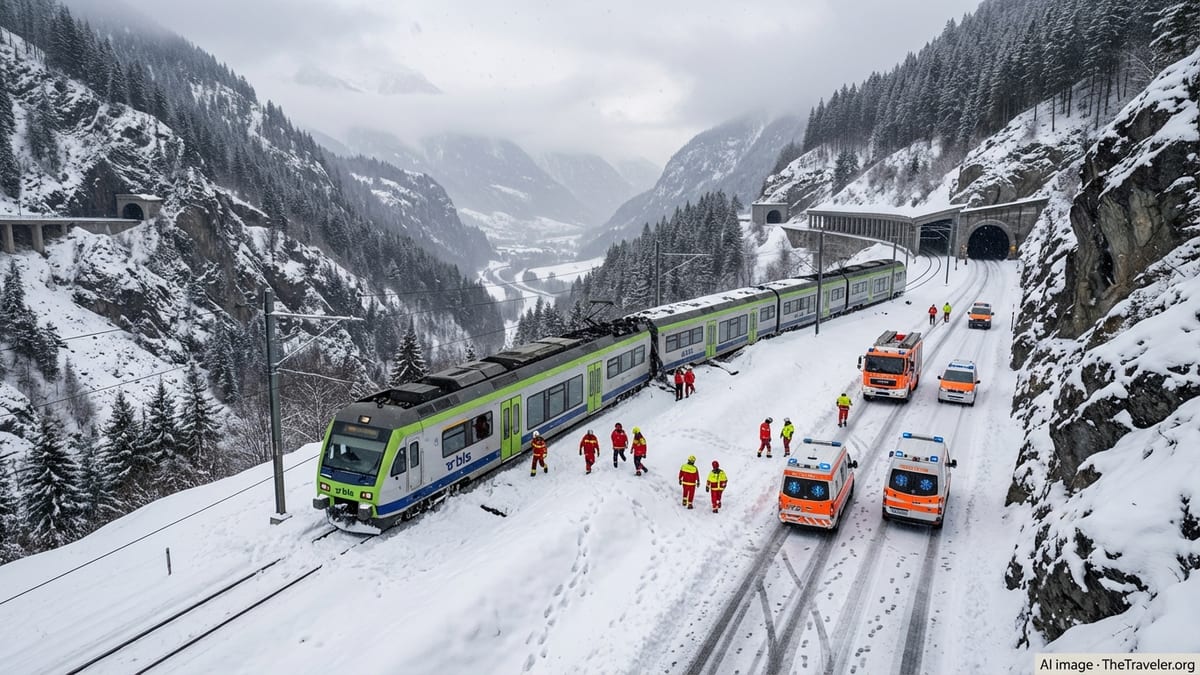
Findings point to weather-driven track vulnerability
According to a recently released report from the Transportation Safety Board of Canada, the Quebec derailment occurred after a section of track experienced significant stress during a short period of rapid freezing and thawing. Publicly available information indicates that the changing temperatures likely contributed to the failure of joint components along the rail, creating conditions for the train to leave the tracks.
The investigation describes how the line had undergone track work earlier in the season. As temperatures plunged and then rebounded, expansion and contraction of the steel rails appear to have loosened or overstressed fastenings that were already in a transitional state following maintenance. Similar patterns have been highlighted in previous federal rail reports, where joint bar bolts and related hardware were found to deteriorate more quickly when exposed to repeated temperature swings shortly after repair work.
The Transportation Safety Board categorized the Quebec occurrence as a limited-scope investigation, focusing on the most critical causal and contributing factors. The report emphasizes that while the derailment was relatively contained, with no reported injuries, it exposed vulnerabilities that could have wider implications for other routes facing more erratic winter weather.
Investigators reference earlier derailments in Western Canada in which thermal cycles after the installation of replacement rail sections were found to loosen track joints and compromise alignment. Those earlier cases prompted federal safety advisories to Transport Canada, and the Quebec findings appear to echo many of the same concerns about how infrastructure responds to rapid swings between deep cold and above-freezing conditions.
Quebec’s shifting climate intensifies rail challenges
The Quebec derailment unfolded against a backdrop of increasingly volatile seasonal weather in the province. Provincial climate summaries show that recent years rank among the warmest on record, yet winter has also delivered intense cold snaps and severe storms in short, disruptive bursts. The result is a climate pattern in which rail infrastructure is exposed to wider temperature ranges over compressed timeframes.
Environment and climate datasets for Quebec describe frequent freeze-thaw cycles, including episodes where temperatures climb from well below freezing to above zero in a matter of hours. For railways, this can hasten fatigue in steel rails, stress concrete and ballast structures, and accelerate wear in track components that were designed around more gradual, predictable seasonal changes.
Historical accident reports have documented derailments in central Canada where extreme cold or rapid warming played a role in weakening components or distorting alignment. While each occurrence has its own specific causes, the cumulative record suggests that climate variability is becoming an increasingly important backdrop for understanding rail safety performance, especially in regions like Quebec that experience strong continental air masses and humid maritime influences.
Rail analysts note that temperature sensitivity has long been a factor in track design and inspection, but the intensity and frequency of recent weather swings are testing standards that were developed in a different climate era. The Quebec derailment provides another data point in a growing body of evidence that rail infrastructure may require modernization to cope with more abrupt transitions between freeze and thaw.
Operational disruptions and community impact
Although no serious injuries were reported, the December derailment generated operational disruptions and local concern in the affected Quebec community. Trains were halted or rerouted while crews worked to stabilize the site, remove damaged rolling stock, and repair or replace compromised rail segments. Published reports indicate that freight movements were temporarily restricted along the corridor as additional inspections were carried out on nearby track infrastructure.
In recent years, derailments and storm-related incidents have already strained passenger and freight punctuality across key Quebec corridors. Severe winter storms in 2022, for example, contributed to lengthy delays and cancellations when fallen trees, drifting snow, and a separate freight derailment forced passenger rail operators to suspend or curtail service. The latest incident adds another layer of concern for residents who live near rail lines and depend on them for both economic activity and mobility.
Local authorities and rail companies have responded in past cases by imposing precautionary speed restrictions, enhancing track patrols during extreme weather, and deploying additional monitoring equipment at known trouble spots. While the December derailment site has since been repaired and reopened to traffic, the event has renewed debates over whether current mitigation measures are sufficient in the face of more frequent and intense weather volatility.
Community advocates argue that each new derailment, even when contained, raises questions about land use along rail corridors and the adequacy of emergency planning. For municipalities, the challenge lies in balancing the economic importance of freight rail with residents’ expectations for safety, transparency, and timely communication when incidents occur.
Regulatory scrutiny and calls for resilience upgrades
The federal investigation’s focus on temperature swings is likely to sharpen regulatory attention on how railways assess and mitigate climate-related risks. Past Transportation Safety Board recommendations following weather-influenced derailments have urged closer review of track maintenance practices, particularly around the installation of replacement rail sections and joint assemblies in regions subject to significant thermal variation.
Publicly available information shows that previous derailments linked to temperature stress have led to federal safety advisories calling for more rigorous inspection intervals, improved record-keeping, and better modeling of how rapidly changing temperatures affect track stability. The Quebec case reinforces the view that weather is not merely an external factor but a core design and maintenance consideration for rail infrastructure.
Industry responses in earlier incidents have included revising engineering standards for rail distressing, enhancing training for track crews, and investing in technologies that detect subtle changes in rail geometry before they escalate into safety hazards. The December derailment is expected to feed into these broader discussions, potentially informing updates to both corporate practices and federal oversight frameworks.
As climate projections for Quebec point to warmer average temperatures combined with a continuation of sharp winter cold snaps, pressure is likely to grow for rail operators to accelerate the adoption of resilience-focused upgrades. These may include enhanced monitoring of temperature-sensitive track segments, more conservative speed and load policies during transitional weather, and targeted replacement of aging infrastructure most vulnerable to thermal fatigue.