


More news on this day
The Dutch government is moving to shore up public transport with a €740 million investment package, aiming to stabilise services after years of financial pressure while supporting greener travel and regional accessibility across the Netherlands.
Get the latest news straight to your inbox!
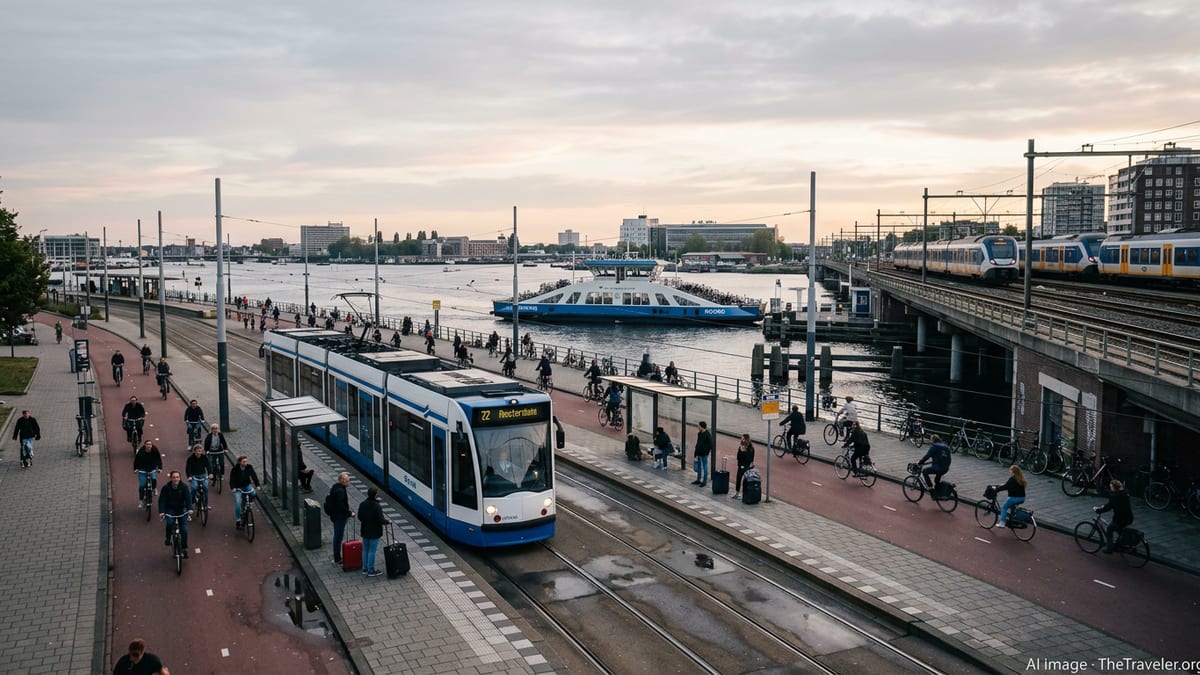
New Funding Amid Tight Infrastructure Budgets
The fresh €740 million commitment comes at a time when Dutch infrastructure finances are under strain, with rising maintenance costs and limited room for large new projects. Recent government budget documents and policy updates show that a growing share of national spending is being diverted to keeping existing roads, railways and bridges in working order, leaving less space for expansion plans.
Within this constrained context, the decision to ringfence hundreds of millions of euros specifically for public transport is positioned by policymakers as a way to protect day-to-day mobility. Publicly available information indicates that central government has been under increasing pressure from regional authorities, operators and passenger groups to prevent further service cuts, particularly after the pandemic period, when ridership dropped and operating deficits widened.
The €740 million is expected to be channelled into a mix of operating support and targeted improvements. While detailed project lists are still emerging, coverage in Dutch and international media points to priorities such as sustaining rail and urban transit frequencies, improving interchange hubs and reinforcing public transport links that serve major housing and employment growth areas.
Observers note that the funding aligns with broader Dutch infrastructure policy, which has recently shifted toward improving reliability and capacity on existing corridors rather than launching entirely new mega-projects. The package is viewed as an attempt to stabilise the system in the short to medium term while longer-range investment programmes continue to be debated.
Focus on Accessibility, Regions and Housing Growth
Transport planning in the Netherlands increasingly ties public transport spending to regional development and housing policy. Previous multi‑billion euro commitments for rail and tram infrastructure have been closely linked to new housing locations and urban growth corridors, with government strategies emphasising that dense neighbourhoods should be built around strong bus, tram and train connections.
The latest €740 million allocation follows this same logic, according to public policy outlines and regional briefings. A significant share of the money is expected to support services and infrastructure in areas where tens of thousands of homes are planned or under construction. By bolstering public transport early, national and regional authorities aim to reduce car dependence among new residents and keep growth areas connected to major employment centres.
Regional cities and rapidly expanding municipalities have repeatedly signalled that they rely on national co‑financing to advance rail and light rail schemes. The new funding package gives these regions additional certainty to continue planning upgrades such as increased train frequencies, bus rapid transit corridors or extended tram lines that can move large numbers of people with relatively low emissions.
Analysts following Dutch infrastructure policy suggest that the distribution of the €740 million will be closely watched by local councils, which are seeking assurances that investment will not be concentrated solely in the Randstad core. Previous national mobility deals have included a mix of projects in major metropolitan areas and in smaller cities that serve as regional hubs.
Supporting Green Mobility and Climate Targets
Publicly available government strategies describe public transport as a central pillar of Dutch climate and sustainability policy. Existing programmes already support zero‑emission buses, energy‑efficient trains and better facilities for combining cycling with rail and metro trips. The latest funding is expected to reinforce this approach by making alternatives to private car use more attractive and reliable.
Reports on the government’s climate agenda highlight that transport emissions remain a significant challenge, even in a country with relatively high rates of cycling and public transport use. Investments in higher‑capacity rail corridors, modern rolling stock and integrated ticketing are framed as essential tools for shifting more journeys away from cars, especially on busy commuter routes into major cities.
The €740 million commitment fits alongside longer‑term infrastructure envelopes that run into the tens of billions of euros. While the new sum represents only a fraction of total national transport spending, it is seen as symbolically important because it is targeted specifically at public transport operations and upgrades at a moment when some regions feared renewed cuts.
Environmental organisations and sustainable mobility advocates have argued that consistent funding is required to deliver the emissions reductions outlined in Dutch climate plans. The latest package, while not resolving all capacity and affordability issues, is likely to be used as evidence that national policymakers are prepared to prioritise public transport even amid broader budgetary pressures.
Balancing Service Quality, Costs and Affordability
In recent years, travellers in the Netherlands have faced concerns about rising fares, reduced frequencies on some routes and crowding on others. According to Dutch media coverage and public transport user groups, operators have struggled with higher wage and energy costs, as well as staff shortages, all of which put pressure on service quality.
The €740 million investment is intended in part to ease these pressures by giving operators and regional transport authorities more financial room to maintain or improve timetables. Analysts of the sector note that without additional support, some concessions risked falling back on route cuts or fare increases to close budget gaps, which could have dampened ridership and undermined broader mobility goals.
Balancing affordable fares with the need to finance operations remains a central challenge. Industry data for many European systems indicate that ticket revenues typically cover only a portion of total public transport costs, with the remainder provided by government funding. The new Dutch package reinforces this model by explicitly using national funds to underpin services that may not be commercially profitable but are considered socially and economically important.
Transport commentators suggest that the ultimate test of the €740 million programme will be whether passengers notice tangible improvements: more reliable trains and buses, shorter waiting times, better‑designed stations and more seamless transfers between modes. These practical outcomes are likely to shape public perceptions of whether the investment delivers value.
Next Steps and Long‑Term Outlook
Details on the full allocation of the €740 million are expected to be clarified as central government finalises agreements with provinces, transport regions and operators. According to published budget notes and policy papers, these negotiations typically define which projects receive funding, what co‑financing regional partners must provide and the timelines for implementation.
Observers anticipate that a portion of the money will support ongoing multi‑year programmes already in progress, while another share will be reserved for new or accelerated measures aimed at short‑term reliability. This dual approach would mirror earlier Dutch infrastructure deals that combined immediate fixes with structural upgrades to major corridors and hubs.
Over the longer term, future public transport investment needs are expected to remain substantial. Demographic growth, housing expansion and economic development in technology and logistics clusters all contribute to rising demand for high‑capacity, low‑carbon mobility. Strategic vision documents produced for the Dutch transport sector project continued pressure on railways, metros and bus networks well into the 2030s and 2040s.
Within that broader picture, the current €740 million package is viewed by transport analysts as a significant, though not definitive, step. It signals that, despite tight budgets and competing priorities, public transport retains a prominent place in national policy. How effectively the funds are deployed will help determine whether the Netherlands can preserve and enhance the accessibility that has long underpinned its economic and social model.