


More news on this day
Passengers flying out of the UAE on July 23 are being advised to monitor their flight status closely, as regional security tensions and capacity controls continue to cause scattered cancellations and delays for Etihad Airways, flydubai and other carriers.
Get the latest news straight to your inbox!
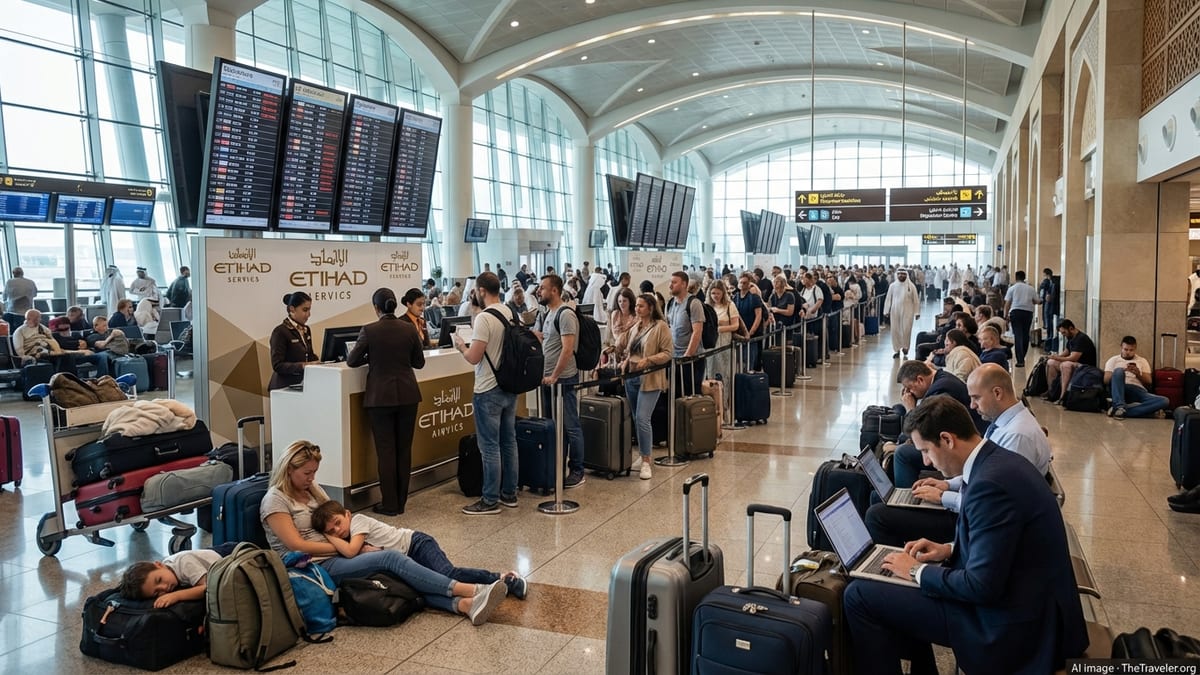
Etihad extends selective cancellations amid regional tensions
Etihad Airways is continuing a pattern of selective route cancellations and schedule adjustments this week as airspace restrictions and regional tensions ripple through Gulf operations. Published coverage from UAE media in recent days indicates that the Abu Dhabi based airline has extended some cancellations on routes in the wider Gulf region, while maintaining the majority of its global network.
Reports on July 20 highlighted that Etihad, along with other carriers, cancelled services on certain routes in response to congestion and intermittent restrictions affecting airspace between the UAE and neighboring states. These targeted changes have largely focused on short haul flights where alternative routings are limited or where demand has fallen due to wider security concerns.
Publicly available travel advisories for the United Arab Emirates note that conflict in the broader region has led to periodic disruption of commercial flights and that airspace may open or close at short notice. Aviation regulators in Europe have also issued operational guidance urging airlines to avoid parts of Gulf airspace, which has required some carriers to adjust routings and schedules even when flights continue to operate.
As of this morning, flight tracking platforms show that most Etihad departures from Abu Dhabi are operating, although some services are running with extended flight times as aircraft route around restricted areas. Travelers are being advised by multiple official travel advisory outlets to allow extra time at the airport and to be prepared for last minute changes to departure times and routings.
Flydubai sees scattered cancellations and delays from Dubai
Low cost carrier flydubai is operating the bulk of its schedule out of Dubai International today, but flight status data shows a mix of on time services, delays and a small number of cancellations affecting selected routes. Real time tracking information early on July 23 listed several delayed arrivals and departures, as well as cancelled flights on routes including some services to the Caucasus region and parts of the Gulf.
Flydubai’s own operational updates page, refreshed this week, focuses largely on medium term schedule changes and terminal moves rather than mass cancellations, suggesting that the current disruption is being managed flight by flight rather than through broad timetable cuts. The airline is continuing to encourage customers to register for notifications through its app and to recheck departure times on the day of travel.
Independent flight status aggregators show that while many flydubai flights to South Asia, East Africa and popular leisure destinations in Asia are running to schedule, individual services have been retimed by minutes or hours. Some overnight and early morning flights into Dubai have landed later than scheduled after taking longer routings around constrained corridors, which can then cascade into knock on delays for outbound departures using the same aircraft.
For passengers departing today, the pattern suggests a need for close monitoring rather than an expectation of widespread cancellations. Travelers connecting in Dubai, particularly those with tight connections onto other airlines, may face additional risk if inbound services are delayed by airspace restrictions or congestion in neighboring hubs.
Capacity controls and airspace management continue to shape schedules
Behind the day to day disruption, aviation authorities in the UAE are operating under special capacity management procedures that were introduced earlier this year to cope with sudden airspace closures and surges in holding traffic. Regulatory circulars published in late April outline how air traffic services can temporarily limit arrivals at key airports and deny entry to additional flights when holding patterns reach maximum safe capacity.
These measures are designed to protect safety during periods of unexpected disruption, such as regional security incidents or severe weather, but they also translate into rapid schedule adjustments for airlines when triggered. Flights destined for airports experiencing restrictions can be delayed at origin, rerouted, or in some cases cancelled if there is no viable arrival slot within crew and operational limits.
Earlier episodes of temporary airspace closures this year prompted short periods when flights to and from the UAE were heavily disrupted, followed by a gradual restoration of operations. Airport operators in Abu Dhabi and Dubai have since emphasized in public updates that they are coordinating closely with national crisis management bodies and air navigation services to balance safety with keeping traffic moving.
For passengers, the practical impact is that flight plans printed even a few hours before departure can change at short notice. Some airlines have built additional buffer time into schedules to cope with potential rerouting, which can make flights appear longer than usual even when departure and arrival are broadly on time.
International advisories urge vigilance for Middle East travel
International governments are maintaining elevated travel advisories for the wider Middle East, including the United Arab Emirates, in light of ongoing regional conflict and the potential for missile or drone activity that could affect civil aviation. Updated notices from foreign ministries this week reiterate that airspace status and airport operations in the Gulf can shift quickly, and that travelers should monitor official channels and airline communications closely.
Some advisories highlight that there is a continuing risk of sudden flight diversions, airspace closures or the temporary rerouting of traffic away from certain conflict zones. Aviation safety agencies have issued guidance to airlines about routes to avoid and altitudes to use when operating near potentially volatile areas, which can in turn affect flight times and the availability of non stop services on certain city pairs.
At the same time, commercial operations at major hubs in Dubai and Abu Dhabi remain broadly active, with high passenger throughput and a large number of daily departures to Europe, Asia, Africa and North America. Industry updates note that airports across the Gulf, including in the UAE, are working to maintain service levels while complying with evolving security and safety guidance.
Travelers departing from the UAE today are therefore operating in a mixed environment where most flights continue, but the baseline level of unpredictability is higher than in more stable periods. This makes individual preparation and real time information especially important.
What passengers flying today from UAE should do
For those scheduled to fly with Etihad, flydubai or other carriers out of the UAE on July 23, the most consistent advice across airlines and travel advisories is to check flight status repeatedly in the hours before departure. Airline channels and airport displays provide the most current information on specific flights, including any retiming, gate changes or cancellations.
Passengers are being encouraged to ensure that their contact details are correctly added to bookings so that airlines can push notifications about disruptions. Using official airline apps or subscribing to flight alerts through reputable tracking platforms can provide earlier warning of emerging issues than relying on a single email confirmation received at booking.
Given the potential for longer routings and last minute schedule changes, travelers may wish to allow additional connection time when booking onward journeys and to carry essential items, medications and a change of clothes in hand baggage. Travel insurance policies that cover delays and missed connections can also provide a financial buffer when disruptions extend overnight.
While today’s picture at UAE airports shows a functioning but finely balanced system, the combination of regional tension, airspace management measures and high summer traffic means conditions can change quickly. Staying flexible, informed and ready to adapt plans remains key for anyone flying from the UAE in the current environment.