


More news on this day
Passengers flying from the United Arab Emirates on July 23 are being urged to double check their itineraries, as a mix of regional tensions and operational constraints drives fresh cancellations, delays and schedule changes on key Etihad Airways and flydubai routes.
Get the latest news straight to your inbox!
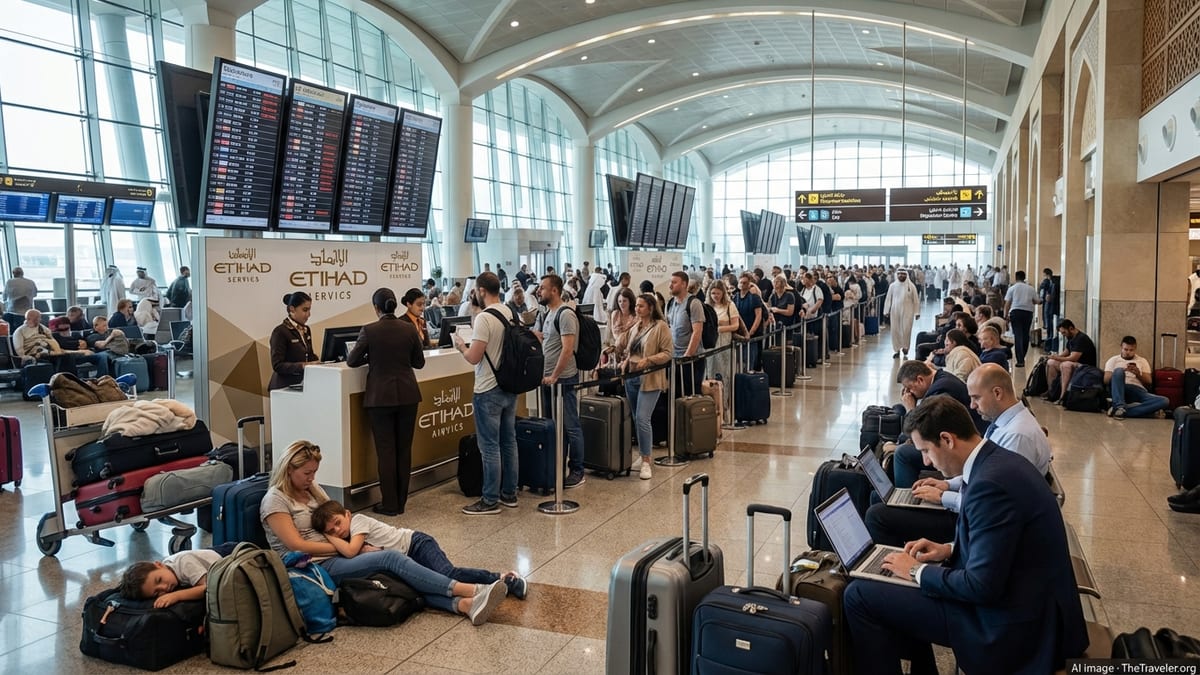
Targeted Etihad cancellations on Kuwait route extended
Publicly available schedules indicate that Etihad Airways has extended the cancellation of flights EY653 and EY654 between Abu Dhabi’s Zayed International Airport and Kuwait International Airport, with disruptions now affecting departures through at least July 24 and some reports suggesting further adjustments through July 26. The airline has attributed the changes to operational reasons, and passengers booked on these services are being reaccommodated on alternative departures where possible.
The Kuwait cancellations follow several weeks of intermittent disruption on short regional sectors, a pattern that has affected onward connections for travellers using Abu Dhabi as a long haul hub. Travel industry coverage notes that even where long haul flights continue to operate, the loss of a first regional leg can upset entire itineraries, impacting accommodation bookings and onward transport.
Etihad’s long haul network from Abu Dhabi to Europe, North America and Asia appears to be operating largely to schedule on July 23, according to online tracking platforms and airport departure boards. However, isolated delays are being reported on select routes, and passengers are being advised to monitor their booking references and airport information screens closely before travelling to the airport.
Consumer advocates emphasise that travellers on cancelled flights should review the fare conditions attached to their tickets and the relevant jurisdiction’s passenger rights framework, as the level of support or compensation depends on whether the disruption is considered within the airline’s control.
Flydubai sees pockets of delays and cancellations
Low cost carrier flydubai is reporting a mixed operational picture on July 23, with the majority of departures from Dubai International’s Terminal 2 running as scheduled but with several short haul services delayed or cancelled. Real time status boards compiled by third party tracking websites show selected flights to regional destinations such as Tbilisi and Al Qassim either delayed by several hours or cancelled outright during the early morning wave.
These targeted disruptions appear to be concentrated on a handful of routes rather than indicating a broad suspension of operations. Flydubai’s own operational updates page, refreshed on July 22, highlights schedule changes linked to airport works at future dates and reiterates guidance for passengers to use the airline’s app and manage booking tools for real time status alerts.
For travellers departing the UAE with flydubai today, the practical impact depends heavily on the specific route and departure time. Many services to South Asia, East Africa and major Middle Eastern cities are continuing on schedule, while passengers on affected flights are being directed to contact the airline or their travel agent for rebooking options.
Industry information on passenger rights underscores that compensation rules differ depending on the point of departure and applicable regulations. Delays caused by weather, airspace restrictions or security incidents may not trigger compensation, even when they significantly disrupt travel plans, but airlines are still expected to provide basic care such as meal vouchers or accommodation in some jurisdictions.
Regional tensions and global advisories heighten uncertainty
The latest disruptions are unfolding against a wider backdrop of geopolitical tension and heightened security messaging for travel across the Gulf region. Recent travel advisories from governments including the United States and Canada highlight the risk that military activity or sudden changes in regional security conditions could lead to airspace restrictions, last minute schedule changes and flight cancellations affecting the United Arab Emirates and neighbouring countries.
Information published by foreign ministries in recent days stresses that airspace in parts of the Middle East may open or close at short notice, with potential knock on effects at major hubs such as Abu Dhabi and Dubai. Notices to air missions issued by aviation regulators are urging carriers to exercise caution when operating in affected areas, a factor that can translate into rerouted flights, extended flight times or altered schedules for commercial passengers.
While no blanket suspension of flights to and from the UAE is in place, analysts point out that airlines are adjusting capacity and timings dynamically as conditions evolve. Short regional sectors to Kuwait and Bahrain have been particularly exposed to cancellations, according to Gulf based media coverage, while longer haul services continue but may experience additional routing constraints and fuel requirements.
Travellers are being encouraged to regard schedules as subject to change, especially on routes that cross or skirt areas of potential conflict. Keeping contact details updated in airline booking systems is considered essential so that carriers can issue rapid notifications if a flight time is changed or a service is withdrawn.
What passengers flying today from UAE should do
For anyone scheduled to fly from Abu Dhabi, Dubai or Sharjah on July 23, the most immediate step is to verify the status of their flight directly through airline channels before setting out for the airport. Online check in portals, mobile apps and SMS or email alerts typically update faster than airport departure boards and can provide early notice of a cancellation or long delay.
Travellers connecting through the UAE on multi sector itineraries should pay particular attention to their first leg. Travel reporting notes that even when a long haul segment remains listed as operating, a cancelled feeder flight from a nearby city can cause missed connections and complicated rebooking, especially when seats on alternative departures are limited.
Passengers whose flights are cancelled or significantly delayed are advised to keep records of boarding passes, booking confirmations and receipts for any out of pocket expenses. These documents may be required when seeking refunds, travel insurance claims or statutory compensation where applicable. Specialist consumer platforms highlight that entitlement depends not only on the cause of the disruption but also on where the journey begins and which airline is operating the flight.
Those with tight time sensitive plans, such as cruises or fixed event dates, may wish to explore options such as voluntary rebooking to earlier departures, adding longer connection buffers or adjusting routing away from the most affected regional sectors. Travel agents and corporate travel managers can assist with contingency planning, particularly for larger groups or complex itineraries.
Travel advisory trends point to continued volatility
Recent updates from multiple national travel advisory services describe a fluid operating environment for airlines across the wider Gulf, with the possibility of renewed disruption over the coming weeks. Guidance issued this month for the United Arab Emirates notes that while commercial flights are continuing, airspace restrictions or security incidents elsewhere in the region could have a spillover effect on departures and arrivals at UAE airports.
Security alerts emphasise that travellers should monitor both official advisories and airline communications in the days leading up to departure, rather than relying solely on the status of a ticket purchased weeks or months in advance. Where travel is discretionary, some advisories encourage individuals to reassess the necessity of non essential trips through areas subject to heightened alert levels.
At the same time, passenger accounts shared on public forums suggest that day to day operations at Dubai and Abu Dhabi airports remain relatively normal when flights are running, with check in, security and boarding processes proceeding much as before. This contrast between generally smooth airport experiences and a more unpredictable strategic backdrop underlines the importance of staying informed up to the last minute.
With airlines such as Etihad and flydubai continuing to adjust their schedules in response to operational and regional factors, travellers departing the UAE today are being reminded that flexibility, contingency planning and close attention to real time information are key to keeping journeys on track.