


More news on this day
Canadian travelers plotting a European escape in 2026 are waking up to a markedly more expensive landscape, as new city surcharges and digital entry permits tighten the cost and complexity of visiting the continent’s most beloved destinations.
Get the latest news straight to your inbox!
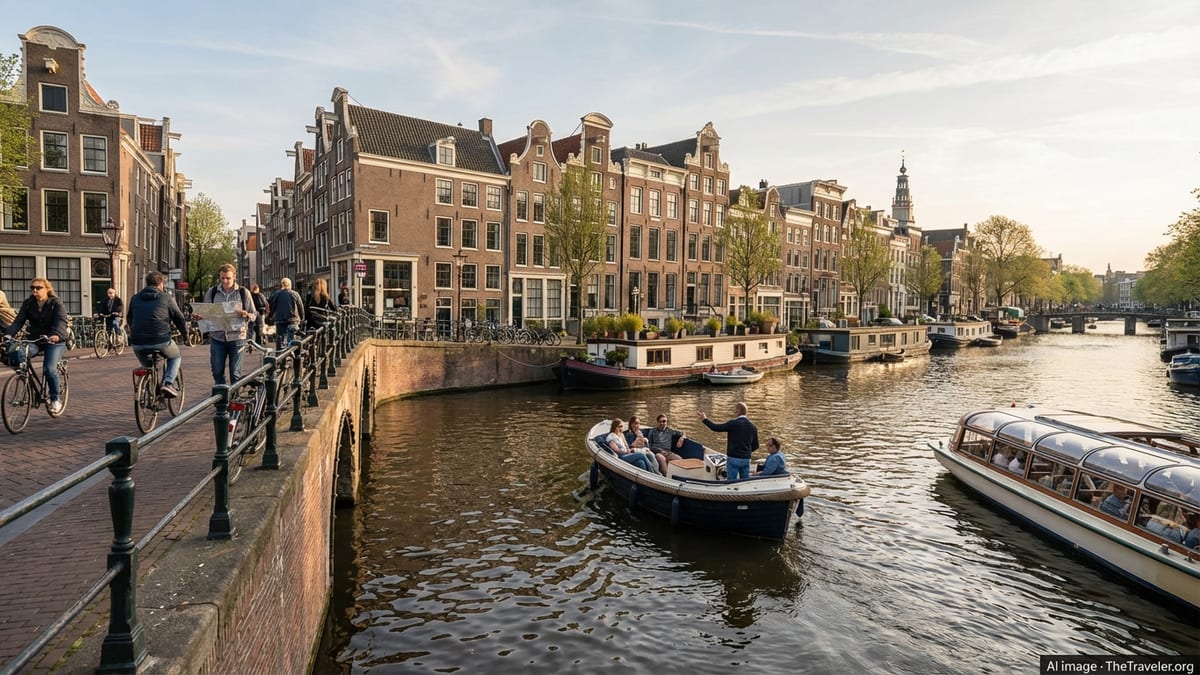
ETIAS: A New Gatekeeper for Visa-Exempt Canadians
The most consequential change on the horizon for Canadian visitors is the European Travel Information and Authorisation System, or ETIAS. The scheme will apply to visa-exempt nationals entering most European Union and Schengen-associated countries for short stays, including classic city-break destinations such as Paris, Rome and Amsterdam. Reports indicate that ETIAS is now expected to launch in the final quarter of 2026, after multiple delays from its original 2021 and 2024 target dates.
Publicly available information shows that ETIAS will require Canadians to complete an online pre-travel application and pay a fee, with approvals linked electronically to a passport for multiple entries over a set validity period. Early communications from EU institutions described a fee of 7 euros for adult applicants, but more recent documentation points to a revised price point of 20 euros for travelers between the ages of 18 and 70, reflecting broader pressures to fund border technology and security systems.
For Canadians accustomed to simply arriving at the Schengen frontier with a passport and return ticket, ETIAS introduces a new layer of planning. Approval will need to be secured before boarding a flight or cruise to Europe, and travelers flagged in automated checks may face additional review. For most visitors, the process is expected to be quick and fully online, but officials have signaled that applications should be made several days in advance to avoid last-minute surprises.
Although the headline fee is relatively modest, the shift symbolizes a new era in which visa-exempt access to Europe comes with formal screening, data-sharing and cost recovery mechanisms. For frequent Canadian visitors, the multi-year validity will spread the expense over several trips, but occasional travelers may feel the pinch when calculating the total price of a once-in-a-decade holiday.
Rising City Taxes in Europe’s Poster-Child Destinations
Alongside new border formalities, municipal taxes are reshaping the price of nights spent in Europe’s most photogenic cities. Barcelona, a perennial favorite among Canadian tourists, has become a high-profile testing ground for overtourism policies. Over recent years, the Catalan capital has layered a regional tourism tax with a separate city surcharge on hotel stays, short-term rentals and cruise passengers, with rates varying by accommodation category.
Recent measures approved by local authorities envisage a steep upward trajectory for the municipal surcharge across the second half of the decade. Coverage in Spanish and international media outlines a schedule that progressively lifts the city component so that, once combined with the regional tax, nightly tourist levies could reach double-digit euro figures per person by 2029 in higher-end establishments. An analysis of city budget documents and tourism-management plans shows that policymakers are aiming to align revenues more closely with the cost of cleaning, policing and transport infrastructure strained by record visitor numbers.
Separate travel-industry briefings published in April 2026 highlight that Barcelona’s current practical caps for most city stays hover below the maximum figures permitted by Catalan legislation, but the direction of travel is clear. Each year, visitors checking in to hotels, licensed apartments or embarking on cruises find higher per-person surcharges folded into their invoices. For a Canadian family of four spending several nights in central Barcelona, the cumulative impact now easily runs into the triple digits in Canadian dollars.
Other European cities have adopted similar, if less dramatic, measures. Tourism coverage notes that Rome, Venice and a raft of Alpine and Adriatic destinations have either introduced or increased nightly per-person levies, often framed as contributions to heritage preservation and crowd management. While fees remain comparatively small on a per-night basis, they can add a significant sum to multi-stop itineraries stitched together across several countries.
Schengen Visa Fees Rise, Even if Most Canadians Are Exempt
Not all of Europe’s fee hikes directly affect Canadians, but they underscore a wider pattern of tightening entry conditions. In June 2024, the European Commission implemented a 12 percent increase in the standard Schengen visa fee, lifting the cost for adult applicants to around 90 euros. This change targets travelers from countries that require a visa for short stays, such as parts of Africa and Asia, and does not apply to Canadians, who remain visa-exempt for visits under 90 days in any 180-day period.
However, the increase helps explain why the EU is taking a revenue-conscious approach to border management. Analyses of the Schengen system note that short-stay visa applications have climbed into the tens of millions, driving administrative and security-related costs. The ETIAS fee for visa-exempt travelers is widely interpreted by commentators as a parallel revenue stream designed to spread financial responsibility across all non-EU visitors.
For Canadians traveling with family or friends who hold other nationalities, the divergence can create budgeting complexity. One traveler might need to pay for a Schengen visa and travel insurance, while another in the same group pays only the ETIAS fee. Reports from travel advisors suggest that multi-generational or multi-passport families are increasingly scrutinizing documentation requirements to avoid unexpected consular payments and processing delays.
The broader takeaway for Canadian tourists is that Europe is moving toward a finely tiered fee architecture, where status as a visa-exempt national no longer guarantees a cost-free border crossing. The combination of higher consular fees and new electronic authorizations points to a long-term trend, rather than a temporary post-pandemic adjustment.
United Kingdom and Other Hotspots Add Their Own Entry Charges
Beyond the Schengen area, the United Kingdom is rolling out its own digital gatekeeper. The UK Electronic Travel Authorisation, or ETA, is being phased in for visitors who previously entered visa-free, including Canadians arriving for tourism or short business trips. Government impact assessments and updated guidance describe an online application linked to a passport, with a fee set at 10 pounds in the initial design phase and subsequently signposted for an increase to 16 pounds per person, subject to parliamentary approval.
The UK scheme mirrors ETIAS in key respects: advance online approval, automated security checks and a validity period allowing multiple entries. For Canadians combining London with Paris or Barcelona on a single itinerary, this means absorbing both an ETIAS fee for the Schengen section and a separate ETA charge for the UK leg of the journey. For budget-conscious travelers, the new reality is that simply crossing the Channel can involve incremental administrative costs beyond airfare and train tickets.
Elsewhere, smaller but symbolically important surcharges are proliferating. Some Mediterranean islands have introduced seasonal eco-taxes to fund waste management and coastal protection, while ski regions in Austria and Italy have fine-tuned overnight levies to stabilize revenues during shoulder seasons. Travel industry reporting suggests that Canadian tour operators are beginning to flag these add-ons more prominently in brochures and booking confirmations to avoid sticker shock at check-out.
These national and regional schemes, layered over municipal taxes, hint at an emerging patchwork where each jurisdiction seeks to capture a slice of tourist spending for public services, housing initiatives or environmental projects. For Canadian travelers, the result is a need to factor border and local levies into the overall value calculation when choosing between rival destinations.
How Canadian Travelers Can Budget for Europe’s New Fee Landscape
While the new era of European travel fees may feel intimidating, Canadian visitors can still plan effectively by treating taxes and authorizations as a dedicated line item rather than an afterthought. Travel planners recommend mapping out an itinerary city by city and identifying where municipal surcharges are highest. Highly popular urban centers such as Barcelona, Venice or certain Balearic and Canary Islands resorts typically apply the steepest nightly rates, particularly for premium accommodation categories.
Budget comparisons show that substituting a few nights in secondary cities or rural areas can significantly reduce cumulative local taxes without sacrificing cultural depth. In Spain, for instance, a swing from central Barcelona to smaller Catalan towns or coastal communities outside the tightest hotspot zones may trim both accommodation prices and surcharges. Similar logic applies in Italy, where lesser-known historic centers often levy lower city taxes than their blockbuster counterparts.
On the administrative side, Canadians are advised by travel commentators to track ETIAS and UK ETA implementation timetables carefully, especially for trips planned for late 2026 and beyond. Applying as soon as portals open, double-checking passport validity and retaining confirmation emails will help minimize disruption. Since both authorizations are expected to be valid for multiple years, strategically timing an application just before a series of planned trips can spread the cost more efficiently.
Ultimately, Europe’s enchanted cities are not closing their doors to Canadian wanderers, but they are attaching a clearer price tag to the privilege of entry. As city halls and border agencies recalibrate the balance between visitor income and local quality of life, travelers who stay informed and budget consciously will be best placed to keep their European dreams both magical and manageable.