


More news on this day
From shifting visa waivers in Southeast Asia to tighter screening in North America and leaner summer flight schedules, 2026 is turning into a year of fast-moving rule changes for Indian travellers. Here are seven developments now shaping how trips are planned, booked and experienced at the airport.
Get the latest news straight to your inbox!
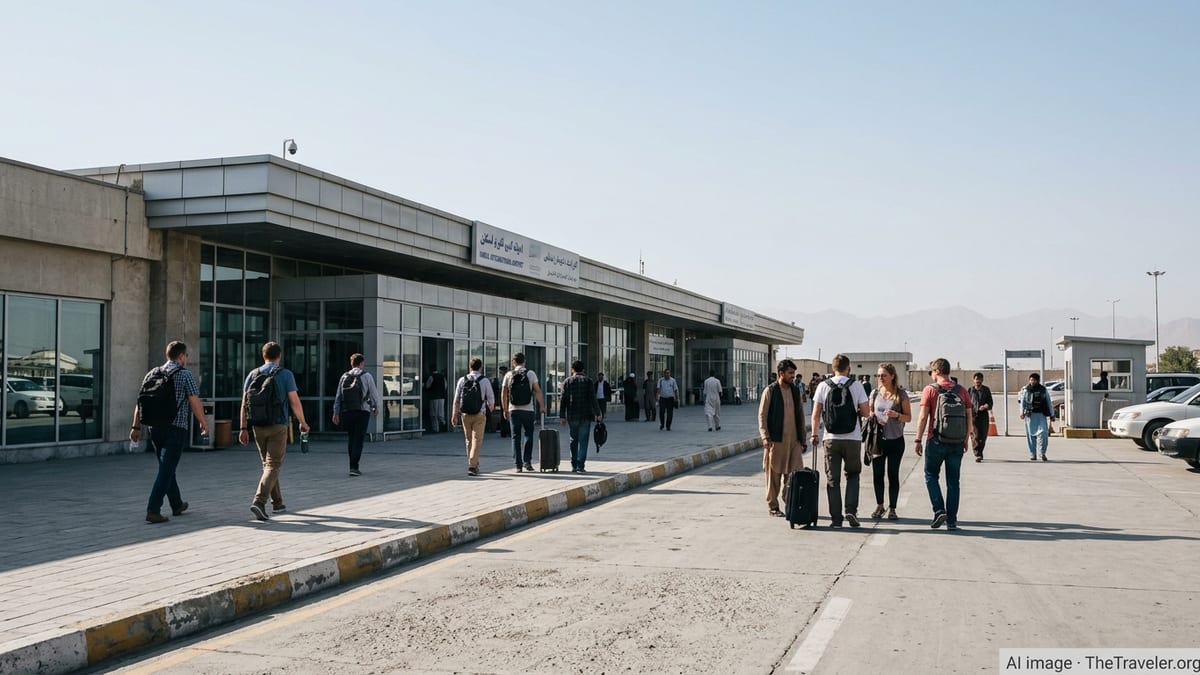
Thailand Rolls Back Visa-Free Stays for Indians
Thailand, one of the most popular short-haul destinations for Indian holidaymakers, has withdrawn the expanded visa-free entry that had briefly allowed Indians to stay for up to 60 days without a visa. Recent updates indicate that India has been moved back into the visa-on-arrival category as Bangkok scales down a broader post-pandemic tourism incentive that had covered dozens of countries.
For Indian passport holders, this means factoring in visa-on-arrival queues, documentation and fees once again, instead of simply walking through on a passport stamp. While the change does not close Thailand’s doors, it restores an extra layer of formality and cost that budget travellers had temporarily been spared.
Travel planners suggest that those heading to Thailand in the coming months should allow more time for immigration and keep proof of onward travel, hotel bookings and sufficient funds ready, as front-line checks can be stricter when countries revise visa policies.
Schengen and Europe Tighten the Rules at the Border
In Europe, the policy picture for Indian visitors is shifting on two fronts. First, updated Schengen border rules adopted in recent months give the European Union more structured tools to reintroduce temporary entry restrictions at external borders in the event of a large-scale crisis such as a public health emergency. While these provisions are not directed at any single nationality, they make it easier for travel conditions to change quickly for non-EU visitors, including Indians.
Separately, reports over the past year have highlighted higher rejection rates for Schengen visas filed by Indian applicants, especially for popular destinations such as Germany, France and Italy. Publicly available statistics and travel-industry commentary point to a mix of stricter documentation checks, tighter appointment availability and heightened scrutiny of first-time travellers.
For Indian citizens planning European holidays or business trips, the practical takeaway is to apply earlier, provide more comprehensive evidence of income, employment and travel history, and be prepared for longer processing times. Travel agents also note that multiple-entry visas, when granted, are becoming more valuable as they spread application costs across several trips.
US and UK: Tougher Screening and Student Visa Curbs
Across the Atlantic, Indians continue to be among the largest groups of visitors and migrants to the United States and the United Kingdom, but recent rule changes are altering how easily they can move. In the US, policy shifts since 2025 have expanded social media screening for many visa categories and placed additional emphasis on security vetting, which travel and immigration reports say has contributed to longer waits and higher refusal rates for some Indian applicants.
Indian professionals and students are particularly exposed, because they dominate key categories such as H-1B work visas and F-1 study visas. Analysis of official data and media coverage indicates that more stringent reviews and evolving green card rules are feeding uncertainty around long-term plans, prompting some Indians to delay non-essential travel or avoid trips that might complicate future immigration filings.
In the UK, tougher student visa rules that took hold from 2024 restrict most international students from bringing dependants, a change that has continued to ripple into 2026. Publicly available government updates frame the move as part of an effort to reduce net migration, but for Indian families it raises the cost and emotional burden of higher education abroad, often forcing students to travel alone while spouses and children remain in India.
Air India and Middle East Turbulence Cut Flight Options
Even when visas are in hand, getting out of India is becoming more complicated on certain routes. Air India has recently announced temporary cuts to its international network between May and July 2026, trimming rotations to Europe, North America, Australia and parts of Asia. Industry reports link the reductions to a spike in fuel prices and the need to reroute aircraft around conflict-affected airspace in West Asia.
These cuts follow earlier reductions on parts of the airline’s domestic and regional network, signalling a broader effort to conserve capacity and restore reliability after a period of rapid expansion. Trade publications and travel analysts warn that fewer seats during the Indian summer peak are likely to push up international fares, particularly on non-stop services that are already in high demand.
The squeeze is being compounded by broader disruption along Gulf and Middle East corridors, where airspace closures and security concerns have triggered large-scale cancellations and diversions in recent months. Many Indians rely on Middle Eastern hubs to connect to Europe and the Americas, so even indirect disruptions can translate into longer journeys, missed connections and sudden itinerary changes.
Travellers are being advised by airlines and travel intermediaries to build in longer layovers, monitor schedule changes closely in the days before departure and keep a buffer of time before key events such as conferences, exams or cruise departures.
Stricter Cabin-Bag Rules and Airport Screening in India
Inside Indian airports, security norms are also evolving in ways that affect how passengers pack and move through terminals. Recent enforcement of updated regulations from the Bureau of Civil Aviation Security has tightened the long-discussed limit of one piece of cabin baggage per passenger on many routes, regardless of whether the flight is domestic or international.
While airlines may still advertise their own cabin-bag allowances in kilograms, security checkpoints are increasingly focusing on the number of pieces and on consolidating personal items, laptop bags and small backpacks into a single unit. Travellers report that carrying extra loose items through screening can lead to delays and, in some cases, demands to check in additional bags at the last minute.
Indian carriers have also refreshed their lists of restricted and special-items in cabin luggage, including clearer rules on power banks, small drones and religious articles that may trigger scrutiny at international security holds. Public notices from airlines and airport operators stress that passengers should check the latest baggage pages and arrive earlier than before, as intensified screening and fuller flights combine to lengthen queues.
Visa-Free, Visa-on-Arrival and E-Visa Maps Keep Shifting
Beyond headline destinations, the overall travel freedom landscape for Indian passport holders is in flux. Updated indexes show that Indians currently have varying combinations of visa-free, visa-on-arrival and e-visa access to more than 140 countries and territories, but the exact mix has been changing with new bilateral deals, pilot tourism schemes and periodic withdrawals of earlier concessions.
India itself has expanded e-visa categories in recent years, while neighbouring and regional destinations such as Sri Lanka and Thailand have alternated between fee waivers, temporary visa-free entries and more conventional visa-on-arrival rules. For travellers, this churn means that assumptions based on a previous trip, or on a friend’s experience a year ago, can easily be out of date.
Travel advisories and visa trackers emphasise that Indian travellers should treat visa conditions as dynamic, not fixed. Checking official consular notices shortly before booking, keeping digital copies of approvals, and using reputable intermediaries where needed have become as essential to a smooth journey as comparing fares or hotel ratings.