


More news on this day
In the time it takes most travelers to clear airport security and board a flight, Royal Caribbean is emptying, cleaning, restocking and reboarding some of the world’s largest cruise ships, transforming one vacation into the next in a tightly choreographed operation that typically lasts half a day or less.
Get the latest news straight to your inbox!
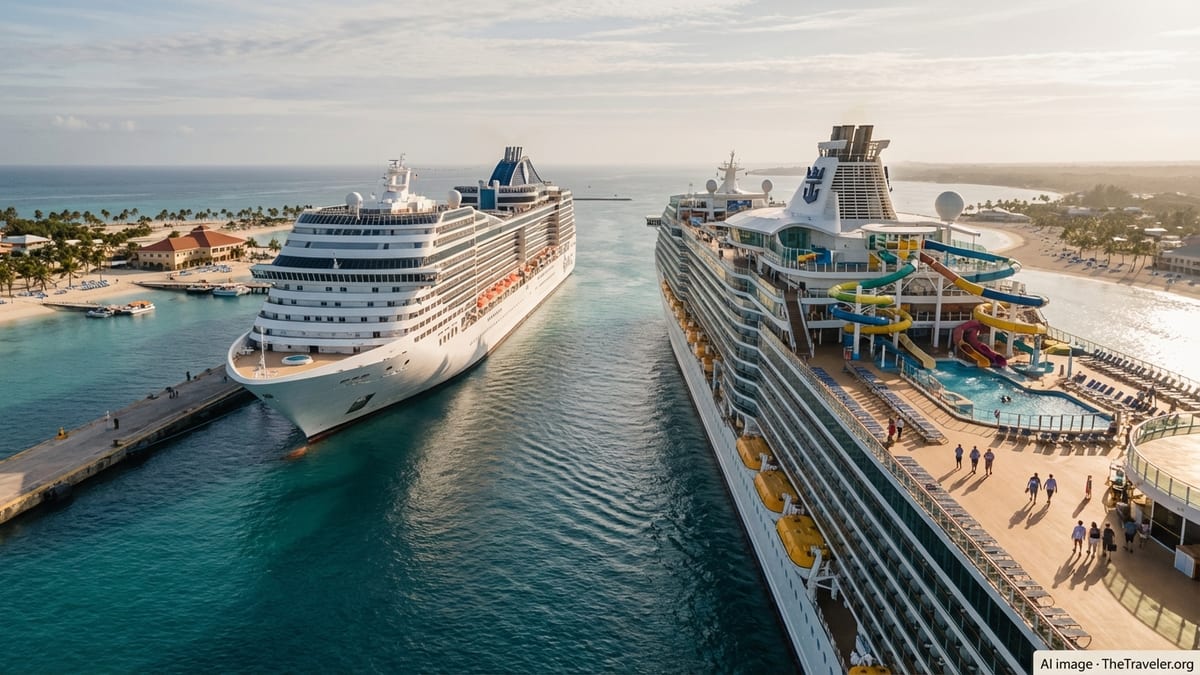
From Sleeping City to Empty Shell Before Breakfast
Turnaround day begins long before sunrise, when a Royal Caribbean ship eases into a homeport like Miami or Port Canaveral after a week in the Caribbean. Publicly available guides on embarkation day indicate that ships often arrive in the early morning, with the goal of having most guests ashore by mid-morning so crews can reclaim every cabin and corridor for the next voyage.
Disembarkation is staggered into time slots, with some guests carrying their own luggage and leaving as early as local authorities permit. Travel forums and cruise guidance note that final passengers are generally asked to vacate staterooms by around 8 or 9 a.m., even when they are not scheduled to walk off the ship until later, so that cabin stewards can begin stripping beds, removing linens and preparing spaces for deep cleaning.
According to published coverage of cruise port operations, all guests must be off before boarding for the next sailing can begin in earnest. Only once the vessel is effectively a sealed worksite can the most intensive cleaning, technical checks and restocking proceed at full speed, turning what had been a floating resort the night before into something closer to an industrial facility for a few critical hours.
This guest “handover” is the first major constraint in a narrow operational window. Industry reports describe modern turnarounds as eight- to twelve-hour tests of coordination in which passenger movement, customs controls, baggage logistics and shipboard work must be sequenced with minimal delay.
Cleaning a Floating Resort in Less Than Half a Day
Royal Caribbean has described turnaround day as the “ultimate pit stop,” with its own blog explaining how thousands of crew members fan out across the ship to ready every venue and cabin for incoming travelers in roughly ten to twelve hours. The company’s behind-the-scenes materials compare the pace to a motorsport refueling stop, scaled up to the size of a small town.
The biggest and most time-sensitive task is housekeeping. Cabins must be stripped of linens, towels and amenities, inspected for damage or maintenance needs, cleaned and fully reset with fresh bedding and supplies in a matter of minutes each. Public areas, from theaters and kids’ clubs to pool decks and promenades, go through intensive overnight and turnaround cleanings that include vacuuming, wiping high-touch surfaces, sanitizing restrooms and resetting furniture.
Health protocols introduced in recent years have added another layer. Guidance documents and operating manuals released by Royal Caribbean Group emphasize rigorous sanitation standards, including disinfection of handrails, elevator buttons and other high-contact points between sailings. These processes are designed to meet internal public health requirements and align with international safety and hygiene expectations in the cruise sector.
While housekeeping and sanitation crews are at work above decks, hotel operations teams refresh bar and restaurant stores, test point-of-sale systems and restock everything from pool towels to glassware. Logbooks and checklists help managers verify that each venue meets operating standards before the first new guests are allowed onboard.
Massive Resupply in a Narrow Port Window
Behind the scenes, turnaround day is also when a ship is literally fed. Royal Caribbean’s own descriptions of the process highlight the scale involved, with large vessels taking on thousands of pounds of fresh produce, dairy, meat and dry goods, along with beverages, consumables and hotel supplies such as toilet paper and lightbulbs.
According to coverage of major turnaround ports, this provisioning is preplanned down to the item, based on sailing length, itinerary, passenger counts and historic consumption patterns. Multiple trucks are typically lined up on the pier even before the ship docks, delivering pallets that are scanned, inspected and loaded through a network of service entrances before being distributed to galleys and storerooms deep inside the hull.
Fuel and waste handling add further complexity. Industry analyses of cruise operations state that ships often refuel and offload waste on the same tight schedule. Royal Caribbean Group has outlined its efforts to reduce landfill disposal by increasing recycling and introducing new waste-to-energy systems onboard some newer vessels, which help manage solid and food waste more efficiently during both port calls and voyages.
Port agents and technical teams also coordinate deliveries of spare parts, consumables for machinery, and specialized contractors during this window. Planning documents referenced in maritime publications describe turnaround calls as critical opportunities to complete maintenance tasks that cannot be done at sea, from safety inspections to equipment repairs.
Choreographing Thousands of People Through the Same Doors
If provisioning and maintenance are the hidden engines of a fast turnaround, passenger movement is the most visible part. A Royal Caribbean ship carrying several thousand guests must empty and then refill through the same terminal infrastructure, often within a span of only a few hours.
Embarkation day guides indicate that boarding for new guests can begin by late morning, once the ship has been cleared and interior spaces are safe for public access. To keep queues manageable, guests are usually assigned arrival windows through the line’s digital platforms. This spreads security screening, document checks and check-in over several hours, which in turn helps onboard teams finalize cabin preparation without overwhelming elevators and corridors.
Safety requirements add fixed milestones to the schedule. Royal Caribbean’s public guidance on muster drills explains that all guests must complete a safety briefing within 24 hours of departure, typically shortly before sail away on turnaround day. On modern ships, much of the briefing can be completed via app or in-cabin television, but guests still need to check in at designated muster points, creating another time-sensitive flow of people that must be built into the day’s plan.
This choreography is replicated in major turnaround ports around the world. Analyses of cruise infrastructure note that ports such as Miami, Port Canaveral and Barcelona function as hubs precisely because they can support rapid swings from one full ship of departing guests to another of arriving passengers, alongside the logistics of fuel, food and baggage handling.
Why Speed Matters for Royal Caribbean’s Business Model
The pressure to turn ships around in hours is structural to the modern cruise industry. Public financial disclosures and expert commentary on cruise operations describe these vessels as high-value assets that generate revenue only when at sea or actively hosting guests. Every additional hour in port can affect an itinerary, fuel consumption and, ultimately, operating margins.
Reports on fleet deployment strategies emphasize that tight turnaround times allow Royal Caribbean and its competitors to maintain dense schedules, stringing together back-to-back voyages with minimal idle days. This supports year-round deployment of flagship vessels in popular regions and enables frequent short cruises, such as three- and four-night sailings, that depend on quick port calls to remain viable.
At the same time, environmental and regulatory expectations are reshaping how these fast cycles work. Sustainability reports from the company describe efforts to make port stays more efficient, including optimizing hotel systems, exploring shore power where available and refining waste management practices. International initiatives focused on the ship-port interface encourage better coordination so that services such as bunkering, garbage handling and inspections can be completed without unnecessary delays.
The result is a finely tuned balance: turnaround days must be quick enough to keep giant ships on schedule, but robust enough to handle safety drills, deep cleaning, technical checks and the needs of thousands of travelers. For Royal Caribbean, mastering that balance has become central to operating some of the biggest cruise ships afloat as they pivot from one voyage to the next in the span of a single working day.