


More news on this day
A newly updated U.S. security warning for Mexico is prompting renewed concern among American travelers, yet current advisories and tourism data indicate that Cancun and the Riviera Maya remain comparatively low risk and are not the primary focus of the latest alert.
Get the latest news straight to your inbox!
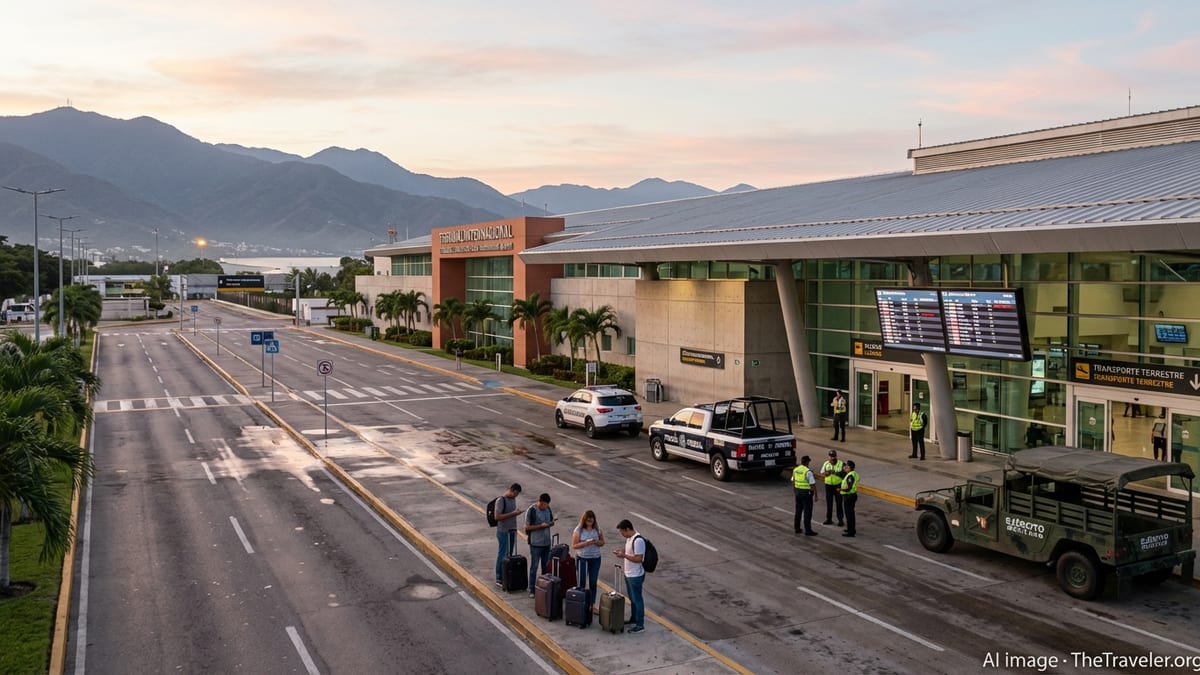
Advisory Targets Higher-Risk States, Not Quintana Roo Resorts
According to recent published coverage, the new U.S. travel warning centers on security operations and organized crime activity affecting a cluster of Mexican states, including Jalisco, Baja California, Guanajuato and others, rather than the tourism corridors of Quintana Roo. The update reiterates that risk levels vary widely across the country and urges travelers to review guidance for each state individually before departure.
Publicly available U.S. government information continues to classify Mexico overall at a “Level 2: Exercise Increased Caution,” but uses a state-by-state approach to spell out where stronger restrictions apply. States such as Guerrero and parts of Michoacan remain under more severe advisories, while Quintana Roo, home to Cancun, Playa del Carmen, Tulum and the broader Riviera Maya, is treated differently from these higher‑risk regions.
Some earlier security alerts in February 2026 temporarily included Quintana Roo amid wider nationwide operations, briefly advising some U.S. government personnel in specific areas to shelter in place. Subsequent updates from the U.S. mission in Mexico and summary analyses indicate that conditions in Quintana Roo normalized quickly, with restrictions focused back on other regions where security incidents persisted.
Travel analyses referencing the State Department framework note that Quintana Roo is grouped with Yucatan and Campeche among the lowest‑risk Mexican states for international visitors under the current advisory system, distinguishing the Caribbean resort belt from parts of northern and western Mexico that face more acute security challenges.
State Department Guidance for Cancun and the Riviera Maya
The State Department’s Mexico advisory page explains that the main tourism centers in Quintana Roo, including Cancun, Isla Mujeres, Cozumel, Playa del Carmen and Tulum, remain open to visitors with no specific travel restrictions for U.S. government employees beyond standard precautions. The guidance stresses situational awareness, avoiding isolated areas at night and monitoring local news, but does not advise against travel to these resort areas.
Beach and water-safety notes within the same government resources emphasize that the most consistent risks for visitors along this stretch of coast are environmental rather than criminal, such as strong currents, changing surf conditions and occasional tropical storms. Travelers are urged to heed colored flag systems on beaches, follow lifeguard instructions where available and pay attention to seasonal hurricane advisories during the Atlantic storm period.
Health-related information from U.S. public-health agencies highlights additional non‑security considerations, including recent reports of gastrointestinal illnesses among travelers returning from Cancun and the Riviera Maya. These updates encourage visitors to follow routine food and water precautions, consider recommended vaccinations and travel health consultations, and pack appropriate medications in case of minor illness during their stay.
Overall, the official materials portray Quintana Roo’s resort corridor as an area where normal tourism remains viable when combined with common-sense precautions, even as they underscore that conditions can evolve and that travelers should verify the latest advisory text immediately before departure.
Tourism Flows Continue Through Cancun International Airport
Traffic data and industry reporting show that airlines continue to operate dense schedules into Cancun International Airport, the primary gateway for the Mexican Caribbean and the Riviera Maya. Carriers from the United States, Canada, Europe and South America maintain regular flights, reflecting sustained demand for the region’s beaches and all‑inclusive resorts despite periodic global headlines about security in other parts of Mexico.
Hotel and resort performance reports reviewed by travel analysts indicate that occupancy in Cancun, Playa del Carmen and neighboring destinations has remained resilient through the late‑summer and early fall booking period. Properties across the region continue to promote seasonal packages, family travel deals and winter 2026 reservations, suggesting limited impact from the latest advisory on forward bookings to date.
On the ground, tourism updates from local and international travel organizations describe day‑to‑day operations in the hotel zone and along the Riviera Maya as largely normal, with transfers running between the airport and resort complexes and tours operating to coastal attractions and archeological sites. Many operators note visible security and traffic controls on major highways, but these are framed as part of routine protective measures rather than disruptions targeting visitors.
Analysts caution that airline and tour schedules can still be affected indirectly if security operations intensify in other parts of the country, making flexible planning and comprehensive travel insurance worth considering for trips booked during the coming high season.
How Travelers Are Being Advised to Respond
Travel guidance drawn from government advisories and independent safety resources stresses that the new warning should not be interpreted as a blanket call to cancel trips to Cancun or the Riviera Maya. Instead, it is presented as a prompt to distinguish carefully between the relatively low‑risk, tourism-focused Caribbean corridor and the higher‑risk states where organized crime activity and law-enforcement operations are more concentrated.
Prospective visitors are encouraged to study the Mexico country page on the State Department’s travel site, then drill down into the Quintana Roo section to confirm the current risk level and any changes that may affect overland routes, excursions or late‑night activities. Many guides also recommend enrolling in the Smart Traveler Enrollment Program so travelers can receive security updates while abroad.
Seasoned Mexico specialists advise that common urban precautions remain relevant in the Cancun and Riviera Maya area, such as using registered airport shuttles or prearranged transfers, limiting displays of valuables, and staying inside resort areas or well‑known tourist districts after dark. Visitors who plan to drive or explore off the main resort strip are urged to review local road conditions and avoid isolated routes at night.
For now, the practical takeaway of the new advisory, according to travel-safety commentators, is that Cancun and the Riviera Maya continue to operate as Mexico’s flagship beach destinations within a lower‑risk bracket, while travelers are reminded to stay informed, follow official updates and remain flexible should conditions shift in other parts of the country.
Balancing Perception and Reality for Mexico Beach Travel
The release of any new Mexico travel warning often generates headlines that can blur regional differences and heighten anxiety among prospective visitors. Tourism analysts note that many travelers first encounter the advisory as a single headline about Mexico as a whole, without realizing that the underlying guidance differentiates sharply between states and even between specific urban and rural areas.
Data from recent seasons show that Cancun and the Riviera Maya have repeatedly maintained strong visitor numbers even during periods when other Mexican states faced elevated security alerts. Industry observers attribute this in part to the region’s heavy reliance on international tourism, established hotel infrastructure and concentrated security measures along the main resort corridors and at key transport hubs.
At the same time, public-health and disaster-preparedness information highlights that risk in the Mexican Caribbean is multifaceted, extending beyond crime statistics. Travelers are urged to factor in hurricane season, coastal erosion in some beach areas, and routine health concerns alongside security considerations when deciding how and when to visit.
For travelers weighing current headlines against on-the-ground conditions, available evidence points to a situation in which Cancun and the Riviera Maya remain central to Mexico’s tourism economy and accessible to international visitors, while the latest U.S. warning serves as a reminder to stay informed, read state-specific advisories closely and avoid extrapolating high‑risk conditions in distant regions to the country’s major Caribbean resort zones.
U.S. Department of State Mexico Travel Advisory
The Cancun Sun: New U.S. Travel Warning Issued for Mexico