


More news on this day
Travelers across the United States are being urged to brace for significant disruptions after an Amazon cargo jet overran a runway at Miami International Airport on Sunday, prompting a full ground stop and rippling delays through one of the nation’s busiest air hubs.
Get the latest news straight to your inbox!
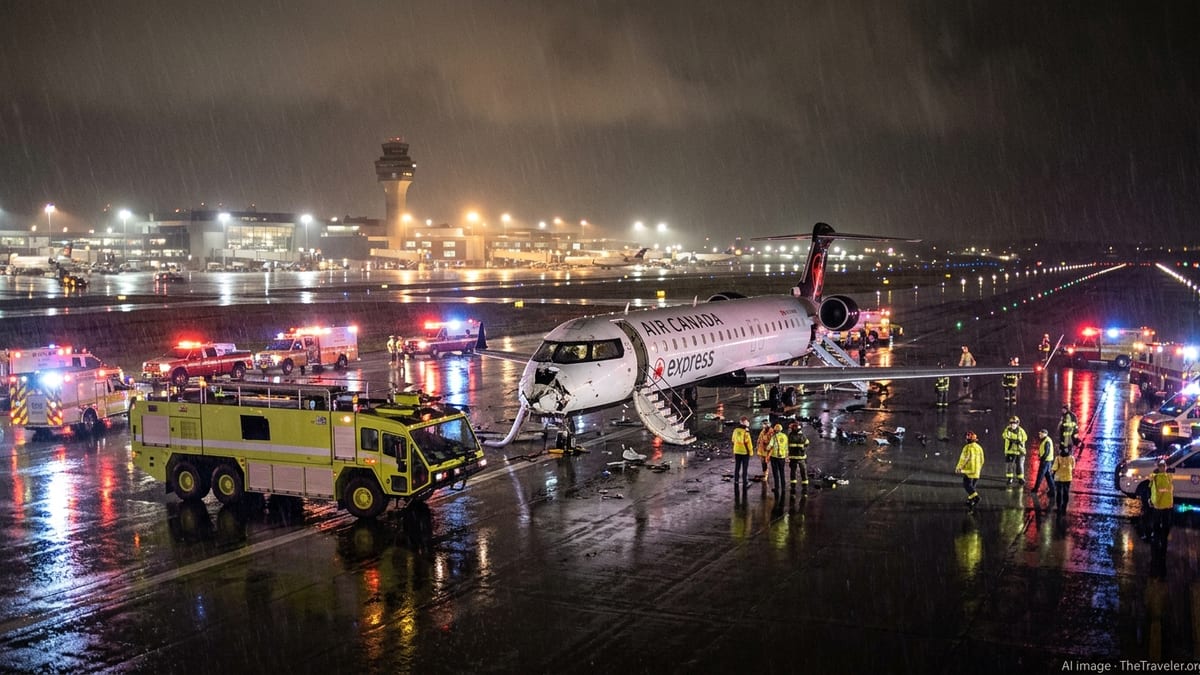
Runway overrun triggers ground stop at major U.S. gateway
Publicly available information indicates that the incident occurred on Sunday afternoon, September 6, when a Boeing 767 cargo aircraft operating for Amazon Prime Air arrived from San Juan, Puerto Rico and failed to stop on the runway at Miami International Airport. The aircraft left the paved surface, struck multiple vehicles beyond the airfield perimeter and caught fire, sending thick black smoke into the sky and drawing a large emergency response across airport grounds.
Reports from multiple outlets describe more than 60 Miami-Dade Fire Rescue units responding to the scene as the aircraft came to rest beyond the runway with its tail section near or over a perimeter fence. Early images and video circulating on social media show the fuselage heavily damaged and surrounded by firefighting foam, with emergency crews working around the aircraft and affected vehicles.
The Federal Aviation Administration stated that the jet overran the runway at around 2 p.m. local time, shortly after its arrival from San Juan. As the situation unfolded, all runways at Miami International were closed, immediately halting arrivals and departures and placing one of the country’s key international gateways under an operational freeze during a busy travel period.
Local and national coverage notes that the crash involved 21 Air Flight 7598, a contract cargo operator flying on behalf of Amazon. Initial reports point to multiple injuries on the ground and among those on board, with national outlets indicating several fatalities, though detailed casualty figures and identities remain under review as investigations continue.
Duffy cites “significant delays and potential cancellations”
U.S. Transportation Secretary Sean Duffy publicly acknowledged the seriousness of the disruption, saying that a full ground stop had been issued at Miami International Airport while first responders assessed the scene. In a post on social media platform X, Duffy warned travelers to expect “significant delays and potential cancellations,” underscoring that normal operations would not resume until the runway environment was confirmed safe.
According to published coverage of Duffy’s statement, the decision to freeze operations was intended to give emergency services unobstructed access to the crash site and to allow aviation officials to evaluate both the damaged aircraft and any impact to runway infrastructure. The ground stop extended beyond the immediate crash window, magnifying the impact on flights arriving from across the Americas and Europe.
Travel outlets and broadcast networks report that Duffy’s warning aligns with his broader approach during recent periods of irregular operations, in which he has encouraged travelers to closely monitor airline communications and federal aviation dashboards when major hubs experience sudden capacity losses. Sunday’s situation in Miami fits that pattern, with transportation officials signaling that travelers should be prepared for knock-on effects even after the immediate emergency phase ends.
While formal timelines for fully reopening all runways had not been published in the initial hours after the crash, Duffy’s comments suggested that the priority remained safety and incident response rather than rapid restoration of flight schedules. That posture is expected to translate into lingering cancellations and delays into the evening and potentially into subsequent days, depending on the extent of damage to airport infrastructure.
Nationwide ripple effects for passengers and cargo
Miami International Airport serves as a critical hub for both passenger and cargo traffic, particularly for routes connecting the United States with Latin America and the Caribbean. The sudden closure of all runways, even for a limited period, can quickly cascade across airline networks, forcing diversions, holding patterns and later missed connections at downstream airports.
Air travel tracking services cited in media reports show numerous flights inbound to Miami entering holding patterns or diverting to alternate airports in Florida and neighboring states shortly after the ground stop took effect. Outbound flights faced extended tarmac waits or cancellations, with airlines urging passengers to check flight status frequently and expect rebookings, schedule changes and delays in baggage handling.
Cargo operations are also heavily affected. Amazon’s Prime Air network relies on Miami as a key node for packages flowing between the U.S. mainland and Caribbean markets, and the damaged aircraft is part of a fleet that supports time-sensitive deliveries. Logistics analysts quoted in national coverage note that a single aircraft outage and hub closure can delay thousands of packages, potentially affecting same-day and next-day delivery commitments across multiple regions.
For leisure and business travelers already in transit, the Miami incident compounds what has been a challenging period marked by weather disruptions and occasional staffing constraints at air traffic control facilities in other parts of the country. Duffy’s latest warning reinforces a message that passengers should build in extra time, particularly for itineraries involving tight connections through major hubs.
Investigators focus on cause and airport safety perimeter
While the primary focus on Sunday centered on rescue efforts and restoring safe operations, attention is already turning to what caused the aircraft to overrun the runway at one of the nation’s most closely monitored airports. Publicly available information indicates that the Federal Aviation Administration is sending investigators to the scene, with the National Transportation Safety Board expected to take a lead role in determining contributing factors.
Early imagery and eyewitness accounts shared in published reports show the cargo jet coming to rest beyond the runway end, across a roadway and amid civilian vehicles, raising questions about the adequacy of physical barriers and engineered safety areas beyond the runway. Aviation specialists consulted by news outlets note that many large airports incorporate runway safety areas or arrestor systems designed to slow or stop aircraft that fail to brake in time, and investigators will likely examine how those protections functioned at Miami.
The weather at the time of the incident, the condition of the runway surface, the aircraft’s braking systems and crew decision-making on approach and landing are all expected lines of inquiry. Investigators will review flight data recorders, cockpit voice recordings and air traffic control communications to reconstruct the final minutes before the overrun.
Because the aircraft was a dedicated cargo transport rather than a passenger jet, the number of people on board was significantly lower than on a typical commercial flight into Miami. Even so, the collision with vehicles beyond the airfield underscores the potential hazard to people on the ground when a large jet exits the runway environment, an aspect certain to feature prominently in safety reviews.
What travelers should do if flying through Miami
For travelers scheduled to fly into or out of Miami International Airport over the next 24 to 48 hours, airline and airport advisories highlighted in media coverage emphasize flexibility and proactive planning. Passengers are being encouraged to monitor airline apps and websites closely, sign up for text alerts, and consider adjusting itineraries if possible, particularly for nonessential trips.
Given Duffy’s warning about significant delays and potential cancellations, travel experts cited in news reports recommend that passengers connecting through Miami explore options to reroute through other hubs, even if that involves longer travel times. Some airlines may offer fee waivers or flexible rebooking policies in response to the disruption, especially for passengers whose journeys begin or end in South Florida.
Travelers already on the ground in Miami are advised to allow extra time to reach the airport, as local road closures and emergency vehicles near the airfield may add congestion around key access points. Inside the terminals, longer lines at customer service desks, security checkpoints and concessions are likely as stranded passengers seek assistance and rebookings.
For those watching the situation from other parts of the country, analysts suggest that the Miami incident is a reminder of how a single runway event at a major gateway can reverberate across the national airspace system. Duffy’s public warning reflects a broader reality for travelers: as air traffic volumes remain high, unexpected incidents can quickly translate into widespread schedule disruptions, making real-time information and contingency planning essential parts of any trip.
CBS Miami: Amazon cargo plane overruns runway at Miami International Airport
Los Angeles Times: Amazon cargo plane overruns Miami airport runway
NPR / Alabama Public Radio: Multiple patients after Amazon cargo plane crashes at Miami airport
Social media archive of Sean Duffy’s post on X regarding Miami ground stop