


More news on this day
The U.S. State Department has issued a new security alert tied to rising Middle East tensions, urging Americans in the region to maintain heightened vigilance and prepare for sudden travel disruption, including flight cancellations and periodic airspace closures.
Get the latest news straight to your inbox!
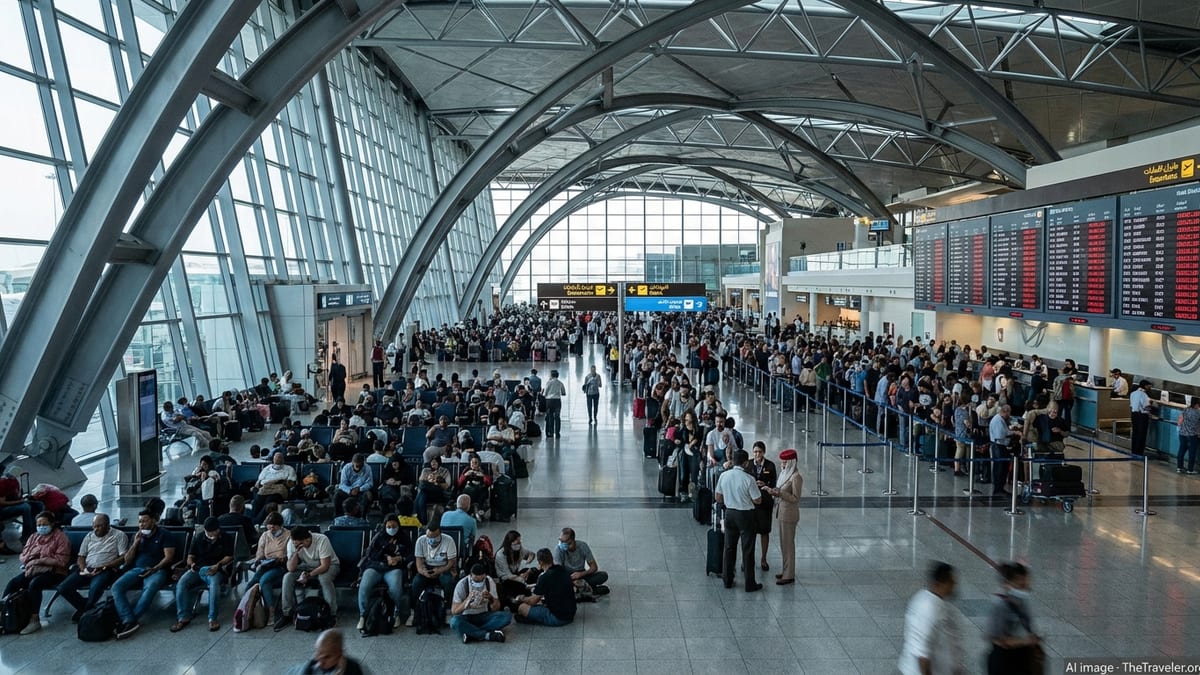
What the new alert says and why it matters now
The State Department’s latest guidance reiterates that the Middle East security environment can shift quickly, with the potential for unforeseen escalation. For travelers, the most immediate practical takeaway is operational: flights can be cancelled, routes can be suspended, and airspace can close with limited notice, affecting both arrivals and connections through major hubs.
The alert also underscores that U.S.-linked locations and interests may be targeted outside the region as well, a framing that matters for travelers because it expands situational awareness beyond any single destination. In real-world travel terms, that can translate into tightened security at airports, more frequent last-minute itinerary changes, and restrictions or reduced services at U.S. diplomatic facilities.
Separate State Department messaging earlier this summer used similar language in a worldwide caution notice, advising Americans to exercise increased caution and highlighting the possibility of travel disruptions tied to Middle East tensions. The newer Middle East-focused alert builds on that baseline with renewed urgency as regional conditions evolve.
Where travelers could feel impacts first: airspace, airports, and reroutes
Even when a traveler’s final destination is not in an active conflict zone, regional airspace constraints can ripple across commercial aviation. Transits through Gulf hubs and other Middle East gateways can be disrupted by periodic airspace closures, sudden route changes, and airline decisions to pause select routes.
Travelers should anticipate that airline operations can change faster than travel agents or third-party booking sites update. The State Department’s alert language specifically points travelers toward monitoring airport and airline operational updates, which is often the quickest way to confirm whether a flight is operating, diverted, delayed, or cancelled.
Recent published coverage around the renewed alert has referenced heightened tensions and incidents that can trigger air-defense responses and short-notice operational shifts. That context matters because it helps explain why travelers may see abrupt schedule changes even if their city appears calm on the ground.
How this interacts with country Travel Advisories (and why both matter)
A security alert is not the same thing as a country Travel Advisory level, and travelers benefit from reading both. The alert provides near-term, fast-moving operational and security guidance, while country Travel Advisories summarize risk levels and standing concerns such as terrorism, armed conflict, civil unrest, and limits on U.S. government assistance.
Several Middle East-related advisories already include aviation and conflict language. For example, Iraq is designated Level 4 (Do Not Travel), with publicly available advisory text noting risks that include terrorism, kidnapping, armed conflict, and limits on emergency services for U.S. citizens. The advisory also references civil aviation restrictions and notices connected to risks to aircraft operating within or near the country.
Jordan’s advisory includes armed-conflict and aviation-safety language tied to the broader regional situation, while also listing specific areas with higher risk. Travelers using Jordan as a staging point should not assume it is automatically insulated from regional disruption, especially when commercial flight schedules are affected.
In practical terms, travelers should treat the security alert as a “right now” layer and the country advisory as the “bigger picture” layer. If the advisory level is high, the threshold for postponing travel, rerouting, or avoiding certain areas should be lower.
Steps travelers should take before departure and while on the ground
For travelers currently in the Middle East or preparing to depart soon, the most time-sensitive step is confirming flight status directly with the airline and, when relevant, checking the departure airport’s official status updates. This matters most for itineraries with tight connections, overnight departures, or transit through hubs where reroutes can cascade across multiple flights.
Travelers should also enroll in the Smart Traveler Enrollment Program so they can receive security updates from the nearest U.S. embassy or consulate. State Department consular information pages for the Middle East also point travelers to an official WhatsApp channel for security updates, which can be useful if email access is inconsistent during disruptions.
Because disruptions can extend beyond the immediate region, travelers should plan for contingencies that do not depend on U.S. government assistance. That includes keeping travel documents accessible, ensuring phones can receive international service, and having a practical plan if a flight is cancelled for multiple days, such as reserving extra funds for lodging, alternative routings, and local transport.
What to watch over the next several days if you have a trip booked
Travelers should monitor three streams of information in parallel: updated embassy security alerts for the specific country they are in, the country Travel Advisory level and details, and airline and airport operations. In fast-changing situations, these sources often update on different timelines, and comparing them helps travelers make decisions based on both security posture and real-world logistics.
It is also wise to keep an eye on whether U.S. diplomatic posts announce changes to routine operations, such as reduced public hours or appointment cancellations. While that does not automatically signal broader danger for travelers, it can be an early indicator that local security conditions or mobility constraints are tightening.
Finally, travelers with flexible itineraries may want to consider rerouting away from the region for connections where feasible, particularly if their itinerary relies on a single hub or a single flight per day. The current alert language emphasizes that travel disruptions may be periodic and unpredictable, which is exactly the kind of environment where redundancy in routing becomes a practical form of risk management.