


More news on this day
Flight disruptions rippled across two major air corridors this weekend after reports of a Houthi attack attempt near Riyadh coincided with operational problems at the Saudi capital’s main airport, while Etihad Airways cancelled a New Delhi to Abu Dhabi flight, stranding travelers and forcing rebookings.
Get the latest news straight to your inbox!
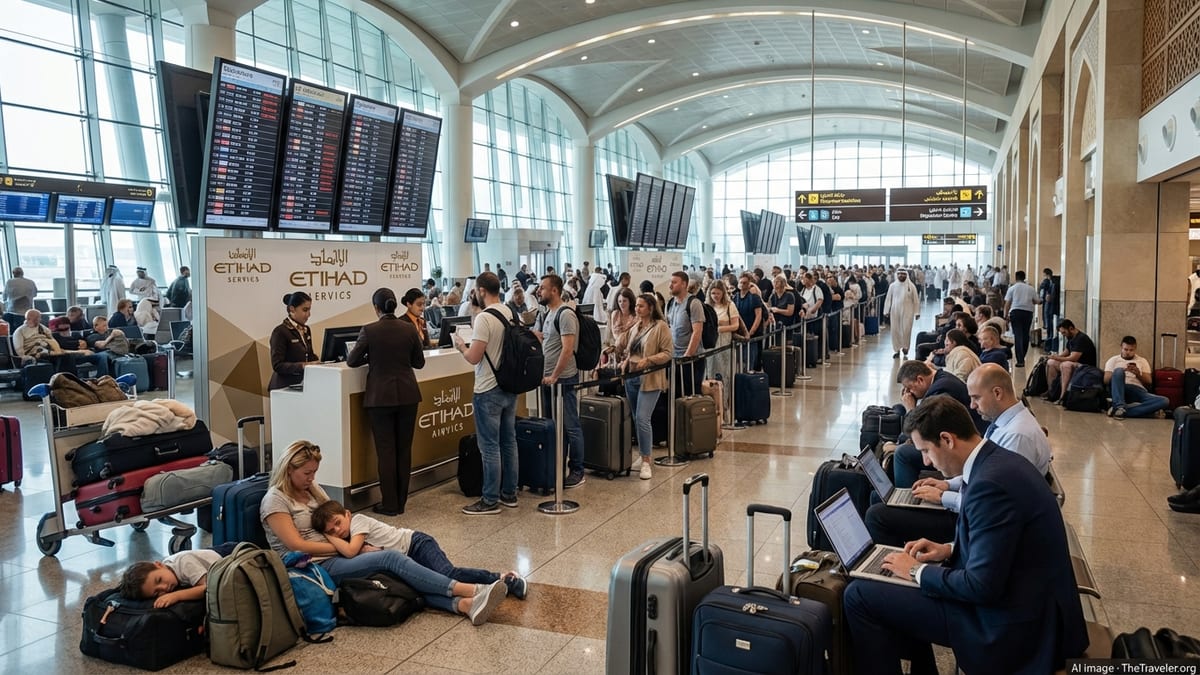
Riyadh: air-raid alert, smoke reports, and disruption at a key hub
Published coverage dated September 19, 2026, described an overnight air-raid alert in Riyadh and subsequent reports of flames and thick black smoke seen near King Khalid International Airport (RUH), one of the Kingdom’s busiest gateways. Flight tracking data during the incident showed widespread delays and a number of cancellations, with Flightradar24 flagging the airport for “major problems” at points during the day.
Saudi coverage summarized by international outlets indicated the attempted strike involved a ballistic missile, with reports indicating it was intercepted. Independent imagery circulated widely online, while wire-service reporting referenced smoke rising near areas described as fuel storage associated with the airport complex, a detail that heightened traveler concern even as flights continued to operate in reduced or uneven fashion.
By September 20, flight tracking summaries indicated operations had resumed more broadly after the earlier disruption. Even when airports remain open, short-lived suspensions, runway restrictions, emergency response activity, or airspace management measures can cause long departure queues, missed connections, and aircraft being repositioned away from the affected hub.
What travelers saw in the data: delays, cancellations, and knock-on effects
Riyadh’s disruption was especially visible because RUH functions as a transfer point for domestic Saudi Arabia flights and international connections across the Gulf, South Asia, and Europe. When departures are delayed in waves, inbound aircraft rotation schedules often break down, leading to secondary cancellations later in the day as crews time out or aircraft end up in the wrong city.
Airlines serving Riyadh typically manage such irregular operations by consolidating services, swapping aircraft types, or rerouting passengers via alternative Gulf hubs where seats are available. The practical result for travelers can be a significant difference between what a boarding pass originally shows and the eventual departure time, particularly for flights later in the operating day.
Passengers transiting Riyadh during periods of disruption generally face two immediate pain points: missed onward flights and baggage misconnects. Public airline policies vary by ticket type and route, but rebooking options often depend on whether the disruption is classified as an airline-controlled issue, an airport operational limitation, or a security-related event affecting airspace or ground infrastructure.
Etihad cancels Delhi–Abu Dhabi service after technical issue
Separately, travelers at Indira Gandhi International Airport (DEL) in New Delhi reported disruption late Saturday as Etihad Airways cancelled flight EY217 to Abu Dhabi (AUH). Published coverage in India described passengers being boarded and then asked to deplane after a technical issue was identified, with the cancellation confirmed later as travelers sought alternatives.
Flight tracking history for EY217 listed the September 19, 2026 service as cancelled, and Indian reports described the aircraft as a Boeing 787, with the disruption affecting roughly 200 passengers. The incident is distinct from the Riyadh event, but it compounded a weekend of heightened traveler sensitivity to disruption across Middle East air routes.
For passengers, a same-day cancellation on a busy international sector like Delhi–Abu Dhabi can be challenging because seats may already be allocated to other disrupted itineraries, including travelers connecting onward from Abu Dhabi. Rebooking can also be complicated when travelers hold separate tickets for onward flights or have time-sensitive plans such as visa appointments, cruise embarkations, or medical travel.
What to do now: checking flight status, rebooking options, and connections
For travelers scheduled through Riyadh or Abu Dhabi in the coming days, the most useful immediate step is to monitor airline flight-status tools and airport departure boards closely, rather than relying only on historical schedules. Disruptions can cascade even after smoke or emergency activity clears, as aircraft and crews are repositioned and backlogs unwind.
If an airline cancels a flight, passengers typically need to decide quickly between taking the earliest offered reroute, shifting to a later date, or requesting a refund depending on fare rules and local consumer protections. Travelers with connecting itineraries should also check whether both segments are on the same ticket, since this often determines whether the airline will protect the onward connection without additional cost.
For those booked on Gulf connections, alternative routings can include other regional hubs where capacity exists, but availability can change hourly during irregular operations. Travelers should keep documentation of cancellation notifications and boarding changes, and confirm baggage handling instructions during rebooking to reduce the risk of luggage being routed to the original destination while the passenger is rerouted elsewhere.
Why these incidents matter for Middle East travel patterns this season
Riyadh’s disruption underscores how quickly security incidents or emergency responses near critical aviation infrastructure can affect commercial schedules, even when damage is limited or flights resume the same day. The visibility of real-time flight tracking also means travelers often see disruptions developing before airlines finalize re-accommodation plans.
Meanwhile, the Etihad cancellation highlights a separate but common reality of long-haul operations: technical issues can produce sudden cancellations that strand hundreds of passengers, particularly on widebody aircraft routes. When this overlaps with broader regional disruption, the competition for seats across the network intensifies, and recovery can take multiple days for some travelers depending on demand and onward connections.