


More news on this day
New Yorkers planning international trips are being urged to reassess itineraries and step up personal security measures after a renewed worldwide caution highlighted elevated threats to Americans abroad and the potential for sudden travel disruptions.
Get the latest news straight to your inbox!
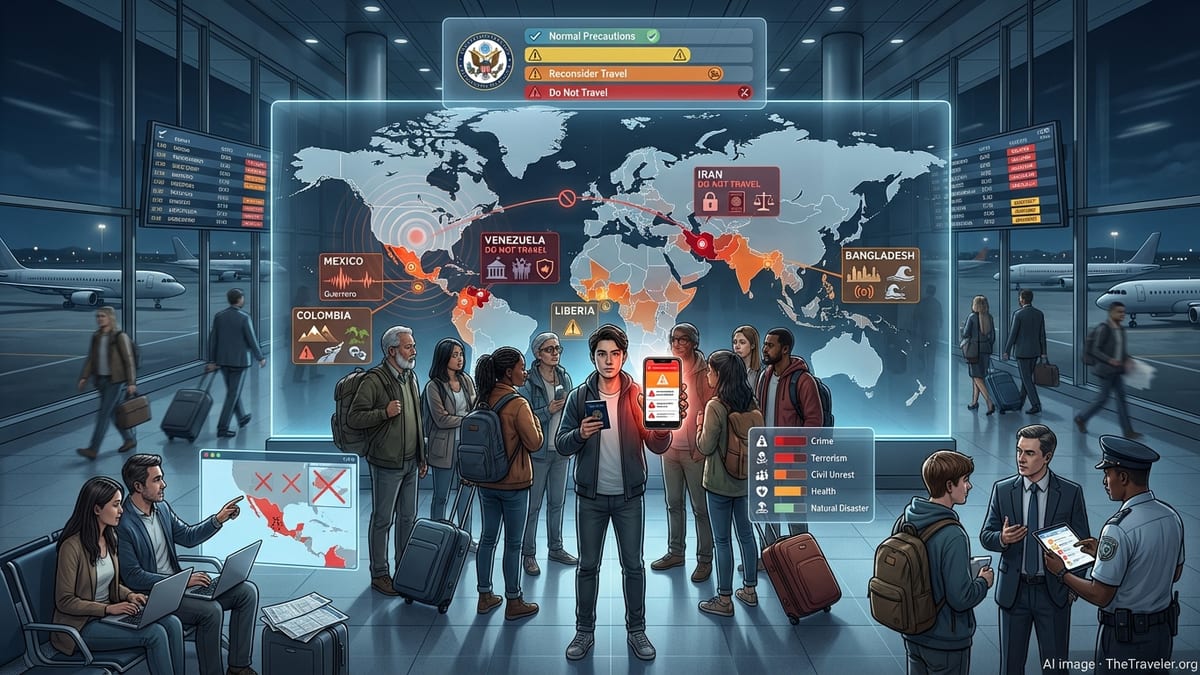
Global Caution Updated Amid Volatile Security Climate
The latest worldwide caution, updated on July 20, 2026, reiterates that Americans traveling overseas face a complex and fast-evolving security environment, particularly in regions affected by conflict and political unrest. While not advising a halt to travel, the alert underscores that attacks, unrest, or targeted incidents can occur with little or no warning in a variety of destinations.
Publicly available information describes the caution as a broad advisory, not limited to a single country or region. It notes that U.S. citizens and interests may be at increased risk where tensions linked to the ongoing conflict with Iran and related regional crises are playing out, including parts of the Middle East and nearby transit hubs. Travelers are urged to stay alert to the possibility of demonstrations, hostile rhetoric, and opportunistic crime directed at foreign visitors.
The warning also flags the heightened potential for disruptions in international air travel. Previous global alerts in 2026 have pointed to possible airspace closures, flight cancellations, and re-routings in and around conflict zones, which can have knock-on effects for connecting passengers from New York passing through major hubs in Europe and the Gulf.
What the Worldwide Warning Means for New York Travelers
For New Yorkers, the latest caution is less about abandoning international plans entirely and more about realistic risk assessment. Travel advisories continue to vary significantly by country, from routine “exercise increased caution” notices to more severe “reconsider travel” or “do not travel” levels. The new global message sits above those individual ratings, signaling that even relatively popular destinations may be subject to sudden changes in risk.
Residents of the New York metropolitan area are among the most frequent international travelers in the United States, with heavy volumes to Europe, Latin America, the Caribbean, and the Middle East. Airlines serving New York’s three major airports often rely on complex routing through sensitive regions, meaning that geopolitical developments far from the city can still affect departures from John F. Kennedy, LaGuardia, and Newark.
Travel publications and recent coverage of the 2026 alerts emphasize that the worldwide caution is unusual but not unprecedented. It is being framed as a reminder that terrorism, civil unrest, and politically motivated violence remain persistent risks in many parts of the world, and that Americans can be targeted because of their perceived national affiliation rather than their individual views.
Regional Hotspots and Country-Level Advisories
Behind the broad global language, a mosaic of country-level advisories helps define where risks are currently most acute. Several Middle Eastern states remain under elevated guidance that urges Americans to reconsider travel due to terrorism, missile or drone activity, civil unrest, and restrictions on consular access. Recent security alerts focused on the region caution travelers to be prepared for curfews, blocked roads, or temporary closures of airports and borders.
Outside the Middle East, parts of Africa, South Asia, and the Pacific are flagged for kidnapping, violent crime, or political instability. Some countries have experienced mass protests tied to economic conditions or foreign policy decisions, with demonstrations occasionally turning confrontational. Publicly available summaries note that police response tactics, restrictions on assembly, and speech laws can differ sharply from those in New York, exposing visitors to unfamiliar legal and physical risks.
Even destinations considered relatively stable in Europe and East Asia may carry warnings related to cybercrime, organized theft rings targeting tourists, or sporadic extremist plots. For New Yorkers accustomed to high-profile security measures at home, the key difference abroad is often the capacity and consistency of local emergency response, particularly outside major capitals.
Practical Steps for New Yorkers Heading Overseas
In response to the latest caution, travel experts and publicly available guidance are urging New Yorkers to take a more methodical approach to pre-trip planning. That begins with checking the current advisory level for each country on an itinerary, including transit points, and verifying that flight routes do not cross or rely on airspace that may be subject to closure if tensions escalate.
Travel safety materials from U.S. agencies encourage enrolling in government-run alert systems before departure so that security updates and event-specific warnings can be delivered by email or text. New Yorkers are also being urged to share itineraries with family or trusted contacts, store copies of passports and visas separately from originals, and learn the location and contact details of the nearest embassy or consulate in each destination.
Insurance specialists note that comprehensive travel insurance has become more important in 2026 as airlines and hotels adjust policies around war-related disruptions and civil unrest. Some policies now include specific clauses for airspace closures or government advisories, but exclusions can apply, making it critical for travelers to confirm whether coverage remains valid if the security situation worsens after booking.
New York’s Role as a Global Gateway Heightens Exposure
New York’s status as a primary gateway for transatlantic and transcontinental traffic gives the city an outsized stake in worldwide security alerts. The region’s airports handle a large share of U.S. passengers bound for destinations currently under elevated advisories, and airlines routinely adjust schedules or flight paths in response to global events.
Local emergency management officials in New York have, in recent weeks, issued their own advisories related to severe weather and large-scale events such as preparations for the 2026 FIFA World Cup. While those alerts are distinct from the federal worldwide caution, together they underscore how layered and interconnected modern travel risks have become for residents who frequently move between city streets, domestic hubs, and high-risk international zones.
For now, New York travelers are not being told to stay home but rather to travel with eyes open. The worldwide caution serves as a reminder that even routine vacations and business trips can be affected by faraway conflicts, diplomatic tensions, or sudden unrest, and that informed, flexible planning is increasingly part of international life for the city’s globally mobile population.