


More news on this day
New Zealand’s government now officially treats Germany as a higher-risk destination than in the past, with its SafeTravel advisory upgraded to “Exercise increased caution” and currently warning of frequent protests, tighter border checks and a growing range of scams and cyber risks affecting visitors.
Get the latest news straight to your inbox!
Advisory Level Raised, Still in Force
New Zealand’s Ministry of Foreign Affairs and Trade (MFAT) currently rates Germany at “Exercise increased caution” (level 2 of 4) due to the ongoing threat of terrorism, according to the official SafeTravel country page. The advice level was last updated on 28 November 2024 and remains in force, with the notice listed as “still current” as of 21 November 2026.
The level 2 rating is not a “do not travel” warning and does not ask New Zealanders to avoid non-essential trips. Instead it signals that safety and security concerns in Germany are greater than those typically faced in New Zealand, and that visitors should spend more effort planning and managing risk.
While the headline justification given by MFAT is terrorism, the detailed advisory text places significant emphasis on day-to-day issues that tourists are more likely to encounter directly, including regular demonstrations, temporary border controls and a mix of petty crime and sophisticated scams.
Protests, Strikes and Civil Unrest Affecting Travel
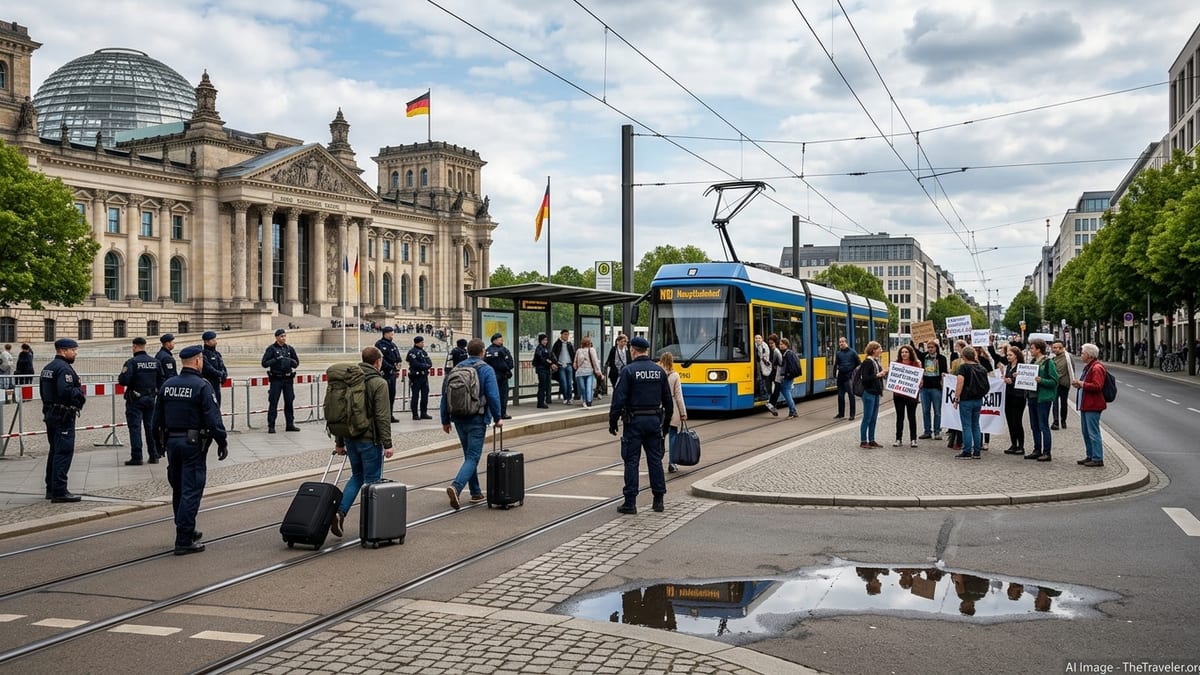
SafeTravel reports that protests and strikes “have occurred in cities across Germany” and notes that demonstrations are common. Even events that begin peacefully are described as having the potential to turn violent, with a risk of bystanders being caught up in confrontations or police operations.
The advisory explicitly instructs New Zealanders in Germany to avoid all demonstrations, protests and rallies, as well as any areas with a heavy police presence. Travelers are urged to monitor local media, follow instructions from authorities and factor possible disruption into itineraries, particularly in major cities and around political or high-profile events.
From a practical point of view, visitors should be prepared for protests or strikes to close streets, interrupt tram and bus routes and cause delays around railway stations or central squares. Allowing extra time when moving between airports, stations and accommodation, and checking live transport updates, can help reduce the chance of missed trains or flights if a march or rally passes through a planned route.
Tighter Land Borders and ID Expectations
The SafeTravel notice also records that Germany has temporarily reintroduced border controls at all land borders since September 2024. In May 2025, the German interior minister announced an increase in police numbers at those borders, further reinforcing checks on cross-border movements within the Schengen zone.
These measures do not change New Zealanders’ basic eligibility to enter Germany under Schengen rules, but they do mean that travelers can face passport checks even when arriving from neighboring Schengen states by train, car or bus. MFAT advises New Zealand citizens to always carry their passport and to be ready to present it at borders and, potentially, during internal security checks.
For trip planning, this heightened control environment can translate into longer queues at some road, rail or ferry crossing points. Visitors using tight connections when transiting through Germany by land may wish to build in extra margin for potential inspection delays.
Petty Crime, Drink-Spiking and Rising Scam Risks
MFAT continues to describe violent crime in Germany as relatively rare, but the advisory highlights several specific risks for visitors. Petty theft, including bag snatching and pickpocketing, is reported particularly in large cities, tourist hotspots and on public transport. New Zealanders are encouraged to stay alert in crowded areas, watch their belongings closely and keep valuables secured.
The advisory also notes incidents of drink-spiking at nightclubs and markets, sometimes linked to later assaults. Travelers are urged to keep drinks in sight, avoid accepting open beverages from strangers and look out for friends in busy nightlife areas and at major events.
Cybercrime and online scams receive a more detailed warning than in many past advisories. SafeTravel flags romance and rental scams and cautions that malicious Wi-Fi networks and identity theft are a concern. Visitors are advised to avoid using public or unsecured Wi-Fi for sensitive activities such as banking, keep devices updated, enable multi-factor authentication where possible and be cautious about sharing personal information or sending money to contacts met only online.
Terrorism Context and What Travelers Should Check Next
The elevated advisory level is anchored in what MFAT describes as a higher threat of terrorism in Germany compared with New Zealand. The SafeTravel page notes that terrorist groups, returning foreign fighters and individuals inspired by extremist ideologies have carried out attacks in Germany and elsewhere in Europe in recent years, and that authorities maintain a visible security presence at public buildings, transport hubs and large events.
For most visitors, this context translates into more routine security screening, armed police patrols and occasional short-notice closures or evacuations around major stations, markets or stadiums. New Zealanders are advised to stay aware of their surroundings in crowded places, follow local instructions promptly if an incident occurs and keep up to date through news outlets and official channels.
Before departure, travelers should review the latest version of the SafeTravel Germany page to confirm that the advice level remains at “Exercise increased caution,” check for any new references to specific protest waves or scam patterns, and register their trip with SafeTravel. Once in Germany, practical steps such as avoiding protest sites, allowing extra time for border or security checks, guarding valuables in busy areas and treating online offers and public Wi-Fi with caution can substantially reduce the risks highlighted in New Zealand’s updated advisory.