


For most short-term tourists from visa waiver countries, the first step to visiting New Zealand is not a traditional visa application but an online request for a New Zealand Electronic Travel Authority, or NZeTA. Travellers from other nationalities usually need to apply in advance for a conventional Visitor Visa through Immigration New Zealand. Knowing which category you fall into, what it costs and how long you can stay is crucial before you book flights to Auckland, Christchurch or Queenstown.
Get the latest updates straight to your inbox!
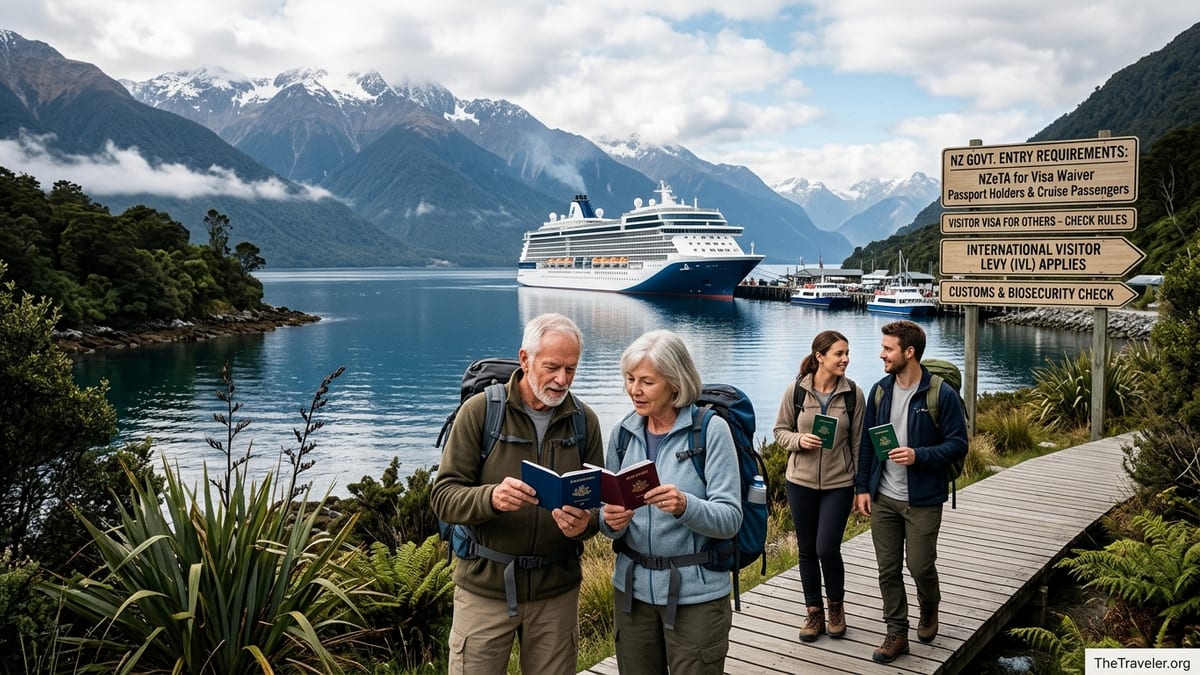
Who uses an NZeTA and who needs a Visitor Visa
New Zealand operates a clear split between visa waiver visitors, who usually travel on an NZeTA, and everyone else, who must hold a Visitor Visa before boarding a flight. The key factor is the passport you travel on, not where you live or work. A Brazilian citizen resident in London is treated as Brazilian for immigration purposes, while a British citizen living in Dubai is treated as British. Airlines check the nationality printed in your passport against New Zealand’s visa waiver list at check in.
The official visa waiver list includes the United States, Canada, Japan, and most European Union and Schengen Area countries such as Germany, France, Italy, Spain and the Netherlands. It also covers the United Kingdom, including British citizens and some other British passport holders who have the right to live permanently in the UK, and a range of other partners from Argentina to the United Arab Emirates. Travellers holding passports from these countries generally do not apply for a Visitor Visa for short trips. Instead, they request an NZeTA and are granted a visitor visa on arrival for each stay.
If your passport is not on the visa waiver list, you normally need to apply online for a Visitor Visa before you travel. This includes many citizens of Africa, South Asia and parts of the Middle East. Immigration New Zealand’s official “Check if you need a visa or an NZeTA” tool bases its answer entirely on the passport you hold. Permanent residence, long term work permits or student visas in another country do not give you visa waiver status if your underlying passport is not eligible.
New Zealand can suspend visa waiver access for specific nationalities when necessary. For example, visa waiver travel is currently suspended for holders of Kuwait passports, even though Kuwait appears on the general list. Such exceptions underline the importance of checking your own passport against current New Zealand government information just before you apply.
Special rules for Australians, cruise passengers and transit travellers
Australian citizens are in a special category. If you are an Australian citizen travelling on a valid Australian passport, you do not need an NZeTA or a Visitor Visa to enter New Zealand for tourism or to visit friends and family. Instead, you are granted a resident visa on arrival provided you meet standard health and character requirements. Australian permanent residents are treated differently. They are not visa waiver visitors and must hold an NZeTA when they fly or arrive by sea, even if they are only transiting through Auckland Airport.
Cruise passengers also follow distinct rules. If you join a cruise in Sydney, Honolulu or Papeete that calls at Auckland, Tauranga and Dunedin, you must hold an NZeTA linked to the passport you travel on, regardless of whether your nationality is visa waiver or whether you would otherwise have needed a Visitor Visa for air travel. With a valid NZeTA, you are deemed to hold a visitor visa for up to 28 days from the ship’s arrival, or until the ship is cleared to depart New Zealand on that voyage.
Transit arrangements revolve around Auckland International Airport, the only airport in New Zealand where you can transit airside. Citizens of visa waiver countries and of a separate list of transit visa waiver countries can usually transit through Auckland for up to 24 hours on an NZeTA without entering New Zealand formally. Australian permanent residents may also transit on an NZeTA. In contrast, some other nationalities must hold a specific Transit Visa instead. Transit passengers must remain in the international transit area, cannot collect checked bags or stay in an airport hotel landside, and must continue onward within the time limit.
There are additional niche arrangements. For example, some citizens of China and certain Pacific Islands Forum countries can travel from Australia to New Zealand using an NZeTA if they hold an eligible Australian visa. These routes have their own conditions that go beyond standard visa waiver rules, so travellers on such itineraries should follow Immigration New Zealand’s dedicated guidance before relying on them.
Costs, levies and how much you really pay
The NZeTA itself has two official price points, depending on how you apply. Requests lodged through Immigration New Zealand’s free mobile application cost NZD 17 in government fees. If you use the official website instead, the NZeTA fee rises to NZD 23. These figures are set centrally and are the same whether you apply from New York, London, Tokyo or Vancouver. The NZeTA is valid for two years for travellers and can be used for multiple entries during that time.
On top of the NZeTA fee, most tourists also pay the International Visitor Conservation and Tourism Levy. The IVL currently stands at NZD 100 and is charged per person. It is usually collected at exactly the same time as your NZeTA or visa application rather than at the airport on arrival. For example, a US traveller applying through the mobile app pays a combined total of NZD 117, while someone using the website pays NZD 123. Because the IVL is processed together with your NZeTA, you do not queue on arrival to pay it.
Some categories of traveller are exempt from the IVL. New Zealand citizens, holders of New Zealand resident visas and Australian citizens do not pay it. Certain transit passengers and diplomatic travellers may also be exempt, along with children on some specific types of visas. Immigration New Zealand explains that the levy is primarily targeted at international visitors who will use tourism infrastructure and benefit from conservation efforts, which is why long term residents and nationals are not charged.
Visitor Visa fees are set differently. The cost depends on both your nationality and where you apply from. Immigration New Zealand’s official visitor visa page notes that fees start from around NZD 441 for many online applications, though amounts can be higher in some regions or when using paper applications and external visa centres. In addition to the application fee, an immigration levy may apply, and most visitors still pay the NZD 100 IVL with their visa application unless they fall into an exempt group.
How long you can stay on an NZeTA or Visitor Visa
An approved NZeTA is not a visa in itself. Instead, it allows you to board a plane or cruise ship so that a visitor visa can be granted at the border. For most visa waiver travellers, each visit on an NZeTA allows up to three months in New Zealand per entry. United Kingdom passport holders enjoy a longer standard allowance: they can be granted up to six months per visit when travelling on an NZeTA, reflecting a long established reciprocal arrangement between the two countries.
There are also cumulative stay limits. Immigration New Zealand policy generally restricts visa waiver visitors to a total of six months in New Zealand in any rolling 12 month period. This means an American digital nomad who makes three separate two month trips to Queenstown and Wellington within one year would likely reach the annual maximum. UK visitors have a slightly broader allowance, often up to six months in a 12 month period but with the ability to take that in one continuous visit.
A standard Visitor Visa usually allows up to six months in New Zealand, though some applicants can be granted up to nine months in a 18 month period if they meet additional criteria. The exact conditions appear in the electronic visa you receive after approval. Visitors can study for short periods, typically up to three months, but cannot take up employment in New Zealand. Some Visitor Visas may include special conditions, for example where you are visiting family under sponsorship or where medical treatment is involved.
Both NZeTA based entry and Visitor Visas require you to hold tickets or funds for onward travel and to demonstrate that you are a genuine temporary visitor. Immigration officers at the border can still limit or refuse entry if they are not satisfied, regardless of the length technically possible on your NZeTA or visa.
Visitor Visa evidence, rights and processing times
Travellers who are not eligible for visa waiver status must apply for a Visitor Visa in advance. Eligibility includes standard health and character checks, sufficient funds to support your stay, and clear plans to leave New Zealand when the visit ends. Applications are now mainly online, though paper forms are still used in some circumstances. You can usually include a partner and dependent children in the same application so that the whole family receives matching visa conditions and expiry dates.
Evidence is a central part of the Visitor Visa process. Typical documents include a passport copy, recent photographs, proof of employment or study at home, bank statements, accommodation bookings or invitations from New Zealand based family or friends, and proof of onward travel such as a confirmed airline ticket. Immigration New Zealand’s official visitor visa guide specifies that self funding visitors should show at least NZD 1,000 per month of stay, or NZD 400 per month if accommodation is paid in advance, through bank statements, credit card limits or travellers cheques.
Processing times can be significantly longer than for the NZeTA. Immigration New Zealand’s current wait time data indicates that most standard Visitor Visa applications are completed within about two weeks, with an average processing time closer to one week. However, peak seasons between September and March or incomplete documentation can lengthen the process. The authority strongly advises applicants not to book non refundable flights or accommodation until their Visitor Visa is granted.
Visitor Visas do not generally provide work rights, though some narrow exceptions exist, such as remote work for an overseas employer or specific family related categories. Conditions are recorded on the eVisa. Breaching them, for example by taking up local employment on a standard Visitor Visa, can affect future visa applications not only for New Zealand but sometimes for other countries that share immigration information.
Step by step: how to request an NZeTA
Requesting an NZeTA is typically straightforward. First, download Immigration New Zealand’s official NZeTA app from your usual app store or visit the official NZeTA webpage. The app is usually cheaper and is often the quickest route for individual travellers. Before you start, make sure your passport is valid for at least three months beyond your planned departure date from New Zealand and that you have a debit or credit card that can be charged in New Zealand dollars.
The app will invite you to scan your passport’s data page, which automatically imports your name, passport number and expiry date. You may also be asked to take or upload a digital photograph of yourself that meets standard passport style requirements. During the request you supply basic personal information, contact details, your intended first arrival date and whether you will visit or transit. Travellers answer health and character questions, for example about previous visa refusals or criminal convictions.
The payment screen then shows the combined NZeTA fee and the IVL if it applies to you. A US tourist applying through the app, for instance, will see a total of NZD 117 before entering card details. Once payment is processed, most NZeTA requests are decided quickly, but Immigration New Zealand officially recommends allowing up to 72 hours. You receive an email confirmation when your NZeTA is approved and the authorisation is automatically linked electronically to your passport.
Because airlines must check that you hold a valid NZeTA or visa, you should not leave the request until the day of travel. If your NZeTA has not been approved by the time you reach the check in desk in Los Angeles, London or Singapore, the airline can refuse boarding. Requesting the NZeTA at least three days before departure reduces that risk and gives you time to respond if Immigration New Zealand asks for any extra information.
New Zealand Traveller Declaration, customs and biosecurity
The NZeTA or Visitor Visa is only one part of New Zealand’s entry formalities. All travellers, including New Zealand citizens and permanent residents, must also complete a New Zealand Traveller Declaration, often abbreviated to NZTD. This digital form replaces the old paper arrival card and collects details about your trip, what you are bringing into the country and where you will stay. You typically complete it online before you fly and receive a QR code or confirmation to show at the airport.
The Traveller Declaration covers customs and biosecurity questions. You must declare cash above a certain threshold, high value items not intended to return home with you, and a wide range of risk goods such as food, plant products and outdoor equipment exposed to soil. New Zealand authorities take biosecurity especially seriously, and incorrectly declaring items in the NZTD can lead to on the spot fines of several hundred dollars or, in extreme cases involving serious breaches, prosecution and much higher penalties.
It is important not to confuse the NZTD with the NZeTA. The NZeTA is an advance authority to travel or transit that airlines check before boarding. The New Zealand Traveller Declaration is a separate arrival requirement that border officials and biosecurity officers use to manage risk at the border. Even New Zealand and Australian citizens who never need an NZeTA must complete a Traveller Declaration each time they arrive.
In practical terms, many travellers now complete three online tasks before travel: they request an NZeTA if eligible; they apply for a Visitor Visa if required instead; and in all cases they complete the New Zealand Traveller Declaration shortly before departure. Keeping emails and screenshots for each step on your mobile phone can speed up processing at the airport.
Worked examples: what different travellers pay and receive
Consider a solo US traveller planning a two week self drive trip through the North Island. She holds a US passport, so she is a visa waiver visitor and requests an NZeTA through the mobile app. She pays NZD 17 for the NZeTA plus NZD 100 for the IVL, a total of NZD 117. On arrival in Auckland, she is granted a visitor visa for up to three months, provided she can show her onward flight and enough funds for the stay if asked. Her NZeTA remains valid for two years, so she can return for a ski holiday the following winter without paying again, as long as the NZeTA and her passport remain valid.
Next, imagine a British couple living in Canada who book a month in New Zealand visiting friends in Wellington and hiking in Fiordland. They each travel on UK passports, so residence in Canada does not affect their eligibility. Each requests an NZeTA online through the website and pays NZD 23 for the NZeTA and NZD 100 for the IVL, a total government charge of NZD 123 per person or NZD 246 for the couple. When they arrive, each receives a visitor visa that permits up to six months in New Zealand, meaning they could extend their trip spontaneously without a new application, subject to overall stay limits.
An Australian citizen visiting family in Christchurch for Christmas faces a different cost profile. Travelling on an Australian passport, she does not need an NZeTA, a Visitor Visa or the IVL. She still completes the New Zealand Traveller Declaration and may be asked about food items or outdoor gear. Meanwhile, an Australian permanent resident with, for example, an Indian passport flying the same route must request an NZeTA, pay the NZeTA fee and IVL, and on arrival will be granted a temporary visa rather than resident status.
For a family of four from a non waiver country such as India, the calculation changes again. They must apply for Visitor Visas, likely online, paying application fees that can total several hundred New Zealand dollars per person, plus any immigration levy and IVL where applicable. The parents submit evidence of employment, school attendance for the children, bank statements showing sufficient funds at roughly NZD 1,000 per person per month, and confirmed return tickets from Auckland. Processing may take up to two weeks or more, so they lodge the applications well ahead of their intended travel date.
Transit passengers also face particular conditions. A Japanese business traveller flying Tokyo to Santiago with a connection in Auckland who stays airside for six hours will usually need an NZeTA and will pay the NZeTA fee plus, in many cases, the IVL. If she decides instead to break the journey for three days in Auckland, the same NZeTA supports a short visit as long as she meets normal visitor conditions. However, a traveller of a nationality that requires a Transit Visa for Auckland cannot substitute an NZeTA and must hold the correct transit documentation even if remaining airside.
Practical issues: children, new passports, onward travel and refusals
Families travelling with children should note that each person usually requires their own NZeTA or Visitor Visa, even infants. The only exception is where a country still endorses dependent children directly on a parent’s passport and New Zealand accepts that endorsement. In those cases, the endorsed passport counts as the child’s travel document, but the child may still need to be included individually in the Traveller Declaration and might need to show evidence of sufficient funds or return travel if requested.
NZeTAs are electronically linked to the passport number used in the application. If you renew your passport after receiving an NZeTA, the authorisation does not transfer automatically. A US or German visitor who changes passports between trips must normally request a new NZeTA using the new passport, paying the fee again. The same principle applies for Visitor Visas: you must travel with the passport listed on your eVisa, or arrange for details to be updated according to Immigration New Zealand procedures.
Onward travel and sufficient funds are recurring themes. At check in and sometimes on arrival, you may need to show a confirmed ticket out of New Zealand to a country where you have the right to enter, or bank statements proving you can afford one. Visitors funding themselves are expected to have at least around NZD 1,000 per month of stay, or NZD 400 where accommodation is already paid. Sponsorship by a New Zealand based friend or relative is possible in some cases, but the sponsor must meet strict financial and status criteria.
If an NZeTA or Visitor Visa request is refused, you will receive a decision notice explaining the main reasons. Common issues include incomplete or inconsistent information, concerns about previous overstays elsewhere, or doubts about whether you intend to leave New Zealand at the end of your stay. In these situations, you usually cannot board a flight and should not attempt to travel until you have resolved the issue or obtained new approval. Some refusals carry a right of reconsideration or appeal, particularly for in country decisions, but most short term visitors will simply need to reapply with stronger evidence or accept the decision.
Finally, beware of unofficial websites that imitate New Zealand government services while adding high “service fees” on top of the official NZeTA cost. Although some agencies are legitimate intermediaries, others are poorly regulated and may provide incorrect information or fail to submit applications promptly. To avoid problems, travellers should use only the official Immigration New Zealand channels for NZeTA and visa applications and treat any site charging substantially more than the published NZD 17 or NZD 23 fees with caution.
Nationality decision table, portal checklist and last checked date
For quick planning, think in terms of your passport. If you hold a United States, Canadian, Japanese, UK or most EU passport, you are usually a visa waiver visitor. Your action plan is to request an NZeTA, pay the combined NZeTA fee and NZD 100 IVL, then complete the New Zealand Traveller Declaration before departure. On arrival, you can normally stay up to three months per visit, or six months if you are a UK passport holder, as long as you respect cumulative stay limits.
If you hold an Australian passport, your path is simpler. You do not need an NZeTA, Visitor Visa or IVL, but you still need a valid passport and Traveller Declaration. Australian permanent residents travelling on another country’s passport, cruise passengers of almost any nationality and eligible transit passengers all need an NZeTA. Travellers from non waiver countries should focus on the Visitor Visa process instead, gathering financial evidence and applying well before they intend to fly.
Before you book long haul flights to Auckland or Christchurch, build a small checklist. First, confirm whether your passport is on New Zealand’s visa waiver list and whether any temporary suspensions apply. Second, determine whether you are visiting, cruising or transiting, since this affects whether you need an NZeTA or Visitor Visa. Third, calculate the full government charges, including the NZeTA or visa fee and the NZD 100 IVL if it applies. Finally, allow enough time for processing, particularly for Visitor Visas, and complete your New Zealand Traveller Declaration close to your travel date.
This article is based on official information available from New Zealand authorities and was last checked on 13 November 2026. Rules, prices and processing times can change with little notice, so travellers should always verify details on the relevant New Zealand government portals shortly before applying or travelling.