


More news on this day
Toronto welcomed a record 28.2 million visitors in 2025, generating CA$9.1 billion in direct spending and CA$13.5 billion in total economic impact, as Canada’s largest city emerges as a flagship for the country’s deliberate shift toward higher‑yield, “highly engaged” travellers.
Get the latest news straight to your inbox!
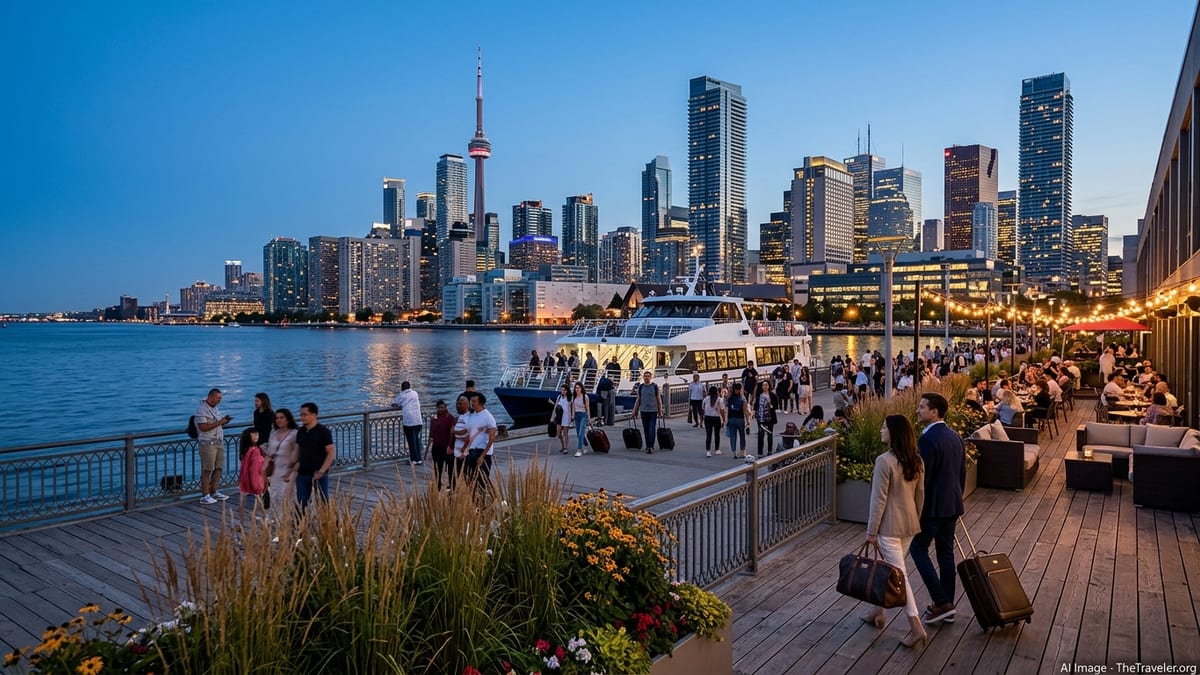
Record year cements Toronto as Canada’s visitor economy flagship
Destination Toronto’s 2025 annual reporting confirms that the city hosted 28.2 million day and overnight visitors in 2025, the highest total ever recorded for Toronto. Those trips generated CA$9.1 billion in direct visitor spending across hotels, restaurants, attractions and retail and an estimated CA$13.5 billion in overall economic impact, according to figures cited by both Destination Toronto and the City of Toronto’s visitor economy reporting.
International markets were the fastest‑growing segment. Destination Toronto’s 2025 data show international arrivals up 8 percent year over year to about 1.4 million, with the United Kingdom and Germany among the strongest performers. Visits from the U.K. rose 12 percent and from Germany 10 percent compared with 2024, offsetting a decline in U.S. arrivals.
Local authorities describe this performance as part of a broader effort to grow the value of each visit rather than only the number of visitors. Toronto’s new Destination Master Plan and the City’s visitor economy strategy both reference the CA$9 billion‑plus in 2025 tourism spending as a foundation for future growth focused on higher‑spend segments and experiences.
From volume to “highly engaged guests” at the national level
Toronto’s record year aligns with a national policy shift. In December 2024, Destination Canada introduced a new traveller segmentation program that reframed its long‑running focus on “high‑value guests” into “Highly Engaged Guests.” The federal tourism agency defines these as visitors who travel frequently, spend more and, crucially, are strongly aligned with Canada’s brand and values.
Destination Canada’s 2026–2030 corporate plan highlights these Highly Engaged Guests as the core audience for future marketing and product development. Rather than maximizing overall arrivals, the plan emphasizes attracting travellers and business events that deliver stronger economic, social and environmental benefits, with a long‑term objective of significantly lifting national tourism revenues by 2030.
Nationally, Canada welcomed close to 20 million international visitors in 2024 based on border and tourism statistics referenced in Destination Canada’s market insights. Within that total, federal analysis points to higher‑spend overseas markets and premium segments as key drivers of revenue growth, a context in which Toronto’s gains with markets such as the U.K. and Germany are seen as strategically important.
Luxury networks, marquee events and hotel rates reshape Toronto stays
Destination Toronto has explicitly targeted the upper end of the market. The organization has renewed its partnership with Virtuoso, a global luxury‑travel network, describing the relationship as a way to elevate Toronto’s position within the strategic luxury travel segment. Membership places the city alongside high‑end hotels, cruise lines and tour operators that cater to affluent travellers booking through specialist advisors.
Major cultural and entertainment events have also been used as templates for high‑yield visitation. Industry analyses of Taylor Swift’s 2024 tour stops in Toronto showed that while occupancy gains were modest, average daily room rates during concert nights surged by more than 25 percent compared with the prior year, illustrating how limited‑capacity events can lift revenue even without dramatic increases in visitor numbers.
Hotel performance data underline the upward pressure on prices. Market reports for 2024 and 2025 show Toronto posting some of the country’s strongest year‑over‑year increases in average daily rate and revenue per available room, with citywide ADR surpassing CA$250 in 2024 and continuing to rise in 2025. More recent regional data from 2026 indicate that Toronto hotels achieved an ADR of about CA$308 in the third quarter, up roughly 10 percent from a year earlier, suggesting that rate strength has persisted into the current high season.
What high‑end travellers are finding on the ground
For visitors, particularly from long‑haul markets, the shift is most visible in Toronto’s dense cluster of upscale hotels and premium urban experiences. Well‑known luxury brands including Four Seasons, Ritz‑Carlton, St. Regis, Park Hyatt and the Hazelton anchor the city’s downtown and Yorkville districts, joined by high‑end boutiques and full‑service properties that position themselves toward design‑ and service‑led stays.
Destination Toronto’s business intelligence materials and the city’s visitor economy strategy both highlight growth in luxury lodging supply and premium experiences, from fine‑dining and cultural venues to curated neighbourhood and waterfront experiences. Marketing campaigns in key overseas markets have increasingly focused on these higher‑spend products, aligning with Destination Canada’s emphasis on guests who are willing to invest more in experiences that reflect Canadian culture and values.
Travellers, however, are likely to notice the cost implications. Rising average daily rates in Toronto’s upscale and luxury segments, particularly during peak summer months, festivals and major sports or music events, mean that centrally located rooms can be significantly more expensive than they were even a few years ago. Current hotel performance data indicate that rate growth has outpaced occupancy gains in several recent high‑demand periods, suggesting that revenue growth is being driven more by price than volume.
Beyond Toronto: other Canadian destinations chase high‑yield segments
Toronto is not alone in targeting higher‑value visitors. Destination Canada’s reports and regional tourism organizations point to strong or record revenues in several other Canadian destinations, including Western Canada’s mountain parks such as Banff and Lake Louise. Many of these areas have limited capacity and environmentally sensitive landscapes, making higher‑spend, longer‑stay visitors commercially attractive.
Several provincial and regional bodies now explicitly reference high‑yield or Highly Engaged Guests in their strategies, aligning marketing and product development with premium outdoor, nature and cultural experiences. While conditions differ widely by region, the common thread is a shift away from measuring success solely by headcounts toward metrics such as revenue, spend per trip and community benefits.
Travellers considering multi‑stop itineraries that combine Toronto with other Canadian destinations may find that luxury‑oriented offerings, from lodge stays to guided experiences, are increasingly prominent, particularly in peak seasons.
What travellers should watch next
Destination Toronto’s 2025 numbers are confirmed, but full 2026 visitation and spending data have not yet been published in annual report form. Early indicators from hotel and air‑traffic reports suggest continued demand growth, particularly from overseas markets, although month‑to‑month performance has shown some volatility.
For upcoming trips, travellers should pay close attention to hotel pricing patterns in central Toronto, especially around major events, festivals and the lead‑up to FIFA World Cup matches scheduled for 2026. New luxury hotel projects and branded residences are in various stages of planning and development in the city, but their opening timelines and pricing structures are still evolving and should be checked at the time of booking.
At the national level, Destination Canada is expected to refine its Highly Engaged Guest segmentation as more data from 2025 and 2026 seasons become available. Prospective visitors, particularly from long‑haul markets, may see more tailored messaging and packages aimed at immersive, higher‑spend experiences, and should review current offers and conditions as plans for 2027 and beyond take shape.