


More news on this day
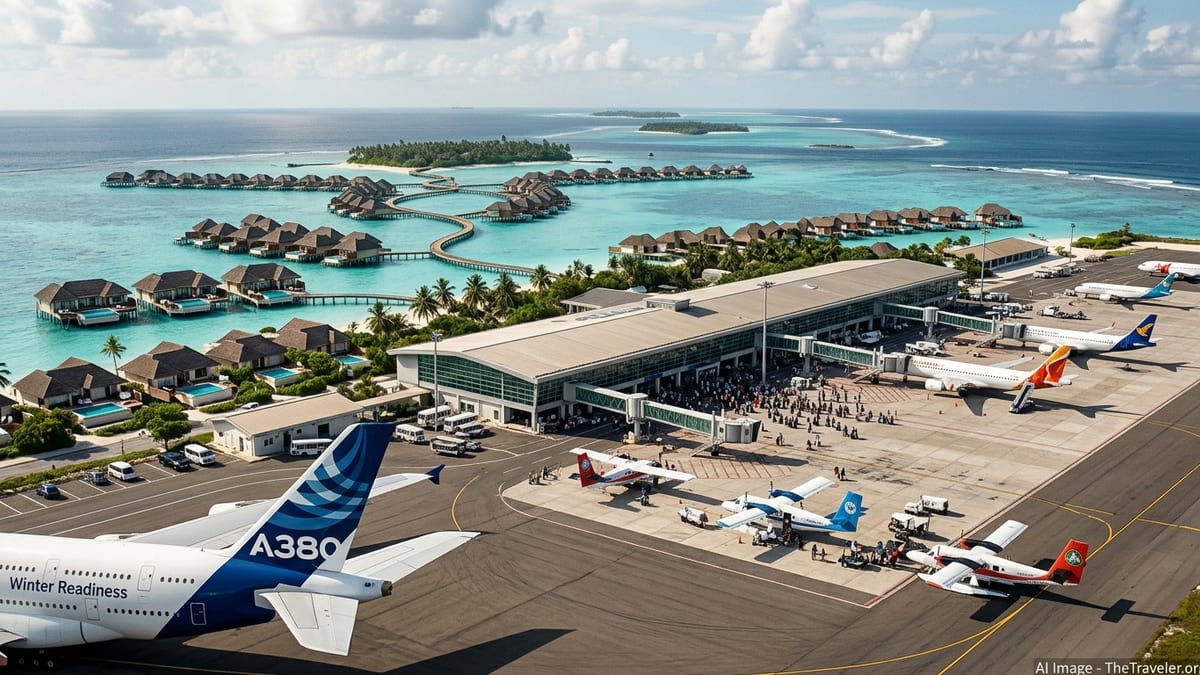
Maldives authorities are preparing for another record winter tourism rush after 2025 arrivals and resort occupancy hit new highs, tightening peak-season availability and keeping prices elevated for prime beachfront and over-water villas into the 2026–27 holidays.
Get the latest news straight to your inbox!
Record 2025 arrivals underline winter demand pressure
Official figures confirm that 2025 was the busiest year on record for Maldivian tourism, with 2,246,516 tourist arrivals, around 10 percent more than in 2024 and roughly one-third higher than in 2019. December 2025 alone brought 224,455 visitors, making it the highest month for tourist arrivals in the country’s history.
Visit Maldives and the Maldives Monetary Authority report that resorts achieved an average annual occupancy of 68.3 percent in 2025, rising to 73.5 percent in December, when both arrivals and bednight usage peak. Across all registered accommodation, operational bed capacity continued to grow, with central bank data indicating a roughly 4 percent increase in average operational beds year on year, yet utilization remained high.
The same datasets underline clear seasonality. Monthly arrivals and occupancy rates consistently crest between December and March and ease between May and July, when visitor volumes fall back to around 60 percent of December levels. This pattern, already visible before the pandemic, has reasserted itself at a higher absolute level of demand, focusing pressure on a relatively short winter window.
Airport scales up for winter peak rather than crisis
At the country’s main gateway, Velana International Airport, state-owned operator Maldives Airports Company Limited has spent 2025 and 2026 adding capacity and reconfiguring operations to handle heavier winter flows. A new international terminal inaugurated in July 2025 has already processed more than half a million passengers, including record daily traffic in late December 2025 during the holiday surge.
For the 2026–27 winter, MACL has launched a dedicated "Winter Readiness 2026/2027" program, bringing together airport departments and government agencies to coordinate for higher passenger volumes. In October 2026 the operator began shifting check-in for 10 international airlines to the older Terminal 2 for the peak season and opened additional counters and remote gates, while expanding security screening capacity and planning electronic immigration gates to ease border formalities.
These measures are framed as capacity expansion to accommodate growth rather than a response to a breakdown. NOTAMs and development documents point to ongoing runway and taxiway works, terminal fit-outs and utility upgrades as part of a multi-year expansion intended to support future tourism growth and lessen congestion during the busiest winter weeks.
High pricing power for luxury stock
Independent hotel performance analysis suggests that this surge in demand is translating into strong pricing power. A 2025 Indian Ocean market review from CBRE identifies the Maldives, alongside Seychelles, as maintaining the highest average daily rates and revenue per available room in the region, with the Maldives’ ADR reported in the mid-hundreds of US dollars and well above competing Indian Ocean destinations.
Central bank tourism data show that total bednights in 2025 grew much more modestly than arrivals, as stays shortened even while more visitors came. That combination of slightly shorter trips, expanding but still finite high-end inventory and concentrated demand in the December to March period has allowed many resorts, especially in the five-star and ultra-luxury tiers, to sustain elevated nightly rates without fully saturating capacity year-round.
The outcome for travelers is not a blanket sell-out but a compression of choice and price flexibility in specific segments. Beachfront and over-water villas with private pools in popular atolls, particularly those reached by seaplane from Malé, are the most constrained, while simpler rooms and guesthouses see more availability and more moderate pricing, especially outside the late December and early January holiday dates.
What travelers face for winter 2026–27 bookings
Live checks on major online travel platforms and tour-operator brochures for late December 2026 indicate that Maldivian inventory remains available but is already selective and priced at a premium in many flagship resorts. Package holidays from European operators show five-star options such as Villa Nautica Paradise Island and Hard Rock Hotel Maldives still on sale for winter 2026, but predominantly outside the tightest Christmas to New Year week.
On global booking sites, headline pricing for December stays at upscale and luxury resorts commonly runs in the high hundreds to low thousands of US dollars per villa per night before taxes, service charges and compulsory festive supplements. User reports and recent agency guidance suggest that over-water villas at sought-after properties can range from roughly 900 to more than 2,000 dollars per night in December, with top-tier brands and private-pool categories significantly higher, especially for bookings that include the final week of the year.
Availability patterns also reflect stricter conditions over the holidays. Many resorts apply minimum stays of five nights or more and levy mandatory gala dinner or festive surcharges on stays that include Christmas Eve, Christmas Day or New Year’s Eve. As a result, some online calendars now show limited or no standard-category villas left over 24 to 31 December at high-profile islands, while showing broader choice for stays earlier in the month or in January.
How to secure a room in peak Maldivian winter
For travelers considering the Maldives between late December 2026 and early January 2027, the data and current booking conditions point to a need for early, targeted planning rather than last-minute deals. Prospective visitors should expect higher prices for beachfront and over-water villas, be prepared for minimum-stay requirements and factor in extra costs for seaplane transfers, service charges, taxes and festive dinners when comparing options.
Those with flexible dates can often secure better value by shifting travel into early or mid-December or waiting until mid-January, when historical statistics show that arrivals and occupancy begin to ease while conditions remain dry and warm. Travelers with fixed school holiday windows, by contrast, may need to compromise on brand, atoll or room category, or look at alternative winter-sun destinations with looser constraints on family-sized beachfront inventory.
Given how quickly loads and rates are changing ahead of the 2026–27 peak, travelers are advised to recheck live availability and pricing directly with resorts, trusted local agencies or major international booking platforms before committing, and to confirm any minimum-stay rules, transfer arrangements and seasonal surcharges in writing as part of their reservation.