


More news on this day
Mongolia is heading into the 2026–27 winter travel season with a fragile but functioning fuel supply, after months of gasoline shortages, queues at petrol stations and urgent efforts to secure extra Russian and regional deliveries that have highlighted how exposed transport and tourism remain to any new disruption.
Get the latest news straight to your inbox!
Fuel dependence and how the 2026 crunch emerged
Mongolia still relies on imports for virtually all of its fuel needs, with government and central bank data showing oil product imports of roughly 2 million tonnes in 2024 and more than 90 percent of gasoline and diesel sourced from Russia. This structure has left the country highly sensitive to refinery outages and export decisions in neighboring states, a vulnerability that has become more visible through 2026 as global diesel markets tightened and regional suppliers rebalanced output toward domestic demand.
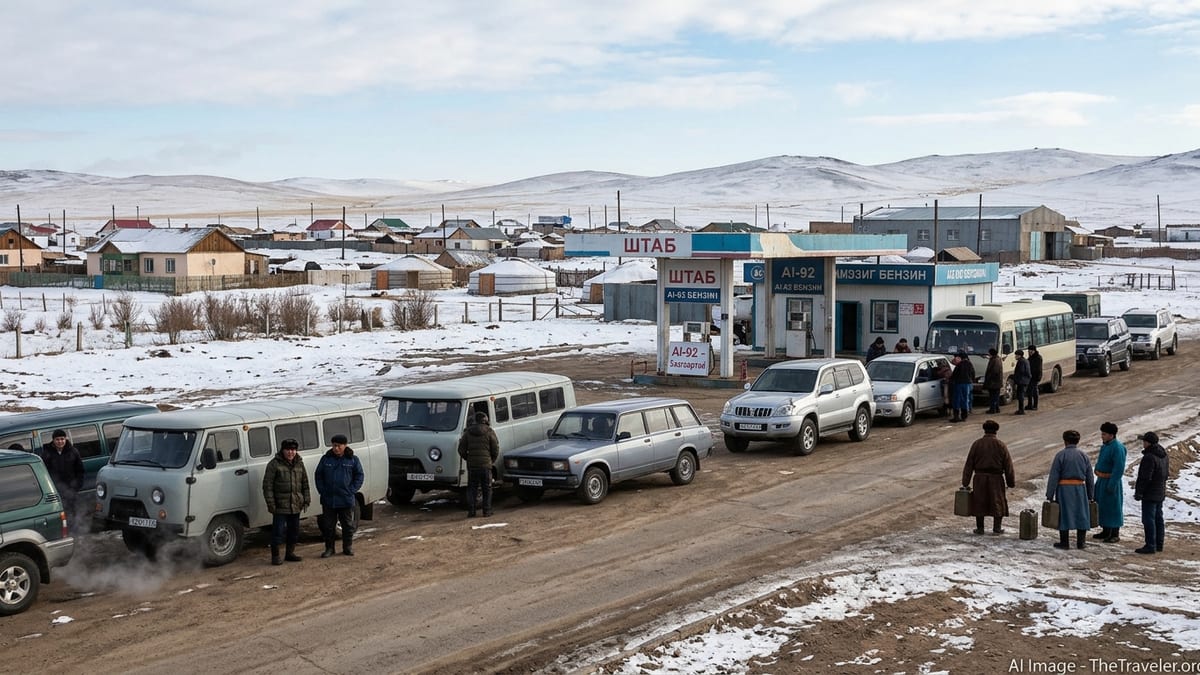
Through the first half of 2026 imports of AI 92 gasoline and diesel both rose sharply in volume and value, reflecting higher international prices even as Mongolia continued to buy AI 92 under a long running supply agreement with Rosneft. By late summer, a mix of disrupted Russian flows and rising local consumption had already translated into intermittent shortages and long lines for gasoline in some districts of Ulaanbaatar and provincial centers, particularly for the widely used AI 92 grade.
Authorities responded by activating a dedicated fuel supply task force, reviewing distribution patterns and seeking increased volumes from Russia as well as additional cargoes from Chinese and South Korean refiners. Officials have repeatedly stressed that the priority is to stabilize supply for essential services and remote communities while gradually rebuilding national reserves that were drawn down over the summer.
Reserves, prices and what travelers are seeing on the ground
By late September officials reported that national fuel reserves had fallen to roughly 9 to 11 days of AI 92 coverage, compared with the government’s longer term target of building a three month strategic stockpile by 2028. Although diesel and jet fuel holdings have generally been higher than gasoline, the uneven distribution of stocks has produced local bottlenecks, with some districts facing temporary closures at filling stations even while imports continued nationally.
Retail prices have climbed accordingly. Local media and trade reports through October cited AI 92 pump prices at some outlets in Ulaanbaatar and regional towns approaching 4,950 to 4,980 Mongolian tugrik per litre during tight periods, significantly above levels seen earlier in the year. For visitors planning road trips or guided overland tours, this means higher operating costs for transport providers and an increased likelihood of rationed volumes or station specific purchase limits on busy days.
Travelers arriving in late October and November have continued to report queues at certain petrol stations in the capital, sometimes lasting hours for AI 92, alongside relatively easier access to diesel. While such anecdotal accounts vary by district and time of day, they are broadly consistent with the official picture of a strained but not collapsed supply system, in which deliveries are still moving but gaps appear when local demand briefly outpaces incoming shipments.
Government response and shifting regional supply routes
To prepare for winter, the Mongolian government has focused on locking in short term supply and tightening oversight of domestic distribution. On 2 October officials announced an agreement with Rosneft covering tens of thousands of tonnes of AI 92 gasoline, diesel and aviation fuel for October deliveries, part of a broader monthly import plan that also included orders from refiners in China and South Korea. Inspections were launched across more than 260 fuel stations to check compliance with allocation rules and to discourage any hoarding or speculative resale.
Subsequent briefings from the Ministry of Industry and Mineral Resources and state news agency Montsame indicated that confirmed fuel orders for September and October were sufficient to meet estimated consumption, while acknowledging that the timing of individual shipments and railcar turnarounds was creating short lived shortages in specific aimags and soums. By early November, officials said Mongolia held around 10 days of AI 92 stocks, approximately four weeks of diesel and more than a month of aviation fuel, and that about 92,000 tonnes of additional fuel for November had already been ordered.
Regional market shifts have complicated this balancing act. Chinese refiners paused exports of oil products for October to preserve domestic inventories, limiting Mongolia’s ability to lean on its southern neighbor for supplemental supplies. At the same time, debate in the United States over potential diesel export restrictions and subsequent moves to prioritize domestic supply contributed to a tighter global diesel pool, although the measures were not directed at Mongolia specifically. The net effect for Mongolian buyers has been a narrower set of fallback options when Russian volumes fluctuate, reinforcing the urgency of each monthly import program.
Implications for winter travel by road and air
For visitors, the main impact of the fuel squeeze is heightened planning risk rather than outright disruption. Intercity buses, tour operators and car rental companies that depend on AI 92 can experience sporadic difficulties refuelling at usual stations, especially in smaller towns where there may be only one or two outlets. Operators have responded by refuelling whenever fuel is available, carrying fuller tanks on long stretches and in some cases adjusting itineraries to pass through centers with more reliable supply.
Remote winter tourism, including homestays in steppe and desert regions, also intersects with diesel supply because off grid guesthouses and ger camps often rely on diesel heaters and generators. Thin local stocks can translate into stricter energy use or the need to truck fuel from district centers, which may add cost or complexity to trips but has not yet produced widespread cancellations. Travelers booking such experiences for December through February are being advised by local agents to confirm that their hosts and drivers have secured fuel in advance, particularly around major holidays when demand spikes.
Domestic air travel has so far been less visibly affected. Aviation fuel reserves reported in early November covered roughly a month of operations, and there have been no broad official warnings of jet fuel shortages at major airports. Nonetheless, because a portion of Mongolia’s jet fuel also originates from Russian and regional suppliers, any further disruption to winter deliveries could eventually feed through to flight schedules or fares. Passengers planning internal flights are therefore encouraged to monitor airline notifications closely and allow flexibility for potential timetable adjustments if supply conditions tighten again.
What travelers should watch through the 2026–27 winter
Looking ahead to the coldest months, local authorities continue to frame the situation as one of elevated risk rather than imminent breakdown. The latest public figures suggest that diesel and aviation fuel stocks are more comfortable than AI 92 reserves, but that all categories remain below the strategic levels the government hopes to build over the next two to three years. Officials have said that regular consultations with Russian suppliers will continue and that diversification toward South Korean and Chinese refiners will remain a priority whenever export conditions allow.
Prospective visitors for winter 2026–27 should factor fuel conditions into their planning by confirming transport arrangements early, asking tour operators how they are managing refuelling on specific routes and checking, close to departure, for any fresh government briefings on reserve levels or distribution measures. Those driving independently may want to leave wider time margins between destinations, refuel more frequently rather than waiting for tanks to run low and be prepared for occasional queues, particularly in and around Ulaanbaatar.
Since fuel market dynamics and policy responses can change quickly, travelers are advised to recheck official Mongolian announcements and local news in the days before arrival, paying special attention to any updates on AI 92 availability, new contracts with Russian suppliers or shifts in Chinese export permissions that could ease or tighten supply during the remainder of the winter season.