


More news on this day
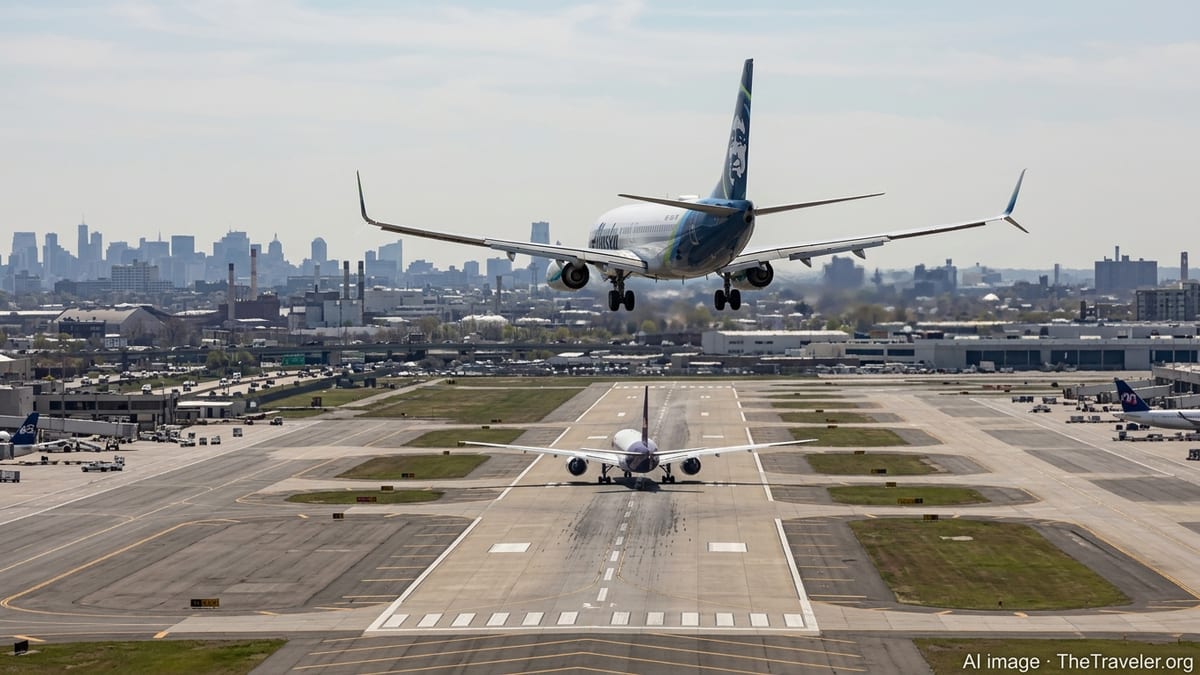
A ground stop at Newark Liberty International Airport on Monday disrupted arrivals and departures after an FAA equipment outage affected air traffic control operations serving the New York and Philadelphia region, triggering widespread delays and cancellations across the Northeast.
Get the latest news straight to your inbox!
What happened at Newark and why the FAA ordered a ground stop
Published coverage indicates the disruption was linked to problems at the FAA’s Philadelphia Terminal Radar Approach Control facility, which manages traffic flows for Newark and other busy airports in the corridor. Reports described communications-related issues involving frequencies used to handle aircraft in the affected airspace.
As the situation unfolded, the FAA issued ground stops that paused inbound flights to Newark and expanded operational constraints to other airports as controllers and technicians worked through the outage. Separate reports described a cascading sequence in which a primary circuit failed and a switchover to backup systems revealed additional connectivity problems tied to a cut fiber-optic line.
The event quickly became more than a Newark-specific issue because the same regional air traffic control infrastructure also supports large volumes of traffic for nearby airports. With demand already high, even short suspensions can create long recovery tails that stretch into evening bank departures and overnight aircraft positioning.
Ripple effects across the Northeast: delays, cancellations, and diversions
Travel impacts spread beyond Newark, with published reporting describing ground stops and delays affecting a wider set of airports in the region, including New York City-area fields and Philadelphia. Coverage also noted diversions arriving at airports outside the immediate tri-state area as airlines and controllers managed congestion and limited arrival capacity.
Major carriers with significant operations at Newark and Philadelphia were pulled into the disruption as inbound flows slowed or temporarily stopped. Reports described airlines warning customers that an FAA technology outage was affecting multiple operators across the Northeast, a region where densely packed routes and tightly scheduled gate turns can amplify disruptions.
Even after flights began resuming at some airports, schedule recovery remained uneven. With aircraft and crews out of position, travelers often encounter rolling delays, last-minute aircraft swaps, and cancellations that persist after the underlying technical issue is resolved.
What’s known about the equipment outage and the repair timeline
Public reporting characterized the underlying problem as an equipment or telecommunications issue affecting air traffic control capabilities, including communications links and related systems. Accounts of the incident pointed to damaged fiber lines and a failure scenario that complicated an immediate switch to backup operations.
By late Monday, multiple outlets reported that repairs had been made to the affected data lines and that key airports were moving back toward normal operations, though residual delays remained. The recovery process typically depends on how quickly arrival rates can be restored and whether traffic management initiatives are needed to safely meter demand.
While the FAA’s operational advisories can change quickly, travelers benefit from checking their flight status frequently, especially for late-day departures, when downstream aircraft rotations may still be catching up. In disruptions like this, the biggest risk for passengers is often not a single long delay but a sequence of missed connections and rebookings that can extend into the next day.
Newark’s broader context: recurring constraints and why disruptions hit hard
The Newark area has been sensitive to disruptions in recent years, in part because a significant share of Newark’s traffic relies on the same regional air traffic control facilities and telecommunications links. Separate FAA materials have previously described how telecom and equipment problems at Philadelphia TRACON have affected operations in and out of Newark.
In addition to episodic outages, the region’s complex airspace, heavy demand, and ongoing infrastructure and staffing challenges can make recovery slower than travelers expect. When a ground stop hits at a major hub like Newark, missed inbound arrivals can quickly turn into canceled departures, with knock-on impacts for travelers connecting through the New York area to destinations across the U.S. and overseas.
Coverage on Monday also tied the timing of the disruption to a high-profile period for New York-area travel demand, with world leaders arriving for the United Nations General Assembly. When demand peaks, the system has less slack, leaving fewer spare gates, aircraft, and crews to absorb sudden operational shocks.
What travelers can do next: rebooking and planning for continued disruption
For passengers traveling through Newark in the next 24 to 48 hours, the most practical step is to verify the latest status before leaving for the airport, including whether the flight is operating, whether the aircraft is inbound, and whether the departure gate has changed. In widespread air traffic disruptions, a flight can look “on time” until the inbound leg is delayed or reassigned.
If rebooking is necessary, travelers may find better availability by considering alternate airports in the region or adjusting departure times to avoid peak evening banks. Because Newark, LaGuardia, JFK, and Philadelphia can share the same congestion drivers when regional air traffic control systems are constrained, travelers should treat the entire corridor as interdependent rather than assuming a nearby airport will be unaffected.
For those already at the airport, delays can move quickly from minutes to hours as traffic management initiatives are adjusted. Keeping an eye on airline app notifications, boarding time updates, and inbound aircraft tracking can help travelers make faster decisions about switching flights or rebooking before remaining seats are taken.