


Booking flights to New York City often leads to one deceptively simple question: Newark Liberty International Airport or John F. Kennedy International Airport? Both are major hubs for the region, each with its own strengths, frustrations, and ideal use cases. Choosing the right one can easily save you an hour in transit, a chunk of money, and a lot of stress on arrival or departure day.
Get the latest updates straight to your inbox!
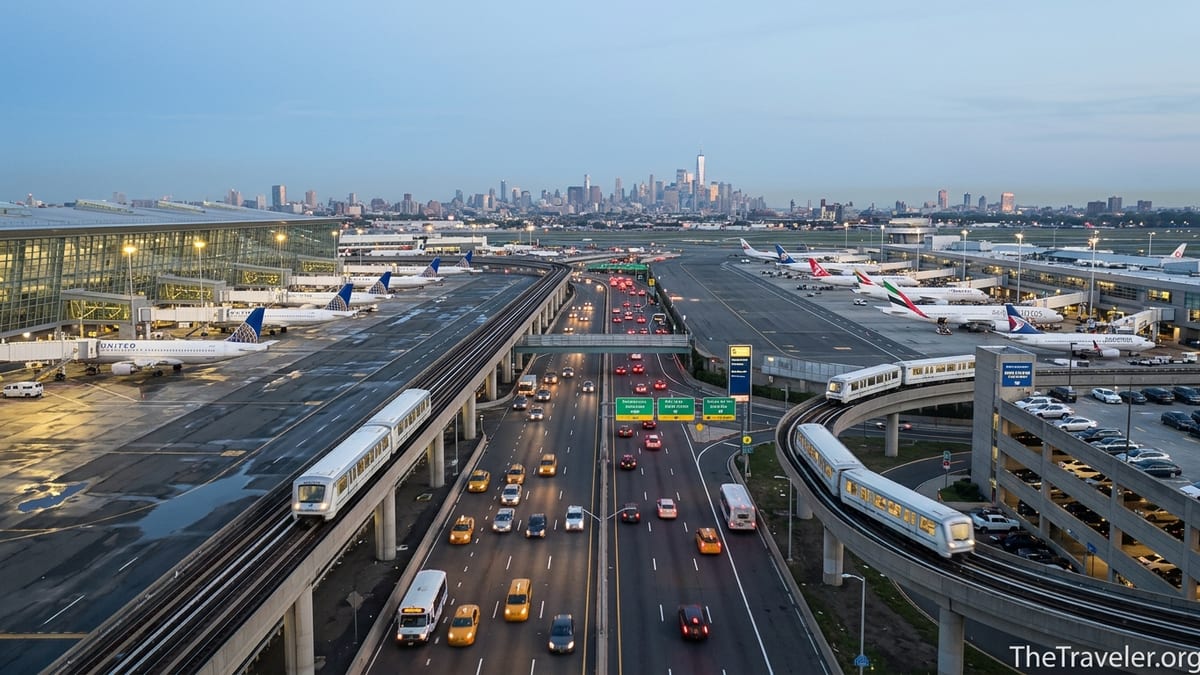
Newark vs JFK at a Glance
Newark Liberty International Airport (EWR) sits in New Jersey, roughly 15 to 16 miles from Midtown Manhattan, and is the primary East Coast hub for United Airlines. It is also a key gateway for travelers staying in Lower Manhattan, Jersey City, Hoboken, and much of northern New Jersey, where it typically offers the most convenient access. The airport has three main terminals, including a new Terminal A that opened in 2023, with ongoing upgrades underway in Terminal B to refresh older infrastructure and passenger areas.
John F. Kennedy International Airport (JFK) is located in the Jamaica neighborhood of Queens, about 15 to 16 miles from Midtown Manhattan. It is New York’s largest international gateway, with a wider range of long-haul destinations and carriers, from major alliances like SkyTeam and Oneworld to numerous foreign flag carriers. JFK has multiple terminals and, while parts are undergoing renovation, it generally offers more choice when you are looking for specific international routes or premium cabin products.
In real travel terms, the distance difference between Newark and JFK for most of Manhattan is relatively small. What matters more is where in the city you are staying, which airline you are flying, and how comfortable you are navigating public transit. A traveler heading to a hotel near Wall Street may find Newark faster, while someone booked in Long Island City or Brooklyn Heights will almost always prefer JFK.
Think of it this way: Newark is often the most logical choice if you are flying United, heading to New Jersey or Lower Manhattan, or prioritizing shorter rideshare times outside peak traffic. JFK usually wins if your priority is wide international choice, easy public transit into Manhattan, or proximity to Queens and Brooklyn neighborhoods.
Getting to Manhattan: Time, Cost, and Real-World Scenarios
Transportation to and from Manhattan is where the Newark vs JFK debate becomes very tangible. Both airports are connected by dedicated AirTrain systems that link terminals to regional rail or subway lines. But how you experience these options depends heavily on your schedule, budget, luggage, and comfort with transfers.
From JFK, the most popular transit route is AirTrain plus either the subway or the Long Island Rail Road. A typical budget-friendly option is AirTrain to Jamaica Station, then the E subway line into Midtown or Lower Manhattan. Travelers commonly report that this combination takes around 60 minutes door to door from JFK to Midtown for about the cost of the AirTrain fee plus a standard subway fare, which is comparatively inexpensive. Those willing to pay more often pair the AirTrain with the Long Island Rail Road from Jamaica to Penn Station or Grand Central, which can bring total travel time into the roughly 35 to 45 minute range in good conditions.
Newark Liberty also uses AirTrain to connect terminals with Newark Liberty International Airport Station, where you can board NJ Transit or Amtrak trains to New York Penn Station. A typical NJ Transit journey from the airport station to Penn Station often runs in the range of 30 minutes on the train itself, with total door-to-door times to Midtown commonly around 45 to 60 minutes when you include AirTrain and platform transfers. For a solo traveler landing midday and heading to a Midtown hotel, the cost of AirTrain plus NJ Transit can be roughly comparable to JFK’s AirTrain plus subway option, sometimes slightly higher but still well below rideshare prices.
Ground transport choices matter even more during peak traffic. For example, a couple landing at JFK at 5 p.m. on a weekday and taking a yellow cab to a Times Square hotel could find the trip stretching to over an hour or more in heavy Van Wyck Expressway congestion, even though taxis from JFK to Manhattan work on a predictable flat fare plus surcharges. A similar couple landing at Newark at the same time and using a rideshare to a Lower Manhattan hotel might still sit in Holland Tunnel or Lincoln Tunnel traffic, but may shave 15 to 20 minutes off the journey compared with a rush-hour drive from JFK to the same area.
Airlines, Routes, and When One Airport Clearly Wins
For many travelers, the choice between Newark and JFK is made almost automatically by airline loyalty or route availability. United Airlines dominates Newark, running its primary East Coast hub there. If you are flying United to or from Europe, select destinations in South America, or many domestic cities, EWR will often be your only nonstop choice or the most convenient connection. For example, a frequent United flyer traveling from Chicago to a meeting near the World Trade Center might reasonably choose a Chicago to Newark nonstop and be in Lower Manhattan on a train in under an hour after landing in light traffic.
JFK, on the other hand, is the primary New York gateway for many members of alliances like Delta (SkyTeam) and American Airlines (Oneworld), along with a long list of international carriers operating nonstop routes to Europe, Asia, the Middle East, and Africa. If you are booking a premium cabin from New York to cities such as Paris, London, or Tokyo, JFK will often give you a wider choice of airlines, departure times, and cabin styles. A traveler flying business class on a flagship transatlantic route might specifically select JFK for access to an airline’s signature lounge or newly renovated terminal facilities.
Connecting itineraries also influence the decision. If you are arriving from a smaller U.S. city and connecting onward to an international flight, it can be far smoother to stay within a single alliance at the same airport. A traveler flying from Raleigh to Rome via JFK on one ticket with a major carrier, for instance, benefits from coordinated schedules, protected connections, and through-checked luggage. By contrast, mixing Newark and JFK on the same day usually requires a separate ground transfer across the region, which can take 90 minutes or more and exposes you to traffic and weather risks best avoided on tight connections.
There are also niche cases where one airport’s network is simply stronger. Travelers heading to or from Caribbean destinations or certain Latin American cities might find more direct options at JFK, while others bound for specific European hubs like Frankfurt or Zurich might see more attractive schedules at Newark. In practice, most leisure travelers start with the fare and times, then zoom in on whichever airport offers the combination that feels most workable with their hotel location and arrival hour.
What It Feels Like on the Ground: Terminals, Security, and Amenities
Beyond schedules and maps, the on-the-ground experience shapes how you remember each airport. Newark’s Terminal A, freshly opened in 2023, offers a modern feel, cleaner lines, and newer concessions than older parts of the complex, while Terminal C has long hosted United’s hub operations and offers a solid range of dining and shopping options. Terminal B, however, is older and currently in a multi-year improvement program, so experiences there can feel more dated, with construction zones and shifting gate areas.
JFK’s experience varies widely by terminal. Newer or recently refreshed facilities tend to feel bright, with expanded security lanes and upgraded food options, while older terminals can still feel crowded and tired, particularly at peak hours. Because JFK is such a busy international hub, passengers should be prepared for long walks between gate and AirTrain, especially in large terminals, and for queues at immigration during peak arrival banks. Many travelers report that it can easily take 20 minutes just to reach the AirTrain from a distant gate when flights arrive in bunches.
Security wait times at both airports can fluctuate sharply based on time of day, season, and specific terminal. General guidance suggests arriving around two hours before a domestic flight and three hours before an international flight at either airport, with an extra margin during holidays or Friday evenings. Frequent flyers with TSA PreCheck or CLEAR often report more predictable experiences at Newark’s United-heavy Terminal C and at the larger JFK terminals serving major carriers, but this is not guaranteed. Checking live wait-time apps or airport tools on your phone on the way to either airport is a smart habit.
In terms of amenities, JFK typically has the broader variety of lounges, duty-free stores, and specialty dining thanks to its higher volume of international traffic and airline investment. Newark, though, has been improving, particularly in the new Terminal A and in renovated spaces in Terminal C, where travelers can find upgraded coffee bars, branded fast-casual outlets, and better seating with charging points. For a family with young children, both airports now offer play areas in select terminals, though their exact locations change as renovations roll through.
Who Should Choose Newark?
Newark Liberty tends to be the better fit for travelers whose plans naturally line up with its geographic and airline advantages. If you are staying in Lower Manhattan neighborhoods such as the Financial District, Tribeca, or Battery Park City, Newark can often rival or beat JFK in total travel time, especially during off-peak traffic hours. A business traveler landing midday on a weekday, rolling only a carry-on, and heading straight to a meeting near the World Trade Center may reasonably choose an NJ Transit train from Newark Airport station to New York Penn Station, then a quick subway ride downtown, arriving in under an hour in good conditions.
Newark is also a strong choice if your final destination is in New Jersey itself. Guests staying in hotels around Jersey City’s waterfront or Hoboken, for instance, can be checking in within 30 to 40 minutes of landing when traffic is light, using a combination of Uber or Lyft from EWR or the AirTrain plus NJ Transit to nearby stations. This makes Newark particularly attractive for travelers attending conferences at New Jersey venues or visiting friends in nearby suburbs such as Montclair or Westfield.
Airline loyalty is another decisive factor. United MileagePlus members, or anyone with United elite status, will almost always find Newark more convenient, with better chances of complimentary upgrades, access to United Club lounges, and more nonstop options on United metal. If you have a United-branded credit card that waives checked bag fees or grants earlier boarding, consolidating your flights through Newark can be a practical way to get the most from those benefits in and out of the New York area.
Budget-conscious travelers should not overlook Newark either. On many routes, especially from the Midwest or smaller U.S. cities, EWR fares can undercut JFK by a noticeable margin. A family of four flying from Cleveland or Indianapolis might find that Newark flights are several hundred dollars cheaper in total than JFK on their chosen dates, making the slightly more complex transit from EWR to a Midtown hotel a fair trade-off in exchange for real savings.
Who Should Choose JFK?
JFK often emerges as the better choice for travelers focused on international connections, extensive airline choice, and straightforward public transit into Manhattan. If you are flying to or from Europe, Asia, or the Middle East and want multiple daily departures, premium-cabin products, or specific alliance connections, JFK usually provides a deeper menu of options. A traveler booking a round-trip business class ticket from New York to London, for example, might compare several carriers at JFK, each with its own lie-flat seat style and lounge access, something Newark simply cannot match at the same scale.
JFK is also the natural pick for those staying in Queens or Brooklyn. Travelers booked into hotels in Long Island City, Williamsburg, or Brooklyn Heights will often reach their accommodations more quickly and cheaply from JFK using a combination of AirTrain and subway. Even for many areas of Midtown, some visitors prefer the simplicity of AirTrain to Jamaica followed by a single-seat subway or Long Island Rail Road ride into Penn Station or Grand Central, especially if they are arriving at off-peak hours and comfortable retrieving a MetroCard or tapping a payment card at fare gates.
For first-time visitors to New York who prioritize clear signage and a feeling of being “in the city” sooner, JFK’s rail connections can feel more intuitive. The AirTrain and its transfer stations at Jamaica and Howard Beach are well signed, and once you are on the subway or Long Island Rail Road you are firmly within the city’s transit grid. A solo traveler with a backpack, arriving mid-afternoon, can often be in a Midtown hostel in about an hour while paying far less than a taxi or rideshare, and without dealing with New Jersey-specific tickets or transfer points.
Lastly, JFK frequently wins when weather or traffic is a concern. While both airports are vulnerable to delays during major storms, having a rail-based option that allows you to bypass some of the worst highway congestion is valuable. During peak holiday periods, being able to rely on AirTrain plus subway or Long Island Rail Road, rather than committing to a taxi stuck on the expressway, can keep your arrival or departure day on track.
Practical Tips to Make Either Airport Work for You
Regardless of which airport you choose, a few practical habits can significantly reduce stress. First, build in honest time buffers. For domestic flights, aim to arrive at the airport about two hours before departure, and for international, closer to three. If you are flying from a particularly busy terminal at either airport in peak seasons or on Sunday evenings, consider adding a further 30 minutes to cover security lines and potential AirTrain delays.
Second, plan your ground transportation before you land. If you are comfortable with transit, note whether you will use JFK’s AirTrain to Jamaica or Howard Beach, or Newark’s AirTrain to Newark Liberty International Airport Station. Download relevant transit apps or maps to track NJ Transit, Long Island Rail Road, or subway departures, and keep a payment method ready for fare machines or contactless readers. Travelers who decide their route while standing at baggage claim often lose 15 to 20 minutes just figuring out signs and ticket options.
Third, match your luggage situation to your transport choice. If you are traveling with two large checked bags and a stroller, a taxi or rideshare might be worth the extra cost from either airport, simply to avoid stairs and crowded trains. A couple visiting New York with only carry-ons, by contrast, can comfortably navigate AirTrain plus subway or rail, accepting one or two transfers in exchange for substantial savings. Think ahead about escalators, elevators, and how far you are willing to roll bags on city sidewalks.
Finally, remember that New York traffic has a rhythm. Very early mornings and late evenings often mean faster drives from both Newark and JFK into Manhattan; mid-afternoon and rush-hour windows can be unpredictable. If you must travel during a congested time, favor routes that incorporate rail where possible, and avoid scheduling extremely tight dinner reservations or show tickets within an hour of your planned hotel arrival.
The Takeaway
Choosing between Newark Liberty International Airport and JFK is less about which one is objectively “best” and more about which one aligns with your specific trip. Newark often shines for United loyalists, travelers bound for Lower Manhattan or New Jersey, and budget-minded flyers who find better fares into EWR. JFK typically leads for international connectivity, travelers staying in Queens or Brooklyn, and those who value direct rail-based options into Manhattan that sidestep at least some of the region’s notorious traffic.
Look at three variables before you book: where you are sleeping, which airline and route serve you best, and how comfortable you are with public transportation. A traveler staying near Wall Street on a United itinerary might be delighted with Newark and an NJ Transit train, while another booked into a Midtown hotel on an international carrier could find JFK and the Long Island Rail Road an ideal combination of speed and cost.
In many cases, the smarter airport is simply the one that keeps your arrival and departure days calm. That might mean paying a bit more for a nonstop into the airport closer to your hotel, accepting a longer but cheaper transit route to protect your budget, or choosing the airport that best supports your airline status and lounge access. With realistic expectations and a clear plan from runway to hotel lobby, both Newark and JFK can serve as efficient and even surprisingly smooth gateways to New York City.
FAQ
Q1. Is Newark or JFK closer to Manhattan? Newark and JFK are both roughly 15 to 16 miles from Midtown Manhattan, but actual travel time depends on traffic, your specific neighborhood, and whether you use rail or road.
Q2. Which airport is better for staying in Lower Manhattan? Newark often works better for Lower Manhattan due to relatively direct access via NJ Transit to Penn Station and shorter car rides to neighborhoods like the Financial District in off-peak hours.
Q3. Which airport has better public transportation to Manhattan? JFK generally has the edge for public transit, with AirTrain connections to both the subway and the Long Island Rail Road, giving travelers multiple rail-based options that bypass some highway traffic.
Q4. Is it cheaper to fly into Newark or JFK? Prices vary by route and date, but Newark can sometimes offer cheaper fares on United and select domestic routes, while JFK may provide competitive pricing on international flights due to wider airline competition.
Q5. Which airport should I pick if I am staying in Brooklyn or Queens? JFK is usually the better choice for Brooklyn and Queens, as you can use AirTrain plus nearby subway lines to reach many neighborhoods more quickly and with fewer transfers than from Newark.
Q6. Does Newark or JFK have better international flight options? JFK typically has more international airlines and long-haul routes, making it the stronger choice if you want multiple carriers, departure times, or premium cabin options to major global cities.
Q7. Which airport is less stressful for first-time visitors? Many first-time visitors find JFK slightly easier because its AirTrain and subway or Long Island Rail Road connections keep everything within New York’s transit system, with clear signage and familiar payment methods.
Q8. How much time should I allow to get to either airport from Manhattan? Plan on at least 60 to 90 minutes from most parts of Manhattan to either JFK or Newark, allowing extra time during rush hour, holidays, or bad weather, especially if you are taking a taxi or rideshare.
Q9. Can I easily transfer between Newark and JFK on the same day? Transferring between Newark and JFK is possible but not convenient; it typically takes 90 minutes or more by a combination of rail and road and is not recommended for tight connections.
Q10. If price and schedule are similar, how should I decide between Newark and JFK? When fares and times are similar, choose the airport closer to your hotel, with the simpler transit route and any airline benefits you value, such as status perks or lounge access, to minimize stress on travel days.