


Few travel experiences feel as instantly iconic as gliding into the mist at the base of Niagara Falls, poncho flapping, camera dripping, and the roar of Horseshoe Falls swallowed by wind and water. On the Canadian side, that “bucket list” moment is delivered by Niagara City Cruises, the official boat tour concession for Niagara Parks. In 2026, with dynamic pricing, timed ticketing, and crowds back in full force, many travelers are asking a simple question: is Niagara City Cruises still worth it?
What Exactly Is Niagara City Cruises in 2026?
Niagara City Cruises is the authorized boat tour operator on the Canadian side of Niagara Falls, based in Niagara Falls, Ontario. It is operated by Hornblower, a company that runs sightseeing and dining cruises in destinations like San Francisco, New York, and London. At Niagara, their compact, double-deck catamarans shuttle thousands of passengers a day from the base of the gorge out into the turbulent pool beneath Horseshoe Falls. The experience is short, wet, and intense, and is widely considered one of the “must do” activities at the falls.
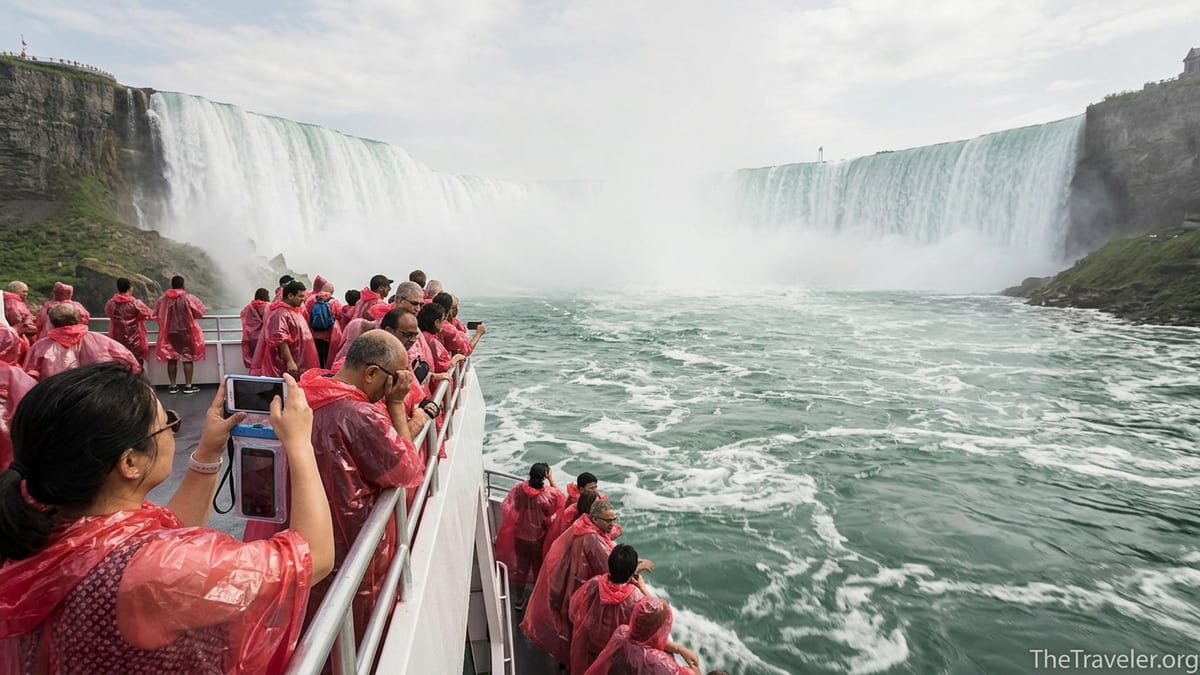
The defining feature of Niagara City Cruises is proximity. Boats depart from the Canadian side, swing past the American Falls and Bridal Veil Falls, then drive directly into the thickest mist at Horseshoe Falls. In practice, you are close enough that many visitors cannot keep their eyes open for more than a second or two when the boat reaches the heart of the spray. The circuit takes roughly 20 minutes on the water, but the build-up of descending via elevators, boarding, and moving through the gorge makes the outing feel like a compact adventure rather than a simple shuttle ride.
In 2026, Niagara City Cruises continues to operate as part of the broader Niagara Parks ecosystem. That means the entire experience is integrated with other Canadian-side attractions such as Journey Behind the Falls and the White Water Walk. Most visitors encounter the cruise as one element of a full Niagara Parks itinerary, purchased either as a standalone timed ticket or as part of a bundled pass.
Because it is the only traditional boat tour on the Canadian side, Niagara City Cruises does not have a like-for-like competitor in Ontario. Jet boats and smaller adventure operators exist further down the river, but if you want the classic “into the mist” experience while staying in Canada, this is the product you will end up using.
Current Prices, Ticket Types, and How Dynamic Pricing Works
By 2026, Niagara City Cruises has fully embraced date-based and time-based pricing, similar to what you see at major theme parks. There is no single flat price you can rely on year-round. Instead, fares vary by season, day of the week, and sometimes by time slot. As a general orientation, most travelers in 2025 and early 2026 report daytime adult tickets in the ballpark of the mid‑20s in Canadian dollars before tax, with shoulder-season and weekday times occasionally coming in a bit lower and peak July and August time slots trending slightly higher.
For a concrete example, visitors attending large conventions in Niagara Falls in spring 2026 have been offered advance rates “starting around 25 Canadian dollars” for basic daytime sailings, with discounts available through group codes. On regular summer weekends, independent travelers searching direct on the official site often encounter adult prices a few dollars higher for departures in the middle of the day, with the first and last sailings sometimes priced more gently. Youth and child tickets typically undercut the adult fare, and children under a certain age are often free with an adult, but exact thresholds and discounts adjust periodically, so it is important to check real-time pricing when you book.
In addition to the standard “Voyage to the Falls” daytime cruise, Niagara City Cruises sells a small range of enhanced experiences in high season, such as evening “Falls Illumination” departures timed to the nightly light show, and on select nights combined cruises that coincide with fireworks. These specialty sailings generally cost more than daytime rides, sometimes by a noticeable margin, but they also operate with a different atmosphere: less focus on drenching everyone and more emphasis on ambient views of the illuminated cataract and skyline.
The key practical takeaway on pricing in 2026 is that you should not arrive expecting to haggle or find a deeply discounted last-minute deal at the dock. The most reliable way to control cost is to book early for a less popular time slot, especially outside the midday peak. If you are visiting with a family of four during a busy August weekend, the difference between peak and shoulder times can add up to the cost of a casual lunch in town.
What the On-the-Water Experience Actually Feels Like
The marketing language for Niagara City Cruises is full of superlatives, but the on-the-water experience is remarkably straightforward. After passing through security at the upper plaza, you descend by elevator to the dock level. Staff hand you a biodegradable plastic poncho, which you can either slip on immediately or carry until you board. There is a short holding area next to the water where passengers from the previous sailing disembark, after which your group moves along a ramp and onto the boat.
Once aboard, you can choose between the lower and upper decks. The lower deck offers a bit more protection from wind and spray, which many families with small children or older travelers appreciate, while the upper deck has the clearest sightlines and the most intense exposure. On crowded summer sailings, the best rail-side spots on the upper level tend to fill quickly, especially on the side that will face Horseshoe Falls for the longest stretch. Locals often recommend moving purposefully but calmly to the front or far side as soon as you board, then holding your position.
The cruise itself begins calmly, gliding along the Niagara River with panoramic views of the American Falls on your left and the Niagara Gorge around you. As the boat approaches the base of the American Falls and Bridal Veil Falls, you will feel the first fine spray and hear the sound build. Many visitors start taking photos here, while the falls are still clearly visible and you can pose without being entirely soaked. This segment is comparable in intensity to a windy day at the seashore.
The tone changes dramatically as the captain steers the boat toward Horseshoe Falls. Within a minute or two, the mist thickens into a dense cloud, the wind accelerates, and the air temperature can feel noticeably cooler. Visibility drops, and in the core section many people can see only fragments of the rock face or white water through the spray. Phones and cameras fog up quickly, and the poncho hood that seemed optional at the dock suddenly becomes essential. For some travelers, this is pure exhilaration. For others, particularly those who dislike loud noise, tight crowds, or unexpected surges of wind and water, it can be overwhelming. Being prepared for that shift helps you enjoy it instead of being caught off guard.
Crowds, Timing, and How Long You Really Need
On paper, the Niagara City Cruises boat ride lasts roughly 20 minutes. In reality, you should plan at least an hour from the time you enter the queue at the upper plaza to the time you re-emerge from the gorge, and longer in peak season. That buffer includes security screening, the elevator ride, waiting at the dock, boarding, and disembarkation. On midweek mornings in May or September, you might move through the entire cycle in 45 minutes to an hour. On Saturday afternoons in July or August, especially during school holidays or long weekends, the process can stretch closer to 90 minutes.
Timed-entry tickets introduced and refined over the last several years help smooth out the worst of the lines, but they do not eliminate them entirely. If you arrive 20 or 30 minutes before your scheduled sailing, you will generally find the flow manageable. Show up exactly at your slot during a busy holiday, and you may encounter a dense crowd all funneled toward the same checkpoint at once. Staff are practiced at moving large numbers of people efficiently, but there are natural choke points at the elevators and gangways.
In terms of time of day, early morning and late evening departures remain the best options for travelers who want to minimize crowds. An 8:30 or 9 a.m. departure in June often feels markedly calmer than a 1 p.m. sailing, even when overall ticket numbers are similar. Likewise, shoulder-season visits in late April, May, September, and early October tend to pair shorter waits with milder temperatures, though weather can be changeable. In contrast, long weekends such as Canada Day in early July or civic holidays in August reliably generate lines that snake well beyond the main plaza.
If you are building a one-day Niagara itinerary from Toronto in 2026, a practical strategy is to book an earlier timed boarding, drive down in the morning, and aim to complete the cruise before lunch. That leaves your afternoon free for the Niagara Parkway viewpoints, Journey Behind the Falls, or a winery visit in Niagara-on-the-Lake, rather than standing in an afternoon queue wishing you had started earlier.
Comfort, Safety, and Accessibility Considerations
From a safety perspective, Niagara City Cruises operates under strict regulations, and incidents on board are rare. The boats are designed for stability in turbulent water, railings are high, and staff are positioned strategically to watch crowds. Even in strong wind and heavy mist, the experience is choreographed and controlled. Many families with young children and older relatives ride together without issue, treating it as a shared rite of passage at the falls.
That said, “comfortable” is not the word most people would use about the core of the trip. You will almost certainly get wet. Even with the poncho, feet, calves, and sometimes the lower half of your body end up soaked, especially if you stand near the rail or on the upper deck. On cooler days in May or October, that chill can linger once you leave the boat, particularly if you did not bring a dry layer. Visitors who arrive in flip-flops and cotton T‑shirts often underestimate how cold they will feel afterward, even in mild air temperatures.
For travelers with mobility challenges, the picture in 2026 is mixed but generally positive. Elevators connect the upper plaza to the dock, and the boats are boarded via ramps. Wheelchair users and those with strollers are accommodated on most sailings, and there is space on the lower deck that allows for a decent view without tackling stairs. However, the combination of wet surfaces, crowd surges when boarding and disembarking, and the noise inside the gorge can be stressful. If you or someone in your party uses a mobility aid, consider requesting assistance from staff at the plaza; they are accustomed to helping guests time their boarding and find safer positions on deck.
Visitors prone to motion sickness usually tolerate the cruise well. The boats are broad and the ride is short, with only modest pitching as they hold in the turbulent water near Horseshoe Falls. The more common discomforts are related to sensory overload: intense noise, spray, and the feeling of being pressed among many people in a confined space. Travelers with sensory sensitivities or anxiety may prefer a lower-deck position near an exit point, and some find that wearing a light hat and glasses under the hood of the poncho helps them feel less exposed.
Niagara City Cruises vs. Maid of the Mist and Other Alternatives
One of the most common questions in 2026 is whether Niagara City Cruises on the Canadian side offers a better experience than Maid of the Mist on the U.S. side. Both tours follow a near-identical pattern: a short ride past the American Falls and Bridal Veil Falls into the mist at Horseshoe Falls, with total time on the water around 20 minutes. Both distribute ponchos, both operate large-capacity boats, and both are deeply woven into their respective sides of the tourism industry.
The main structural difference is geography. Maid of the Mist departs from Niagara Falls, New York, within the U.S. Niagara Falls State Park. Niagara City Cruises departs from the base of the gorge on the Ontario side, accessed via the Canadian Niagara Parkway. Because the Canadian shoreline curves around toward the horseshoe itself, many travelers feel the Canadian boats achieve a slightly more frontal approach to Horseshoe Falls, resulting in a marginally more dramatic view as you near the center of the curtain. The flip side is that those staying in Buffalo or on the U.S. side may find the American departure point far more convenient and avoid cross-border formalities entirely.
Price-wise, the two operators are broadly comparable, with each using its own seasonal and dynamic pricing structures in local currency. Differences of a few dollars in either direction are common from season to season, but for most visitors those small variations are not decisive. Where you are staying, what else you plan to do, and which side of the border you prefer to explore tend to matter far more than a modest price gap.
Beyond the “big two,” alternatives include jet-boat rides that depart from points downstream and power into the rapids of the lower Niagara River. These tours do not take you into the mist beneath the falls themselves, but they offer high-adrenaline whitewater experiences and are particularly popular with repeat visitors who have already done one of the main cruises. There are also land-based experiences like Journey Behind the Falls, which brings you into tunnels carved behind the curtain of Horseshoe Falls, and observation towers that frame the view without getting you wet at all.
In practical terms, if you are visiting only the Canadian side and want the classic postcard moment, Niagara City Cruises is the clear choice. If you have easy access to the U.S. side or already plan to explore Niagara Falls State Park in depth, Maid of the Mist delivers an almost indistinguishable on-the-water experience. The question is not which boat is objectively “better,” but which one aligns with your border logistics and overall itinerary.
Is Niagara City Cruises Worth the Money in 2026?
Value is inherently subjective, but by 2026 a few patterns emerge from traveler feedback. For most first-time visitors to Niagara Falls, Niagara City Cruises is described as “absolutely worth it” at least once. The combination of proximity, sound, and sheer physical sensation is difficult to replicate from any lookout, and photographs from the river level convey scale in a way that even the best viewpoints cannot. Many travelers who arrive ambivalent leave saying the boat ride was the highlight of their visit.
Where disappointment does crop up, it typically falls into three categories. The first is expectations versus duration. Some travelers, seeing the price and marketing, anticipate a longer or more interpretive cruise, perhaps with narration and languid circling of the gorge. When they discover that most of the 20 minutes is spent in a tight loop under intense spray, they feel the cost outstrips the time. The second is weather and visibility. On particularly foggy or rainy days, the combination of natural mist and low clouds can obscure much of the falls, leading to a sense of paying for a white wall of water and wind. The third is crowding; those who strongly dislike dense crowds in confined spaces sometimes exit more relieved than exhilarated.
To decide whether it is worth it for you, consider what you are really buying. You are not purchasing a leisurely river cruise or in-depth commentary on geology and history. You are paying for a controlled, intense encounter with one of the world’s most famous waterfalls from its most dramatic angle. If that sort of visceral experience appeals to you, the ticket price in 2026 is easier to justify, especially when framed against the overall cost of travel to Niagara, lodging, and meals, which will dwarf the price of a single boat ride.
On the other hand, if you prefer contemplative views, dislike getting wet, or are traveling on a very tight budget, you may decide to skip the cruise and invest your time in the free viewpoints along the Niagara Parkway, which already deliver excellent panoramas of the American and Horseshoe Falls. In that case, pairing a walk along the promenade with a paid visit to Journey Behind the Falls or a tower observation deck can provide an alternate but still memorable way to appreciate the cataract.
Practical Tips to Get the Best Experience
A bit of practical planning can significantly elevate your Niagara City Cruises experience. The first and most important tip is to book a timed ticket in advance during peak months. While same-day tickets are often available in shoulder season, summer weekends and holidays now see many popular time slots sell out online. Booking early also gives you more control over the time of day and helps you align the cruise with other plans, such as dinner reservations or winery appointments.
Second, dress for conditions that are wetter and cooler than the forecast suggests. Even on a warm July day, the combination of spray and wind can make the gorge feel brisk. Quick-drying shorts or trousers, a light synthetic top, and footwear that tolerates getting soaked are ideal. Many travelers swear by bringing a compact, quick-dry towel in a daypack and a spare pair of socks, particularly if they plan to continue walking along the parkway afterward. Simple waterproof phone pouches, which you can buy in Niagara souvenir shops or online before your trip, help you capture photos without constantly worrying about water damage.
Third, think strategically about where you stand. If your priority is photography, a corner spot on the upper deck often gives you the best angle to pivot between the American Falls and Horseshoe Falls without having to fight through the crowd. If your goal is to experience the mist but remain as comfortable as possible, a position along the lower deck rail, slightly back from the bow, may strike the right balance. Families with young children might prefer to start on the lower deck and then move cautiously to the upper level only if the child seems enthusiastic once the boat begins its approach.
Finally, build in flexibility for weather. If you are staying in Niagara Falls for several days, consider scheduling the cruise for the first full day but remain open to adjusting if visibility is terrible or lightning storms are forecast. Operations can pause or adjust during severe weather, and riding in heavy rain on top of the mist can be less satisfying. Having a backup slot in mind later in your visit makes it easier to adapt without feeling you have lost your chance.
The Takeaway
In 2026, Niagara City Cruises remains what it has been for years: the signature way to feel the full power of Niagara Falls up close from the Canadian side. The experience has not been transformed into something radically different. It is still short, loud, wet, and intensely physical, a sharp contrast to the more static viewpoints along the rim of the gorge. What has changed is the context: more sophisticated pricing, better crowd management, and a tourism ecosystem in Niagara Falls that expects you to plan rather than simply show up.
Whether it is “worth it” depends mostly on your expectations and travel style. For first-time visitors who are willing to embrace getting soaked and jostling with a crowd for a few minutes in exchange for a singular memory, the answer is almost always yes. The cost is significant but still relatively small compared with the overall expense of reaching Niagara and staying overnight, and the emotional payoff of staring into the white fury of Horseshoe Falls from just a few dozen meters away is difficult to replicate anywhere else.
For travelers who value quiet contemplation over sensory overload, or who are traveling on a very limited budget, the Canadian side of Niagara still offers excellent alternatives. The panoramic overlooks, riverside walks, and supplementary attractions like Journey Behind the Falls provide many ways to appreciate the scale and beauty of the falls without setting foot on a boat. But even among seasoned travelers and locals, the consensus in 2026 is that if you can comfortably afford it and are physically up for the experience, Niagara City Cruises deserves a place on your itinerary.
Ultimately, Niagara City Cruises is not just about seeing Niagara Falls; it is about feeling them. If that is the kind of travel memory you seek, then in 2026, the ride remains a worthy investment of both your time and your travel budget.
FAQ
Q1. How much does Niagara City Cruises cost in 2026?
Exact prices vary by date and time, but most adult daytime tickets typically fall in the mid‑20s in Canadian dollars before tax, with children and youth paying less and occasional shoulder-season or early-morning departures priced a bit lower.
Q2. Do I need to buy Niagara City Cruises tickets in advance?
Advance purchase is strongly recommended from late spring through early fall, especially on weekends and holidays, because popular midday time slots can sell out and buying ahead lets you avoid some of the longest queues.
Q3. How long does the Niagara City Cruises boat ride take?
The on-the-water portion lasts about 20 minutes, but you should budget at least an hour door to door for security, elevator rides, boarding, and disembarking, and up to 90 minutes during peak periods.
Q4. Will I get very wet on Niagara City Cruises?
Yes, expect to get significantly wet from the knees up, especially on the upper deck near the rail; a poncho is provided, but shoes, legs, and sometimes sleeves still end up soaked, so dress accordingly.
Q5. Is Niagara City Cruises suitable for young children and older adults?
Generally yes, as the ride is short and the boats are stable, but families should consider noise, crowds, and wet conditions, and may prefer the more sheltered lower deck for small children or less mobile travelers.
Q6. How does Niagara City Cruises compare with Maid of the Mist?
Both tours are very similar in length and intensity; Niagara City Cruises departs from the Canadian side and may offer a slightly more frontal view of Horseshoe Falls, while Maid of the Mist departs from the U.S. side and is more convenient if you are staying in New York.
Q7. When is the best time of day to ride Niagara City Cruises?
Early morning and late evening usually offer the smallest crowds and more relaxed boarding, while midday departures, especially in July and August, tend to be the busiest and feel most crowded on deck.
Q8. Is Niagara City Cruises accessible for wheelchair users?
The attraction uses elevators and ramps and can accommodate wheelchairs on the lower deck, but surfaces can be very wet and boarding crowded, so it is wise to request staff assistance and allow extra time.
Q9. What should I wear on Niagara City Cruises?
Wear quick-drying clothing, secure footwear that can get soaked, and consider a light layer under the poncho; bringing a small towel or spare socks can make you more comfortable afterward.
Q10. Is Niagara City Cruises worth it if I am on a tight budget?
If funds are very limited, you might prioritize free viewpoints and lower-cost attractions instead, but for many visitors the boat ride is the single most memorable part of Niagara and worth saving for if possible.