


More news on this day
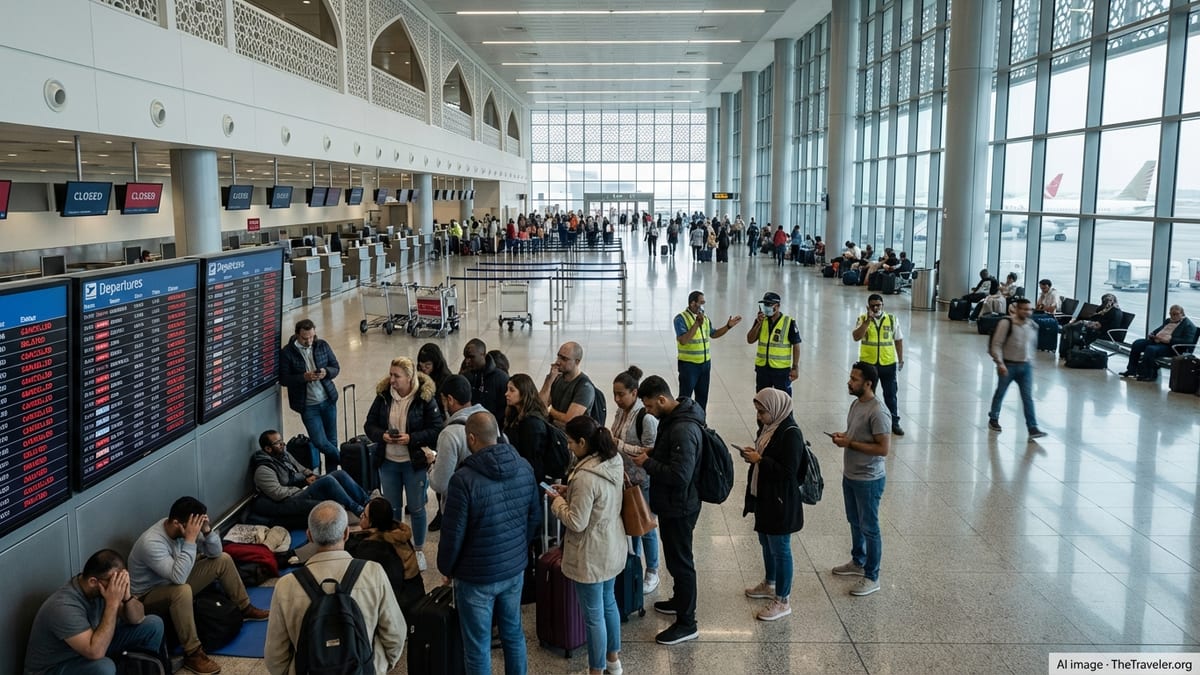
Nine sudden flight cancellations by Flydubai, Kuwait Airways and Air Arabia at Bahrain International Airport have left passengers stranded and intensified a fresh wave of travel disruption across the Gulf’s already fragile aviation network.
Get the latest news straight to your inbox!
Ground Disruption at Bahrain Ripples Across Key Gulf Routes
According to published coverage focused on Bahrain International Airport, the latest wave of cancellations is linked to ongoing constraints affecting ground handling and wider airport operations in the kingdom. Recent reporting indicates that bottlenecks in turning aircraft around, combined with intermittent airspace restrictions, have made it difficult for airlines to keep schedules running predictably across short and medium haul routes.
The nine scrapped services involving Flydubai, Kuwait Airways and Air Arabia were concentrated on high frequency links between Bahrain and neighboring hubs, including Dubai, Sharjah and Kuwait City. Publicly available flight data and regional aviation analysis suggest that these connections are especially vulnerable because they rely on tight turnaround times and multiple daily rotations, leaving little room to absorb sudden changes.
Travel-focused monitoring of the situation in Bahrain indicates that these latest cancellations come on top of earlier episodes in which dozens of services were pulled or retimed over several days. Coverage by regional outlets has described repeated waves of disruption at Bahrain International Airport, with cancellations and delays radiating outward to major Gulf hubs such as Dubai, Doha, Riyadh, Dammam, Jeddah and Kuwait City.
Observers of Gulf aviation trends note that while Bahrain is a relatively compact hub, its role as a connector for traffic shuttling between Saudi Arabia, the United Arab Emirates, Kuwait and wider Middle East destinations means that even a short burst of cancellations can quickly cascade through the network.
Flydubai, Kuwait Airways and Air Arabia Under Pressure
Publicly available operational updates and flight tracking snapshots indicate that Flydubai has faced repeated interruptions on its Bahrain to Dubai services during recent bouts of instability in regional airspace. Analysts describe the carrier’s dense short haul network out of Dubai International Airport as particularly sensitive to disruption, because delays or cancellations on one rotation can affect several subsequent departures.
Kuwait Airways has been navigating a separate layer of complexity as Kuwait’s own airspace has seen restrictions over the past months. Travel commentary and legal guidance for passengers highlight that the airline has already dealt with mass cancellations on routes linking Kuwait International Airport to Bahrain and other regional hubs. The additional loss of Bahrain-linked flights therefore compounds challenges for travelers attempting to route through Kuwait at a time of constrained capacity.
For Air Arabia, the cancellations affecting Bahrain to Sharjah services follow earlier reports that the low cost carrier has at times pulled or adjusted Bahrain operations when Gulf airspace conditions tightened. Aviation specialists monitoring the situation have previously noted that some Bahrain traffic has been temporarily rerouted through nearby Saudi airports to preserve a minimum level of connectivity when direct services became difficult to operate.
Across all three carriers, the current pattern points to a tightening of available seats for budget conscious travelers who rely on Flydubai and Air Arabia for point to point links, and on Kuwait Airways for competitive one stop connections between the Gulf, Europe and South Asia.
Passengers Stranded as Regional Network Shows Fragility
Reports from regional travel publications describe scenes of stranded passengers at Bahrain International Airport during recent cancellation waves, with travelers attempting to rebook on alternative carriers or reroute via other hubs. Similar accounts linked to earlier disruptions in March and April 2026 reference long queues at ticket desks, limited information on revised departure times and heightened frustration among those with onward connections.
Coverage of Gulf-wide aviation disruption in recent months has emphasized the underlying fragility of the regional network during periods of heightened security tension and airspace closures. Analyses note that when several Gulf states restrict overflights simultaneously, airlines must lengthen routes, reduce frequencies or suspend services altogether, which in turn reduces the margin for dealing with day-to-day operational issues such as weather or ground handling delays.
Travel industry commentary indicates that the latest cancellations in Bahrain intersect with this broader pattern. With airlines already operating trimmed schedules, even a cluster of nine scrapped flights can strand hundreds of passengers and overload remaining services on parallel routes. Observers point to compressed departure banks at Dubai, Sharjah and Kuwait City during peak hours, where a single cancellation can force passengers to wait many hours or even days for the next available seat.
In some cases documented by regional media and passenger reports, travelers affected by Bahrain-related disruption have been encouraged to reposition overland to Saudi cities such as Dammam in order to access more stable operations. This workaround, however, can add significant time and cost, particularly for families or travelers without flexible visas.
Knock-on Effects for Dubai, Kuwait City, Sharjah and Beyond
The immediate impact of nine cancellations at Bahrain International Airport is local, but aviation analysts stress that the knock-on effects reach much farther. With Bahrain serving as both an origin and a transfer point, pulled flights can disrupt feed into long haul departures from Dubai, Doha or Riyadh, and can separate passengers from onward connections to Europe, North America, Africa and South Asia.
Recent travel analysis focused on the Gulf highlights that hubs such as Dubai International and Sharjah International were already managing backlogs and extended processing times following earlier rounds of airspace-related disruption. When Bahrain-origin services are cut suddenly, passengers who attempt to rebook through Dubai or Sharjah often encounter constrained seat availability, especially on popular timing windows.
Kuwait City’s role in the current disruption is more complex. Published background material shows that Kuwait’s airspace has itself been subject to closures since late February 2026, forcing airlines, including Kuwait Airways, to suspend or curtail operations. As a result, travelers hoping to rebook Bahrain itineraries through Kuwait face limited options, and the cancellation of Bahrain-linked services by Kuwait Airways further narrows an already tight market.
Regional observers note that these ripple effects raise the risk of missed business meetings, disrupted family travel plans and broken inbound tourism itineraries throughout the Gulf. In particular, leisure travelers who string together multi stop journeys through Bahrain, Dubai and other Gulf gateways may find that a loss of one short sector undermines an entire long haul trip.
What Travelers Can Expect in the Coming Days
Travel specialists and consumer advocates tracking the situation across the Gulf advise that the environment around Bahrain International Airport and connected hubs remains highly fluid. Publicly available guidance generally encourages passengers to monitor airline communications closely, arrive at airports only once a flight is clearly confirmed and maintain flexible plans in case last minute cancellations continue.
Information shared by legal and consumer rights commentators regarding recent Gulf disruptions emphasizes that passengers on cancelled flights are typically entitled to options such as refunds or rebooking, though the exact remedies depend on the carrier’s policies and the jurisdictions involved. Some advisory pieces highlight that travelers may, in certain cases, request rerouting on alternative airlines if their original carrier cannot provide timely transport.
For now, aviation analysts suggest that travelers using Bahrain, Dubai, Sharjah or Kuwait City as gateways should plan for possible schedule changes and consider building longer connection times into itineraries. Reports examining earlier phases of this disruption indicate that flights may resume gradually as airspace conditions evolve, but that periodic cancellations remain likely as airlines balance safety considerations, crew availability and airport capacity.
Regional travel coverage concludes that the cluster of nine cancellations involving Flydubai, Kuwait Airways and Air Arabia serves as a reminder of how quickly localized operational issues in Bahrain can trigger wider instability across the Gulf’s tightly interconnected aviation system.