


NJ Transit is the backbone of public transportation in New Jersey, linking suburbs, shore towns and small cities with New York, Philadelphia and each other. If you are visiting the Garden State or staying in New York City and planning day trips across the Hudson, understanding how NJ Transit trains, buses and fares work will make your travels smoother, cheaper and far less stressful. This guide walks you through the system as it operates in 2026, with concrete examples of routes, prices and strategies that real travelers actually use.
Get the latest updates straight to your inbox!
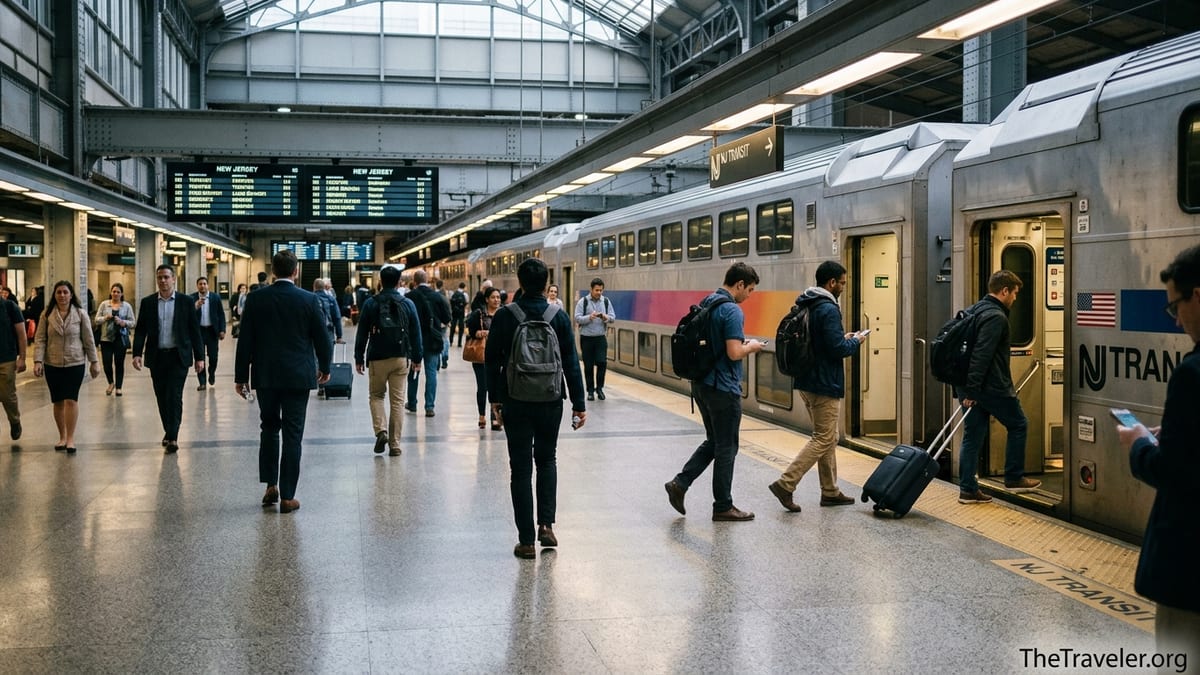
How NJ Transit Fits Into Getting Around New Jersey
NJ Transit operates the state’s main network of commuter trains, buses and light rail, covering more than five thousand square miles and connecting New Jersey with New York City and Philadelphia. In practical terms, that means you can take a train from Trenton or Princeton to New York Penn Station, ride a bus from a suburb like Clifton straight into the Port Authority Bus Terminal in Midtown Manhattan, or use light rail to move around Jersey City and Newark without a car. For most visitors, NJ Transit is the most convenient way to cross the Hudson for day trips and to reach beach towns along the Jersey Shore.
Rail lines radiate out from major hubs such as New York Penn Station, Hoboken Terminal, Newark Penn Station, Secaucus Junction and Trenton. For example, the busy Northeast Corridor Line links Trenton, Princeton Junction, New Brunswick and Metropark to Newark and New York, while the North Jersey Coast Line carries riders from Rahway down through Long Branch toward shore communities near Asbury Park and Bay Head. On the bus side, dozens of commuter routes funnel into the Port Authority Bus Terminal in Midtown and the George Washington Bridge Bus Station in Upper Manhattan, serving towns across northern and central New Jersey.
Because NJ Transit integrates trains, buses and light rail, planning a trip often means choosing between several options. A traveler staying near Journal Square in Jersey City might combine the PATH subway to Newark and then an NJ Transit train to the Jersey Shore, while someone based in Midtown Manhattan could instead board an express bus at the Port Authority straight to a New Jersey suburb. Understanding where each mode is strongest will help you avoid long detours and unnecessary transfers.
It is also important to know that service patterns can change during major infrastructure projects. In early 2026, for instance, work associated with the new Portal Bridge temporarily altered schedules and some trains that would normally run to New York Penn Station were diverted to Hoboken. Before any trip, especially during winter storms or planned construction periods, checking NJ Transit’s official alerts for your line or route will help you avoid surprises.
Understanding the Rail Network: Key Lines for Travelers
NJ Transit runs a web of commuter rail lines, but a few are especially relevant to visitors. The Northeast Corridor Line is the workhorse, connecting Trenton, Princeton Junction, New Brunswick, Metropark, Newark Liberty International Airport, Newark Penn Station and New York Penn Station. A common itinerary for visitors is to land at Newark Liberty, walk to the Newark Liberty Airport station via the AirTrain, then catch a Northeast Corridor train straight into Manhattan or onward to Princeton Junction for access to Princeton. Trains are frequent at peak hours and run into the late evening, making this line the default for many intercity and airport trips.
Another high-profile route is the North Jersey Coast Line, which links urban hubs such as Newark and Elizabeth to shore-focused stops including Long Branch, Asbury Park, Belmar and Bay Head. In summer, New Yorkers often board this line at New York Penn Station with beach bags in tow, heading for a day in Asbury Park or Point Pleasant Beach. Between New York and Long Branch the line is electrified, and some trains continue farther south without requiring a change, while others require a transfer at Long Branch to reach Bay Head.
For travelers staying in northern New Jersey, the Morris & Essex and Montclair-Boonton lines connect suburbs like Morristown, Maplewood, Summit and Montclair with Hoboken and, depending on the current schedule and any diversions, New York Penn Station via the shared link at Secaucus Junction. A visitor based in Hoboken, for example, could board a Morris & Essex Line train at Hoboken Terminal for a day trip to historic Morristown, where the town center and sites related to the Revolutionary War are a short walk from the station.
Other lines are more specialized but still useful in certain itineraries. The Raritan Valley Line serves towns like Westfield and Somerville and provides a direct rail link from those communities to Newark and, depending on the timetable, sometimes to New York Penn Station through a one-seat ride arrangement. The Atlantic City Line, which operates separately, connects Philadelphia’s 30th Street Station to Atlantic City, offering a straightforward rail route to the casinos and boardwalk without needing to drive. When planning, always check whether your line requires a transfer at Secaucus Junction or Hoboken to reach New York, as this affects both travel time and the best ticket to purchase.
Bus Services: From Local Trips to Manhattan Commutes
NJ Transit’s bus network is extensive, serving both local travel within New Jersey and commuter trips into New York City and Philadelphia. Interstate routes in the 100-series, for example, fan out from the Port Authority Bus Terminal in Midtown Manhattan to suburbs along the New Jersey Turnpike and Garden State Parkway. A popular example is route 139, which connects the Port Authority to Old Bridge and Lakewood along Route 9, heavily used by commuters who prefer a one-seat ride to Midtown instead of transferring from rail. Another is route 126 between Hoboken and Port Authority, a critical link for residents of Hoboken who work near Times Square.
In northern New Jersey, several routes instead serve the George Washington Bridge Bus Station in Upper Manhattan. If you are staying in neighborhoods like Fort Lee, Englewood or Teaneck, you may board an NJ Transit bus at a local stop and ride across the George Washington Bridge to connect with the New York City subway at 181st Street. This can be faster and more direct than traveling down to the Port Authority, especially during peak hours when Midtown traffic is dense.
Within New Jersey, local and limited-stop buses crisscross cities such as Newark, Jersey City, Paterson, Camden and Atlantic City. For instance, in Jersey City you will often see NJ Transit buses along Christopher Columbus Drive and Bergen Avenue, linking residential neighborhoods with Journal Square, Exchange Place and other transit hubs. A visitor staying in downtown Newark might use a short bus ride to reach the Newark Museum of Art or Branch Brook Park during cherry blossom season, instead of taking a taxi.
For day trips, buses can be an effective alternative when rail service is limited or indirect. To reach the outlet shopping at Jersey Gardens in Elizabeth, many travelers use buses from Port Authority or Newark instead of complicated rail connections. Similarly, for suburban destinations that do not lie directly on a rail line, such as office parks along Route 46 in Parsippany or Route 22 in Union, commuter buses timed to peak hours may be the most realistic public transport option. Because route patterns and frequencies vary widely, it is wise to confirm the latest timetable and whether your chosen route operates on weekends or only on weekdays.
Light Rail, PATH and Other Connections
Beyond conventional buses and commuter trains, NJ Transit operates three light rail systems that can be extremely useful to visitors: the Hudson–Bergen Light Rail along the Jersey City and Bayonne waterfront, the Newark Light Rail in and around downtown Newark, and the River Line between Trenton and Camden. The Hudson–Bergen Light Rail is particularly valuable if you are exploring the Hudson River waterfront. You can, for example, ride from Hoboken Terminal down to Exchange Place or Liberty State Park, gaining access to skyline views of Manhattan and ferries that serve the Statue of Liberty and Ellis Island.
The Newark Light Rail links Newark Penn Station with destinations such as Branch Brook Park and the Broad Street Station area. A typical use case is a traveler arriving by Northeast Corridor train at Newark Penn who wants to reach the New Jersey Performing Arts Center or the Newark Museum of Art without navigating busy streets on foot. The River Line, running from Trenton to Camden, is less likely to be on a first-time visitor’s agenda but can be practical for those combining visits to Trenton’s historic sites and Camden’s waterfront attractions, including the aquarium.
NJ Transit also intersects with other regional transit systems, most notably PATH and the New York City subway. At New York Penn Station, travelers can transfer between NJ Transit rail services and several MTA subway lines, making it easy to continue to Midtown, Lower Manhattan or Brooklyn. At Hoboken Terminal and Newark Penn Station, direct connections to PATH trains provide quick access to Lower Manhattan and the World Trade Center area. For example, a common route is to take an NJ Transit train from a Morris & Essex suburb to Hoboken, then switch to PATH for a short ride under the Hudson to the financial district.
In addition, NJ Transit facilities often connect to intercity buses operated by companies such as Greyhound and to some Amtrak services. At Newark Penn Station, for instance, you can arrive on an NJ Transit commuter train, transfer upstairs to an intercity bus heading farther south, or board an Amtrak train toward Washington or Boston. These interconnections make NJ Transit a useful backbone even if your ultimate destination lies outside New Jersey. When planning mixed-mode journeys, allow generous transfer time, especially during peak periods or when traveling with luggage.
Tickets, Passes and How Fares Work in 2026
NJ Transit fares are based largely on distance and service type. On trains, prices depend on the number of fare zones between your origin and destination. For example, an adult one-way rail ticket from New Brunswick to New York typically costs significantly more than a short hop between Newark and Elizabeth, reflecting the additional zones traveled. Bus fares are usually set by fare zone as well, with local trips costing less than long-distance commuter routes into Manhattan. Light rail services operate on a simpler flat or short-distance-based fare, making them relatively inexpensive for short urban trips.
For occasional travelers, the most common choice is an adult one-way ticket purchased just before boarding. These are available through the NJ Transit mobile app, at station ticket vending machines and, in some cases, from ticket windows. If you plan to make a round trip on the same day, buying two one-way tickets is typical, though some passengers prefer a ten-trip ticket for routes they ride often. Ten-trip tickets bundle ten one-way rides at a modest discount compared with ten single purchases, which can be useful if you expect to ride a given route repeatedly during a longer stay.
Frequent commuters and long-stay visitors often benefit from weekly or monthly passes. A monthly rail pass, for instance, is priced to be attractive for those riding most weekdays between the same origin and destination. As of 2026, a key perk is that many monthly rail passes valued above a certain dollar amount include the ability to ride NJ Transit buses and light rail within the same number of fare zones printed on the pass at no extra charge. In practice, that means someone holding a monthly pass between Princeton Junction and New York can often hop on a local bus in Princeton or a light rail vehicle in Jersey City without buying a separate ticket, as long as they remain within the allowed zones.
NJ Transit has also introduced products aimed at hybrid and flexible work patterns. FlexPass, for example, provides a bundle of 20 one-way adult rail tickets between a specific origin and destination at a discounted rate, suitable for travelers who commute only a few days per week. Instead of buying a full monthly pass, a consultant who travels from Morristown to New York twice a week might purchase FlexPass to reduce the per-trip cost while retaining flexibility. Senior citizens, people with disabilities and many students qualify for reduced fares on most NJ Transit services, often around half the regular adult price, although exact discounts and eligibility depend on identification and partnership agreements with schools.
How to Buy and Use Tickets in Practice
Most visitors will find the NJ Transit mobile app the easiest way to buy and manage tickets. After downloading the app and creating an account, you can purchase rail, bus and light rail tickets using a credit or debit card. Tickets remain stored in your app until you are ready to travel, at which point you must activate them before boarding. Rail passengers are expected to activate a mobile ticket a few minutes before the train arrives, so that the conductor can scan or visually inspect the animated validation screen. On buses and light rail, you show the activated ticket to the operator or fare inspector when requested.
If you prefer a physical ticket, major stations such as New York Penn Station, Newark Penn Station, Hoboken Terminal, Trenton, Secaucus Junction and many others have ticket vending machines. These machines sell one-way, round-trip, ten-trip and, in many locations, weekly or monthly passes. They accept cash and cards, although some machines in smaller stations may be card-only. A traveler boarding at a small unstaffed station on the Morris & Essex Line, for example, might arrive a few minutes early to purchase a ticket from the platform machine before the train arrives.
On many bus routes, particularly local services within New Jersey, you pay the driver directly when you board through the front door. Having exact change speeds the process, though more routes now accept pre-purchased tickets and passes visible through the mobile app. On some longer-distance or limited-stop routes, especially those entering New York City, drivers may inspect passes more closely or issue receipts. Where off-board fare collection is in place, such as on parts of the Hudson–Bergen Light Rail or Newark Light Rail, you must buy and validate a ticket at the platform machine before boarding, keeping it available in case fare inspectors conduct a check during your journey.
Whatever method you use, be sure your ticket or pass covers the correct origin, destination and date. Buying a rail ticket to the wrong station can result in a request to pay the difference on board, often with an onboard surcharge. If you are unsure whether you need a ticket to New York Penn Station, Hoboken, or simply to Secaucus Junction, ask a ticket agent at a staffed station or consult the mobile app’s trip planner. When traveling with family, note that NJ Transit often offers family-friendly promotions on weekends and holidays, allowing children accompanied by a fare-paying adult to ride at a discount or, in some periods, at no additional cost.
Real-World Trip Examples and Route Strategies
To see how these pieces fit together, consider a traveler staying near Times Square in Manhattan who wants to spend a summer Saturday in Asbury Park. The most straightforward option is to walk to New York Penn Station, purchase an adult one-way rail ticket on the North Jersey Coast Line to Asbury Park using the NJ Transit app or a ticket machine, then board a direct train if available or transfer at Long Branch if required. The ride typically takes around 1 hour 45 minutes, and the station in Asbury Park is within walking distance of the beach, boardwalk, restaurants and live music venues.
Another common itinerary is a business traveler based in Jersey City’s waterfront district who needs to attend a meeting near Princeton University. From Exchange Place, they might take the Hudson–Bergen Light Rail or walk to the PATH station, ride PATH to Newark Penn Station, then transfer to a Northeast Corridor Line train toward Trenton and disembark at Princeton Junction. There, the traveler could take a small connecting train or local bus to reach downtown Princeton and the campus area. Although this involves multiple modes, each leg is relatively short, and tickets can be purchased in advance through the NJ Transit app and, if needed, separate PATH vending machines.
For visitors staying in Hoboken who want to explore New York without using the car, NJ Transit offers both bus and rail options. They might use the 126 bus from Hoboken to the Port Authority Bus Terminal for quick access to Midtown, especially if their destination is near Times Square or the Theater District. On other days, they could ride an NJ Transit commuter rail train from Hoboken Terminal to Secaucus Junction or beyond, or switch to PATH for destinations in Lower Manhattan. If they hold a monthly rail pass, they may also be able to board certain buses within their fare zones without extra charge, making spontaneous side trips cheaper.
Finally, consider a family based in suburban Westfield planning a winter weekend in Philadelphia. They could take the Raritan Valley Line east to Newark Penn Station, transfer to an Amtrak or another regional rail link to Philadelphia, or drive to Trenton and use the Northeast Corridor Line from there. In each scenario, the combination of NJ Transit commuter services and connections to other rail or bus providers enables car-light travel across multiple states. The specific choice often comes down to schedules, ticket prices on the connecting segments and personal comfort with transfers.
The Takeaway
Using NJ Transit effectively is less about memorizing every line and route and more about understanding how the pieces fit together around a few key hubs. Trains carry most long-distance commuters between New Jersey and New York, buses fill in the gaps for neighborhoods away from rail stations, and light rail smooths out short urban hops in cities like Newark and Jersey City. For travelers, this mix makes it entirely feasible to explore the Jersey Shore, historic towns and urban waterfronts without renting a car.
In 2026, the most important habits for NJ Transit users are to check current service alerts, consider whether a pass such as a monthly ticket or FlexPass might offer savings, and make full use of the mobile app for ticketing. When in doubt about which station to use or which fare product to buy, staff at major hubs like New York Penn Station, Newark Penn, Hoboken Terminal and Trenton can usually point you in the right direction. With a bit of preparation and a willingness to combine trains, buses and light rail, NJ Transit becomes a powerful tool for unlocking New Jersey’s cities, suburbs and beaches.
FAQ
Q1. Do I need a separate ticket for NJ Transit trains and buses?
In many cases you do, but certain monthly rail passes allow free travel on NJ Transit buses and light rail within the same number of fare zones printed on the pass. Always check the specific conditions on your pass.
Q2. How far in advance should I buy my NJ Transit ticket?
For most trips you can buy tickets on the day of travel using the mobile app or a station machine. During busy holiday periods, purchasing earlier ensures you are ready to board when trains and buses are crowded.
Q3. Can I use the NJ Transit mobile app for all services?
The NJ Transit app supports most rail, bus and light rail tickets, including one-way tickets and many passes. A few special products or promotions may still require purchase at ticket windows or vending machines.
Q4. What happens if my train is diverted to Hoboken instead of New York?
When major construction or disruptions send trains to Hoboken, you can usually transfer to PATH or certain ferries to reach Manhattan. Check posted advisories for recommended alternatives and allow extra time.
Q5. Is NJ Transit safe to use at night?
Many people commute during early mornings and late evenings without issues, especially on main lines and busy routes. As with any large-city transit system, stay aware of your surroundings and travel in well-lit cars and stations.
Q6. How do I get from Newark Airport to Manhattan on NJ Transit?
From the airport terminals, take the AirTrain to Newark Liberty Airport station, buy an NJ Transit rail ticket to New York Penn Station, and board a Northeast Corridor or North Jersey Coast Line train heading into Manhattan.
Q7. Are there discounts for seniors and people with disabilities?
Yes. Seniors and riders with disabilities generally qualify for reduced fares on trains, buses and light rail. You may need appropriate identification or a qualifying card to receive the discount.
Q8. Can I bring luggage on NJ Transit trains and buses?
Small and medium luggage is usually allowed as long as it does not block aisles or doors. On crowded commuter services, try to travel outside the busiest rush hours or keep bags compact.
Q9. How do I know which side of the platform my train uses?
Electronic boards and audio announcements at stations indicate track numbers and boarding sides. If you are unsure, ask a conductor, station agent or fellow passenger before the train arrives.
Q10. Does NJ Transit run on holidays and weekends?
Yes, but schedules may differ from weekdays, with fewer trains and buses on some routes and special holiday timetables. Always check the weekend or holiday schedule for your line before you travel.