


More news on this day
A freight train derailment near Feasterville in Bucks County, Pennsylvania, prompted temporary shelter-in-place and evacuation orders on Tuesday, before emergency inspections found no hazardous materials leaks and reports indicated no ongoing threat to the public.
Get the latest news straight to your inbox!
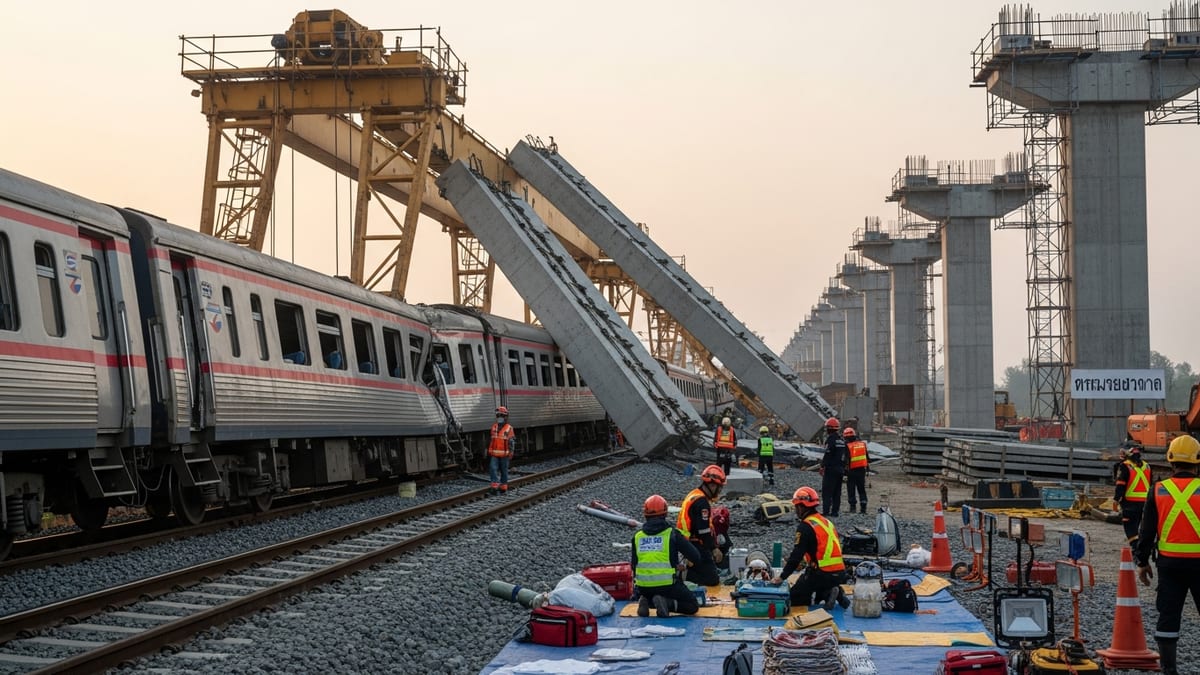
Freight Cars Leave Tracks Near Busy Bucks County Corridor
Publicly available information shows that the derailment occurred on the afternoon of Tuesday, June 30, 2026, along a freight line in Bensalem Township, near the Feasterville area of Bucks County. The incident was reported between Street Road and the Neshaminy Falls station, a corridor that runs close to residential neighborhoods and commercial properties.
Local coverage describes multiple freight cars leaving the tracks, with some accounts indicating that more than a dozen cars were involved. Aerial images shared by Philadelphia-area outlets show railcars scattered along the right of way, with some tilted or on their sides but with no large fires or visible smoke plumes at the scene.
Initial uncertainty about the cargo led officials to treat the situation as a potential hazardous materials event. Emergency crews, including fire services and hazmat teams, converged on the site to assess the derailed cars, secure the area and determine whether any substances had been released.
Rail traffic through the corridor was halted as responders set up staging areas and began inspections. Nearby roads experienced closures and delays, with drivers advised to avoid the Brownsville Road and Bristol Road area while crews worked around the tracks.
Shelter-in-Place Orders and Evacuations Quickly Implemented
According to published coverage from regional television and newspaper outlets, a one-mile shelter-in-place order was issued shortly after the derailment. Residents in the immediate vicinity were advised to remain indoors, close windows and limit outdoor activity while assessments were underway.
Some limited evacuations were also reported near the track, particularly for properties closest to the derailed cars. Public alerts emphasized caution rather than confirmed danger, reflecting the absence of clear information about the train’s full manifest in the first hour of the response.
Transit watchers noted that the derailment occurred close to a commuter rail station used by regional passengers, although current reports indicate that the incident involved a freight consist rather than a passenger train. Passenger services in the wider corridor experienced delays as a precaution while inspections continued.
Officials used local alert systems, social media posts and news briefings to outline the basic safety guidance. Coverage from multiple outlets indicates that the priority in the early stages was to minimize potential public exposure while hazmat specialists performed more detailed checks on the freight cars.
Inspections Find No Hazardous Leaks and No Ongoing Public Threat
By late afternoon, reports from local and national outlets, including television news and online news services, indicated that hazmat teams had finished their initial inspections. These assessments found no evidence of hazardous materials leaks from the derailed cars.
Statements relayed in published coverage emphasized that the air and surrounding environment had been checked and that the derailed freight cars were not releasing dangerous substances. Local police updates referenced in multiple reports stated that the area had been deemed safe, and that there was no continuing threat to residents or nearby businesses.
As a result, shelter-in-place and evacuation orders were lifted later in the day. Residents were informed that they could return to normal activities, although travel restrictions near the tracks remained in place because of ongoing cleanup and recovery work.
Transportation observers point out that this outcome placed the Feasterville-area derailment among a growing number of high-profile rail incidents where extensive hazmat precautions are initiated out of caution, but post-incident testing finds no harmful release.
Rail Operations Disrupted as Cleanup and Investigation Begin
Even as safety assurances were issued, rail operations in the corridor remained significantly disrupted. Freight movements through Bucks County were expected to face delays while crews re-railed cars, removed damaged equipment and inspected track and signal systems for structural damage.
Images from the scene show heavy machinery positioned along the right of way, preparing to lift and clear derailed cars. Recovery operations of this scale can extend for many hours or days, depending on the condition of the rolling stock and underlying infrastructure.
News reports note that road closures continued in the immediate vicinity of the derailment site to allow access for cranes, loaders and other specialized equipment. Commuters were encouraged to use alternate routes, and local businesses near the tracks were advised to expect intermittent access limitations as cleanup progressed.
Investigative agencies typically document the condition of track, rail fasteners and wheels before major components are moved, a process that can further lengthen the time before the line fully reopens. While the exact timeline for restoring normal service in the Feasterville and Bensalem area had not been detailed in early reports, observers anticipated a phased resumption of traffic once safety checks were complete.
Derailment Renews Focus on Rail Safety in Pennsylvania Suburbs
The incident near Feasterville comes amid heightened public attention to train derailments across the United States, particularly those involving hazardous materials. Recent derailments in other states and within Pennsylvania have prompted ongoing debate about rail infrastructure, inspection regimes and emergency preparedness.
Data from prior state-level analyses show that derailments in and around Pennsylvania’s communities often lead to major emergency responses even when no serious injuries or chemical releases occur. The visible presence of freight trains near homes, schools and shopping centers contributes to community concern whenever a train leaves the tracks.
Local coverage of the Bucks County derailment highlights how quickly suburban communities can be affected by rail incidents, as roads close, residents are asked to shelter in place and emergency vehicles converge on an otherwise routine landscape. The relatively swift confirmation that there was no hazardous leak, and no immediate threat to public health, may provide some reassurance, but questions about long-term safety and prevention remain part of the broader policy conversation.
Transportation analysts note that investigators will be examining factors such as track conditions, train speed, equipment maintenance and any recent construction or weather impacts in the corridor. Findings from those inquiries are likely to feed into ongoing regional and national discussions about how to reduce derailment risks while freight volumes remain high across the rail network.