


More news on this day
Normal runway operations have resumed at Cape Town International Airport after a temporary disruption that led to delays and diversions, with publicly available information indicating that Airports Company South Africa has restored standard use of the main runway system.
Get the latest news straight to your inbox!
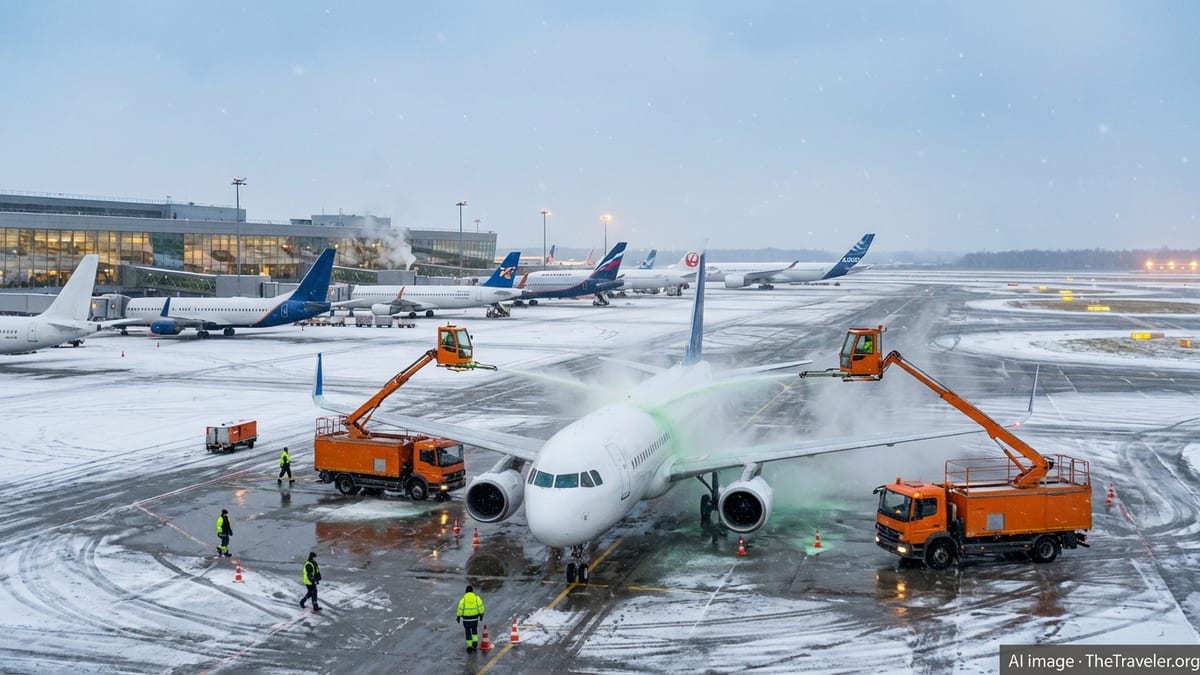
Runway status returns to standard operating configuration
According to recent airport operations updates and flight-tracking data, Cape Town International Airport has shifted back from a restricted configuration to normal runway use, allowing a broader mix of arrivals and departures than during the interruption period. The restoration follows a period in which an aircraft incident on the runway prompted tighter spacing, alternative runway use and, in some cases, diversions to other airports.
Publicly available flight records show that departure and arrival flows at Cape Town have now largely realigned with typical peak and off-peak patterns for this time of year. Aircraft are once again being sequenced on the primary runway according to prevailing wind and traffic conditions, easing pressure on both ground operations and air traffic management.
Operational notices indicate that runway inspections and safety checks were completed before full service resumed, a standard requirement whenever a runway has been partially closed or restricted. Once engineers and safety teams cleared the pavement and associated systems, normal movements were phased back in, with controllers gradually rebuilding the usual cadence of landings and takeoffs.
The return to a standard runway configuration is expected to reduce airborne holding, taxi delays and the need for extended routings around Cape Town’s busy terminal airspace. This is particularly significant during early-morning and late-afternoon peaks, when Cape Town International routinely handles dense waves of domestic and regional traffic.
Impact on passengers and airlines during the disruption
Reports from recent days indicate that the runway constraints led to a number of delayed departures and arrivals, as well as diversions to alternative airports such as Durban and George. Some inbound services were held in airborne stacks before being rerouted, while others were re-timed to depart later in the day when slots became available.
Airlines operating frequent domestic sectors between Cape Town, Johannesburg and Durban appeared to absorb much of the disruption by reshuffling aircraft rotations and swapping equipment. Low-cost carriers in particular rely on tight turnarounds, so even relatively short-lived runway restrictions can ripple through schedules for the remainder of the day.
For passengers, the most immediate effects were extended waits on the ground, missed onward connections and last-minute changes to routing. Accounts shared on public forums describe aircraft holding for prolonged periods before landing clearance, as well as instances where flights were diverted away from Cape Town and re-accommodated later.
Travel agents and online booking platforms also had to adjust itineraries at short notice, especially for travelers connecting from long-haul international arrivals onto smaller regional services. As normal runway operations return, airlines are expected to work through residual backlogs and reposition aircraft to restore published schedules.
Operational context at one of South Africa’s busiest airports
Cape Town International Airport is consistently ranked among South Africa’s busiest, handling millions of passengers annually on domestic, regional and intercontinental routes. Normal runway availability is central to maintaining that throughput, particularly in peak holiday periods when demand on Cape Town’s coastal and wine-region tourism infrastructure is at its highest.
The airport’s main runway complex is designed to handle a range of aircraft types, from smaller regional turboprops to wide-body jets serving long-haul destinations in Europe, the Middle East and other parts of Africa. When operations are constrained, larger aircraft can be particularly challenging to accommodate because they require more separation and longer runway occupancy times.
Published planning documents from Airports Company South Africa indicate that Cape Town’s runway system has been the focus of both maintenance and long-term capacity planning in recent years. The airport features prominently in national infrastructure strategies, which highlight the need to balance safety, environmental considerations and forecast passenger growth.
Against this backdrop, any temporary restriction on runway use quickly becomes visible in flight schedules, as the airport routinely operates close to its peak-hour capacity. The return to normal operations therefore has immediate implications for airline planning, ground handling and passenger flows through terminals.
Safety checks, maintenance and future resilience
Whenever a runway incident or extended inspection occurs, standard aviation practice requires a series of technical checks before full operations resume. At Cape Town, these checks typically include surface inspections, verification of navigation aids, lighting systems and communications, as well as confirmation that any debris or contaminants have been removed.
Runway rehabilitation and longer-term realignment projects at Cape Town International, outlined in various public procurement and planning documents, also play a role in how the airport manages temporary disruptions. Ongoing and future works are intended to enhance pavement quality, improve taxiway connectivity and ultimately increase the airport’s ability to handle higher traffic volumes with fewer bottlenecks.
Industry analysis of similar events at major hubs suggests that robust contingency plans, including pre-agreed diversion airports and flexible crew rostering, can significantly reduce the impact of short-term runway restrictions. For Cape Town, the availability of alternate airfields within a manageable flying distance provides an added layer of resilience when the main runway is partially unavailable.
As normal runway operations resume, observers note that each disruption provides additional operational data that can inform future planning, from optimizing runway inspection routines to refining air traffic sequencing during peak demand. This iterative approach is seen across global aviation, where airports use every incident and recovery to stress-test procedures and strengthen system resilience.
What travelers should expect in the coming days
With normal runway operations re-established, airlines are expected to progressively return to standard timetables, although some knock-on delays may persist while aircraft and crews are repositioned. Travelers are likely to see a gradual normalization rather than an immediate return to perfectly on-time operations.
Industry practice suggests that the first priority after such disruptions is stabilizing core trunk routes between major domestic hubs, followed by regional and leisure-oriented services. Once those key flows are back on schedule, airlines typically address remaining irregularities in secondary routes and charter operations.
Travelers scheduled to pass through Cape Town in the short term may still encounter busy departure halls and longer-than-average queues, especially at peak times. However, the restoration of full runway availability should help reduce airborne and taxi delays, shortening overall journey times compared with the period when operations were constrained.
Publicly available information from aviation data providers indicates that, as of the latest updates, movements at Cape Town International are trending back toward typical daily totals for this season. For many passengers, the most visible sign of improvement will be aircraft departing closer to their planned times and a noticeable reduction in last-minute diversions and re-routings.