


More news on this day
Nigeria’s civil aviation regulator has ordered Air Peace to compensate passengers affected by a disrupted Lagos–Enugu flight, after a communication lapse over a schedule change left travelers stranded at Lagos’s Murtala Muhammed Airport.
Get the latest news straight to your inbox!
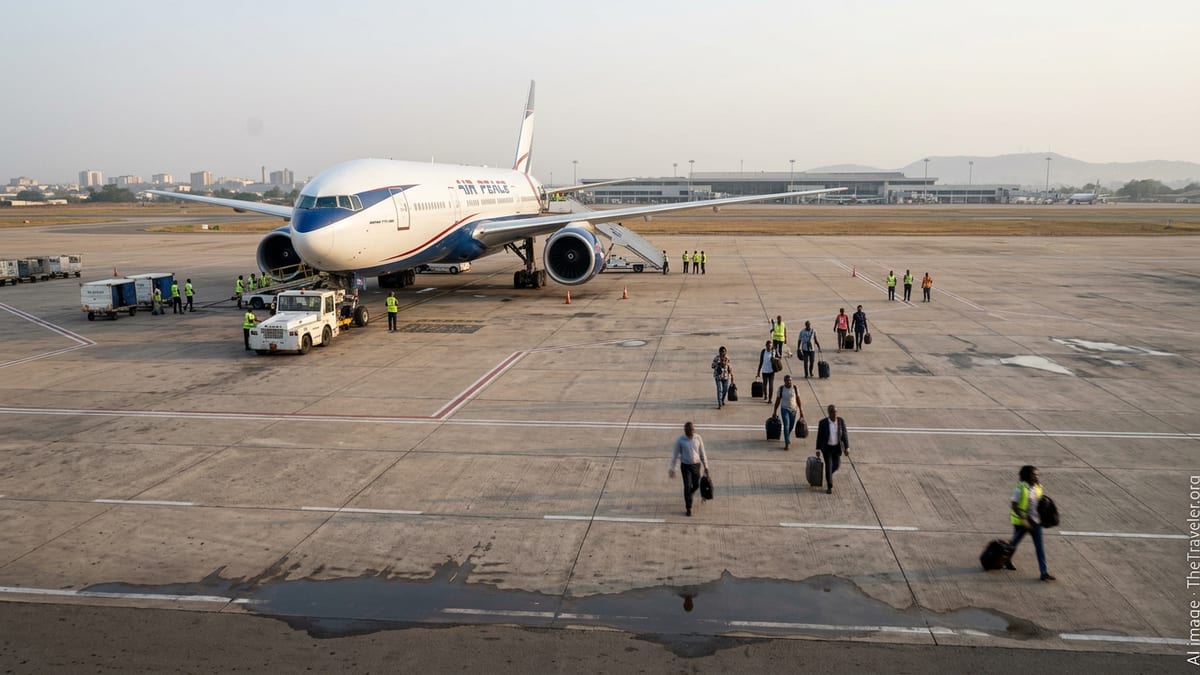
Regulator steps in after Lagos–Enugu disruption
According to published coverage on 22 September 2026, the Nigeria Civil Aviation Authority (NCAA) directed Air Peace to arrange compensation for passengers booked on a Lagos–Enugu service who arrived at the airport to find that their early morning flight had already departed on a revised schedule. Reports indicate that the airline had rescheduled the flight but issued an incorrect notification to travelers, leading many to show up for the original departure time.
The incident involved a Monday morning service from Lagos to Enugu, one of Nigeria’s busiest domestic corridors linking the country’s commercial capital with the South East. Affected passengers reported arriving at Terminal One of Murtala Muhammed Airport after completing online check in, only to discover that boarding had closed following an uncommunicated or wrongly communicated time change.
Publicly available information shows that the disruption gained wider attention after some travelers, including a Lagos based lawyer who was due in court in Enugu, posted detailed accounts on social media. The case quickly became a test of how firmly the NCAA would apply Nigeria’s updated consumer protection rules in a market where delays and last minute changes are frequent complaints.
Following a preliminary review of the episode, the regulator concluded that Air Peace’s communication fell short of the standards required under current civil aviation rules and directed the airline to prepare what it described as an appropriate compensation package for those affected.
Passenger rights under Nigerian aviation rules
The NCAA’s intervention highlights passenger entitlements under Part 19 of the Nigeria Civil Aviation Regulations, which sets out minimum rights when flights are delayed, rescheduled or cancelled. Public guidance from the authority states that passengers on domestic routes are entitled to information on the cause of delays within 30 minutes of the scheduled departure time, as well as basic care such as refreshments, communication and, when necessary, hotel accommodation and transport.
For longer disruptions and schedule changes that cause passengers to miss their flights or abandon journeys, the framework also provides for refunds or other forms of compensation. The level of redress can depend on factors such as the length of the delay, whether the cause is within the airline’s control, and how much notice travelers received.
Consumer information made available by the NCAA further explains that Nigerian passengers can lodge complaints directly with airlines and, if unresolved, escalate them to the regulator’s Consumer Protection Department through airport desks or online forms. The Lagos–Enugu case has drawn attention to these channels, with travel advocates urging domestic flyers to make fuller use of formal processes rather than relying solely on social media to highlight problems.
Travel analysts note that while compensation levels on Nigerian domestic routes are generally lower than those mandated in some other regions, the existence of codified rights and enforcement powers gives regulators a tool to push airlines toward clearer communication and more consistent customer care.
Air Peace’s role in Nigeria’s domestic network
Air Peace operates one of Nigeria’s largest domestic networks, providing passenger and charter services on key routes linking Lagos, Abuja, Enugu and other regional centers. The airline has positioned itself as a major connector for both business and family travel, with multiple daily flights on trunk routes such as Lagos–Enugu when demand allows.
The Lagos–Enugu corridor is especially important for travelers shuttling between Nigeria’s main commercial hub and the South East, where many Nigerians working in Lagos and abroad maintain family and business ties. For travelers planning time sensitive activities such as court appearances, same day business meetings or onward road journeys, early morning departures from Lagos are often critical.
Recent coverage indicates that Air Peace has faced scrutiny over operational reliability and communication on several domestic routes, even as it expands services and competes with other Nigerian carriers. The latest NCAA directive adds regulatory pressure on the airline to refine its handling of schedule changes, particularly when flights are brought forward or retimed in ways that can easily catch passengers off guard.
Aviation commentators suggest that how Air Peace responds in this case, both in terms of compensation and improvements to its notification systems, may influence traveler perceptions in an increasingly competitive domestic market where on time performance and transparency are central to customer choice.
What compensation could mean for affected travelers
While the NCAA has instructed Air Peace to compensate those affected by the Lagos–Enugu disruption, specific figures and forms of redress had not been publicly detailed at the time of reporting. Under existing Nigerian regulations, compensation on domestic routes typically takes the form of ticket refunds, partial fare reimbursements or vouchers, along with care such as refreshments, accommodation and rebooking on the next available flight where appropriate.
In the Lagos–Enugu case, travel industry observers expect the compensation package to reflect not only the schedule change itself but also the communication failures that left passengers without clear, timely information. Some of the affected travelers reported missing professional commitments, including legal proceedings, after planning their day around the original flight time.
For international readers considering domestic travel within Nigeria, the episode serves as a reminder to monitor booking emails, airline apps and text messages closely in the days and hours before departure, especially on early morning flights. Although carriers often adjust schedules to accommodate operational constraints, issues arise when notifications are inconsistent, delayed or contradictory.
The NCAA directive also signals to airlines that miscommunication can carry a financial cost. Travel experts say such outcomes may encourage carriers to invest in more robust customer information systems and staff training, particularly in markets where network disruptions can quickly cascade across a day’s schedule.
Implications for Nigeria’s wider air travel experience
The decision to order compensation on the Lagos–Enugu route fits into a broader effort by Nigerian aviation authorities to tighten oversight of passenger experience. In recent years, the NCAA has publicly emphasized its readiness to sanction airlines that fail to comply with consumer protection rules, particularly in relation to chronic delays, poor communication and mishandled baggage.
For domestic travelers, stronger enforcement can translate into clearer expectations when booking flights between major Nigerian cities such as Lagos, Abuja, Port Harcourt and Enugu. Greater regulatory visibility may also encourage passengers to document disruptions and pursue formal complaints, which in turn can provide data for regulators seeking to address recurring operational patterns.
Travel industry watchers point out that predictable, passenger friendly handling of disruptions is increasingly important for Nigeria’s tourism and business travel ambitions. Reliable domestic air links are critical not only for residents but also for visitors connecting through Lagos or Abuja to regional destinations, whether for conferences, family visits or leisure trips.
As Air Peace works with the NCAA on the Lagos–Enugu compensation directive, travelers and regulators alike will be watching for any sustained improvements in communication, schedule management and support for disrupted passengers. The outcome may help shape expectations for how future delays and last minute changes are handled across Nigeria’s domestic aviation network.