


More news on this day
Travelers across the Northeast continued to face rolling delays on Tuesday, a day after an equipment outage at a regional air traffic control facility triggered ground stops at major airports including Philadelphia International Airport.
Get the latest news straight to your inbox!
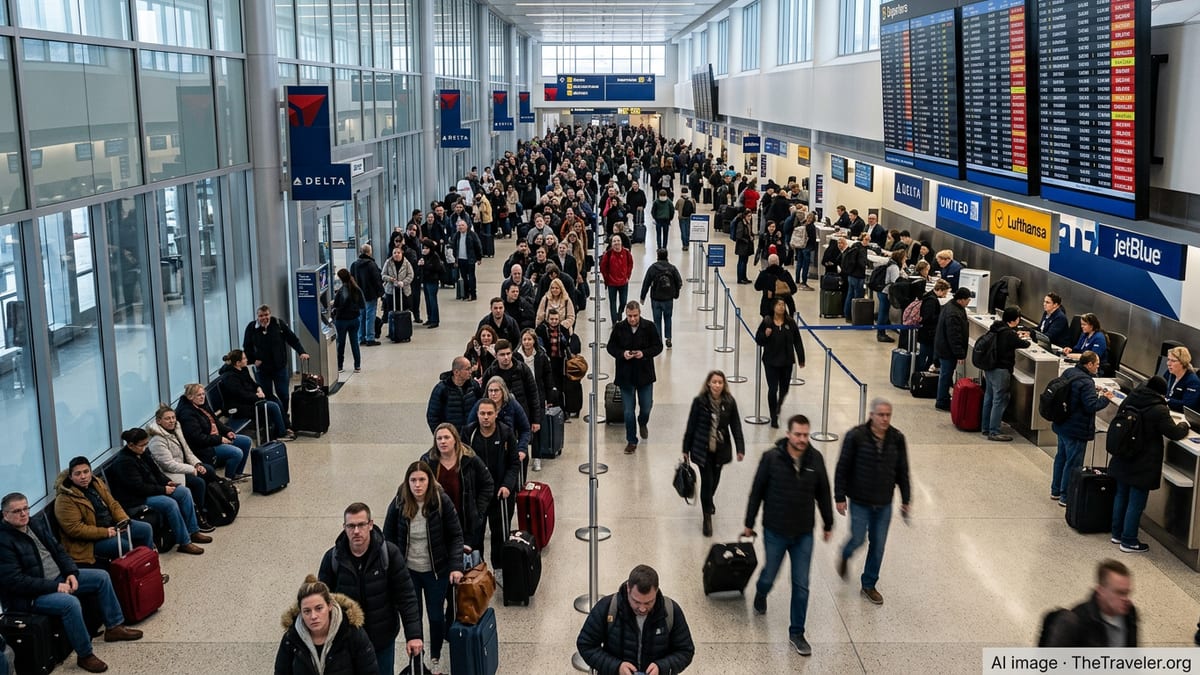
Ground stops lifted, but schedules remain out of sync
Published coverage indicates that the Federal Aviation Administration ordered ground stops on Monday, September 21, 2026, affecting arrivals into Philadelphia International Airport (PHL) and several other major Northeast hubs while technicians worked to resolve an equipment failure linked to telecommunications infrastructure. The restrictions halted many flights bound for PHL and slowed departures out of the region, backing up traffic well into the evening.
By late Monday, the ground stops at PHL, Newark Liberty International (EWR), New York’s John F. Kennedy International (JFK), LaGuardia (LGA) and New Jersey’s Teterboro Airport (TEB) had been lifted and arrivals and departures were permitted to resume. However, public flight-tracking data and airport status boards on Tuesday still showed extended delays on a range of routes into and out of Philadelphia, reflecting the time it takes airlines to reposition aircraft and crews after a large-scale disruption.
At PHL, regional news outlets reported that the formal ground stop expired around 5 p.m. Eastern time on Monday, transitioning to a less restrictive ground delay program as air traffic controllers worked through a backlog of flights. As of Tuesday evening, many carriers were still operating with longer-than-usual departure queues, particularly on high-frequency routes linking Philadelphia with New York-area airports, Boston and other East Coast cities.
Airport officials and airline updates described operations on Tuesday as in a recovery phase, with most flights operating but some still subject to delays of an hour or more. Carriers encouraged passengers to monitor their flight status and make use of no-fee rebooking options that some airlines introduced in response to the disruption.
Cut fiber line in New Jersey blamed for equipment outage
According to national and local reporting, the chain of events began when construction crews in New Jersey severed a fiber-optic cable used by telecommunications provider Verizon, disrupting data and communications links that support air traffic control systems serving the Philadelphia region and parts of the New York airspace.
Publicly available information from federal transportation briefings and airline communications indicates that the cable damage affected systems at a Federal Aviation Administration terminal radar approach control facility associated with Philadelphia. That facility manages approach and departure traffic for PHL and contributes to traffic flows for neighboring airports, meaning an outage there can quickly ripple across a large swath of Northeast airspace.
Coverage by national news outlets and aviation industry publications noted that the primary circuit failed and a backup path also did not function correctly because it had been compromised when the cable was cut between central New Jersey and the New York metropolitan area. The resulting loss of capacity affected radar or communications services used to sequence aircraft safely, prompting the FAA to issue ground stops as a precaution while contingency procedures were activated.
Technical summaries released in the aftermath describe the event as an equipment and infrastructure failure rather than a cyber incident, with telecommunications engineers working alongside federal technicians to restore connectivity. By Monday evening, transportation officials reported that the affected lines had been repaired and systems were stable, clearing the way for airports to begin ramping operations back up.
Impact across the Northeast aviation network
The outage and ground stops had an immediate and visible impact on airports throughout the Northeast corridor. National airspace status logs and media roundups showed that Newark, JFK, LaGuardia, Teterboro and Philadelphia were all subject to ground stops or severe flow restrictions on Monday, with Boston Logan International (BOS) also reporting knock-on delays as it absorbed diversions and coped with separate weather-related constraints.
Airlines serving the affected airports reported hundreds of delays and cancellations across their networks on Monday, particularly on shuttle-style routes between major business centers and along the busy Washington to Boston corridor. At Newark, some reports indicated that commercial arrivals were paused for several hours during the height of the disruption, leading to congested taxiways and long lines at customer service desks as travelers sought alternative connections.
Passenger accounts shared through social media and travel forums described extended waits on the ground at outstation airports, with flights to PHL and the New York area held at gates for much of the day. Some aircraft pushed back only to return to the gate after updated ground stop orders, while others remained in holding patterns before being rerouted or delayed further.
Because the outage struck during a busy weekday period, the disruption overlapped with both business and leisure travel. Regional rail services and intercity buses reported higher interest from travelers looking for same-day alternatives, especially along routes where driving times to Philadelphia, New York or Newark compared favorably with uncertain flight departure times.
How airlines and the FAA are managing the recovery
As systems came back online, publicly available FAA advisories showed a shift from full ground stops to structured flow control measures. These programs, which assign controlled departure times to flights headed into constrained airports, are designed to prevent bottlenecks in the skies and on airport surfaces while allowing operations to continue at reduced capacity.
Airlines responded by thinning out schedules where possible and offering travel waivers for customers booked to or from the most affected airports on September 21 and, in some cases, into September 22. A waiver allows passengers to change their travel dates without paying the usual change fee, and in many instances without paying a fare difference if they rebook within a defined time window and cabin.
Published guidance from major carriers advised travelers to make changes through airline apps or websites rather than at the airport, both to reduce lines at customer service counters and to access a wider set of rebooking options. Carriers also encouraged customers to accept automatic rebooking where offered, then adjust connections if needed once the broader network stabilized.
Industry analysts quoted in aviation trade coverage noted that the recovery timeline from an event of this size can stretch over 24 to 48 hours, as aircraft and crew rotations gradually realign. Even after headline delays ease, late-night and early-morning departures may continue to experience minor knock-on effects until midweek schedules fully normalize.
What travelers using PHL and Northeast hubs should know now
For travelers booked through Philadelphia and other Northeast hubs over the next several days, aviation and consumer travel coverage points to a few practical steps. The most consistent advice is to check flight status frequently on the day of travel, as departure and arrival times may continue to shift while airlines work through remaining imbalances.
Because many carriers implemented temporary waivers tied specifically to the September 21 event, passengers whose trips were disrupted are being encouraged to review their airline’s irregular operations policy and any notifications received by email or app. Some policies allow same-day confirmation onto earlier or later flights when seats are available, which can help affected travelers avoid extended waits at the airport.
Travel experts cited in news reports recommend allowing extra time for connections through PHL, EWR, JFK or LGA at least through midweek, particularly for itineraries involving separate tickets or tight minimum connection times. Where feasible, travelers with flexibility may choose to route through alternate hubs that were not directly affected by the equipment outage, though availability and pricing can vary considerably by carrier and route.
For those planning near-term trips, the incident has also renewed attention on trip insurance and credit card travel protections. While not all policies cover delays linked to air traffic control disruptions, some products provide reimbursement for meals or overnight accommodations once a delay surpasses a specified threshold, making it important for travelers to review the terms that apply to their tickets.