


More news on this day
Flights across the U.S. Northeast are slowly returning to schedule after a widespread telecommunications failure led to ground stops at major airports, but air travel disruptions are expected to persist as airlines work through a large backlog of delayed and diverted aircraft.
Get the latest news straight to your inbox!
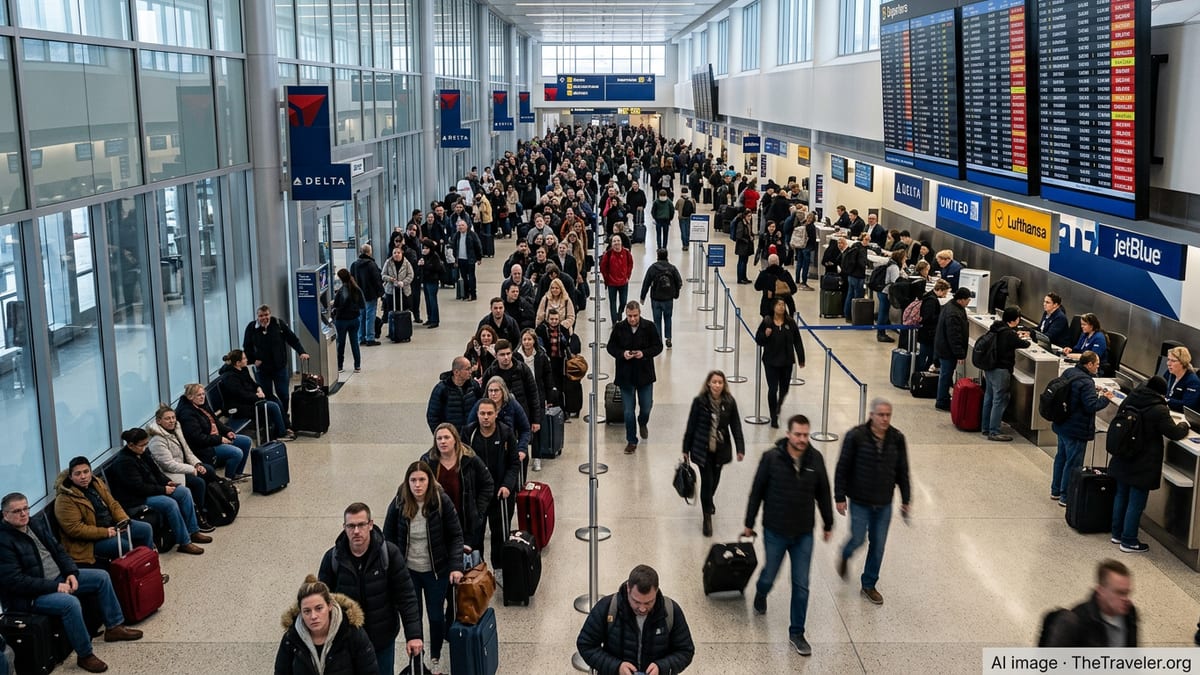
Fiber line failure cascades across key Northeast hubs
Publicly available information indicates that an equipment outage tied to damaged fiber lines in New Jersey triggered the disruption on Monday, affecting air traffic control communications serving several of the country’s busiest corridors. Ground stops and severe flow restrictions were reported at Newark Liberty, Philadelphia International, Boston Logan, and multiple New York City–area airports as the Federal Aviation Administration worked to restore services.
Reports from flight-tracking services show that commercial traffic at Newark Liberty International Airport was reduced to a trickle for much of the day, with no commercial flights landing there for several hours while controllers relied on backup procedures. Similar constraints at Philadelphia International and New York’s LaGuardia and John F. Kennedy airports created a chokepoint that quickly rippled across the national network.
Regional media coverage and aviation advisories indicate that thousands of flights were delayed or canceled systemwide as the outage radiated outward. Boston Logan alone saw hundreds of delayed departures and arrivals, while Philadelphia and Newark recorded lengthy queues on the ground and prolonged waits for passengers attempting to rebook.
By Monday evening, the damaged telecommunications lines had been repaired and the FAA reported that airport operations in the Northeast were resuming. However, the sudden restart left aircraft and crews out of position, setting the stage for lingering knock-on disruptions.
Transportation secretary urges flyers to expect lingering disruption
In public statements following the repairs, Transportation Secretary Sean Duffy acknowledged that the technical issues had been resolved but cautioned that the travel impact would not ease immediately. According to published coverage of his remarks, Duffy indicated that it would take time to clear existing delays and advised anyone flying in the region to check directly with their airline before heading to the airport.
Updates shared on social media and reflected in multiple news reports show that Duffy framed the outage as a stark reminder of the fragility of key pieces of the country’s aviation infrastructure. He emphasized that even a single damaged circuit or cut fiber line can have outsized consequences when it affects equipment serving several major hubs simultaneously.
Coverage from regional outlets in Philadelphia and Boston highlights that, despite the formal end of the ground stops, many travelers continued to face hours-long waits on Monday night and early Tuesday. Some passengers opted to rebook for later in the week amid uncertainty about when regular schedules would fully normalize.
Data from flight-tracking sites on Tuesday morning pointed to elevated levels of delays at airports that had been at the center of the outage, alongside secondary disruptions at connecting hubs in other parts of the country as aircraft rotated back into position.
What travelers flying through the Northeast should know now
For those with upcoming trips through the Northeast, published advisories and airline statements underscore the importance of closely monitoring flight status, particularly for connections involving Newark, Philadelphia, New York City–area airports, and Boston. Even as new ground stops are lifted, residual delays can continue as airlines reposition planes and crews and work through accumulated maintenance and crew duty-time limits.
Industry guidance gathered after the outage indicates that travelers whose flights are canceled have specific federal refund rights when an airline cancels a segment and the passenger chooses not to accept alternative transportation. Airlines may additionally offer travel credits or rebooking options, but passengers can request a refund of the unused portion of their ticket in qualifying cases.
Many carriers have also been waiving change fees for affected routes in the immediate aftermath of the outage, according to airline advisories reviewed on Tuesday. However, fare differences can still apply once original travel dates pass, so travelers are encouraged to act promptly if they know their plans will need to shift.
Airport operators in the region are advising travelers to arrive early and build in extra time for security, boarding, and potential gate changes as schedules stabilize. Crowded terminals and longer-than-usual lines at customer service counters are being reported at several major hubs as airlines work through rebookings and missed connections.
Infrastructure strain raises fresh questions about resilience
The outage has renewed scrutiny of the resilience of critical telecommunications links that support air traffic control operations. According to reporting on the incident, the disruption originated with a circuit problem in the Philadelphia area and a backup connection that had also been compromised when fiber infrastructure in New Jersey was damaged during construction activity.
In subsequent televised appearances and written statements referenced in business and transportation coverage, Duffy has tied the outage to broader concerns about aging infrastructure in the national airspace system. He has argued that legacy equipment and insufficient redundancy increase the risk that relatively localized problems can metastasize into regionwide disruptions.
Analysts quoted in recent aviation industry reports note that, while the safety of the system is maintained through conservative procedures such as ground stops and flow control, those same safeguards can translate into significant delays when key facilities lose communications or radar feeds. The combination of aging hardware and rising flight volumes in busy regions like the Northeast magnifies the operational impact of such failures.
Lawmakers and aviation groups have previously pointed to earlier equipment outages and radar failures at Newark and other facilities as evidence that modernization is overdue. The latest incident is likely to sharpen debates in Washington over funding levels and timelines for replacing critical systems.
What this outage signals for future U.S. air travel
While the telecommunications failure was localized in origin, its effects were national in scope, illustrating how dependent the broader system has become on a relatively small number of high-capacity facilities and data links. Travel publications and aviation specialists suggest that similar outages could occur again if investments in redundancy and modernization do not keep pace with demand.
For travelers, the episode serves as a reminder that even on clear-weather days, disruptions may arise from technical or infrastructure issues far from their departure point. Trip-planning advice from consumer advocates in the wake of the outage emphasizes building longer connection windows through the Northeast, particularly for international itineraries or trips with limited onward options.
The incident is also likely to factor into airline and airport planning for peak holiday periods, when schedules are tighter and the margin for absorbing large, sudden disruptions is smaller. Carriers may adjust crew and aircraft reserves in the region or refine contingency playbooks for large-scale equipment failures following lessons learned this week.
As operations continue to normalize, traveler experiences across the Northeast will offer an early test of how quickly the system can rebound from an infrastructure-driven shock. The handling of rebookings, customer communication, and passenger rights in the coming days is expected to shape how this outage is remembered by both the industry and the flying public.