


Norway is one of Europe’s most spectacular destinations, but it is also one of the easiest places to plan badly. First‑time visitors often underestimate distances, weather and prices, or misunderstand local rules about driving and wild nature. The result can be missed ferries, eye‑watering bills and a lot of avoidable stress. Before you hit “book,” it pays to know where so many travelers go wrong.
Get the latest updates straight to your inbox!
Not Budgeting Realistically for One of Europe’s Priciest Countries
Many travelers click “book” on flights to Oslo or Bergen assuming Norway will cost roughly what they paid in Iceland, Scotland or Switzerland. Once they arrive, sticker shock kicks in. Norway consistently ranks among the most expensive countries in Europe, and casual expenses add up fast. A basic hotel room in central Oslo in summer can easily be the equivalent of a mid‑range room in Paris, while a simple cafe lunch of open‑faced sandwiches and coffee can feel surprisingly costly. Travelers who do not adjust their expectations often find themselves cutting activities they came for, like fjord cruises or glacier walks, just to stay within budget.
Alcohol, in particular, catches people off guard. Strict government regulation and taxes mean a single beer in a bar in Bergen or Tromsø can cost what some visitors expect to pay for a full meal. Many Norwegians and repeat visitors buy their permitted quota of duty‑free alcohol on arrival at the airport to save money, but customs limits are enforced. If your entire budget relies on nightly bar hopping or daily restaurant dinners, you may either overspend or end up resenting costs that could have been planned for.
Transport is another area where optimistic assumptions collide with reality. Long‑distance express boats through the fjords, the famous Norway in a Nutshell combination journeys between Oslo and Bergen, and scenic train lines are worth their price, but for a family or group they are not cheap. Travelers who do not price these elements before booking flights sometimes discover that the iconic experiences they saw in glossy brochures would double their total trip cost. Building a sample day‑by‑day budget, line by line, before you commit to dates will save most visitors from this regret.
Underestimating Distances, Travel Times and Norway’s Geography
On a map, Norway looks slim and manageable. In reality it is a long, sparsely populated country with mountains, fjords and islands that slow everything down. New visitors regularly try to squeeze Oslo, Bergen, the fjords, Ålesund, the Lofoten Islands and Tromsø into a one‑week itinerary. They only realize later that Oslo to Bergen alone can be a seven‑hour journey by road even in good conditions, and adding a detour into the fjords or Lofoten means more time on buses, ferries and narrow roads than in the places they came to see.
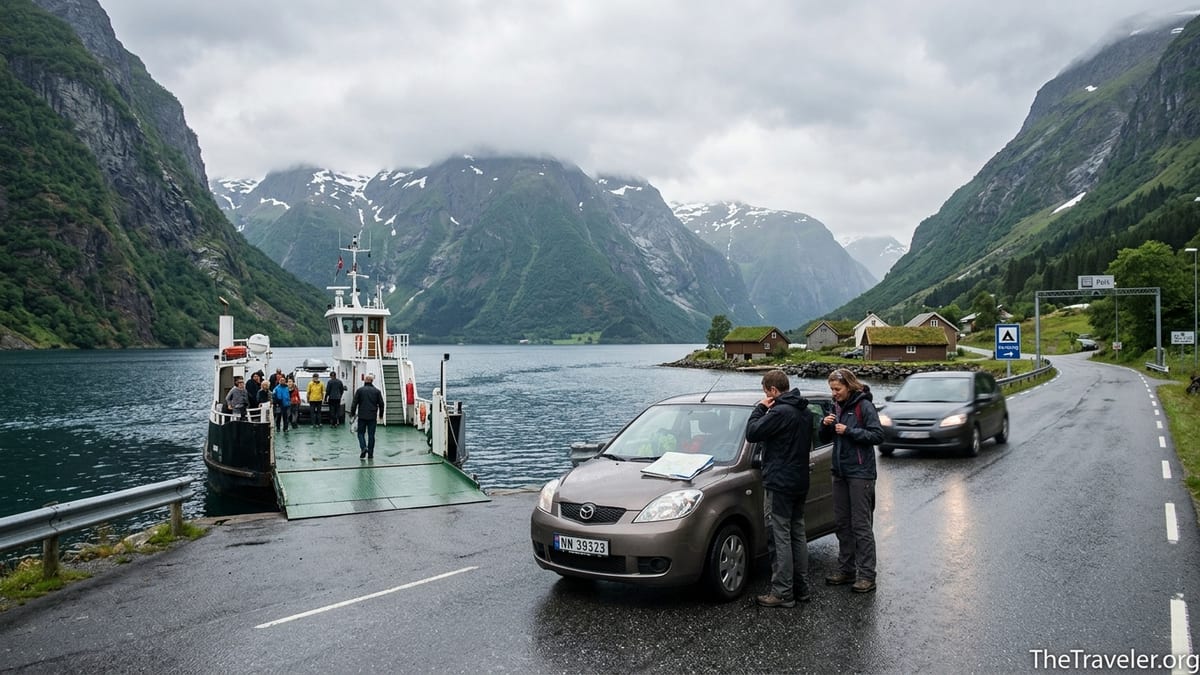
Travel times in western Norway surprise many drivers. What looks like a short distance on a phone map between Geiranger and Åndalsnes, for example, may involve hairpin mountain roads, summer ferries across fjords and tunnels. Average speeds can be far lower than visitors are used to, even when roads are in excellent condition. If you are planning to drive from Bergen up the coast to Trondheim or into the interior, do not rely on optimistic navigation estimates and then stack back‑to‑back activities on top. A delayed ferry or a rainstorm that forces you to slow down can cause you to miss pre‑booked boat tours or train connections.
Public transport is usually reliable, but the frequency can be limited in rural areas. That means missing the last bus from Flam back to your chosen base or misjudging a connection between a scenic train and a fjord cruise can turn into an expensive taxi or an unplanned hotel stay. A common regret from first‑timers is wishing they had cut one or two regions and seen less of the map but more of each place. Committing to fewer bases, and accepting that north of the Arctic Circle is effectively a separate trip from the classic fjord region, leads to a more relaxed and memorable journey.
Misreading the Weather and Packing the Wrong Clothing
Travel brochures love to show Norway under blue skies, glassy fjords and soft sun. The reality is more varied. Western Norway, including famous spots like Bergen, Flam and the Geirangerfjord, is known for frequent rain, even in July and August. Travelers who pack as if they were heading to the Mediterranean often end up buying emergency rain jackets and thermal layers at Scandinavian prices. Others book winter trips to see the northern lights in Tromsø, Narvik or Alta without realizing how long they will stand outside at night, motionless, under an Arctic sky.
The problem is not simply temperature but changeability. It is common for a day that starts bright in Bergen to turn into steady drizzle by lunchtime and then briefly clear again in the evening. In the fjords, low cloud can descend quickly, hiding views and cooling the air. Visitors who only bring umbrellas or a single cotton hoodie often find their clothes soaked after a few hours on deck during a fjord cruise. Likewise, summer hikers near popular trails like Preikestolen or Trolltunga sometimes head out in sneakers and jeans because the forecast mentioned sun, only to find the trail wet, windy and much colder than the city below.
The regret most people voice afterwards is not that the weather was bad, but that they were uncomfortable in one of the most beautiful places they had ever seen. The solution is to pack and dress as locals do, in breathable layers with a truly waterproof outer shell and footwear that can handle wet rock and mud. For winter visits north of the Arctic Circle, plan as if you were going skiing even if you never touch the slopes: thermal base layers, insulating mid‑layers and windproof, waterproof outerwear. Budgeting for a proper jacket at home is almost always cheaper than buying whatever is left in stock in a tourist shop in Tromsø after a cold snap.
Renting a Car Without Understanding Norway’s Driving Reality
Norway is made for road trips, and renting a car can be a fantastic way to access lesser‑known valleys, remote coastal stretches and tiny ferry crossings. It can also turn into one of the most stressful parts of a trip if you underestimate the challenges. Many visitors from warmer climates arrive in winter, collect a rental car in Oslo or Tromsø, and immediately face snow‑covered roads, icy city streets and darkness that arrives mid‑afternoon. Local driving laws require winter tires and careful speed control, but they do not give you experience. Several Norwegians every season report near‑misses or accidents involving tourists driving too fast for conditions or braking hard on black ice.
Even in summer, western Norway’s roads can be unnerving for drivers more accustomed to multilane highways. Popular tourist routes near the Sognefjord and Geirangerfjord often include single‑lane stretches with passing places, tunnels and steep gradients. Locals expect slow drivers to use dedicated pull‑outs to let faster traffic pass, and it is a legal requirement to avoid creating long queues. Visitors unfamiliar with these customs sometimes hold up lines of cars, buses and delivery trucks on mountain passes because they are too nervous to pull over, leading to frayed tempers and near misses.
Costs are another common shock. Most Norwegian rental cars are equipped with an AutoPASS device that automatically pays electronic toll roads, city toll rings and, on some routes, ferries. Those charges are passed on to you, and many major rental companies add an administrative fee per day or per invoice for handling them. If you plan to drive widely, those quiet toll gantries can add a noticeable amount to your bill. Fuel prices are also high by international standards, and distances between stations can be larger in rural areas than many visitors expect. Before booking a car, sketch out your planned route, estimate fuel and tolls, and compare with the cost of regional buses, trains and occasional guided excursions. Many travelers later wish they had either driven less, or driven only in the areas where a car truly added freedom.
Misunderstanding the Right to Roam and Wild Camping Rules
Norway’s famous “right to roam,” known locally as allemannsretten, is one of the country’s great gifts. It grants everyone access to uncultivated land for walking, resting and traditional tent camping, even on privately owned land, as long as you show respect for nature and residents. However, this freedom is not unconditional, and misunderstanding it is one of the biggest sources of conflict between visitors and locals. In some heavily visited fjord and island regions, repeated abuse of these rules has already led to local restrictions on camping.
A frequent mistake is assuming the right to roam applies equally to vehicles. In reality, the rules that allow you to pitch a tent on uncultivated land, typically at least a short distance from the nearest house, do not permit you to drive your car or campervan off established roads and park overnight on private land without permission. Travelers who pull their rental camper onto a farmer’s field edge near Lofoten, or who drive down a small coastal track to sleep in their car above a beach, often believe they are exercising a legal right when they are not. Some municipalities explicitly ban overnight parking in popular scenic pull‑outs and enforce fines to protect sensitive nature and manage waste.
Another misunderstanding concerns distance and duration. Typical guidance allows you to pitch a small tent on uncultivated land for up to two nights in one place, at a reasonable distance from the nearest inhabited house, provided the area is not cultivated or clearly signposted against camping. In high‑season hot spots, local rules may be stricter, with designated camping areas to prevent erosion and overcrowding. Travelers who arrive counting on a picturesque free campsite right on the shores of the Geirangerfjord or in the busiest coves of the Lofoten Islands are increasingly disappointed to find “no camping” notices and patrolled parking lots. Planning to use official campgrounds, simple cabins or mountain huts for part of your stay gives you flexibility while still letting you enjoy Norway’s outdoor culture responsibly.
Overbooking Activities and Ignoring Seasonal Realities
Between glossy images of summer fjord cruises and winter auroras, it is easy to forget that Norway’s seasons are intense and highly regional. Many first‑time visitors book a June trip expecting snow‑free hiking at all elevations, only to find high mountain passes and trails still partly snowbound. Others buy flights for November hoping to see the northern lights but then choose southern cities where darkness arrives later and auroral activity is less frequent than in the far north. The mismatch between expectations and reality is a major source of regret.
Some of Norway’s most iconic experiences operate on strictly seasonal schedules. Hurtigruten‑style coastal sailings, Norway in a Nutshell style itineraries between Oslo and Bergen, scenic summer car ferries across minor fjords, and narrow mountain roads like those to Trollstigen and Geiranger are all tied to weather and daylight. A traveler who books flights for early May to save money may find that a famous mountain road or boat route is not yet open, or that a specific hiking route is still considered unsafe without winter equipment. Conversely, visiting in late October to chase the aurora might place you between seasons, when some summer attractions have closed and winter activities are not yet running.
An equally common mistake is trying to book every minute of the trip in advance. While it is wise to reserve key trains, ferries and in‑demand hikes like Trolltunga on specific days, filling every day with back‑to‑back fixed activities leaves no room for weather changes or simple fatigue. If you schedule an all‑day fjord cruise, followed by a long scenic train ride the next day, followed by a full‑day hike, you may find yourself exhausted when a rare day of perfect sunshine finally appears. A more flexible plan, with open days that can be swapped around in response to forecasts, usually leads to fewer regrets and far better memories.
Expecting Big‑City Nightlife and Dining Everywhere
Norway’s cities have increasingly sophisticated food and nightlife scenes, but that experience is not spread evenly across the country. Travelers who book remote fjord villages or small Arctic towns expecting a choice of late‑night bars, international cuisine and all‑hours coffee often end up disappointed. In places like Flam, Geiranger or small villages in the Lofoten Islands, restaurant options can be limited and expensive, shops may close early, and evenings are quiet once day‑trippers leave. This is part of the charm for many visitors, but it can come as a shock if you assumed every waterfront town would feel like a mini version of Oslo.
Dining times and habits also differ from some visitors’ home countries. Kitchens in smaller hotels and guesthouses may stop serving dinner relatively early, especially outside peak season. Travelers who arrive late after a long drive expecting to find multiple casual restaurants open can discover their only realistic option is a gas‑station hot dog or whatever snacks they happen to have in the car. Self‑catering cabins and rental apartments are popular with Norwegians in part because they allow for relaxed home‑style meals with ingredients from supermarkets, which are more affordable than eating out every night. Incorporating a mix of hotel stays and simple self‑catering nights into your itinerary can soften the budget and help you enjoy local ingredients at your own pace.
Another subtle regret is not trying local specialties when the opportunity arises. Many visitors stick to familiar dishes when confronted with menus in a language they do not speak, missing chances to sample traditional fish soups, baked stockfish in the north, or brown cheese at breakfast. Taking a little time before your trip to learn the names of common dishes in Norwegian, or simply asking staff for recommendations, makes dining more interesting and less stressful.
The Takeaway
Most regrets after a trip to Norway trace back to the same roots: underestimating costs and distances, misreading the climate, and assuming that generous access to nature means a lack of rules. Travelers who prepare for high prices, accept slower journeys, and pack for wet and changeable weather usually find that Norway more than repays the effort. Respecting local driving customs and camping regulations not only keeps you out of trouble but also protects the fragile landscapes you came to admire.
Before you book, look carefully at a map, check opening seasons for the specific roads, ferries and hikes you dream about, and build a realistic budget and pace. Choose a smaller number of regions and stay longer in each. If you arrive with flexible expectations, practical clothing and a willingness to match your plans to Norway’s rhythms rather than forcing the country into your schedule, you are far more likely to leave with memories of waterfalls, midnight sun or dancing auroras, and far fewer memories of stress at toll invoices and missed connections.
FAQ
Q1. Do I really need to budget more for Norway than for other European countries?
Yes, you should plan on higher daily costs than in most of Europe, especially for accommodation, eating out, alcohol and organized tours.
Q2. Is it possible to visit Oslo, Bergen, the fjords and Lofoten in one week?
It is technically possible but not recommended. You would spend most of your time in transit. Focusing on one or two regions leads to a better trip.
Q3. Can I camp anywhere I like in Norway under the right to roam?
No. The right to roam mainly applies to tent camping on uncultivated land away from houses. It does not allow car or campervan camping on private land or in forbidden areas.
Q4. Do I need a car to see the Norwegian fjords?
Not necessarily. Many classic fjord areas are accessible by train, bus and boat. A car gives flexibility, but public transport and organized tours work well for first‑timers.
Q5. How should I pack for summer in western Norway?
Pack light, breathable layers, a genuinely waterproof jacket, and shoes with good grip that can handle rain and wet trails, even if the forecast looks sunny.
Q6. Is winter driving in Norway safe for tourists?
It can be safe if you have experience on snow and ice, drive cautiously and use proper winter tires, but many visitors are more comfortable relying on trains and buses.
Q7. When is the best time to visit for the northern lights?
The main season is from roughly late September to late March in northern Norway. Dark nights, clear skies and a flexible schedule improve your chances.
Q8. Are toll roads in Norway expensive for rental cars?
Tolls add up over a long road trip, and rental companies usually pass on charges plus an administrative fee. Check the toll policy before you book a car.
Q9. Will I find vegetarian or vegan food easily?
In cities, options are growing and you will find suitable meals, but in smaller towns choices can be limited. Self‑catering and supermarket shopping help a lot.
Q10. How many bases should I choose for a 10‑day trip?
For most visitors, two or three bases are ideal, such as a few nights in Oslo, a few in the fjords or Bergen, and possibly one additional region if travel times allow.