


More news on this day
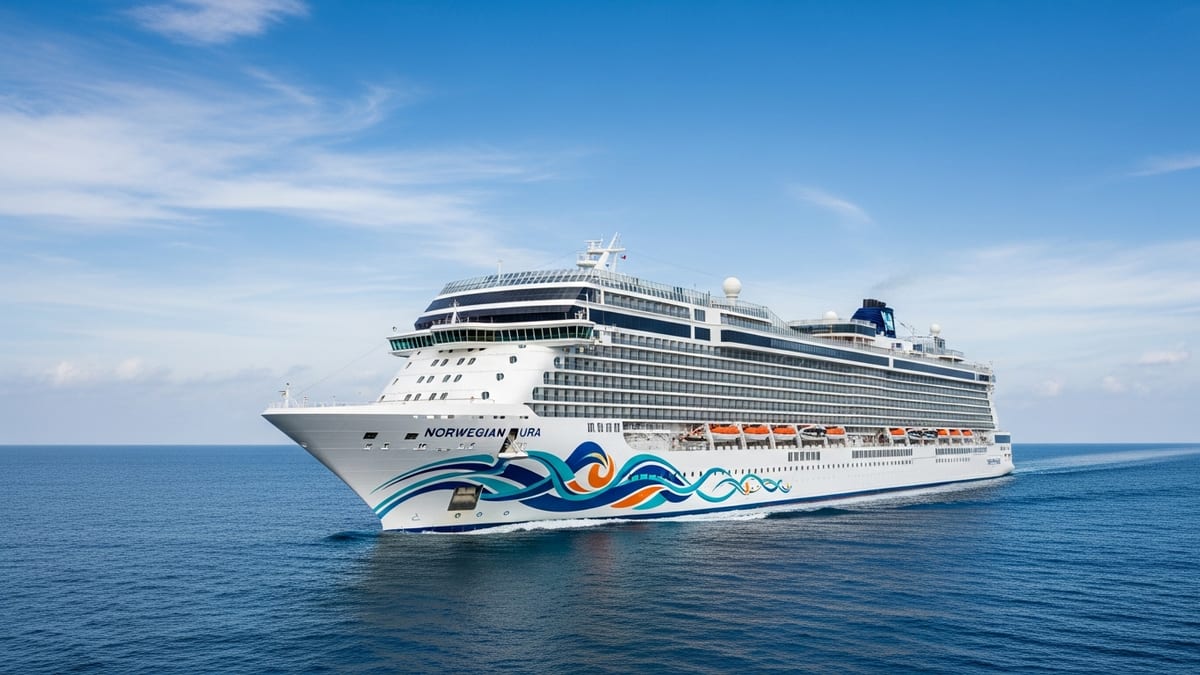
Norwegian Cruise Line is again facing operational headwinds as propulsion problems on Norwegian Bliss disrupt another scheduled sailing, prompting itinerary changes and renewed concern among passengers watching the ship’s mechanical reliability.
Get the latest news straight to your inbox!
Latest Sailing Affected by Ongoing Propulsion Limits
Public tracking data and passenger accounts indicate that Norwegian Bliss, one of Norwegian Cruise Line’s newer large vessels, is operating under propulsion-related speed restrictions that have forced adjustments to at least one recent Alaska itinerary. The ship has reportedly been unable to sail at normal cruising speed, compelling route alterations and the cancellation of at least one port call on a voyage from Los Angeles.
Reports shared by recent guests describe the ship “limping” back to port at reduced speed after an apparent loss of propulsion redundancy, with noticeable vibration in aft accommodations and a longer-than-scheduled final sea day. A subsequent cruise saw the scheduled call to Victoria, British Columbia, removed so that the ship could maintain a slower, more conservative speed profile while still returning to its home port on time.
Information discussed in online cruise communities suggests that the necessary replacement parts for a more permanent repair were expected to arrive in late June, with a tentative goal of completing the work sometime in July. Until those repairs are finalized, the ship appears to be operating with an operational workaround that preserves safety but limits top-end performance and scheduling flexibility.
For guests already on board, the propulsion issue has not resulted in outright voyage cancellation, but rather in a subtly different experience at sea. Slower transits and altered routes can change arrival times and reduce port hours, particularly at more distant calls, which can affect shore excursion plans and overall perceptions of value.
Itinerary Changes Add to a Pattern of Disruption
The Bliss propulsion problem arrives against a backdrop of broader schedule turbulence for the brand. In the past year, Norwegian Cruise Line has already redrawn parts of its 2026 and 2027 deployment, canceling dozens of sailings across several ships as it juggles dry-dock demands, port access constraints, and evolving market conditions. Those moves have ranged from long-range cancellations on Norwegian Breakaway and Norwegian Prima to reshuffled winter itineraries on other vessels.
Industry watchers note that propulsion or engine work is often clustered into extended maintenance periods, during which ships are removed from service for dry-dock overhauls. Publicly available planning documents and travel-industry coverage point to a wave of technical upgrades in the mid-2020s as cruise lines adapt fleets to new efficiency and emissions expectations, a process that can lead to reshuffled deployments, altered routes, or even outright cancellations when yard time stretches longer than anticipated.
In this context, the Bliss situation underscores how even localized mechanical issues can ripple through tightly packed schedules. When a ship must run more slowly, longer sea days and cut ports are the most immediate consequences. If a more extensive repair window becomes unavoidable, future voyages can be compressed, rescheduled, or canceled outright to free shipyard capacity, further complicating travel planning for customers who often book cruises many months in advance.
The latest propulsion-related disruption also keeps Norwegian in the news alongside other major lines that have recently dealt with technical slowdowns, itinerary trims, and delays linked to propulsion or mechanical work, reinforcing a wider narrative of operational fragility at a time when demand for cruising remains strong.
Passenger Experience: Port Cancellations and Onboard Adjustments
For travelers, the most visible impact of propulsion trouble comes when a port disappears from the itinerary. Guests booked on recent Norwegian Bliss sailings report learning that a planned stop in Victoria would not be possible, with the ship instead sailing more slowly to conserve operating margins under the constrained propulsion configuration.
Public discussions by affected passengers describe a mix of reactions: disappointment at losing a marquee call, frustration over late-breaking schedule notices, and appreciation from some travelers that the line prioritized technical caution over pushing the ship harder than advisable. In several accounts, guests comment that most onboard services continued normally, with entertainment, dining, and casino operations largely unaffected by the slower speed or mechanical vibration aft.
Such incidents highlight a familiar tension in modern cruising between the lure of ambitious itineraries and the reality that ships are complex machines subject to occasional technical setbacks. While onboard life may feel unchanged for most guests, even a single dropped port can significantly alter the perceived value of a premium voyage, particularly in destination-focused regions such as Alaska where glacier viewing and specific ports are key selling points.
Travel advisors and seasoned cruisers often recommend that guests build flexibility into pre- and post-cruise plans, purchase comprehensive travel insurance, and monitor line communications closely, especially when reports of mechanical issues begin to surface around a specific ship or route.
Maintenance Pressures and Industry-Wide Context
Norwegian’s current challenges with Bliss sit within a broader industry trend in which multiple global brands have had to adjust itineraries or cancel sailings due to propulsion- and engine-related work. Recent seasons have seen several well-known ships across different fleets reduce speed, skip ports, or enter extended repair windows after propulsion faults, reinforcing how even routine wear or component failures can upend carefully planned schedules.
Publicly available analyses of the cruise sector indicate that operators are pushing through a dense calendar of maintenance, refits, and retrofits in the mid-2020s. Some projects focus on efficiency and emissions compliance, such as engine upgrades and propulsion optimizations to meet tightening international standards. Others address aging hardware, with older vessels requiring more intensive work to remain competitive on fuel consumption and reliability.
These overlapping technical and regulatory pressures can narrow the margin for error when a new propulsion issue appears on a ship already slotted for future yard time. If an unscheduled repair is urgent, cruise lines may face difficult choices between preserving near-term sailings with limited workarounds or pulling ships from service earlier than planned and triggering compensation obligations for guests.
In that environment, Norwegian Bliss’s current limitations are being watched closely by both booked travelers and industry observers as a test of how effectively a major line can manage a live mechanical constraint while maintaining service and protecting its brand reputation.
What Cruisers Should Watch for Next
As Norwegian Cruise Line works toward a more permanent fix for Norwegian Bliss’s propulsion system, prospective passengers are scrutinizing schedule updates, ship-tracking data, and traveler forums for signs that full performance has been restored. Travel agents and trade publications are likewise monitoring whether any additional sailings might be modified or whether the line will adjust future deployments to accommodate more extensive repairs.
For those already booked, the main questions are practical. Travelers want to know whether advertised ports will be maintained, whether arrival and departure times might shift, and what compensation, if any, will be offered if a port or glacier viewing experience is lost due to ongoing speed restrictions. According to published coverage of similar incidents across the industry, common remedies can include onboard credit, partial fare refunds, or discounted future cruise offers, depending on the scale and timing of the disruption.
The Bliss episode also serves as a reminder that cruise itineraries are inherently subject to change, for reasons spanning weather, congestion, and technical issues. Seasoned travelers often watch for patterns: repeated adjustments involving the same ship or route can signal a deeper operational constraint, while isolated changes may reflect a one-off technical glitch or scheduling conflict.
For now, Norwegian Bliss remains in service, but under an unusual spotlight. How swiftly Norwegian Cruise Line moves from interim workarounds to a verified propulsion repair will likely shape both guest sentiment and the ship’s operational prospects over the peak Alaska season and beyond.