


Ask a seasoned luxury traveler to name the top hotel brands in the world and Four Seasons and Aman will almost always appear in the same sentence. Both promise polished service, beautiful design, and high nightly rates. Yet the experience on the ground feels very different. One excels at seamless, social luxury in major cities and resort destinations. The other is almost monastic in its focus on privacy, silence, and sense of place. Understanding those differences is the key to deciding which brand fits your own travel style better.
Get the latest updates straight to your inbox!
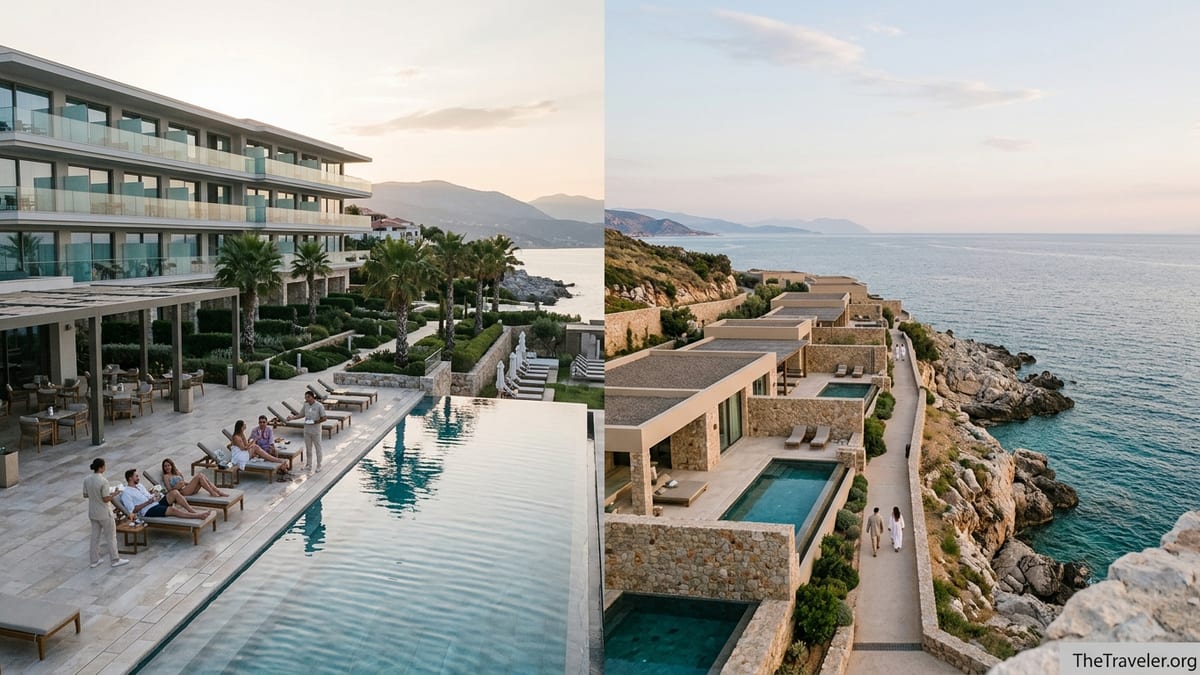
Four Seasons vs Aman in a Nutshell
Four Seasons is the world’s best known luxury hotel brand, with more than 100 properties across roughly 45 to 50 countries. You find Four Seasons in global hubs like New York, London, Hong Kong, and Dubai, as well as in leisure destinations from Maui to the Maldives. By design, the experience is consistent and polished. Whether you walk into the Four Seasons Hotel London at Park Lane or the Four Seasons Resort Bali at Sayan, you can expect a similar service philosophy, strong food and beverage programs, and a full suite of facilities such as spa, pool, kids’ club, and concierge.
Aman sits at the opposite end of the spectrum in terms of scale. The brand has only a few dozen properties worldwide, often with fewer than 50 keys. Resorts like Amanjiwo in Central Java or Amantaka in Luang Prabang are intentionally intimate, low-rise, and deeply integrated into their surroundings. The emphasis is on space, quiet, and a feeling of retreat from the outside world. You do not come to Aman for a bustling lobby bar. You come because you want to hear the wind in the trees rather than the clinking of martini glasses.
In broad strokes, Four Seasons suits travelers who value reliable five star comfort, social energy, and full-service convenience wherever they go. Aman is better for travelers who are willing to trade convenience and choice for seclusion, minimalism, and a more contemplative kind of luxury. Both are firmly in the ultra-luxury tier, but they serve different emotional needs.
Design and Atmosphere: Social Club or Private Sanctuary
Walk into the Four Seasons Hotel Madrid or the Four Seasons Resort Dubai at Jumeirah Beach and you step into a contemporary grand hotel. Public spaces are designed to impress: high ceilings, statement art, often a lively bar adjacent to the lobby, and staff circulating constantly. In city properties, you will see business travelers taking meetings, families checking in for a long weekend, and locals heading to the restaurant for a working lunch. Resorts like Four Seasons Resort Maui at Wailea or Four Seasons Resort Costa Rica at Peninsula Papagayo have the same social energy around pools and restaurants, even if the overall tone is relaxed.
Aman properties, by contrast, are built around the idea of calm. At Amanpuri in Phuket you walk along stone paths between villas, with extensive planting absorbing sound. At Amanjiwo, suites are arranged in a crescent around a central rotunda, each with its own outdoor space facing the Borobudur valley. Public areas tend to be open-air, with a single main restaurant and bar, and maybe a library or lounge. You are unlikely to encounter wedding parties, big corporate groups, or a bustling brunch crowd. Many guests spend much of their day in their villas, enjoying the private pool and in-room dining.
If you enjoy the buzz of a great hotel bar, the option to people-watch in the lobby, and a sense of occasion at breakfast, Four Seasons will probably feel like home. If your idea of a perfect stay is hearing almost no one outside your own travel party and being able to walk barefoot from villa to spa without passing a crowd, Aman will feel closer to what you are seeking.
Service Style and Guest Interaction
Both brands are known for attentive service, but they express it differently. Four Seasons leans into a polished, anticipatory style that works well for a broad mix of guests. At the Four Seasons Hotel Hong Kong, for example, you can expect multilingual concierges, a team that can secure hard-to-get restaurant reservations, and pool staff circulating regularly with chilled water and small treats. Staff will learn your preferences if you stay several nights or return frequently, but there is also a clear hotel rhythm: morning buffet, busy lunch hours, evening bar rush.
Aman aims for a quieter, almost invisible style of service. Many guests describe it as feeling like staying at a private home with a highly skilled household staff. At Aman New York, for example, suites come with butler-style service and a high staff-to-guest ratio, but interactions are low-key rather than formal. In Southeast Asian resorts such as Amantaka in Laos or Amanjiwo in Indonesia, staff members will often greet you by name and remember your favorite breakfast without any visible note-taking. They tend to appear at exactly the moment you need something, then melt away.
In practice, this means Four Seasons works extremely well for multigenerational trips, business travel, and occasions where you want the hotel to make things happen for you around the city or resort. Aman is ideal when you want the outside world to recede. There are fewer announcements, fewer events, and generally no loud pool music or big family activities. If you prefer a hotel that never feels intrusive, Aman will resonate. If you like structured kids’ clubs, daily resort programming, and a concierge who checks in often, Four Seasons is the better fit.
Rooms, Suites, and Real-World Pricing
At both brands, entry-level rooms are generous by urban standards, but the way they are priced and configured differs. In major cities, recent live pricing for Four Seasons properties illustrates the range. Nightly rates at the Four Seasons Hotel New York Downtown often fall in the 700 to 1,000 US dollar range for standard rooms outside peak events, while ocean-facing rooms at The Ocean Club, A Four Seasons Resort in the Bahamas frequently start around 1,000 US dollars and can rise several times higher in festive season. City properties such as Four Seasons Hotel Kuala Lumpur or Four Seasons Hotel Doha sometimes publish entry rates closer to 250 to 350 US dollars in off-peak periods, offering what passes for “value” at this level.
Aman’s published rates are typically higher on a like-for-like basis. Amantaka’s pool suites in Luang Prabang, for example, have been reported around 1,700 to 1,900 US dollars per night for certain dates, and many Aman resorts in beach or island locations price pool villas well above 2,000 US dollars per night even outside major holidays. Iconic properties such as Amanpuri in Thailand or Aman Venice on the Grand Canal can climb significantly higher for top suites or peak seasons. At Aman New York, some suites have been marketed at figures around 20,000 US dollars per night, placing them firmly in the ultra-high-end bracket.
Room configurations reflect each brand’s priorities. A resort like Four Seasons Resort Orlando at Walt Disney World offers a wide choice of connecting rooms, family suites, and multiple-bedroom configurations aimed squarely at parents and children. Meanwhile, a typical Aman resort will have a smaller number of large suites or villas, often with private pools, but fewer explicitly family-focused layouts. If you are a couple seeking a private pool villa with nothing but jungle or desert outside, Aman will deliver. If you are trying to house grandparents, parents, and children in a flexible mix of rooms and suites, Four Seasons will usually be easier and often more economical on a per-room basis.
Location, Experiences, and Trip Scenarios
Where you want to go, and what you plan to do once there, is one of the clearest ways to choose between the brands. Four Seasons has a deep footprint in global cities and established luxury resorts. If you need a reliable base in downtown Tokyo, central Florence, Boston, or Toronto, Four Seasons offers high floors, good soundproofing, and strong dining without needing to research dozens of boutique options. In resort destinations like the Maldives, Maui, Koh Samui, or the French Riviera, the brand often combines beachfront access with multiple pools, water sports, and kids’ activities.
Aman focuses more on remote or unusual settings. Amanjiwo sits in rural Central Java with views toward the Borobudur temple. Amangiri in Utah is set amid sculpted desert landscapes, with excursions that include slot canyon hikes and private hot-air balloon rides at sunrise. In Italy, Aman Venice inhabits a 16th century palazzo on the Grand Canal with only a small number of keys, more akin to a private residence than a large hotel. Experiences are curated and often feel deeply tied to the landscape or local culture, such as private temple blessings in Indonesia or sunrise picnics overlooking canyon scenery in the American Southwest.
Consider two real trip scenarios. For a three-night business trip to London where you need reliable meeting spaces, a central location, and quick access to Heathrow or City Airport, Four Seasons at Park Lane or Ten Trinity Square is an easy choice. The lobby will be busy, but you will have full conference support and extensive dining on site. For a five-night unplugged retreat after a major life event, where you want as few decisions and as much privacy as possible, a stay at Amangiri or Amanemu in rural Japan will feel more appropriate. Your days may revolve around spa treatments, long walks, and in-villa dining, rather than city restaurants and networking drinks.
Food, Wellness, and On-Property Amenities
Four Seasons properties often function as local dining and social hubs. In cities like Hong Kong or Madrid, their restaurants draw external guests for power lunches and special-occasion dinners. A single hotel might host a Michelin-starred fine dining room, an all-day brasserie, a cocktail-focused bar, and a casual poolside venue. Families appreciate the ability to rotate between restaurants over a week-long stay without repeating too often. Spas tend to be large, with a full menu of treatments, fitness centers, sometimes resident wellness consultants, and in some resorts multiple pools including adults-only and family zones.
Aman’s food and beverage approach is more restrained. Most resorts center around one main restaurant that flexes between breakfast, lunch, and dinner, sometimes with a secondary venue focused on regional cuisine or a casual poolside option. Menus typically emphasize fresh, local ingredients and a compact set of dishes rather than pages of choice. Wellness is a strong point, but again the tone is quiet. Many Aman spas incorporate local traditions, from Javanese healing rituals to Ayurvedic treatments, often in candlelit, low-noise environments. You are less likely to find a busy spinning studio and more likely to find a serene yoga pavilion overlooking rice paddies or ocean.
If you are traveling with a group that includes picky eaters, children, and friends who like a late-night bar scene, Four Seasons generally gives you more variety without leaving the property. If your priority is a simple but well-executed menu, perhaps tailored to a wellness program, and you value calm over social buzz, Aman’s more curated approach will appeal. It is worth noting that in some remote Aman locations, dining options outside the property can be limited, so plan for most meals on site.
Value, Loyalty, and How to Decide What Fits You
Neither Four Seasons nor Aman participates in the big points-based loyalty programs that drive decisions at brands like Marriott or Hilton. Instead, “loyalty” is effectively rewarded through soft benefits and repeat-guest recognition. Many travelers book Four Seasons and Aman stays through luxury travel advisors or credit card programs that can add perks such as daily breakfast for two, resort or hotel credits, and occasional upgrades. Those add-ons can materially change the value equation, especially at Four Seasons properties where entry-level prices sometimes overlap with other five star competitors in the same city.
In general, Four Seasons offers a broader range of price points across its portfolio. On certain dates, a city property like Four Seasons Hotel Kuala Lumpur or Four Seasons Hotel Abu Dhabi might price below 300 US dollars, which is high but not unheard of for top-end urban hotels. Resort properties in North America, Europe, and island destinations tend to command higher rates, often from 700 US dollars upward for base rooms, but you regularly see attractive shoulder-season offers, third-night-free promotions, or bundled packages that include transfers and breakfast.
Aman, by contrast, rarely positions itself as “good value” in a conventional sense. Rates are high, promotions are limited, and additional experiences such as private excursions or spa rituals often carry premium pricing. What guests feel they receive in return is extreme privacy, space, and personalization. If that combination is central to your idea of a successful trip and you can comfortably afford it, Aman can feel uniquely satisfying. If you mainly want a very comfortable, well-run hotel in a convenient location and prefer to stretch your budget across more trips or nights, Four Seasons will usually be the better value choice.
A practical way to decide is to look at your overall travel pattern. For a year in which you might take several shorter city trips and one or two resort breaks, allocating those to Four Seasons will give you consistent quality and good use of any preferred partner benefits or card perks. For a special occasion such as a milestone birthday, honeymoon, or once-in-a-decade sabbatical, choosing an Aman property that aligns with your dream landscape can turn the trip into a genuinely singular experience, but one that does not need to be repeated every year.
The Takeaway
Four Seasons and Aman both sit at the very top of the global hotel market, but they are not interchangeable. Four Seasons is about expertly delivered luxury at scale: social, convenient, and deeply reliable, from Boston and London to Bali and Dubai. It is the brand you choose when you want your hotel to be a polished home base for exploring a city, entertaining clients, or managing a busy family vacation with minimal friction.
Aman focuses on something narrower and more rarefied: profound privacy, pared-back design, and locations that feel removed from everyday life. Stays are fewer, longer, and more introspective, whether that means waking up in a canyon landscape in Utah or watching dawn break over a temple complex in Central Java. The brand is less about networking and more about retreat.
If your perfect trip involves vibrant lobbies, multiple restaurants, and a sense that the world is at your doorstep, Four Seasons is likely to fit your style better. If you dream of hearing nothing but birds, waves, or desert wind and value space and silence above all, Aman is the stronger match. Many frequent luxury travelers ultimately use both brands: Four Seasons for the rhythm of regular life and work, Aman for the rare journeys that mark turning points. Knowing which mode you are in before you book is the most reliable way to choose well.
FAQ
Q1. Is Aman always more expensive than Four Seasons?
Aman is often priced higher on a per-night basis, especially for pool suites and villas, but there are overlaps. Some Four Seasons resorts in peak season can match or exceed certain Aman rates, and city-based Four Seasons hotels can be relatively accessible on off-peak dates.
Q2. Which brand is better for families with children?
Four Seasons is generally better for families, thanks to kids’ clubs, children’s menus, multiple pools, and room categories designed for parents and children. Many Aman properties welcome children but are quieter and less structured, which can feel better suited to older kids or very calm family dynamics.
Q3. Do either Four Seasons or Aman have loyalty points programs?
Neither brand runs a traditional points-based program where you earn and redeem nights. Instead, they focus on recognition for repeat guests and work closely with luxury travel advisors and select credit card programs to provide benefits like breakfast, hotel credits, and upgrades.
Q4. Is Aman worth the premium for a honeymoon?
For couples who prioritize privacy, dramatic settings, and a feeling of being cocooned away from the world, many find Aman worth the premium for a once-in-a-lifetime honeymoon. For those who want a lively atmosphere, several restaurant options, and more social energy, a Four Seasons resort might be a better fit at a lower or similar price.
Q5. Which brand should I choose for a busy city trip with meetings?
For business-heavy city trips, Four Seasons tends to be more practical. You get central locations, strong meeting facilities, efficient concierge support, and a consistent experience across major hubs, which simplifies planning when your schedule is tight.
Q6. Are there destinations where only one of the two brands is present?
Yes. Four Seasons has a far larger global footprint, so in many cities and resort areas it may be your only option between the two. Aman often appears in more remote or niche locations, such as certain desert, jungle, or heritage settings where Four Seasons does not yet operate.
Q7. How far in advance should I book Aman or Four Seasons?
For peak holiday periods, major events, or very small Aman resorts with limited inventory, booking many months in advance is wise. In shoulder seasons or for large Four Seasons city hotels, you can sometimes book closer to arrival, but availability and pricing are always better with advance planning.
Q8. Do both brands offer strong spa and wellness programs?
Yes, but with different emphases. Four Seasons spas tend to be large and comprehensive, with broad treatment menus and fitness facilities. Aman spas are more intimate and often integrate local healing traditions or longer, more immersive rituals within very quiet environments.
Q9. Can I visit the restaurants or spa at an Aman or Four Seasons without staying there?
In many locations, non-residents can book restaurants or spa treatments, especially at Four Seasons, which often functions as a local social hub. At Aman, policies vary and access may be more restricted or subject to availability, particularly in very small or secluded resorts.
Q10. If I enjoy boutique hotels, which brand will I like more?
If you love intimate, design-forward boutique hotels and value individuality over scale, you are more likely to enjoy Aman. If you prefer a boutique feel but do not want to give up big-hotel resources like multiple dining venues, robust concierge support, and kids’ facilities, Four Seasons may strike the right balance.