


More news on this day
New York City’s Economic Development Corporation has opened a request for proposals for an organization to administer the Manhattan Cruise Terminal Community Fund, signaling a new effort to channel cruise revenues into nearby neighborhoods and public waterfront projects.
Get the latest news straight to your inbox!
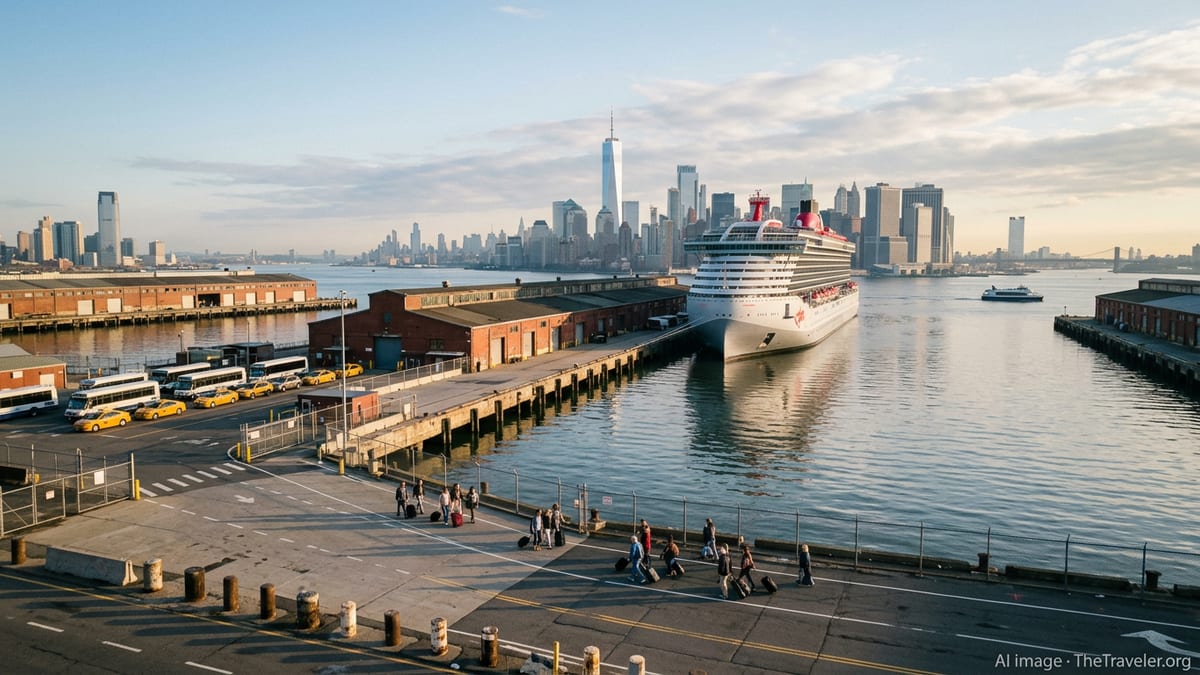
New Community Fund Targets Manhattan’s West Side Waterfront
Publicly available information shows that the Manhattan Cruise Terminal Community Fund is designed to direct money generated by cruise operations toward community priorities in West Midtown. The fund is intended to support projects in and around the terminal’s immediate impact area, including waterfront access, environmental improvements, and quality-of-life initiatives for residents who live with the daily effects of passenger traffic.
The request for proposals, released by the New York City Economic Development Corporation in late 2025 as part of a broader cruise community funding initiative, seeks a third-party administrator to manage, track, and distribute these dollars. The administrator will not operate the terminal itself, but will instead serve as an intermediary between the city, cruise-related revenues, and community organizations seeking grants.
The RFP links the fund to a larger policy push to ensure that major maritime assets provide more direct benefits to surrounding neighborhoods. By formalizing a community fund structure and inviting outside entities to compete for the administrator role, the city is signaling a move toward more transparent and accountable stewardship of cruise-related community investments.
Reports indicate that a similar framework is being pursued for the Brooklyn Cruise Terminal Community Fund and a Sunset Park special-purpose project fund, suggesting that Manhattan’s program is one element of a citywide waterfront strategy.
What the Fund Administrator Will Be Expected to Do
According to RFP materials, the chosen Manhattan Cruise Terminal Community Fund administrator will be responsible for designing and running an application process for local projects, evaluating proposals, and recommending awards consistent with program guidelines. The administrator will also be charged with monitoring funded projects, ensuring compliance with reporting requirements, and maintaining financial records that can be shared with both the city and the public.
The scope of work described in the solicitation emphasizes community engagement and outreach, including efforts to reach small, neighborhood-based organizations that may not have extensive grant-writing experience. Prospective administrators are expected to demonstrate familiarity with the West Side’s demographic landscape and to propose strategies for supporting projects that address environmental health, open space, workforce opportunities, and cultural programming linked to the waterfront.
Budget management is another central responsibility. The fund administrator will help translate cruise-related contributions into a clear grantmaking calendar and pipeline, aligning disbursements with the cruise season and multi-year planning cycles. The RFP points to the need for robust internal controls, conflict-of-interest policies, and regular public reporting on how funds are used.
Applicants are asked to outline their experience overseeing similar community funds, managing competitive application processes, and working with public agencies. The competition is expected to attract interest from community development nonprofits, fiscal sponsors, and philanthropic institutions with established grantmaking infrastructure.
Context: Cruise Growth, Climate Pressures, and Community Demands
The Manhattan Cruise Terminal, located along the Hudson River on Manhattan’s West Side, has long functioned as one of New York City’s primary passenger gateways. Historical summaries indicate that the facility dates back to the 1930s, serving transatlantic liners before evolving into a modern cruise hub with upgraded gangways, passenger processing areas, and expanded apron space.
In recent years, the rebound of global cruising has drawn renewed attention to the terminal’s local impacts. Neighborhood advocates have raised concerns about traffic, curbside congestion, air quality, and noise tied to ship calls, buses, and taxis along the West Side Highway corridor. At the same time, city planners have been promoting a long-term master plan for the terminal area aimed at modernizing infrastructure, improving resilience, and reshaping the waterfront edge.
The push for a community fund administrator sits at the intersection of those trends. It reflects growing expectations that cruise facilities contribute not only to tourism and city revenues but also to tangible improvements for residents who live near busy piers. Publicly available coverage of related initiatives at the Brooklyn Cruise Terminal, including investments in shore power connections and broader redevelopment plans in Red Hook, shows that waterfront communities are increasingly expecting cleaner operations and direct reinvestment.
For travel and cruise passengers, these shifts may translate into a more integrated terminal district, with upgraded sidewalks, parks, and public spaces that frame the terminal as part of a larger urban waterfront rather than as an isolated infrastructure zone.
Implications for Community Groups and Prospective Bidders
The Manhattan Cruise Terminal Community Fund RFP creates new opportunities for neighborhood organizations, environmental groups, cultural institutions, and local business alliances seeking resources for small and mid-sized projects. Eligible activities, as described in the solicitation, may encompass waterfront access improvements, public realm enhancements, community-led environmental monitoring, and programs that connect local residents with employment or training linked to maritime and tourism sectors.
For potential fund administrators, the RFP outlines a multiyear engagement, with options for renewal based on performance and available funding. Applicants are encouraged to present governance models that include advisory boards, conflict-of-interest safeguards, and mechanisms for community input on funding priorities. The solicitation also highlights the importance of tracking measurable outcomes such as neighborhood access to new public spaces, participation rates in funded programs, and environmental indicators.
Observers note that the administrator’s approach to transparency may shape public perceptions of the cruise industry’s role in Manhattan. Regularly published summaries of grant awards, clear criteria, and open data on funded projects could help establish the fund as a credible vehicle for local reinvestment, rather than as a symbolic gesture.
Community stakeholders are closely watching how the process unfolds, particularly how accessible the competition for small grants will be and whether groups with limited administrative capacity will receive technical assistance to participate.
Part of a Broader Waterfront Investment Pattern
According to recent city press releases, the Manhattan initiative is part of a broader “Harbor of the Future” vision that includes large-scale investments at multiple maritime sites, notably the Brooklyn Marine Terminal in Red Hook and other working waterfronts. At those locations, plans call for modernized cargo and logistics facilities, all-electric operations, and new public open spaces integrated with surrounding neighborhoods.
The Manhattan Cruise Terminal Community Fund reflects a complementary strand of that strategy, focusing on social and environmental programs rather than heavy infrastructure. While the RFP centers on a single facility, it aligns with a citywide approach that pairs maritime modernization with affordability measures, open space improvements, and climate resilience projects in nearby communities.
As the deadline for proposals approaches, nonprofit networks, community boards, and philanthropic intermediaries are assessing whether to compete for the administrator role or partner with larger organizations. The outcome will help determine how effectively cruise-related revenues are translated into visible changes on Manhattan’s West Side waterfront in the coming years.
The selection of a fund administrator, anticipated after the RFP review period concludes, is likely to draw interest from both the travel sector and local residents watching how the city balances tourism growth with neighborhood well-being.