


More news on this day
Oceania Cruises is sharpening its focus on experiential travel, presenting a version of luxury cruising that centers less on formality and more on learning, cultural immersion and science-informed wellness at sea.
Get the latest news straight to your inbox!
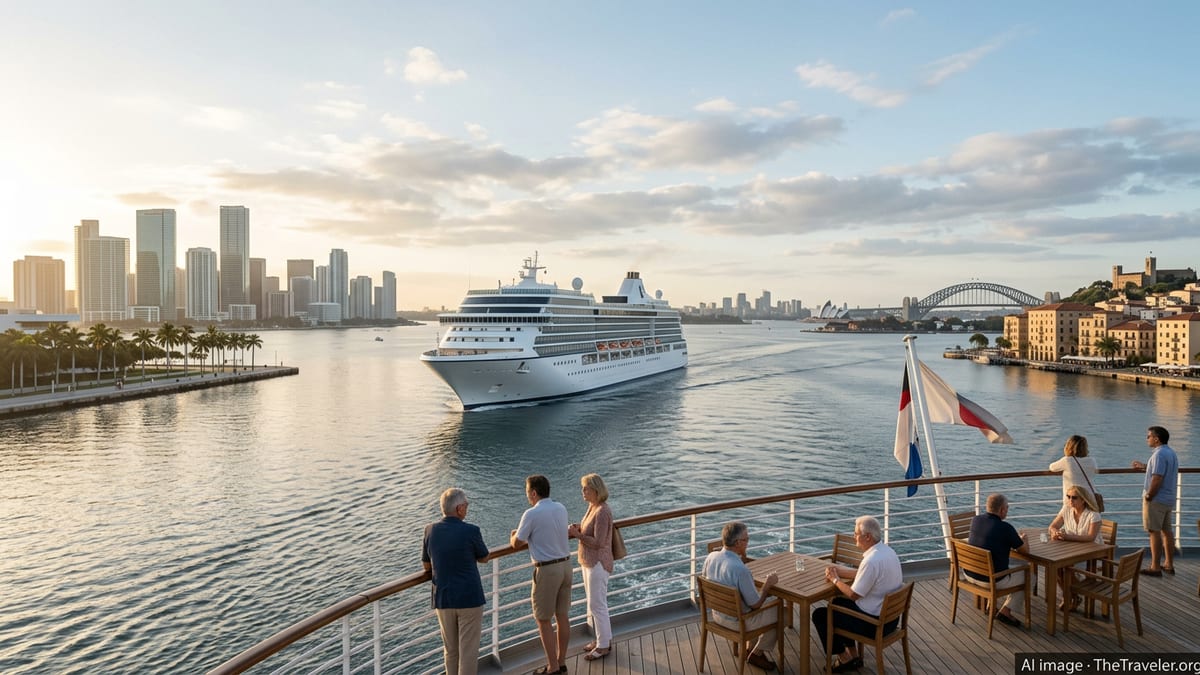
Small Ships as Floating Learning Hubs
Publicly available fleet data highlights how Oceania’s relatively small ships underpin its experience-led approach. The line operates eight vessels carrying roughly 684 to 1,250 guests each, significantly below the capacity of many contemporary megaships, which enables a more intimate onboard environment and easier access to enrichment spaces such as culinary classrooms and lecture venues.
Onboard program descriptions emphasize structured learning across culinary arts, destination history and lifestyle topics. The Culinary Center, a hands-on cooking school available on Marina, Riviera, Vista and the new Allura, offers dedicated workstations and instructor-led classes that translate regional ingredients and techniques into interactive sessions at sea. Reports indicate more than 100 distinct class formats and itineraries that tie these sessions to the ports being visited.
Oceania also connects learning to shore time through its Culinary Discovery Tours. These small-group excursions pair local markets, farms, wineries and restaurants with follow-up cooking instruction back on the ship, creating a continuous narrative from destination to classroom. Coverage of the program notes that guests might visit a Venetian chef’s private villa, forage with guides in Corfu or tour plantations in French Polynesia before returning to interpret those flavors under professional guidance.
Beyond food, enrichment programming on board includes guest lectures, art workshops and regionally themed talks that aim to position the ship as a “floating campus.” According to the line’s life-on-board materials, these sessions are designed to be complimentary, casual in tone and deeply linked to the places on the itinerary, reflecting a broader trend in upmarket cruising where knowledge and context are treated as elements of luxury.
Culture-Forward Itineraries on Next-Generation Ships
Oceania’s shipbuilding strategy is closely tied to this learning and culture focus. The Allura-class vessels, Vista and Allura, were developed with Italian shipbuilder Fincantieri to deliver what the partners describe as a fresh interpretation of small-ship luxury. Vista entered service in 2023, while Allura was delivered in 2025, each carrying about 1,200 guests and emphasizing a high ratio of public space to passengers.
According to ship profiles, both vessels are framed as “boutique hotels at sea,” with design choices such as expansive lounges, culinary studios and flexible lounges that can host lectures, tastings and performances. Marketing materials position Allura, in particular, as a “global explorer” ship, aimed at culture-oriented itineraries that prioritize longer port days and lesser-visited harbors over marquee resort stops.
Destination coverage shows that Oceania continues to schedule culturally dense routes in regions such as the Mediterranean, Northern Europe, Asia and South America, with a notable focus on mid-size and smaller ports. This allows for shore excursions that reach historic centers, food markets and countryside wellness retreats where large ships can struggle to dock or tender efficiently.
Industry observers note that with Allura joining Vista, Marina and Riviera in the upper end of the fleet, Oceania’s newest vessels now share a common design language centered on culinary venues, creative spaces and wellness facilities. That alignment supports consistent delivery of culture-forward programming, regardless of which ship guests choose for a given region.
Wellness at the Core: Aquamar Spa + Vitality Center
Wellness has become a defining pillar of Oceania’s repositioning, anchored by the Aquamar Spa + Vitality Center concept that appears across the fleet. The program extends beyond a traditional spa model to include what the line describes as holistic experiences that integrate body treatments, nutrition, movement and destination-based wellness encounters.
Onboard facilities typically include a full-service spa, thermal areas with thalassotherapy pools or whirlpools, and a modern fitness center. Public information indicates that complimentary classes such as sunrise yoga, core conditioning and stretching are standard, alongside fee-based services such as massage therapies, facials and body rituals drawing on marine ingredients and global techniques.
Nutrition is treated as a key component of the wellness offering. Oceania has expanded plant-based and lighter menu options across restaurants, while selected ships feature a cold-pressed juice and smoothie bar serving breakfast bowls and raw blends. Promotional material for Aquamar highlights these culinary features alongside spa services as essential parts of a unified vitality concept, rather than add-ons.
Aquamar’s influence also extends ashore via curated Wellness Discovery Tours. These excursions, described in official brochures, visit yoga retreats, organic farms, nature reserves and thermal spas in destinations ranging from Australia to the Mediterranean. Participants might join guided meditation in the countryside, learn about apitherapy from beekeeping specialists or explore local approaches to preventive health, situating the cruise as a gateway into global wellness traditions.
Experiential Luxury in a Competitive Market
Oceania’s push toward learning and wellness is unfolding within an increasingly competitive premium and luxury cruise market, where lines are racing to differentiate themselves with lifestyle-driven concepts. Analysts and enthusiast communities frequently describe Oceania as a food-centric operator positioned between traditional premium brands and ultra-luxury lines, noting that the company has chosen to invest heavily in culinary programs, enrichment and ship design rather than expansive waterparks or high-adrenaline attractions.
Recent commentary suggests that with Vista and Allura, Oceania is refining its identity closer to a modern luxury product without significantly changing its core proposition. Instead, the brand’s evolution is most visible in the layering of experiences: more immersive cooking schools, deeper destination programming and a more fully articulated wellness strategy through Aquamar. This approach resonates with travelers who prioritize quiet ships, fine dining and intellectual engagement over large-scale entertainment.
At the same time, the line continues to trade on its relatively small-ship profile, which allows for higher staff-to-guest ratios and more personalized service. Fleet comparisons for 2026 show that while Allura and Vista increase overall capacity, Oceania remains firmly in the mid-size category, which supports its promise of “small ship luxury” and underpins the feasibility of intimate classes and small-group excursions.
As consumer interest in health, meaningful travel and cultural authenticity grows, Oceania’s blend of Aquamar wellness, culinary immersion and destination-focused itineraries positions the brand as a case study in how cruise lines are redefining luxury. Rather than centering on formality or spectacle, its “new era” of cruising is being built around how travelers feel, learn and connect while at sea and in port.
Links
Oceania Cruises – Aquamar Spa + Vitality Center
Oceania Cruises – Culinary & Culinary Discovery Tours
Oceania Cruises – Oceania Allura ship overview