


More news on this day
Luxury-focused Oceania Cruises is sharpening its sights on Northern Europe for 2027, rolling out itineraries that blend marquee capitals with remote fjords, small historic ports and increasingly sought-after Arctic landscapes.
Get the latest news straight to your inbox!
Expanded Northern Europe Focus in 2027
Publicly available deployment previews for 2027 indicate that Oceania Cruises is planning one of its most extensive Northern Europe seasons to date, positioning multiple ships across the Baltic, Scandinavia, the British Isles and the fringes of the Arctic. The program forms part of a wider 2027-2028 collection that totals more than 230 itineraries worldwide and highlights Europe as a core focus.
Information published by the line and trade media describes a network of voyages reaching from the fjords of Norway and Greenland to classic city calls in Stockholm, Copenhagen and Helsinki. Travel trade listings for the 2026-2027 seasons already flag dozens of Northern Europe sailings, and the 2027-2028 collection builds on that base with additional routes that extend farther north and west.
The deployment continues Oceania’s strategy of using mid-sized, traditionally styled ships to access smaller harbors while still offering the range of facilities associated with the upper-premium and luxury sectors. Reports indicate that the line is targeting travelers who want intensive port schedules paired with longer time ashore, including frequent overnight stays in key cities.
Small Ships, Smaller Ports
Oceania’s reputation for destination-focused cruising is closely tied to the size of its fleet, and the 2027 Northern Europe program continues to leverage that advantage. With capacities generally around 1,200 to 1,250 guests on its newer vessels and significantly fewer on its smaller ships, the line is able to include compact harbors that larger megaships must bypass.
Preview materials for the 2027-2028 collection highlight visits to towns such as Skagen and Aarhus in Denmark, Visby on Sweden’s Gotland island and historic ports along the Baltic coast. These smaller destinations typically feature walkable centers, medieval districts and local museums, and they have become a signature element of Oceania’s Northern Europe offerings.
Cruise brochures and agency schedules also show an emphasis on longer port days and complex routing, with itineraries that string together boutique stops with better-known gateways like Southampton or Copenhagen. The approach is designed to appeal to guests who prioritize in-depth regional exploration over sea days and onboard attractions.
Fjords and Iconic Nordic Landscapes
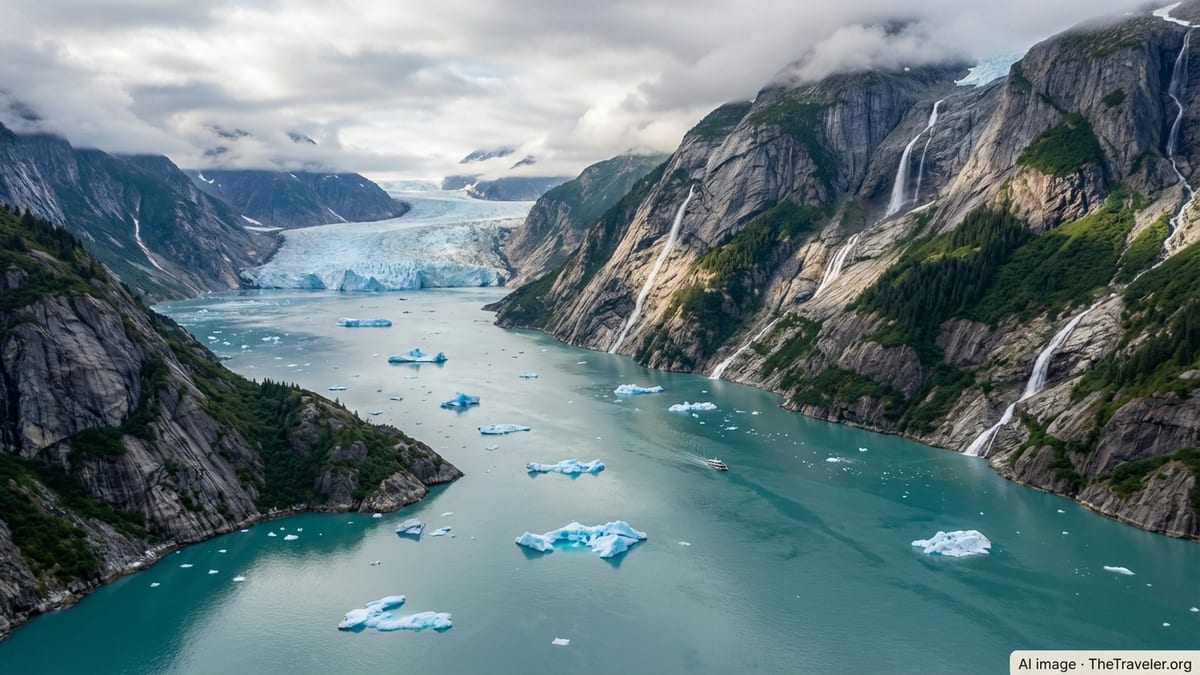
The fjords of Norway and the glacial scenery of Greenland remain central to Oceania’s Northern Europe messaging for 2027. The brand’s published overviews of the 2027-2028 collection describe sailings that travel up the Norwegian coastline and into deep, narrow inlets framed by steep cliffs and waterfalls, as well as routes that track along Greenland’s sparsely populated shores.
Trade coverage of the program notes that itineraries combine classic cruise calls like Bergen and the Norwegian fjords with lesser-visited outposts, giving guests a mix of famous viewpoints and quieter landscapes. In Greenland, calls typically highlight ice-choked bays, colorful settlements and, season permitting, opportunities for late-sunset or midnight-sun viewing.
These itineraries are marketed as a contrast to traditional Mediterranean sailings, with cooler summer temperatures and dramatic topography. Industry observers point out that this focus aligns with a broader trend toward “coolcation” travel, as lines direct more capacity to Northern Europe during the warmest months.
City Stays Across the Baltic and North Sea
While fjords and remote regions draw the headlines, the 2027 Oceania program in Northern Europe also leans heavily on city experiences. Sample itineraries shared in advance feature sequences of capital and cultural centers including Stockholm, Helsinki, Tallinn, Riga and Berlin via Warnemünde, as well as major North Sea gateways such as Southampton and Copenhagen.
Destination descriptions for these voyages emphasize museum visits, historic architecture and culinary discovery ashore, reflecting Oceania’s positioning as both a gastronomic and culturally oriented brand. Guests are offered combinations of overnight calls and extended daytime visits, particularly in major cities where evening dining and cultural events form part of the appeal.
According to industry analysis, these city-heavy itineraries are designed to attract travelers who may be considering independent land tours but prefer the convenience of unpack-once cruising. By pairing urban overnights with more rural or coastal stops, Oceania aims to distinguish its product from shorter, more standardized North Sea and Baltic itineraries offered by larger mainstream ships.
Reaching Toward the Arctic and Iceland
Another defining element of Oceania’s 2027 Northern Europe strategy is the growing reach toward Arctic-influenced regions, particularly Iceland and high-latitude sections of Norway and Greenland. Travel sellers already list 2027 sailings that include extended circuits incorporating Iceland, the Faroe Islands and Northern Norway, building on patterns established in earlier seasons.
These cruises typically position Iceland as a centerpiece, with calls at Reykjavik and smaller ports around the island combined with stops in Norwegian or Scottish ports. The itineraries are timed for the Northern Hemisphere summer, when daylight hours are at their longest and conditions are generally more favorable for scenic cruising and wildlife viewing.
Analysts note that interest in Arctic and near-Arctic voyages has risen steadily across the industry, and Oceania’s decision to embed such routes within a broader Northern Europe program reflects that demand. While the line does not operate purpose-built expedition ships, its mid-sized vessels allow it to provide a taste of polar scenery alongside the comforts and familiar structure of a traditional luxury cruise.
Positioning in a Competitive Northern Europe Market
Oceania’s expanded 2027 Northern Europe deployment comes at a time when several premium and luxury cruise brands are increasing their presence in the region. Other operators have already announced sweeping 2027 programs featuring Scandinavia, Iceland and Arctic crossings, indicating that the cool-weather segment is likely to be highly competitive.
Industry reporting suggests that Oceania is seeking to differentiate its offering through a combination of culinary positioning, intensive port density and access to smaller harbors. The line’s focus on extended itineraries, often ranging around two weeks or more, also sets it apart from shorter Northern Europe cruises that emphasize quick visits to a handful of marquee cities.
For travelers planning ahead for 2027, the result is a growing range of options that span classic Baltic city-hopping, deep fjord exploration and Arctic-adjacent routes touching Iceland and Greenland. Within that landscape, Oceania is positioning its Northern Europe collection as a way to combine small-ship comfort with a broad sweep of ports, from compact fishing towns to capital cities and stark polar coastlines.