


More news on this day
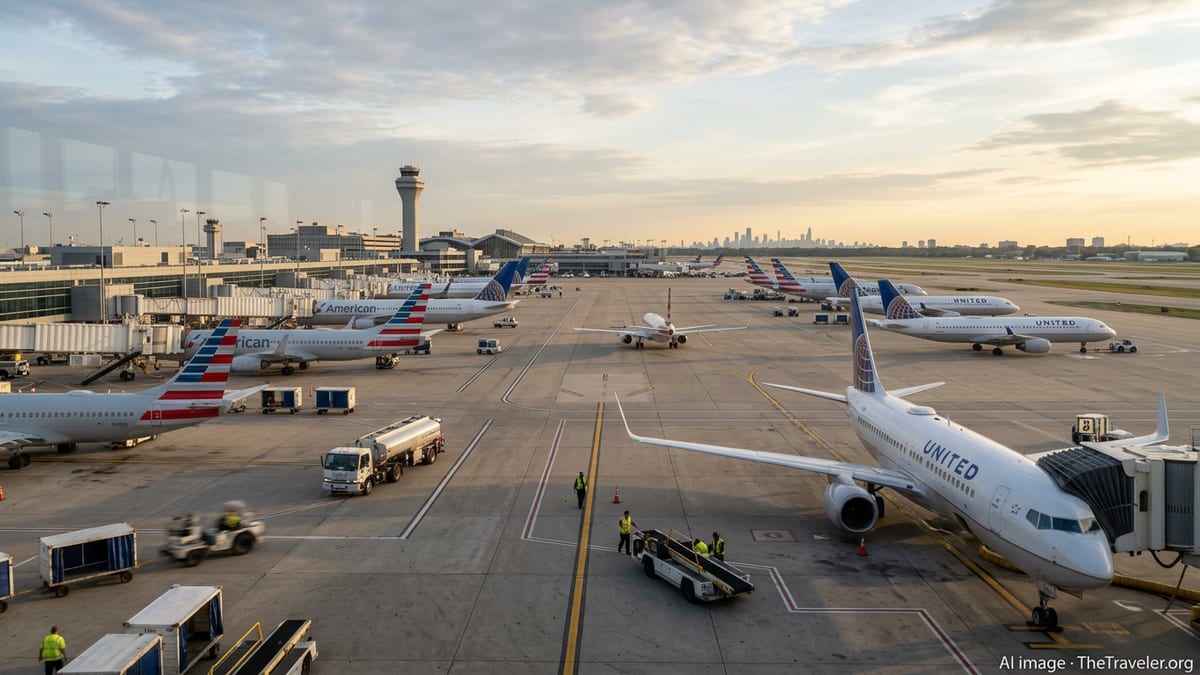
Chicago O’Hare International Airport has brought two refurbished gates in Terminal 3 back into operation, a visible sign of progress in the ElevateT3 modernization program and a modest but timely boost for passengers facing crowded concourses and tight gate availability.
Get the latest news straight to your inbox!
Early Milestone in O’Hare’s ElevateT3 Program
The reopening of two upgraded gates in Terminal 3 comes as part of ElevateT3, a multiyear project that is reshaping one of O’Hare’s busiest domestic terminals. Planning documents and public briefings describe ElevateT3 as a cornerstone of the broader O’Hare 21 strategy, which is intended to expand capacity, modernize facilities and improve accessibility across the airport’s terminal complex.
ElevateT3 began major construction in 2024 and is scheduled to continue in phases into the second half of this decade. Project materials indicate that work is being sequenced to keep Terminal 3 operating throughout construction, with gates rotating in and out of service as areas are rebuilt. The two gates that have now reopened were among those temporarily closed to accommodate early phases of the works, and their return is one of the first tangible improvements passengers can experience at the concourse level.
Airport planning documents indicate that, at various points in the construction cycle, O’Hare’s effective gate count has dipped as areas in Terminal 3 and other concourses were taken offline. Analyses prepared for investors have referenced temporary closures of a small number of Terminal 3 positions, with assumptions that these gates would return to service as phases are completed. The reopening of two of these positions underscores the incremental nature of the project: capacity is being restored and enhanced in stages rather than in a single cutover.
While the overall ElevateT3 completion remains several years away, the return of even a pair of gates can have outsized operational impacts during peak periods, particularly for hub carriers that depend on tight banks of arrivals and departures.
What Has Changed at the Reopened Gates
Publicly available descriptions of the ElevateT3 design indicate that gate areas in Terminal 3 are not simply being refreshed cosmetically but reconfigured to handle more passengers and larger aircraft more efficiently. The program calls for expanded holdrooms at certain positions, including key gates at the ends of the concourses, to ease crowding that has become a familiar complaint among travelers using the terminal.
The two reopened gates form part of this push to enlarge and reorganize seating zones while integrating more power outlets, flexible seating and clearer circulation paths. Planning documents emphasize that the upgraded spaces are intended to reduce pinch points around boarding lines and to separate seated passengers from through-traffic moving between concessions, restrooms and neighboring gates.
The modernization work is also tied to broader changes behind the scenes. ElevateT3 includes upgrades to baggage systems, infrastructure and building systems that support the gates. Although many of these elements are not directly visible to travelers, they are designed to support more reliable handling of checked bags feeding flights from the reopened positions and to improve energy efficiency through new mechanical and electrical systems.
Wayfinding and accessibility improvements are another part of the redesign. Project summaries highlight new or improved paths for passengers with reduced mobility, including reworked corridors and access points that intersect with upgraded gate areas. As additional phases open, the two gates now back in use are expected to connect more seamlessly to a widened corridor between Concourses K and L and to new concession spaces nearby.
Relief for Gate Constraints and Congested Operations
The return of two gates in Terminal 3 comes at a time when gate availability at O’Hare has been under sustained pressure. Public analyses of gate utilization have noted that the airport has been operating near or above traditional comfort thresholds during peak periods, particularly on the domestic side. In recent years, temporary closures for construction in Terminal 3 and in parts of other terminals have further tightened the squeeze.
Travelers and airport staff have described frequent situations in which arriving aircraft wait for open positions and departing flights queue for access to constrained gate space. These operational bottlenecks can cascade into delays, especially at a hub where airlines schedule tightly timed flight banks. Restoring even a small number of gates can help carriers smooth their schedules and reduce the incidence of aircraft waiting on taxiways for parking stands to clear.
Industry observers point out that O’Hare’s broader Terminal Area Plan is designed to deliver a significant net increase in gate capacity over the next several years through the addition of new satellite concourses and the future O’Hare Global Terminal. Until those major elements come online, however, short term improvements such as the stepped reopening of Terminal 3 gates are expected to play a crucial role in balancing demand with available infrastructure.
With airlines closely monitoring their gate allocations at O’Hare, restored positions in Terminal 3 can also influence competitive dynamics between carriers. Incremental capacity allows hub airlines to add frequencies or adjust aircraft gauge with more flexibility, while also providing room for operational recovery during irregular operations and severe weather events.
Passenger Experience: From Security to Seating
The gate reopenings are intertwined with broader Terminal 3 changes that are intended to improve the passenger journey from security screening to boarding. ElevateT3 plans call for the consolidation of two existing security checkpoints into a single, larger screening area outfitted with newer technology. The reconfiguration is designed to give screeners more space and to provide passengers with a more streamlined queuing environment that connects more logically to the concourses and gate areas.
For departing passengers, this means that the experience of reaching the reopened gates should gradually become less fragmented once the new checkpoint and expanded corridors are fully in place. Travelers who previously navigated a patchwork of narrow passageways and crowded nodes in Terminal 3 are expected to benefit from a wider circulation spine linking key concourses, allowing flows of people to disperse more evenly throughout the terminal.
Within the gate areas themselves, the upgrades are aligned with broader trends at major North American hubs, where airports and airlines have been adding more seating, power, and work surfaces in response to changing passenger expectations. Terminal 3’s refreshed gate zones are envisioned as multipurpose spaces where travelers can work, relax, or shop within a short walk of their boarding area, supported by expanded concession offerings planned as part of the ElevateT3 initiative.
The project also responds to accessibility and inclusivity concerns that have become central to modern terminal design. Public plans emphasize the addition of new family restrooms, renovated existing facilities and more intuitive wayfinding for those using mobility aids or traveling with young children, all of which are tied into the circulation patterns around the renovated gates.
Next Phases in Terminal 3 and the Wider O’Hare Overhaul
The reopening of two upgraded gates is one of many milestones in a years long effort to reconfigure O’Hare’s terminals for the next generation of air travel. ElevateT3 is scheduled to continue through at least 2027, with phased construction that will bring additional refurbished gates, new concessions and reworked public spaces online as work progresses down the concourses.
Beyond Terminal 3, the airport’s Terminal Area Plan foresees construction of two satellite concourses and a new O’Hare Global Terminal that will ultimately replace the current Terminal 2. Together with associated tunnel and airfield works, these projects are intended to raise the total gate count and add flexibility for both domestic and international operations. The timing of each element is spread over several years, meaning that incremental steps such as today’s gate reopenings will continue to be important markers of progress.
Financial disclosures and planning reports describe a complex funding picture for O’Hare’s modernization, blending federal infrastructure grants, airport revenue bonds and airline contributions. ElevateT3 in particular has attracted sizable federal terminal improvement grants that have been highlighted in official materials as among the largest such awards in the country, underscoring the national significance of the project.
As construction continues, passengers using Terminal 3 can expect a rolling series of changes, from shifting construction walls to new amenities and redesigned circulation routes. The return of two upgraded gates offers an early glimpse of how the terminal is being reshaped and signals that, even as work continues, capacity and comfort are beginning to move in the right direction for one of the nation’s busiest airport terminals.