


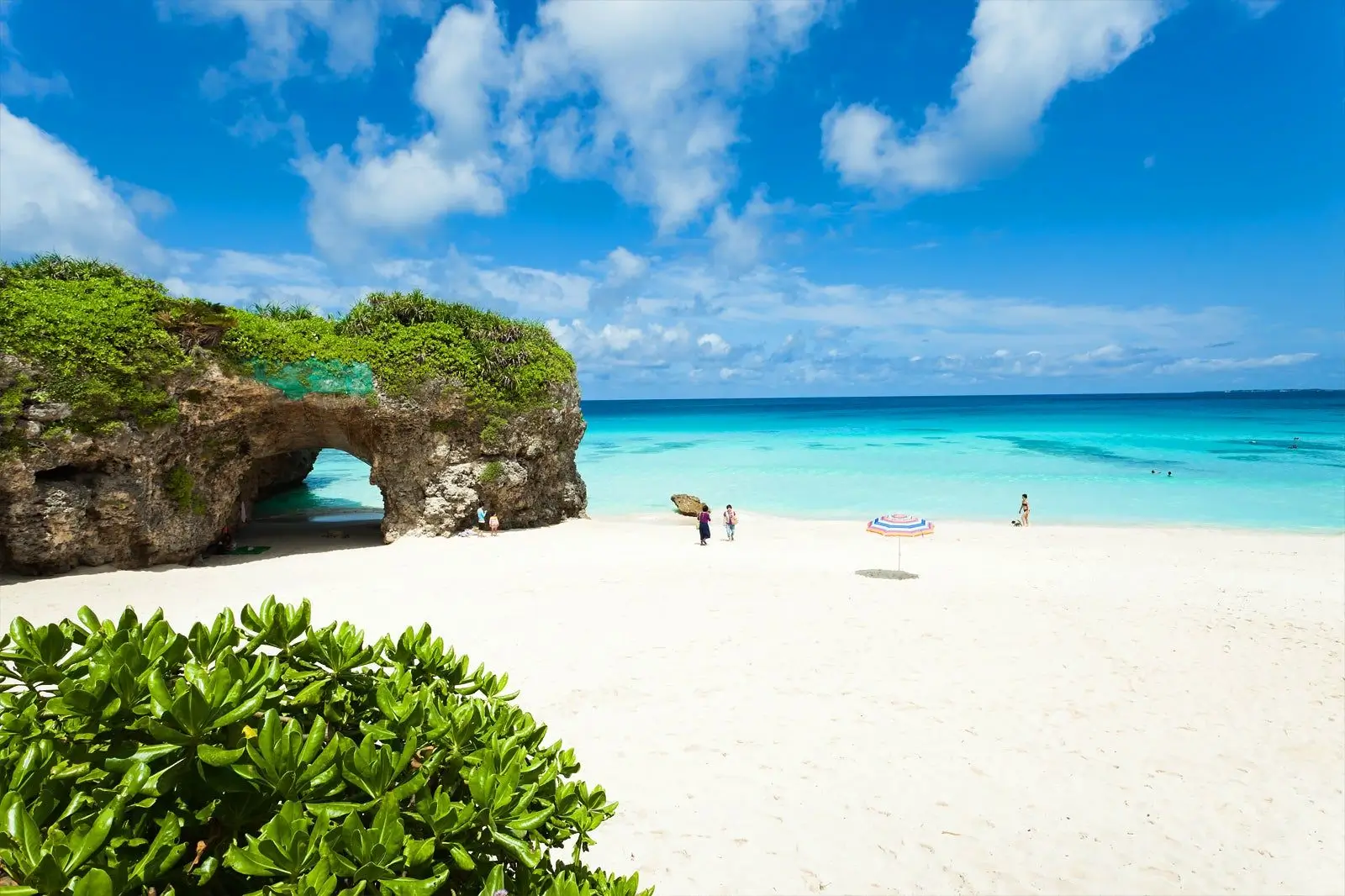
Every season, someone books a trip with us picturing a single beach, a single town, one tidy little island they can loop in a couple of days. Then they open a map on the flight over and go quiet. Because here's the thing I wish more people knew before they booked: Okinawa is not one island. It's more than 160 of them, scattered across a thousand kilometers of ocean, and the biggest question in planning a trip here isn't when to go. It's which Okinawa island to visit.
Is Okinawa one island?
No, and this is the reframe that makes everything else click. Okinawa is Japan's southernmost prefecture, a Japanese island chain made up of over 160 islands, roughly 50 of which are inhabited. The whole run of tropical islands stretches about 1,000 kilometers through the East China Sea, closer to Taiwan at its far end than to mainland Japan.
The typical first-time visitor arrives on direct flights from Tokyo or Osaka, and from there the islands of Okinawa fan out across the ocean by plane and ferry, so how you travel between them shapes everything.
For travel purposes, we don't think in "160 islands." We think in four groups:
- Okinawa Main Island (Hontō) : the big one, with the airport, the castle, the city, the resorts.
- The Kerama Islands (plus nearby Kume) : a quick ferry from Naha, famous for impossibly clear water.
- The Miyako Islands : flat, white-sand beach country to the southwest.
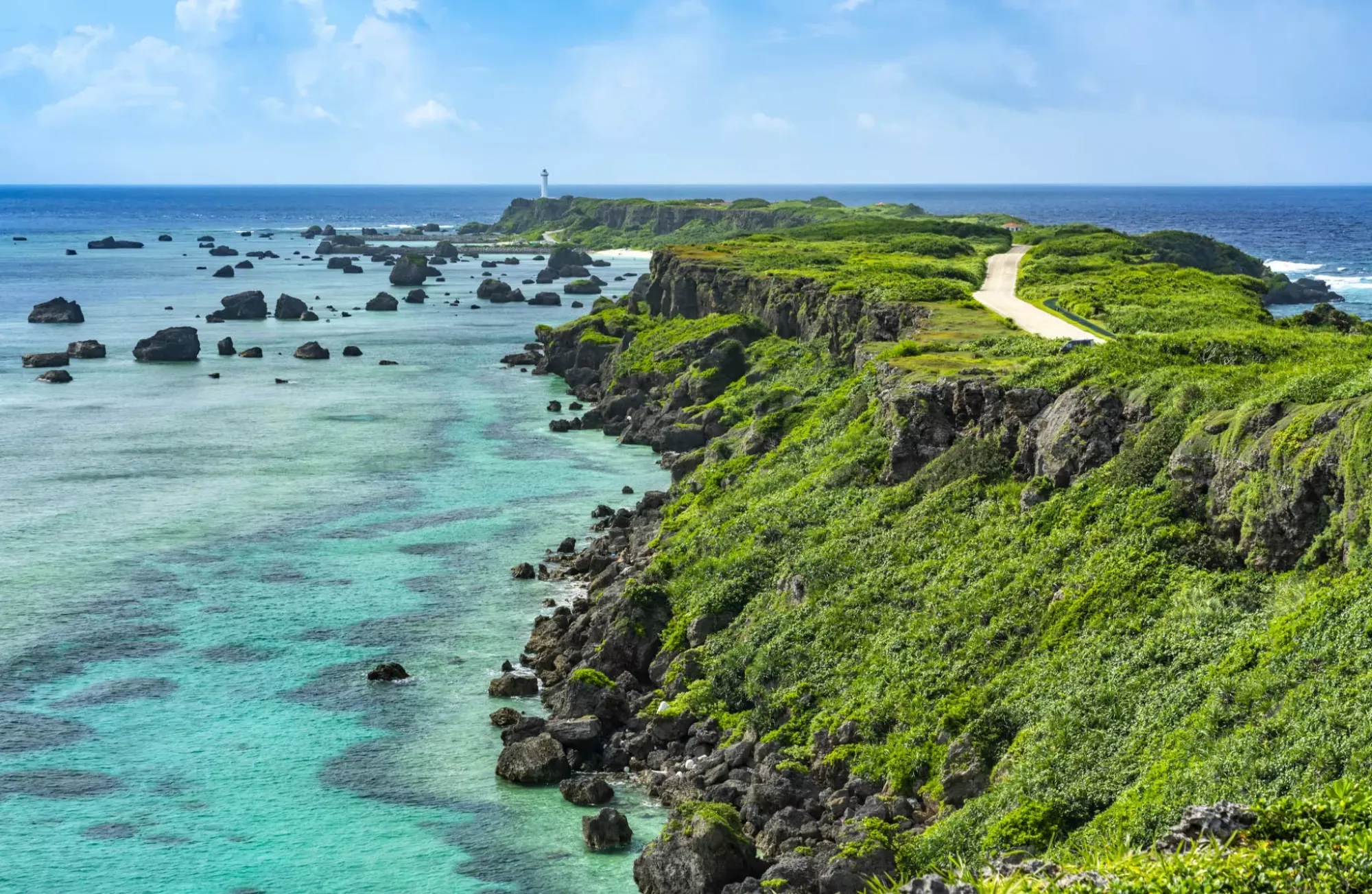
- The Yaeyama Islands : the wild, jungle-and-culture frontier out near Taiwan.
So you don't really "visit Okinawa." You choose your island : or your handful of them, and each one is a genuinely different trip.
The mistake most first-timers make
Here's the assumption that quietly wrecks itineraries: people think these islands are strung close together, like stepping stones you can hop by boat in an afternoon.
They aren't.
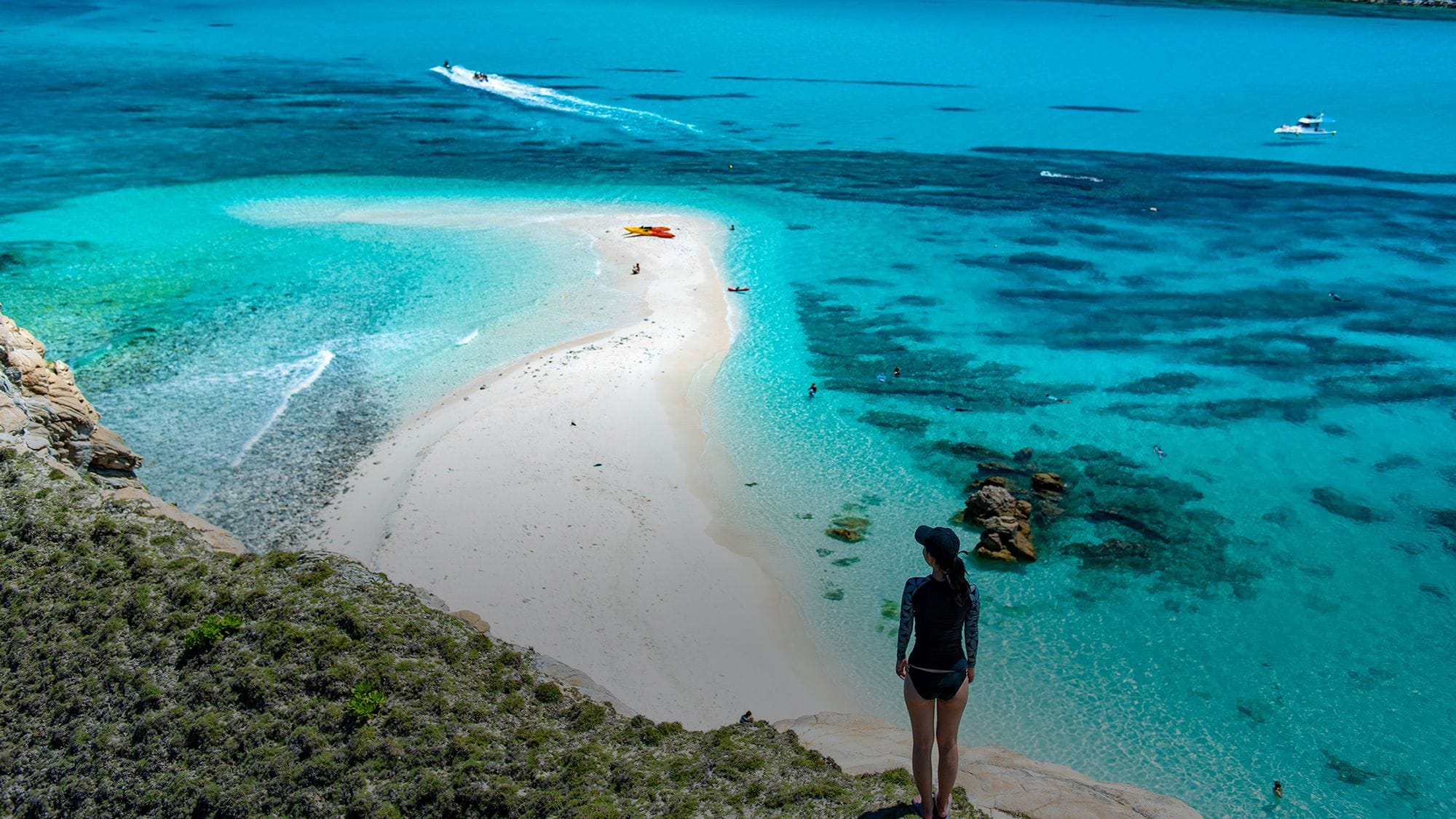
The distances out here are real. Getting from Naha to Ishigaki, the hub of the Yaeyama Islands, is roughly a one-hour flight covering close to 400 kilometers. It is not a short ferry ride. Same story with Miyako: about a 50-minute flight from Naha, no passenger ferry at all. Between the main island groups, you're almost always flying.
The one big exception is the Kerama Islands, which genuinely are a ferry day-trip. A high-speed boat from Naha's Tomari Port gets you to Zamami or Aka in around 50 minutes.
I'm laboring this point because it changes your whole plan. If you've only got four days and you try to squeeze in the main island and Miyako and Yaeyama, you'll spend your trip in airports. Pick well instead. (If you want the full breakdown of ferries, flights, and how to get around once you land, we cover the logistics in depth in our Okinawa map guide, this piece is about choosing where to point yourself in the first place.)
The four Okinawas: one prefecture, four very different trips
This is the part worth slowing down for. Think of these less as regions and more as four completely different holidays that happen to share a prefecture.
Okinawa Main Island (Hontō) : best for first-timers
If it's your first trip, start here. The main island is where you land, Naha Airport is the prefecture's front door, with the most flights, the best public transportation (including the Yui Rail monorail through the vibrant capital), and the most English signage you'll find anywhere in the chain.
It's also where the history lives. This was the heart of the old Ryūkyū Kingdom, and you feel it in the rich local heritage, at Shuri Castle, at the sacred grove of Sēfa-utaki in the south, and in the Okinawan food, music, and summer festivals that don't quite feel like the rest of Japan. Time it right and you might catch a lively island music festival or the drums of an Eisā celebration.
Then there's the north: the Churaumi Aquarium, Cape Manzamo and the resort beaches along the Onna coast, cherry blossoms as early as January in the Nakijin hills, and jungle in Yanbaru. City, history, and easy beach days all in one island. For most first-timers, it's the obvious call.
Kerama Islands: best for divers and day-trippers
If you're short on time but crave that postcard water, the Keramas are your answer. They sit close enough to Naha that you can go for the day and be back for dinner.
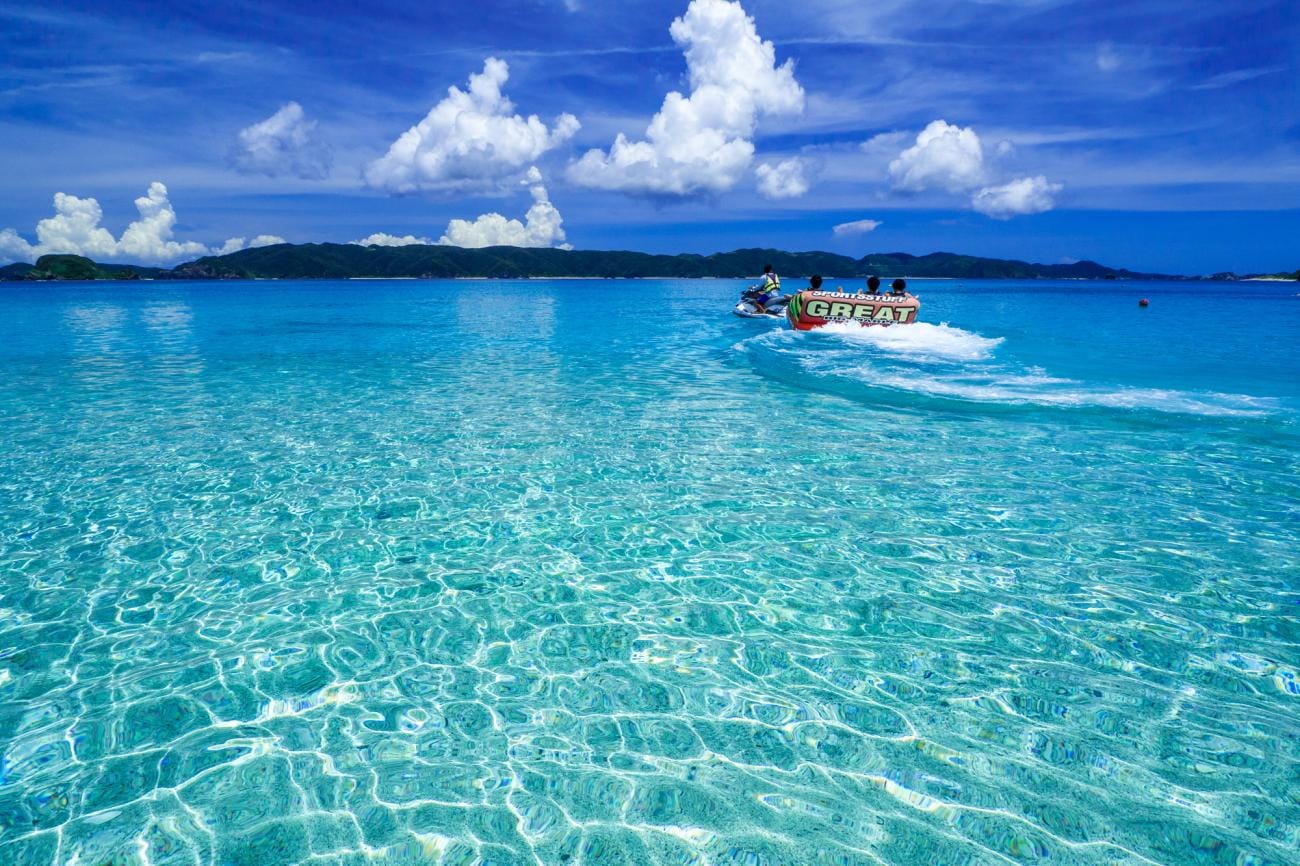
The water here has its own name, Kerama Blue, and it earns it. Underwater visibility often runs around 30 meters and can push past 50 on a clear day, over colorful coral reefs and some of Japan's best, world class dive sites, which is why divers and snorkelers are borderline obsessed with these islands. Come in the winter season (roughly January to March) and you can add humpback whale watching, a seasonal treat, to the list.
It's the easiest way to feel like you've left the city behind without committing a flight to it.
Miyako Islands, best for beach purists
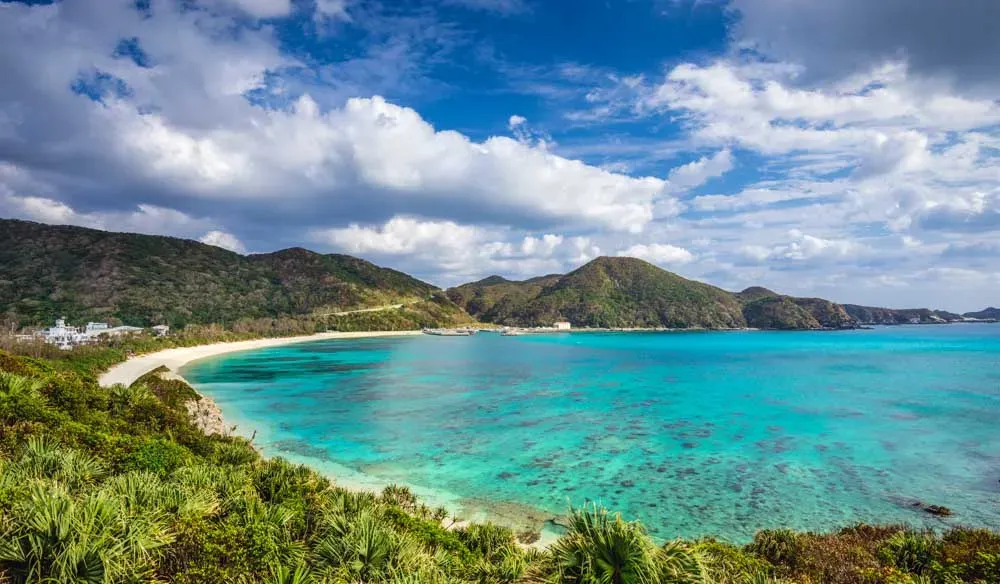
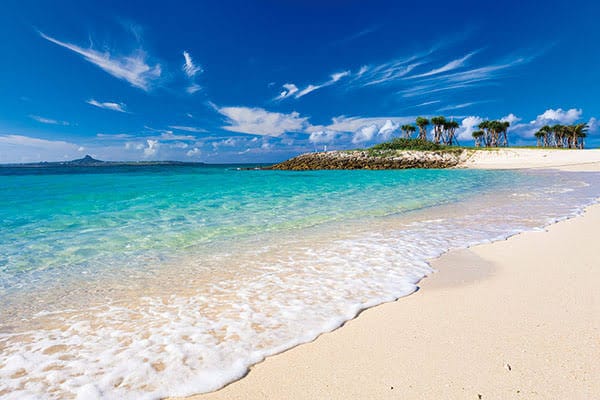
Miyako Island is for people whose ideal trip is basically "clear water, white sand, repeat." Because the islands are flat coral limestone with no real rivers washing sediment into the sea, the water is startlingly clear, pristine beaches like Yonaha Maehama regularly top Japan's rankings, and the tropical view genuinely lives up to them.
The other joy here is that you can drive between islands. Miyako is linked by road bridges to Irabu, Ikema, and Kurima, and on to Shimoji, the Irabu Ōhashi is one of Japan's longest toll-free bridges at over 3.5 kilometers. Grab a rental car, and a single day can go viewpoint to beach to seafood dinner without much time on the road.
Just don't come expecting nightlife. Miyako Island is a sea-and-sky reset, a place to properly relax, not a city break.
Yaeyama Islands : best for adventurers and culture lovers
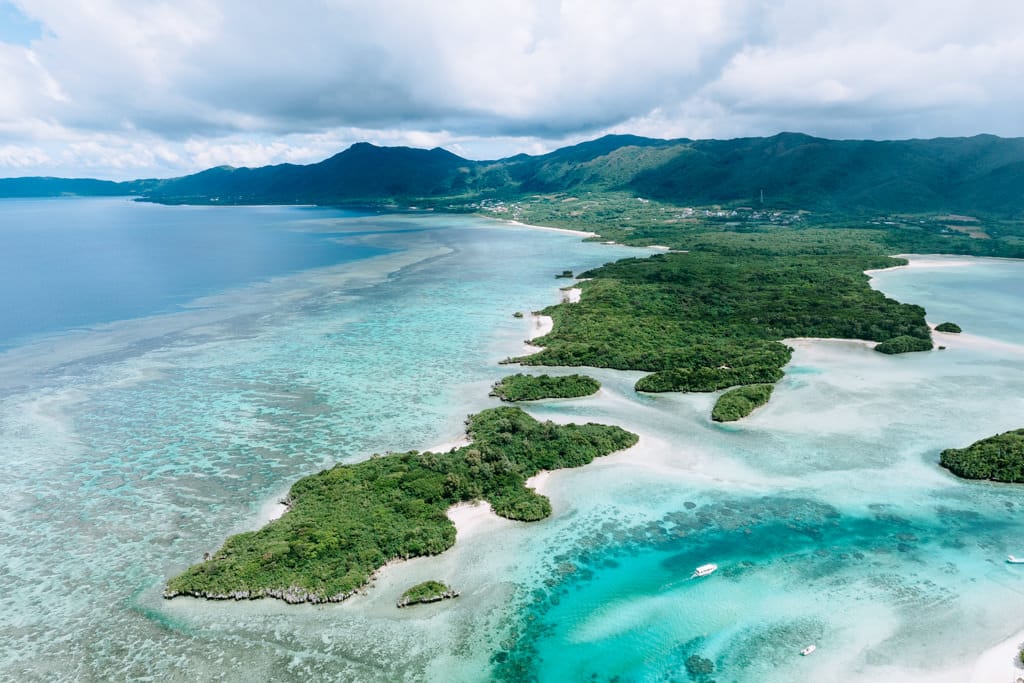
This is the far frontier, and my personal soft spot. Ishigaki is the hub, its own airport, its own town, and the launchpad for the islands around it.
From Ishigaki, a short ferry takes you to Iriomote Island, which is nearly 90% dense subtropical jungle and mangrove and now protected as a UNESCO World Natural Heritage site. It's waterfall treks, river kayaking, and wildlife you won't see anywhere else in Japan. A heads-up worth planning around: to manage tourism and protect the forest, since 2025 the most sensitive spots, like the hike to Pinaisara Falls, require a certified local guide and a daily-capped permit, so book ahead rather than hoping to wing it.
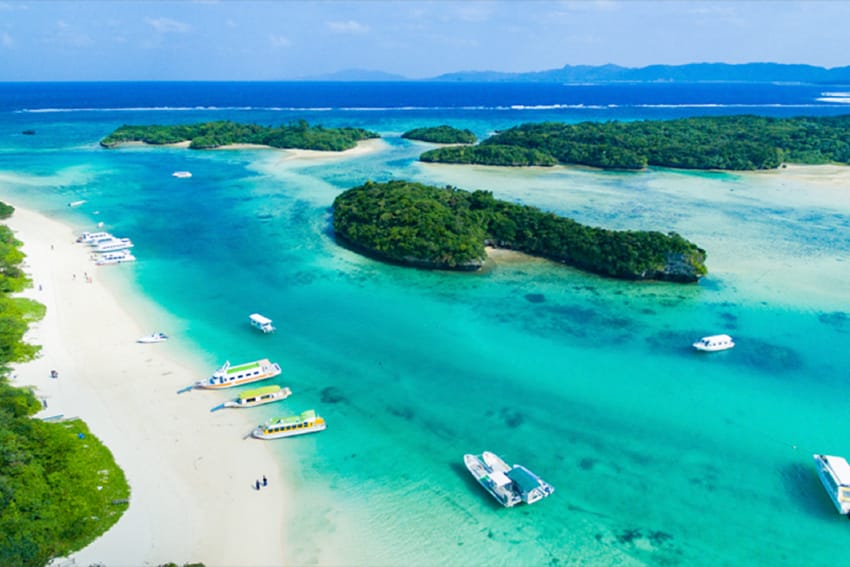
Another quick ferry lands you on tiny Taketomi, a preserved Ryūkyū village of red-tiled roofs, coral-stone walls, and water-buffalo carts trundling down white-sand lanes. (And on Ishigaki itself, the famous Kabira Bay is for glass-bottom boats and photos, not swimming, the water's off-limits for a dip, so don't pack your suit for it.)
Further out still lies remote Yonaguni, Japan's westernmost island, a bucket-list spot to dive with hammerhead sharks and explore its enigmatic underwater ruins. Yaeyama is variety in one trip: jungle, world-class diving, and old-world village life.
Which Okinawa island should you visit?
Here's how I'd match you to a group if you sat across from me and told me your travel style:
First trip, or you want a bit of everything → Okinawa Main Island. Easiest to reach, most to do, gentlest learning curve.
Beaches above all else → Miyako. The clearest water and the most relaxed pace.
A taste of paradise without a second flight → a Kerama day-trip from Naha.
Adventure, jungle, and culture → Yaeyama (Ishigaki as your base, Iriomote and Taketomi as your days out, with time to explore the islands beyond).
History and Ryūkyū heritage → the main island's south, with Yaeyama's villages as a bonus.
A short trip (four days or fewer) → pick one group and go deep. Don't split.
That last one is the tip I'd tattoo on people if I could. The magic of these islands isn't in ticking off as many as possible, it's in staying long enough for one place to stop feeling like a destination and start feeling like somewhere you know.
Can you combine islands in one trip?
Yes, but respect the flight times, since flying really is the main way to get between the groups. The realistic combinations look like this: the main island plus a Kerama day-trip is easy. Ishigaki plus its Yaeyama neighbors is a natural pairing, since they're linked by short ferries out to the smaller islands. Miyako works best as its own self-contained trip. Trying to stitch Miyako and Yaeyama together, though, really wants ten days or more, because you'll usually route between them through Naha.
One more planning note: the weather shapes the calendar too, reliable sun and beach days run from April through summer, the rainy season settles in around June, typhoons can rattle plans into October, and the islands stay warm enough to venture out for much of the year.
This is exactly why I went with Evertrail Tours on their multi-day Island Hopping Tour. It starts in Naha and threads the different Okinawas into one trip, the atmospheric back-alleys of the capital, the jewel-blue reefs of the Keramas, the jungle interior up north, and finally a ferry ride out to a remote island where the fishing boats outnumber the tourists and local families cook dinner like you're family. It's a small-group, hand-built experience, guided by people who actually live here . If your whole reason for coming is to feel how many different Okinawas there are, an experience built to venture across the ocean between them beats staying put, and that's the trip I'd recommend the most.
So, where should you go?
Come back to the one idea that started us off: Okinawa is not one island, and that's the best news in your whole trip. There's really nowhere quite like Okinawa for this, it means there's a version of this place tuned to almost exactly what you want: the easy first-timer's mix, the pure beach reset, the diver's dream, the jungle adventure.
Don't try to see all of it. Choose the Okinawa that matches the traveler you actually are, give it real time, and let the rest wait for next visit. There's always a next visit, that's how these islands get you.
And if you're staring at the map right now, a little overwhelmed, that's normal. It's exactly where most of our best trips begin.
Frequently asked questions
Is Okinawa one island or many?
Okinawa is not a single island. It is a Japanese prefecture made up of more than 160 islands, roughly 50 of them inhabited, spread across about 1,000 kilometers of ocean. Travelers usually group them into four clusters: the Okinawa Main Island, the Kerama Islands, the Miyako Islands, and the Yaeyama Islands.
How many islands does Okinawa have?
Okinawa Prefecture, in southern Japan, consists of over 160 islands, of which around 50 are inhabited.
Which Okinawa island is best for first-time visitors?
The Okinawa Main Island is generally best for first-timers. It has the main international airport (Naha), the widest range of accommodation and attractions, the best public transport, and the most historical sites, including the Shuri Castle area.
Which Okinawa island has the best beaches?
Miyako is most often cited for the best beaches in Japan, thanks to exceptionally clear water and highly rated sands such as Yonaha Maehama. The Kerama Islands are outstanding for snorkeling and diving, while the Yaeyama Islands offer the greatest variety of coastline.
How far is Ishigaki from Naha?
Ishigaki is roughly 400 kilometers from Naha and reached by air, with a flight time of about one hour. There is no direct passenger ferry between them.
Can you easily island-hop in Okinawa?
Not in the sense of quick ferry hops between the main groups. The main island, Miyako, and Yaeyama are connected to each other by flights within Japan, not short boats. Only the nearby Kerama Islands are a genuine ferry day-trip from Naha, at around 50 minutes by high-speed boat. Plan inter-group travel by air and allow buffer time for weather-related disruptions.