


More news on this day
A rush-hour collision between two passenger trains on a mainline north of London has left one person dead and many others injured, according to early reports from Bedfordshire on Friday.
Get the latest news straight to your inbox!
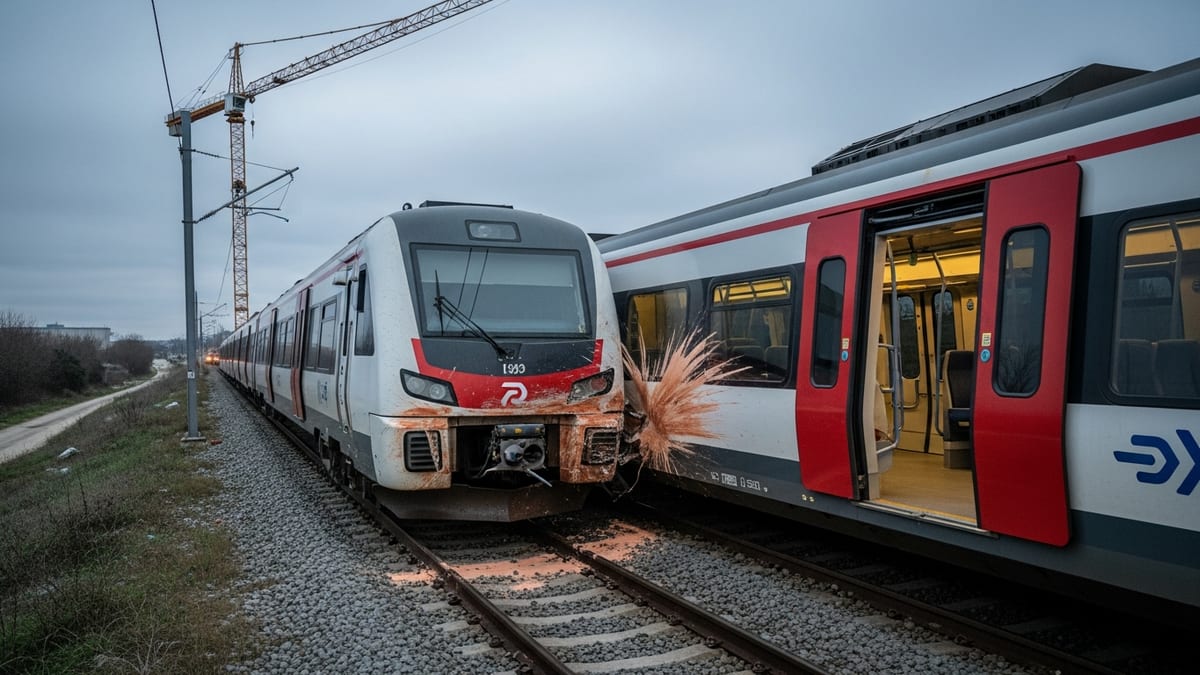
Collision on Busy Route Into Central London
Publicly available information indicates that the crash occurred on the afternoon of June 19 on a stretch of track south of Bedford, a key junction on the Midland Main Line that carries frequent commuter and intercity services into London St Pancras. Two southbound trains are reported to have been involved, one operating a service from Nottingham and the other from Corby, both heading toward the capital at the time of impact.
Rail tracking data cited in media coverage suggests that the collision happened shortly after 5 p.m. local time, at the height of the evening rush. One train appears to have struck the rear of another at relatively low speed, but images and accounts from the scene show significant damage to at least one driving cab and severe jolting of multiple carriages.
Early tallies referenced in national and local reports describe one confirmed fatality and a large number of injuries of varying severity. Passenger accounts shared with broadcasters and on social platforms speak of people being thrown from their seats, with visible cuts, suspected fractures and the interior of some carriages left heavily damaged.
The collision has triggered a major emergency response across the Bedford area and prompted an immediate shutdown of the affected section of the line, cutting direct rail links between London and parts of the East Midlands and north Northamptonshire during one of the busiest travel periods of the week.
Large-Scale Emergency Response and Passenger Evacuations
Reports from the scene describe a substantial deployment of emergency resources, including ambulance crews, specialist incident teams and air ambulances, converging on the tracks just south of Bedford. Local road traffic has been disrupted by road closures and diversions to accommodate the response effort and to allow safe access to the railway.
Passengers have described in published accounts how they were initially instructed to remain on board before being led through darkened or debris-strewn carriages to reach safer sections of the train. Evacuations then continued onto the trackside, where travelers were guided to nearby access points and mustering areas for medical assessment and onward transport.
Medical teams at the scene are reported to have established triage points to separate those with minor injuries from passengers requiring urgent hospital care. Preliminary figures cited in media coverage suggest a mix of minor, serious and very serious injuries among the hundreds of people believed to have been on board the two trains.
Uninjured and lightly injured passengers have been directed toward alternative transport options where possible, though the location of the collision and the ongoing investigation constraints mean that movements in and out of the area are expected to remain tightly controlled for some time.
Major Disruption to Rail Services Across the Region
The crash has caused extensive disruption across one of the United Kingdom’s busiest intercity corridors. Train operators serving the Midland Main Line have suspended or diverted services through the Bedford area while emergency and recovery operations continue. Some long-distance trains are being turned back short of their planned destinations, and local stopping services have been cancelled over sections of the route.
Public travel updates issued on operator channels and rail information platforms are warning passengers of severe delays, cancellations and extended journey times on routes linking London with Luton, Bedford, Wellingborough, Kettering, Corby, Leicester, Nottingham and surrounding stations. Travellers are being advised to check the latest service information before setting out and to allow significant extra time for essential journeys.
Replacement road transport is reported to be limited, reflecting both the scale of the disruption and the difficulty of quickly sourcing sufficient vehicles at peak time. Attempts to reroute travellers via alternative main lines are adding pressure to other busy routes into London, including those serving Euston and Kings Cross.
For many regular commuters, the collision has underscored the central role of the Bedford corridor in daily life, with thousands relying on these services to reach workplaces, schools, and connections to airports such as Luton and beyond.
Early Focus on Safety Systems and Investigation
Although the exact cause of the collision remains unknown, coverage across national and specialist rail outlets indicates that attention is already turning to how two passenger trains came into contact on a modern, signal-controlled main line. Commentators familiar with UK rail operations note that trains on this stretch of track are protected by layered signalling and train protection systems intended to prevent rear-end collisions.
Analysts observing publicly available train movement data have highlighted that the incident appears to have involved a following train closing on a preceding service on the same southbound track. Whether this reflects a signalling issue, a technical fault on one of the trains, human error, or a combination of factors is expected to be a central question for investigators.
In the United Kingdom, serious rail accidents typically trigger parallel inquiries, including a safety-focused investigation that examines technical, operational and human factors to determine immediate and long-term safety recommendations. Based on past precedent, investigators are likely to review on-board data recorders, signalling logs, communication recordings and maintenance records, as well as carrying out detailed site inspections and structured interviews.
Rail commentators are also pointing to the apparent performance of modern crashworthiness standards. While one person has died and many have been injured, initial assessments from rail specialists quoted in coverage suggest that structural design, energy-absorbing crumple zones and automatic braking systems may have reduced the severity of what could otherwise have been a far more devastating impact.
Implications for UK Rail Safety and Passengers
Serious collisions between passenger trains in the UK have become comparatively rare events, a change attributed by industry observers to decades of investment in signalling upgrades, train protection systems and improved rolling stock design. The Bedford crash is therefore being treated by commentators as a significant test of whether existing safeguards are performing as intended under real-world pressure.
Rail unions, passenger groups and safety campaigners are expected to scrutinize the forthcoming investigation for lessons on system resilience, staffing levels, driver training and the management of dense, high-frequency timetables on busy routes into major cities. Particular attention is likely to fall on how closely spaced services are managed during peak periods and what contingency protocols are in place when delays or technical faults occur.
For travelers, the collision may raise fresh questions about personal safety on crowded peak-time trains, especially around luggage storage, seating positions and awareness of emergency procedures. Publicly available guidance from rail operators typically encourages passengers to note the location of emergency equipment, follow staff instructions, and keep gangways and exits clear so that evacuations can proceed quickly if needed.
In the coming days, attention is set to remain focused both on the condition of those injured in the crash and on efforts to restore normal service along the Bedford corridor. For many regular passengers and local residents, images of damaged carriages, emergency workers on the tracks and stranded commuters are likely to linger long after trains begin rolling on their usual timetable once again.