


More news on this day
A collision between two southbound trains near the town of Bedford, north of London, has left one person dead and a number of passengers injured, according to early reports from British transport and emergency services on Friday.
Get the latest news straight to your inbox!
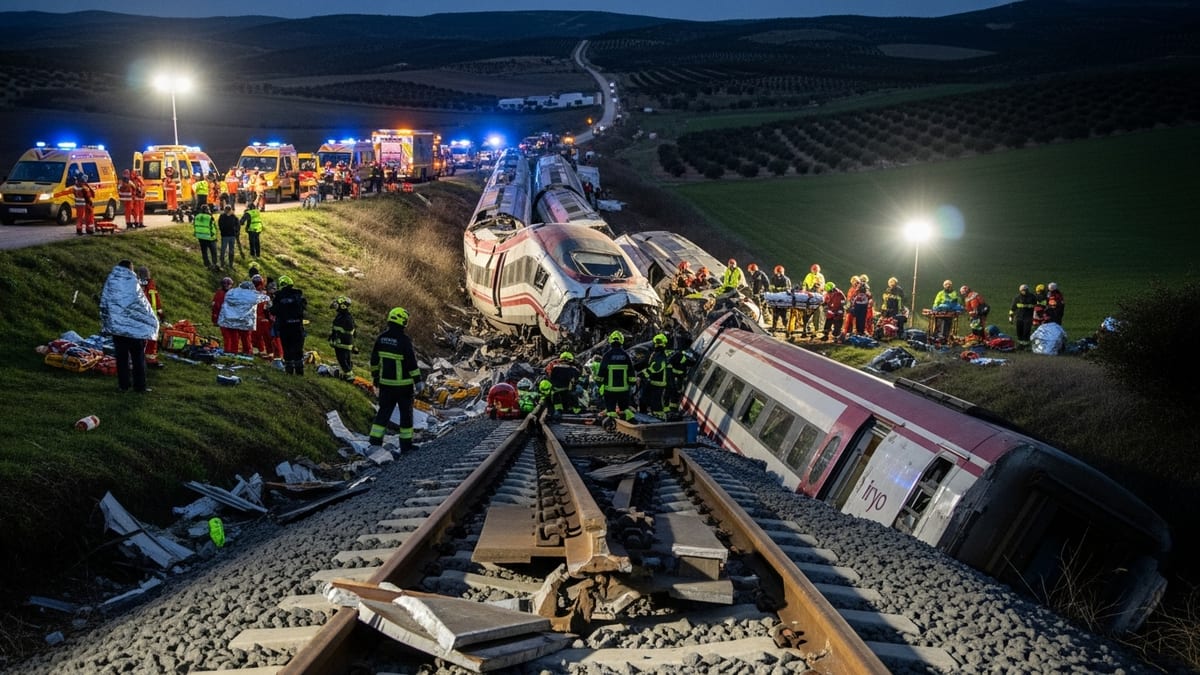
Collision on key route into central London
Published coverage indicates that the crash occurred on Friday afternoon north of London, when two trains traveling toward London St Pancras were involved in a collision near Bedford, a major commuter hub on the Midland Main Line. Rail tracking data cited in news reports places the incident at around 5:15 p.m. local time, at the height of the evening rush.
Both trains were understood to be heading south when the impact took place on a busy stretch of line that links communities in the East Midlands with central London. Early accounts from passengers describe a sudden jolt that threw travelers forward, followed by scenes of confusion inside the carriages.
Publicly available information from regional police and ambulance services states that one person has died and that several others have sustained injuries of varying severity. An air ambulance and specialist hazardous incident units were among the resources dispatched to the site, underscoring the seriousness of the crash.
The line is an essential artery for daily commuters, students and leisure travelers heading into the capital, making the incident particularly disruptive just as the weekend travel period begins.
Emergency response and casualty reports
Initial reports indicate that emergency responders reached the scene shortly after the collision, establishing a major incident response that involved local police, fire and ambulance services as well as rail incident officers. The priority in the first hours focused on treating the injured, evacuating passengers from damaged carriages and securing the area around the tracks.
Accounts from the scene describe multiple passengers being treated for suspected fractures, cuts and impact injuries. The full number of injured travelers had not been formally confirmed in early reports, but rail operators and local health services warned that the toll could rise as assessments continue in hospitals and triage centers.
Images circulated by travelers and local media show a substantial deployment of ambulances, fire engines and support vehicles clustered near a section of track bordered by fields, highlighting the logistical challenge of reaching and stabilizing passengers in a semi-rural location.
Investigators are expected to carry out detailed inspections of the train units, signaling infrastructure and track equipment once the immediate phase of casualty care and evacuation is complete, meaning the affected section of line may remain closed for an extended period.
Severe disruption for rail passengers
The collision has caused widespread disruption across services on the north–south rail corridor into London. According to information shared by train operators and real-time journey planners, services through Bedford toward London St Pancras were suspended or heavily delayed, with knock-on effects reaching stations further north as trains and crews were displaced.
Passengers were advised to check live updates before setting out and to expect cancellations, extended journey times and diversions via alternative routes. Replacement road transport was arranged in some areas, although capacity constraints meant that many travelers faced long waits and crowded conditions.
The timing of the crash at the evening peak compounded the impact on commuters returning from London and those heading into the capital for weekend trips. Travelers reported being held on stationary trains for extended periods, while others described crowded platforms as services were progressively withdrawn from the affected section of line.
Rail industry statements emphasized that safety checks would take precedence over any attempt to restore normal timetables, signaling that disruption could persist into the night and potentially into Saturday for certain routes.
Early focus on safety systems and rail history
While it is too early for investigators to determine the precise cause of the collision, transport specialists following the incident note that the UK rail network is equipped with multiple layers of safety systems intended to prevent trains from occupying the same section of track. These include modern signaling technologies and automatic protection systems designed to intervene if a driver fails to respond to signals.
Reports and commentary circulated on social platforms suggest that, despite the tragic loss of life and injuries, the safety features built into contemporary rolling stock and infrastructure may have mitigated what could otherwise have been a far more devastating outcome. Carriage construction standards, braking systems and emergency procedures are all likely to come under renewed scrutiny as the investigation progresses.
The collision north of London will inevitably prompt comparisons with previous rail incidents in the United Kingdom and overseas, where inquiries have led to upgrades in signaling, staff training and maintenance regimes. Specialists often point to such events as moments that shape future investment decisions and regulatory changes across the wider network.
Formal investigation reports typically take months to complete, but interim findings can influence how operators manage traffic on busy main lines, particularly at times of high demand or during periods of engineering work and timetable change.
Implications for travelers and upcoming services
For travelers, the immediate concern remains whether planned journeys in and out of London can go ahead. Train companies indicated through public service messages that tickets for affected services may be accepted on alternative routes, although options are limited on some cross-country connections.
Regular users of the Bedford corridor, including commuters into London’s business districts and students traveling to and from universities in the Midlands, were urged through operator statements and media coverage to allow extra time, consider different lines where possible, or postpone nonessential trips.
Travel analysts observing the disruption note that incidents of this scale can have lasting ripple effects, with rolling stock and crews out of position, ongoing speed restrictions near the site, and heightened safety checks across adjacent parts of the network. Such factors can complicate efforts to bring timetables back to normal, especially on already busy lines.
As the investigation unfolds, attention for many passengers will turn to how lessons from the collision are translated into tangible safety and reliability improvements, and how quickly confidence can be restored along one of the main gateways into London.